
Quick Summary: The ideal angle to sharpen kitchen knives is typically between 15-20 degrees per side for most Western-style knives. Japanese knives often benefit from a sharper 10-15 degree angle. Achieving the correct angle ensures a keen edge without damaging your blade.
Ever struggled to slice through a ripe tomato, only to have it squish under your knife? Or perhaps you’ve found yourself sawing through bread, leaving a messy trail? A dull knife isn’t just frustrating; it can be downright dangerous, making food preparation harder and increasing the risk of slips. The secret to a perfectly sharp knife often lies in a single, crucial detail: the sharpening angle. But what exactly is the right angle, and how do you even achieve it? Many people feel intimidated by knife sharpening, fearing they’ll ruin their beloved blades. We’re here to demystify this essential kitchen skill, making it simple and stress-free. Get ready to discover the “shocking truth” about knife sharpening angles and transform your cooking experience from struggle to slice!
The Shocking Truth About Your Knife’s Angle
Let’s get straight to it. The “shocking truth” isn’t some complex, industry secret. It’s that most home cooks are probably sharpening their knives at an angle that’s either too steep or too shallow for their specific knife type, leading to less-than-ideal sharpness and premature dulling. Think of your knife’s edge like a tiny wedge. The angle of that wedge determines how easily it cuts and how long it stays sharp. Too blunt, and it won’t slice cleanly. Too fine, and it might chip or fold over easily.
The angle isn’t a one-size-fits-all situation. Different knife styles, from the robust Western chef’s knife to the delicate Japanese Santoku, are designed with different edge geometries. Understanding these differences is key to unlocking their full cutting potential. We’ll break down exactly what you need to know to give your knives the precise angle they deserve, making every chop, slice, and dice a pleasure.
Why Angle Matters: The Science of Sharpness
Every time you use your knife, the very edge, the thinnest part of the steel, experiences wear and tear. It can bend, chip, or even break down microscopically. Sharpening works by removing a small amount of metal to restore that fine, keen edge. The angle at which you remove this metal dictates the strength and sharpness of the resulting edge.
A steeper angle (like 20-25 degrees) creates a more durable, robust edge. This is great for knives that see a lot of heavy-duty work, like a sturdy butcher knife or a paring knife used for tough tasks. However, it won’t be as razor-sharp as an edge with a finer angle.
Conversely, a shallower angle (like 10-15 degrees) creates a much sharper, more precise edge. This is perfect for knives that require delicate precision, such as those used for filleting fish or finely chopping herbs. The trade-off? This finer edge is also more susceptible to damage and will likely need more frequent touch-ups.
The sweet spot for most kitchen knives is a balance between sharpness and durability. For Western-style knives, this typically falls between 15 and 20 degrees per side. Japanese knives, often made from harder steel and designed for finer work, usually perform best with an angle closer to 10-15 degrees per side.
Common Knife Angles Explained
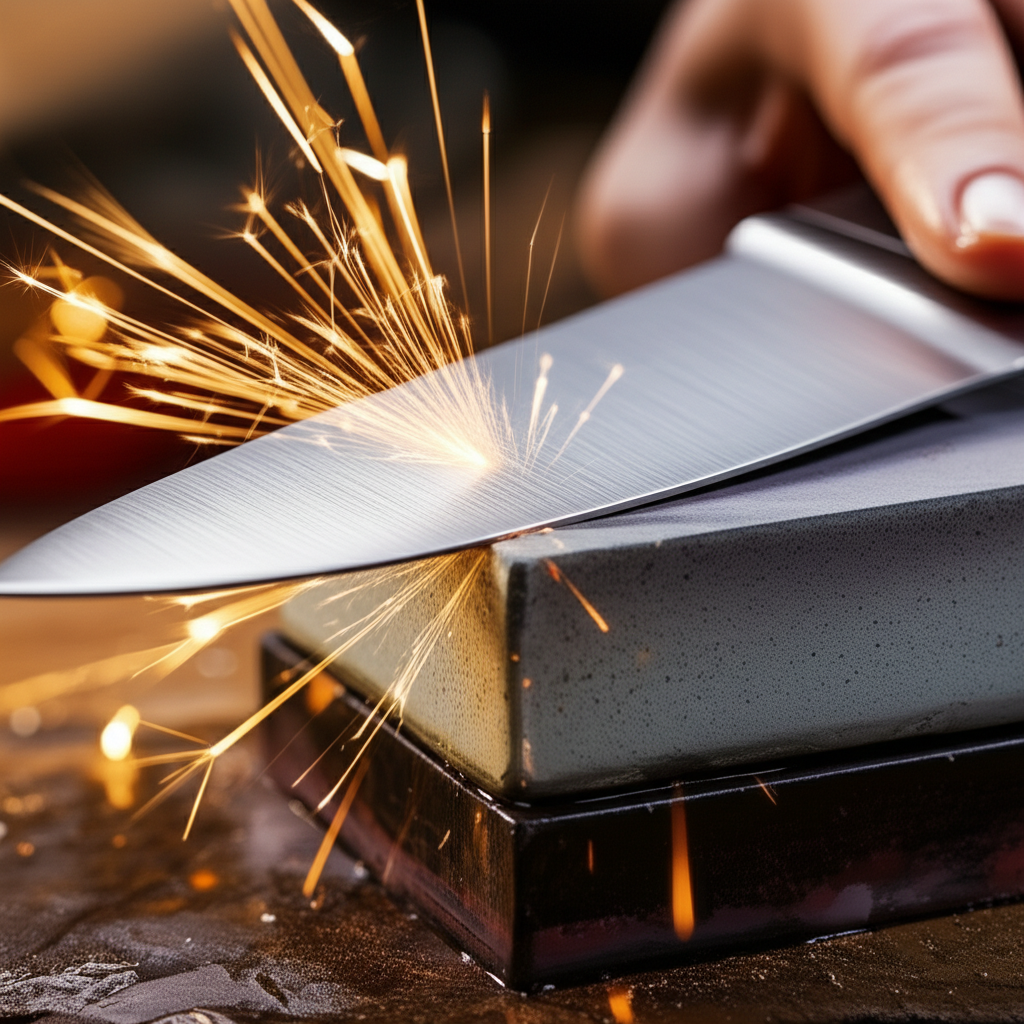
It’s helpful to visualize what these angles look like. Imagine a clock face. A 90-degree angle would be like the corner of a square. Halving that to 45 degrees is a diagonal line. Another 45-degree halving gives you 22.5 degrees, which is very close to the common 20-degree angle. A 15-degree angle is even finer.
Here’s a quick guide:
- 10-15 Degrees: Typically for Japanese knives (Santoku, Nakiri, Yanagiba). These knives are often made from harder steel and designed for precision.
- 15-20 Degrees: The most common range for Western-style knives (Chef’s knife, utility knife, paring knife). This offers a good balance of sharpness and durability.
- 20-25 Degrees: For heavy-duty knives or those that need extreme durability, like some cleavers or serrated knives.
The angle is usually measured from the horizontal plane of the sharpening surface to the side of the blade. So, when we say “15-20 degrees per side,” it means you sharpen one side of the blade at that angle, then flip the knife over and sharpen the other side at the same angle.
Choosing Your Sharpening Method: What Works Best?
Now that you understand the importance of the angle, let’s talk about how to achieve it. There are several popular sharpening methods, each with its own benefits and learning curve. For beginners, some methods are much more forgiving than others.
1. Sharpening Stones (Whetstones)
Sharpening stones are the traditionalist’s choice and, arguably, offer the most control and the best results when mastered. They come in various grits, from coarse (for repairing chips) to fine (for polishing and refining the edge).
How to achieve the angle:
- Start with the right stone: A medium-grit stone (around 1000 grit) is a good starting point for general sharpening.
- Find your angle: This is where practice comes in. Many stones have guide grooves, or you can use angle guides that clip onto the spine of your knife. Alternatively, you can use the “coin trick”: place a few coins under the spine of your knife to approximate the desired angle (e.g., a quarter is roughly 15 degrees).
- Maintain consistency: The key is to keep the knife at the same angle throughout the sharpening stroke, on both sides of the blade.
- Stroking technique: Move the knife edge-first across the stone in a sweeping motion, mimicking the curve of the blade. Apply even pressure.
Pros: Offers the most control, can sharpen any knife, excellent results when learned.
Cons: Has a learning curve, requires practice to maintain a consistent angle.
2. Electric Knife Sharpeners
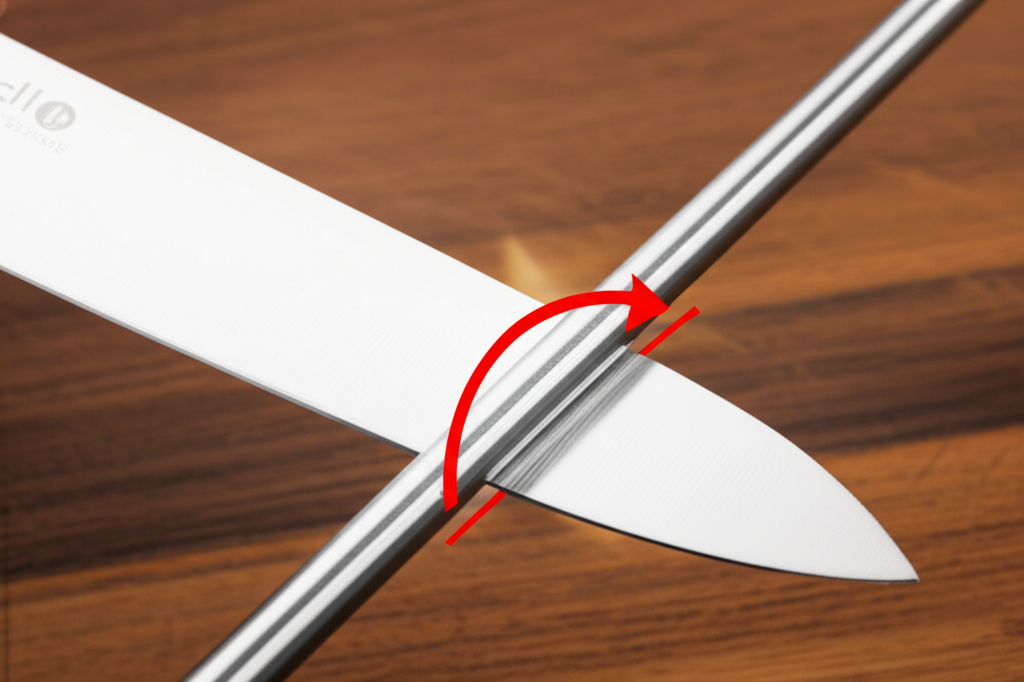
Electric sharpeners are designed for speed and ease of use. They have pre-set angled slots that guide your knife automatically.
How to achieve the angle:
- Select the right slot: Most electric sharpeners have multiple slots for different sharpening stages (coarse, fine) and sometimes for different knife types. Follow the manufacturer’s instructions.
- Follow the guide: Simply insert your knife into the appropriate slot and pull it through gently, following the device’s guidance.
- Alternate sides: Typically, you’ll pull the knife through each slot a few times, alternating sides as instructed.
Pros: Very easy to use, fast, consistent angle provided by the machine.
Cons: Can remove more metal than necessary if not used carefully, less control over the exact angle, may not be suitable for all knife types (especially very thin or specialized blades).
For a great overview of different sharpening systems and how they work, check out this resource from CookingChops.com.
3. Pull-Through Sharpeners (Manual)
These are simpler, often portable sharpeners with V-shaped slots made of sharpening material (like carbide or ceramic).
How to achieve the angle:
- Place on a stable surface: Ensure the sharpener is on a flat, non-slip surface.
- Position the knife: Place the heel of your knife blade into the slot.
- Pull gently: Pull the knife towards you with light, consistent pressure.
- Repeat: Perform a few strokes on each side, alternating as needed.
Pros: Portable, easy to use, relatively inexpensive.
Cons: Can be aggressive and remove metal quickly, angle might not be ideal for all knives, can sometimes create a “toothy” edge rather than a polished one.
4. Honing Steels (Not Sharpening, but Crucial!)
It’s important to distinguish between sharpening and honing. Honing steels (also called honing rods) don’t actually remove metal. Instead, they realign the microscopic teeth on the very edge of your blade that have bent over with use. Regular honing keeps a sharp edge performing at its best between sharpenings.
How to use a honing steel:
- Hold it correctly: Hold the steel vertically, point down, with the handle resting on a stable surface (like a cutting board or folded towel).
- Find the angle: Hold your knife at the correct sharpening angle (15-20 degrees for most Western knives) against the steel.
- Draw down: Gently draw the blade down the steel in a smooth, sweeping motion, from heel to tip.
- Alternate sides: Repeat on the other side of the steel with the other side of the blade.
- Repeat strokes: Do about 5-10 strokes per side.
Pros: Maintains edge alignment, prolongs sharpness, easy to use.
Cons: Does not actually sharpen (restore a dull edge).
Table: Knife Types and Recommended Sharpening Angles
To help you find the perfect angle for your kitchen arsenal, here’s a handy reference table. Remember, these are general guidelines, and the specific steel and construction of your knife can influence the ideal angle.
| Knife Type | Typical Steel Hardness (HRC) | Recommended Sharpening Angle (Per Side) | Primary Use | Notes |
|---|---|---|---|---|
| Western Chef’s Knife | 54-58 HRC | 15-20 degrees | All-purpose slicing, chopping, dicing | Balanced edge for durability and sharpness. |
| Japanese Chef’s Knife (Gyuto) | 58-62 HRC | 10-15 degrees | Precision slicing, fine chopping | Harder steel allows for a finer, sharper edge. |
| Santoku Knife | 58-62 HRC | 10-15 degrees | Chopping, slicing, mincing | Often features a flatter profile than a chef’s knife. |
| Paring Knife | 54-58 HRC | 15-20 degrees | Peeling, trimming, detailed work | Durability is often preferred for intricate tasks. |
| Bread Knife (Serrated) | N/A (Serrated edge) | N/A (Specialized sharpening) | Slicing bread and items with tough exteriors | Requires a different sharpening approach; often best left to professionals or specialized tools. The angle refers to the teeth. |
| Fillet Knife | 56-60 HRC | 12-17 degrees | Filleting fish, delicate slicing | Flexibility and a very keen edge are paramount. |
| Utility Knife | 54-58 HRC | 15-20 degrees | Medium-sized tasks, slicing fruits/vegetables | Similar to a smaller chef’s knife. |
The Angle Accuracy Challenge
One of the biggest hurdles for home users is maintaining a consistent angle. Our hands naturally want to drift. This is where sharpening guides and aids come in handy.
- Angle Guides: These small clips attach to the spine of your knife and rest on the sharpening stone or rod, helping you maintain the correct angle. They are particularly useful for learning on sharpening stones.
- Sharpening Systems: Some bench-style sharpeners have adjustable angle settings or jigs that hold the knife at a precise angle.
- Practice Makes Perfect: Even without guides, consistent practice with a honing steel or a simple pull-through sharpener will build muscle memory.
For a deeper dive into the physics of blade geometry and sharpening, the Gränsfors Bruk Knowledge Bank offers insights into sharpening, which, while focused on axes, shares fundamental principles applicable to all bladed tools.
Step-by-Step Guide: Sharpening Your Kitchen Knives
Let’s walk through a common scenario: sharpening a Western-style chef’s knife using a sharpening stone. This method offers the most control and is incredibly rewarding once you get the hang of it.
What You’ll Need:
- A sharpening stone (e.g., a 1000-grit stone is a good starting point)
- Water (for water stones) or oil (for oil stones)
- A stable surface
- Your knife
- A towel or non-slip mat
- Optional: Angle guide, honing steel
The Sharpening Process:
- Prepare Your Stone: If you’re using a water stone, soak it in water until it stops bubbling (usually 5-10 minutes). If it’s an oil stone, apply a few drops of honing oil. Place the stone on a damp towel or non-slip mat to keep it from moving.
- Find Your Angle: For a Western chef’s knife, aim for 15-20 degrees. If using an angle guide, attach it to the spine of your knife. If not, try to visualize it. A common tip is to hold the knife so the spine is about as high off the stone as two stacked quarters.
- Sharpen the First Side: Place the heel of the blade on the stone at your chosen angle. Apply gentle, even pressure and push the blade across the stone, moving from heel to tip in a smooth, sweeping motion. Imagine you’re trying to shave a thin layer off the stone with the edge.
- Maintain the Angle: The most critical part is to keep the angle consistent throughout the stroke. Try to maintain the same pressure on the stone.
- Repeat Strokes: Make about 10-15 strokes on this side. You should start to feel a “burr” – a tiny ridge of metal – forming on the opposite side of the edge. You can feel for this by gently running your fingertip away from the edge on the opposite side.
- Sharpen the Second Side: Flip the knife over. Maintain the same angle and repeat the same number of strokes on the other side of the blade. The goal is to remove the burr and create an equal edge on both sides.
- Refine the Edge (Optional but Recommended): If you have a finer grit stone (e.g., 3000-6000 grit), repeat steps 3-6 with the finer stone to polish and further refine the edge.
- Deburr: After sharpening both sides, you might have a slight burr remaining. Make a few very light, alternating strokes on each side, using less pressure each time, to remove it.
- Test the Sharpness: Carefully test your knife. A common test is to slice a piece of paper. A sharp knife will slice cleanly through without snagging.
- Clean Up: Rinse your knife under warm water to remove any metal particles and dry it thoroughly. Clean your sharpening stone according to its instructions.
What About Serrated Knives?
Serrated knives, like bread knives, have a different edge geometry. Sharpening them requires a different approach, usually involving a ceramic rod or a specialized sharpening system designed for serrations. The goal is to sharpen each “valley” between the serrations. For most home cooks, it’s often best to have serrated knives professionally sharpened or use a specific serrated knife sharpener.
Common Pitfalls and How to Avoid Them
Even with the best intentions, it’s easy to make mistakes when sharpening. Here are a few common pitfalls and how to sidestep them:
- Inconsistent Angle: This is the biggest culprit for poor results. Use angle guides until you build muscle memory.
- Too Much Pressure: You don’t need to press hard! Let the abrasive grit do the work. Excessive pressure can damage the edge or the stone.
- Not Sharpening Enough: If you’re not feeling a burr, you might not be sharpening enough on each side.
- Sharpening Too Much: Over-sharpening can remove too much metal, shortening the lifespan of your knife.
- Forgetting to Hone: Honing regularly will keep your edges sharp for longer, meaning you’ll need to sharpen less often.
- Using the Wrong Grit: Starting with a very coarse grit on a knife that only needs a touch-up can be too aggressive.
FAQ: Your Kitchen Knife Sharpening Questions Answered
Here are some common questions we get about knife sharpening angles and techniques:
Q1: What angle is best for my everyday kitchen knife?
A1: For most Western-style kitchen knives (like chef’s knives, utility knives, and paring knives), an angle between 15 and 20 degrees per side is generally recommended. This provides a good balance of sharpness and durability for daily tasks.
Q2: How can I tell if my knife is sharp enough?
A2: A simple test is to try slicing through a piece of paper. A sharp knife will slice cleanly and smoothly. You can also try cutting a ripe tomato; a sharp knife will bite into the skin without crushing the fruit.
Q3: Do I need different angles for different knives?
A3: Yes, absolutely! Japanese knives, made from harder steel, typically benefit from a finer angle (10-15 degrees), while Western knives are suited to a slightly wider angle (15-20 degrees). Heavy-duty knives might even use a slightly steeper angle for durability.
Q4: How often should I sharpen my kitchen knives?
A4: This depends on how often you use your knives and what you cut. As a general rule, honing your knives with a steel before each use can help maintain sharpness. Sharpening might be needed every few weeks to a few months, depending on usage and the quality of the steel.
Q5: What’s the difference between sharpening and honing?
A5: Sharpening removes metal to create a new edge when the existing one is dull or damaged. Honing (using a steel or ceramic rod) realigns the microscopic teeth of the existing edge, which can become bent during use. Honing keeps a sharp knife sharp.
Q6: Can I sharpen my knives with a regular kitchen steel?
A6: A standard kitchen steel is a honing steel, used for realigning the edge, not for sharpening. To actually sharpen a dull blade, you need a sharpening stone, an electric sharpener, or a pull-through sharpener.
Q7: My knife feels sharp, but it’s still not cutting well. What could be wrong?
A7: It’s possible the edge is damaged (bent or chipped), or that it’s not truly sharp. Ensure you’re using the correct angle and have created a burr on both sides. If you’re still having trouble, the steel itself might be too soft, or the knife might need professional attention.
Conclusion: Mastering the Angle for a Better Kitchen Experience
Understanding the correct angle to sharpen kitchen knives is fundamental to enjoying your time in the kitchen. It’s not about having the most expensive knives; it’s about caring for the tools you have. By aiming for that sweet spot of 15-20 degrees for Western knives and 10-15 degrees for Japanese knives, you’re setting yourself up for success.
Don’t be intimidated by the process. Whether you choose the control of a whetstone, the convenience of an electric sharpener, or the simplicity of a pull-through device, consistent practice is your best friend. Remember to hone your blades regularly to maintain that edge between sharpenings. With a little attention to detail and the right angle, you’ll transform your kitchen experience, making every slice effortless and every meal preparation a joy. Happy chopping!
