
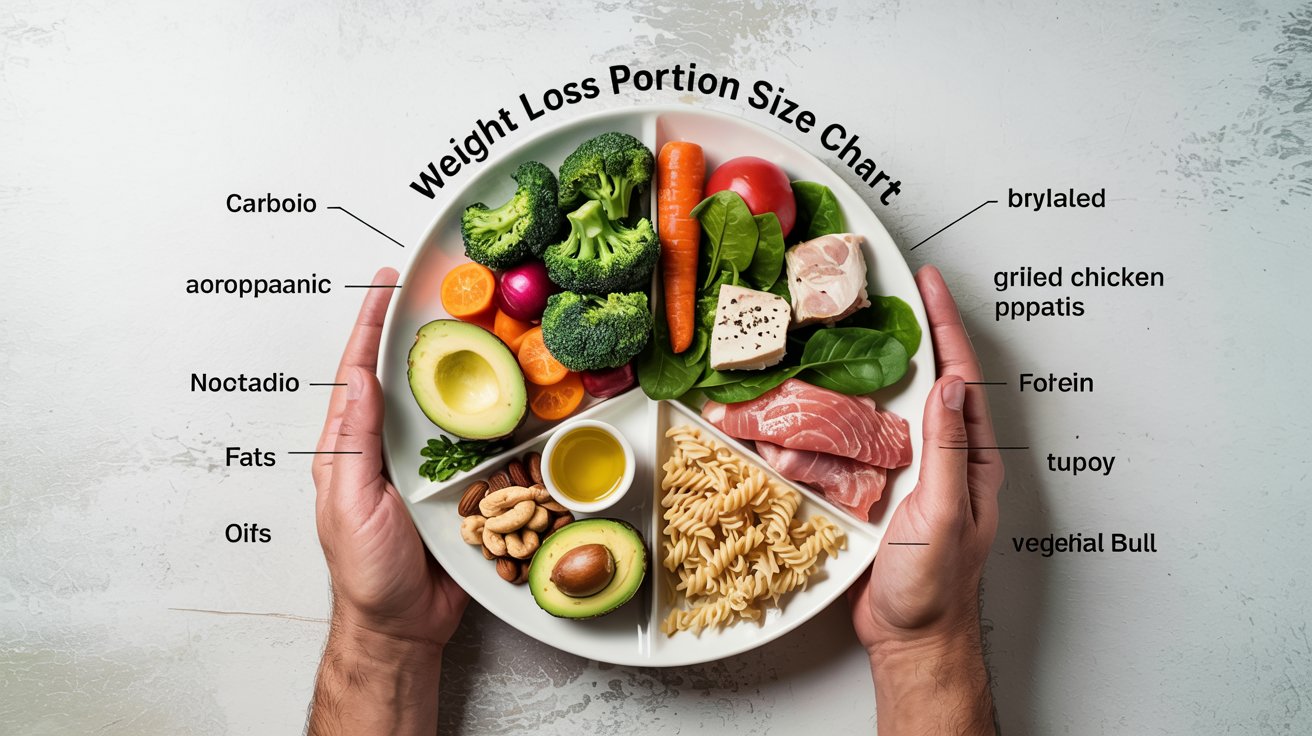
Losing weight isn’t just about what you eat—it’s also about how much you eat. Even healthy foods can slow your progress if portions are too large. Understanding a weight loss portion size chart helps you control calories, stay satisfied, and build sustainable eating habits.
Why Portion Size Matters for Weight Loss
Portion control is one of the most effective ways to manage calorie intake without strict dieting.
Knowing the right portions helps you:
- Reduce excess calories
- Maintain balanced nutrition
- Avoid overeating
- Stay full longer
Small adjustments in portion size can lead to big results over time.
Standard Portion Sizes for Weight Loss
A balanced plate is key for weight loss.
Weight Loss Portion Size Chart
| Food Group | Portion Size | Example |
|---|---|---|
| Vegetables | ½ plate (largest) | 1–2 cups |
| Protein | ¼ plate | 3–4 oz chicken, fish, tofu |
| Carbohydrates | ¼ plate | ½–1 cup rice, pasta, grains |
| Healthy Fats | Small amount | 1–2 tbsp nuts, oil, avocado |
👉 Fill half your plate with vegetables to stay full with fewer calories.
Hand Portion Method (Easy Guide)
You can measure portions without tools using your hand:
| Food Type | Portion Guide |
|---|---|
| Protein | Palm of your hand |
| Carbs | Cupped hand |
| Fats | Thumb size |
| Vegetables | Two handfuls |
This method is simple and effective for daily use.
Portion Size by Meal
Here’s a simple breakdown for each meal:
Breakfast
- Protein + small carbs + fruit
- Example: Eggs + toast + fruit
Lunch
- Balanced plate (½ veggies, ¼ protein, ¼ carbs)
Dinner
- Similar to lunch, but lighter carbs if needed
Snacks
- Small portions (100–200 calories)
- Example: Fruit + nuts
Weight Loss Portion Size and Calories
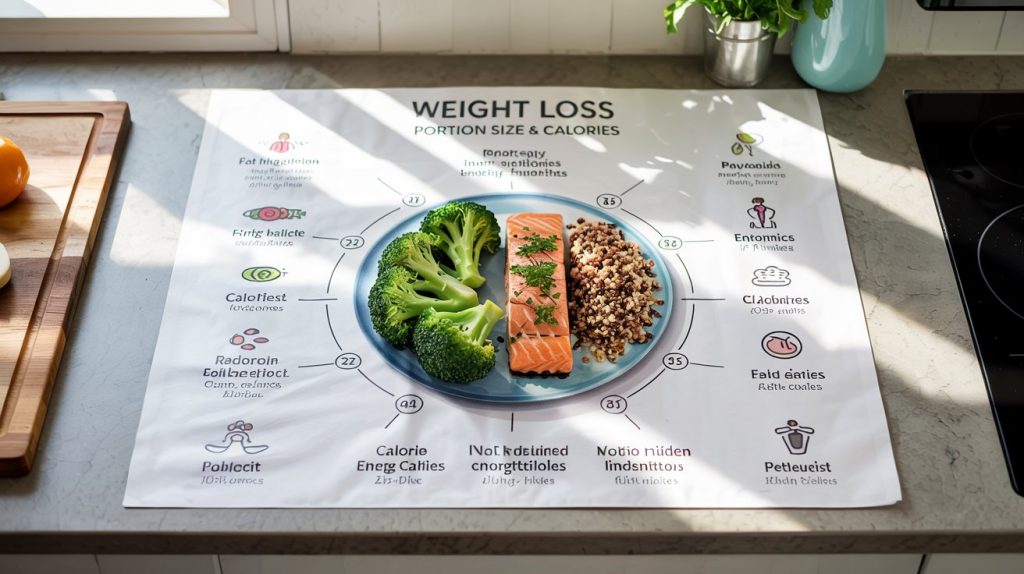
Controlling portions helps you:
- Stay in a calorie deficit
- Avoid hidden calories
- Maintain steady weight loss
Even reducing portions slightly can make a big difference.
Visual Guide: Weight Loss Portions
Here’s a quick visual reference:
| Portion Type | Visual Comparison | Best Use |
|---|---|---|
| Protein | Palm | Meals |
| Carbs | Cupped hand | Energy foods |
| Fats | Thumb | Oils, nuts |
| Vegetables | Two handfuls | Fill half plate |
Visual cues help simplify portion control.
Tips for Controlling Portions
- Use smaller plates: Reduces overeating
- Measure servings: Especially high-calorie foods
- Eat slowly: Helps you feel full
- Avoid eating from packages: Portion your food
- Increase vegetables: Low-calorie and filling
Consistency is key for results.
Common Mistakes With Portion Sizes
- Eating “healthy” foods in large amounts: Calories still count
- Ignoring liquid calories: Drinks add up quickly
- Oversized restaurant portions: Often double servings
- Skipping meals: Leads to overeating later
Awareness helps you stay on track.
How Portion Control Supports Weight Loss
Proper portion sizes help you create a calorie deficit while still getting enough nutrients. This leads to steady, sustainable weight loss without extreme dieting.
Balanced meals keep you satisfied and energized.
The Importance of Consistency
Weight loss is not about perfection—it’s about consistency. Following portion guidelines regularly leads to long-term success.
Frequently Asked Questions
What Is the Best Portion Size for Weight Loss?
Half plate vegetables, quarter protein, quarter carbs.
Do I Need to Weigh Food?
Not always—hand portions work well.
Can I Eat Carbs While Losing Weight?
Yes, in controlled portions.
How Many Meals Should I Eat?
Typically 3 meals and 1–2 snacks.
What Is the Easiest Way to Control Portions?
Use smaller plates and visual guides.
Weight loss portion sizes may seem simple, but they are one of the most powerful tools for achieving your goals. By following a weight loss portion size chart, you can eat smarter, stay satisfied, and lose weight in a healthy, sustainable way.
