
Are you ever confused about which size of spaghetti noodles to buy or cook? Choosing the right noodle size can change how your dish tastes and feels.
Whether you want a light dinner or a hearty meal, knowing the perfect spaghetti noodle size makes all the difference. In this guide, you’ll find a simple, easy-to-understand spaghetti noodles size chart that helps you pick exactly what you need.
Keep reading to make your pasta dishes better than ever!
Spaghetti Types And Sizes
Spaghetti comes in many types and sizes. Each type offers a unique experience in taste and texture. Knowing the size and type helps you cook spaghetti perfectly. It also helps to match the noodle with the right sauce.
? Spaghetti Noodles Size Chart
| Spaghetti Type | Diameter (Approx.) | Cooking Time | Texture | Best Uses |
|---|---|---|---|---|
| Angel Hair (Capellini) | 0.8–1.0 mm | 3–5 min | Very soft | Light sauces, soups |
| Thin Spaghetti (Spaghettini) | 1.4–1.6 mm | 6–8 min | Light, smooth | Olive oil, seafood |
| Standard Spaghetti | 1.8–2.0 mm | 8–10 min | Balanced | Tomato, meat sauces |
| Thick Spaghetti (Spaghettoni) | 2.3–2.6 mm | 10–12 min | Firm, chewy | Chunky, rich sauces |
| Bucatini | 2.8–3.0 mm (hollow) | 11–13 min | Hearty | Creamy or robust sauces |
Common Spaghetti Variants
Spaghetti has several common variants. The classic spaghetti is thin and round. Spaghettini is thinner than regular spaghetti. Spaghettoni is thicker and chewier. Bucatini looks like spaghetti but has a hole inside. Each type changes how the dish feels and tastes.
Diameter Differences
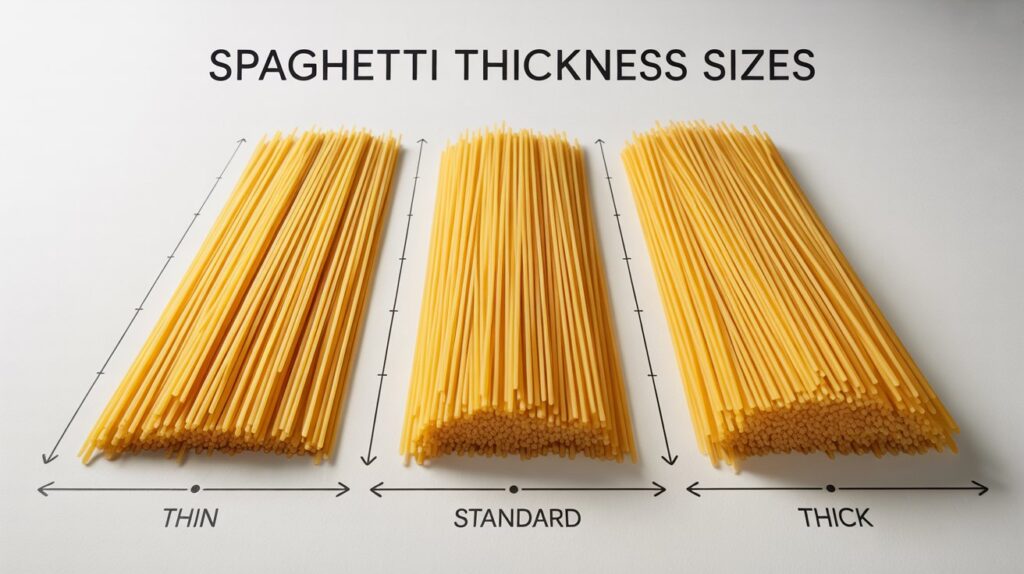
Spaghetti sizes differ mainly by diameter. Thin noodles cook faster and are lighter. Thick noodles need more time to cook well. The diameter affects how sauce sticks to the noodle. Thicker spaghetti holds chunky sauces better. Thin spaghetti suits smooth, light sauces.
Texture And Cooking Impact
Texture changes with spaghetti size. Thin spaghetti is soft and smooth after cooking. Thick spaghetti stays firm and chewy. Cooking time depends on noodle thickness. Overcooked thick spaghetti becomes mushy inside. Proper cooking keeps the perfect bite, or al dente.
Measuring Spaghetti Portions
Measuring spaghetti portions helps control how much you cook and eat. It stops food waste and makes meal planning easier. Knowing the right portion size can keep your meals balanced and tasty.
Dry Vs Cooked Weight
Spaghetti changes weight after cooking. Dry noodles weigh less than cooked ones. Usually, dry pasta doubles in weight when boiled. Measure dry pasta to know exact servings. Cooked weight varies with water absorption. Use dry weight for consistent portion control.
Using A Kitchen Scale
A kitchen scale gives the most accurate measurement. Place dry spaghetti on the scale for precise weight. Set the scale to zero before measuring. Use grams or ounces based on your recipe. Weighing ensures you cook the right amount every time.
Visual Portion Indicators
Visual cues help if you don’t have a scale. A small bundle of dry spaghetti about the size of a quarter serves one person. Use your hand to estimate portion size. This method is quick and practical. It helps avoid cooking too much or too little.
Portion Sizes For Different Meals
Knowing the right portion size of spaghetti noodles helps in cooking the perfect meal. Different occasions need different amounts of pasta. This guide explains how much spaghetti to use for various meal sizes.
Single Serving Portions
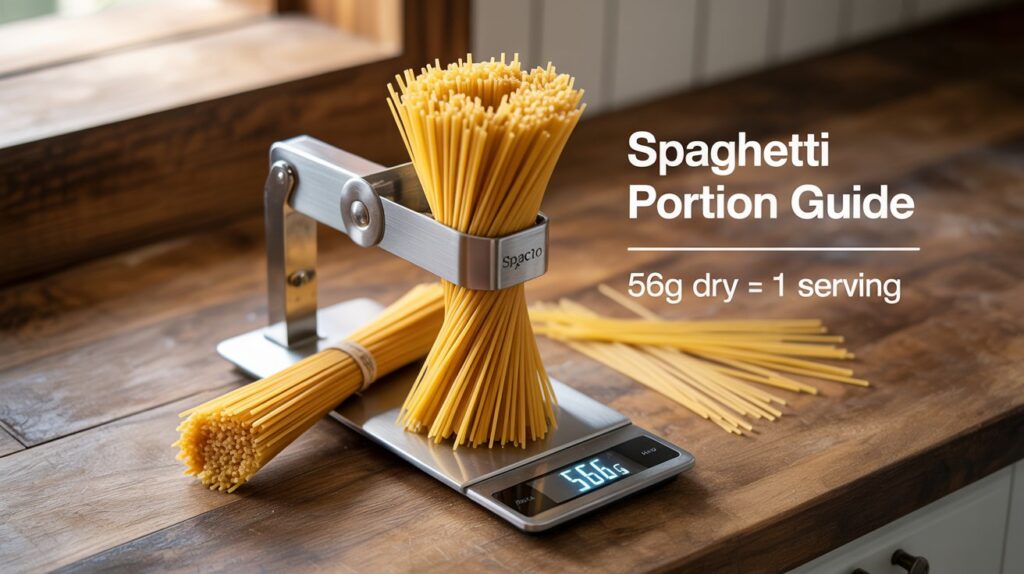
A single serving of dry spaghetti usually weighs about 2 ounces (56 grams). This amount cooks into roughly one cup of pasta. It fits one adult’s meal well. Use a pasta measure or a small handful of noodles to get this size. It helps avoid waste and keeps meals balanced.
Family Meal Quantities
For a family meal with four people, use 8 ounces (226 grams) of dry spaghetti. This amount cooks into about four cups of pasta. It fills standard dinner plates nicely. Adjust slightly for big eaters or children. Measuring this amount ensures everyone gets enough pasta without leftovers.
Party And Large Group Sizes
Parties need much more pasta. For 10 people, plan on 1.25 pounds (567 grams) of dry spaghetti. This cooks into roughly 10 cups of pasta. It serves well with sauces and side dishes. Larger groups may require even more. Portion control keeps the serving smooth and avoids running out.
Tools For Perfect Portions
Portion control is key to cooking perfect spaghetti. Using the right tools helps measure the right amount of noodles. This avoids waste and ensures balanced meals. Simple tools make it easier to get the right spaghetti size every time.
Spaghetti Measuring Tools
Special spaghetti measuring tools come in handy. They have holes of different sizes to fit portions. Insert dry noodles through holes to see the right amount. These tools save time and reduce guesswork in the kitchen.
Diy Portion Methods
Use your hands to measure spaghetti portions. A small bundle about the size of a quarter fits one serving. Hold noodles tightly in a round shape to check the right amount. This method is quick and needs no extra tools.
Using Common Kitchen Items
Household items can also measure spaghetti portions. A standard drinking glass can hold one serving of dry noodles. Use a kitchen scale to weigh 2 ounces of spaghetti for accuracy. These items help measure without special gadgets.
Cooking Tips For Ideal Texture
Cooking spaghetti noodles to the right texture makes a big difference in taste. Knowing how long to cook and how to handle the noodles can improve your meal. This section shares simple tips to get perfect spaghetti every time.
Timing Based On Size
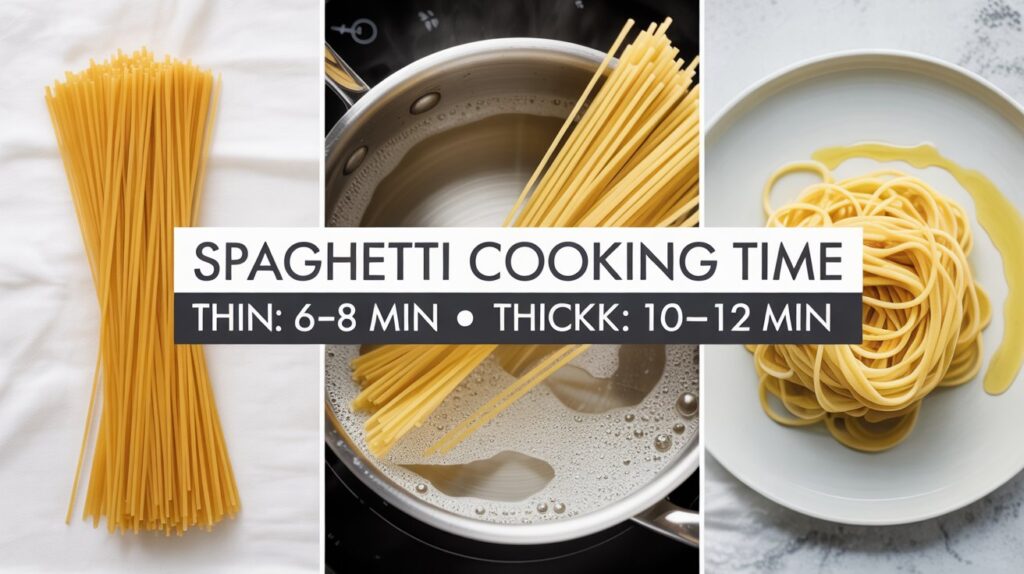
Thinner spaghetti cooks faster than thicker ones. Small noodles need about 6 to 8 minutes. Medium size takes around 8 to 10 minutes. Thick spaghetti requires 10 to 12 minutes. Check the package for exact times. Test noodles by tasting them a minute before the timer ends.
Avoiding Overcooking
Overcooked spaghetti becomes mushy and loses flavor. Stir noodles gently while cooking to stop sticking. Drain pasta as soon as it feels firm but cooked. Rinse noodles only if you use them in cold dishes. Keep some pasta water to mix with sauce. This water helps sauce stick to noodles better.
Adjusting Sauce Ratios
Thicker spaghetti needs more sauce to cover each strand. Thin spaghetti works well with lighter sauces. Use just enough sauce to coat noodles without drowning them. For large servings, prepare extra sauce to balance the pasta. Stir sauce and noodles together for a tasty blend.
Storing And Reheating Spaghetti
Storing and reheating spaghetti is important to keep its taste and texture. Proper care helps avoid soggy or dry noodles. It also keeps the pasta safe to eat and fresh for longer. Follow simple steps to get the best results every time.
Best Storage Practices
Let the spaghetti cool before storing it. Place it in an airtight container to keep moisture in. Store the container in the fridge. Use the spaghetti within 3 to 4 days for best taste. Avoid leaving pasta out at room temperature for too long.
Reheating Without Drying Out
Add a splash of water or sauce before reheating. Heat the spaghetti gently on low power in the microwave. Stir halfway through to warm evenly. Using a pan with a little oil or sauce works well too. This stops the noodles from drying and keeps them soft.
Maintaining Portion Integrity
Keep spaghetti in single portions for easy reheating. Use small containers or wrap portions tightly in plastic wrap. This stops the noodles from sticking together. It also helps keep the right amount for each meal. No waste, no soggy clumps.
Frequently Asked Questions
What Are The Common Spaghetti Noodle Sizes?
Spaghetti noodles typically range from thin (angel hair) to thick (bucatini). Standard sizes include 1. 5mm to 3mm in diameter. Size affects cooking time and texture, so choosing the right thickness enhances your dish’s flavor and consistency.
How Does Spaghetti Size Affect Cooking Time?
Thinner spaghetti cooks faster, usually in 4-6 minutes, while thicker noodles take 8-12 minutes. Adjust cooking times based on size to avoid overcooking or undercooking. Proper timing ensures perfect texture and taste in your pasta dishes.
Can I Substitute Spaghetti Sizes In Recipes?
Yes, you can substitute spaghetti sizes, but cooking times vary. Thicker noodles need more time, thinner ones less. Adjust sauce and serving style to complement the noodle size for the best culinary result.
Why Is Spaghetti Size Important In Recipes?
Spaghetti size impacts texture, cooking time, and sauce absorption. Choosing the right size ensures your pasta dish has the desired mouthfeel and flavor balance. Size selection enhances overall dining experience and recipe success.
Conclusion
Spaghetti noodles come in different sizes for many recipes. Knowing the size helps cook the pasta just right. Thin noodles cook fast and suit light sauces well. Thick noodles take longer and hold rich sauces better. Use this chart to pick the best noodle size for your dish.
Enjoy cooking and tasting pasta the way you like it. Simple choices can make meals more delicious and fun. Keep experimenting with sizes to find your favorite pasta style.
