
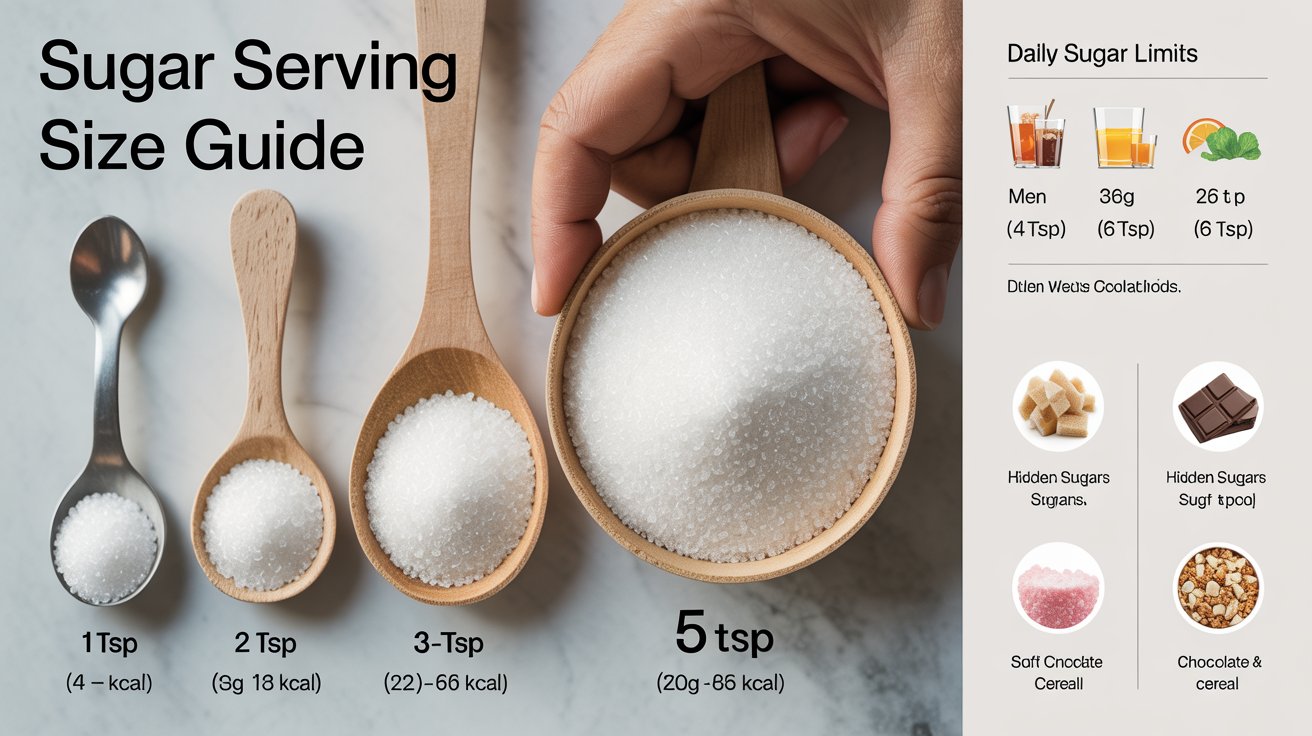
Sugar is a common part of many foods and drinks—but it’s also one of the easiest ingredients to overconsume. Whether you’re adding it to tea, coffee, or desserts, understanding the serving size of sugar helps you manage your intake and maintain better health.
Why Sugar Serving Size Matters
While sugar provides quick energy, too much can lead to health issues over time.
Controlling sugar portions helps:
- Reduce risk of weight gain
- Maintain stable blood sugar levels
- Support heart health
- Prevent excessive calorie intake
Because sugar is often “hidden” in foods, portion awareness is key.
Standard Serving Size of Sugar
Sugar is typically measured in teaspoons (tsp) or grams (g).
Sugar Serving Size Chart
| Serving Type | Amount (Teaspoons) | Weight (Approx.) | Calories (Approx.) |
|---|---|---|---|
| Small Serving | 1 tsp | 4g | 16 kcal |
| Standard Serving | 2 tsp | 8g | 32 kcal |
| Large Serving | 3–4 tsp | 12–16g | 50–65 kcal |
| Extra Large | 5+ tsp | 20g+ | 80+ kcal |
A standard serving is about 1–2 teaspoons of sugar.
Daily Recommended Sugar Intake
Health guidelines suggest limiting added sugar:
- Men: Up to 36g (≈9 teaspoons) per day
- Women: Up to 25g (≈6 teaspoons) per day
This includes all added sugars from foods and drinks—not just what you add yourself.
Sugar In Common Foods
Sugar is often hidden in everyday items:
Hidden Sugar Examples
| Food Item | Sugar (Approx.) |
|---|---|
| Soft drink (1 can) | 35–40g |
| Chocolate bar | 20–30g |
| Flavored yogurt | 10–20g |
| Breakfast cereal | 10–15g per serving |
It’s easy to exceed daily limits without realizing it.
Tips For Managing Sugar Intake
- Measure your sugar: Use teaspoons instead of guessing
- Read labels: Look for added sugars
- Reduce sugary drinks: Major source of excess sugar
- Choose natural sweetness: Fruits instead of sweets
- Gradually cut back: Helps adjust taste preferences
Small changes can make a big impact.
Common Mistakes With Sugar Portions
- Adding sugar without measuring: Easy to overuse
- Ignoring hidden sugars: Found in processed foods
- Assuming “healthy” foods are low sugar: Not always true
- Drinking calories: Sugary drinks add up quickly
Being aware helps you stay within limits.
How Sugar Serving Size Affects Health
Excess sugar intake is linked to:
- Weight gain
- Increased risk of diabetes
- Heart disease
- Tooth decay
Moderation is key to long-term health.
Sugar In Different Diets
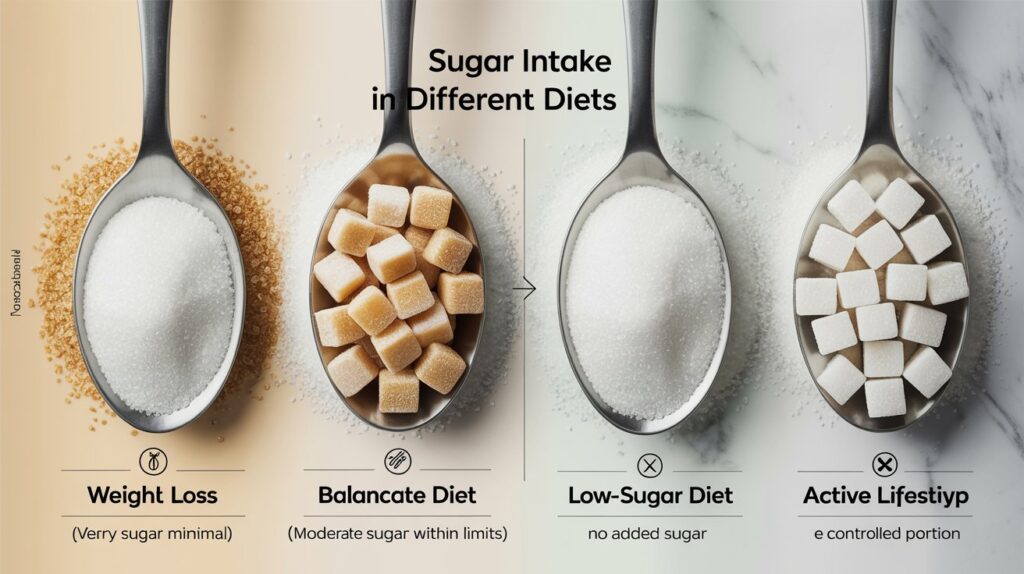
Serving sizes may vary depending on your goals:
- Weight loss: Minimize added sugar
- Balanced diet: Stay within daily limits
- Low-sugar diets: Avoid added sugars entirely
- Active lifestyle: Slightly higher tolerance, but still moderate
Adjust intake based on your needs.
Frequently Asked Questions
What Is A Standard Serving Size Of Sugar?
About 1–2 teaspoons (4–8 grams).
How Much Sugar Is Too Much Per Day?
More than 25–36 grams of added sugar is considered excessive.
Is Natural Sugar Better Than Added Sugar?
Yes, natural sugars in fruits come with fiber and nutrients.
Can I Completely Avoid Sugar?
You can avoid added sugar, but natural sugars are found in many foods.
How Can I Reduce Sugar Intake Easily?
Cut sugary drinks and reduce added sugar gradually.
The serving size of sugar may be small, but its impact on health is significant. By understanding proper portions and monitoring your intake, you can enjoy sweetness while keeping your diet balanced and healthy.
