
Fruits are an essential part of a healthy diet, packed with vitamins, fiber, and natural sweetness. But even though they’re healthy, portion size still matters—especially because fruits contain natural sugars. Understanding serving sizes for fruits helps you balance your diet, manage calories, and meet daily nutrition goals.
Why Fruit Serving Size Matters
Fruits provide important nutrients, but eating too much can increase sugar and calorie intake.
Knowing the right serving size helps you:
- Control natural sugar intake
- Balance meals with other food groups
- Meet daily fruit recommendations
Moderation helps you enjoy fruits without overdoing it.
Standard Fruit Serving Sizes And Portions
Fruits are typically measured in cups, pieces, or grams.
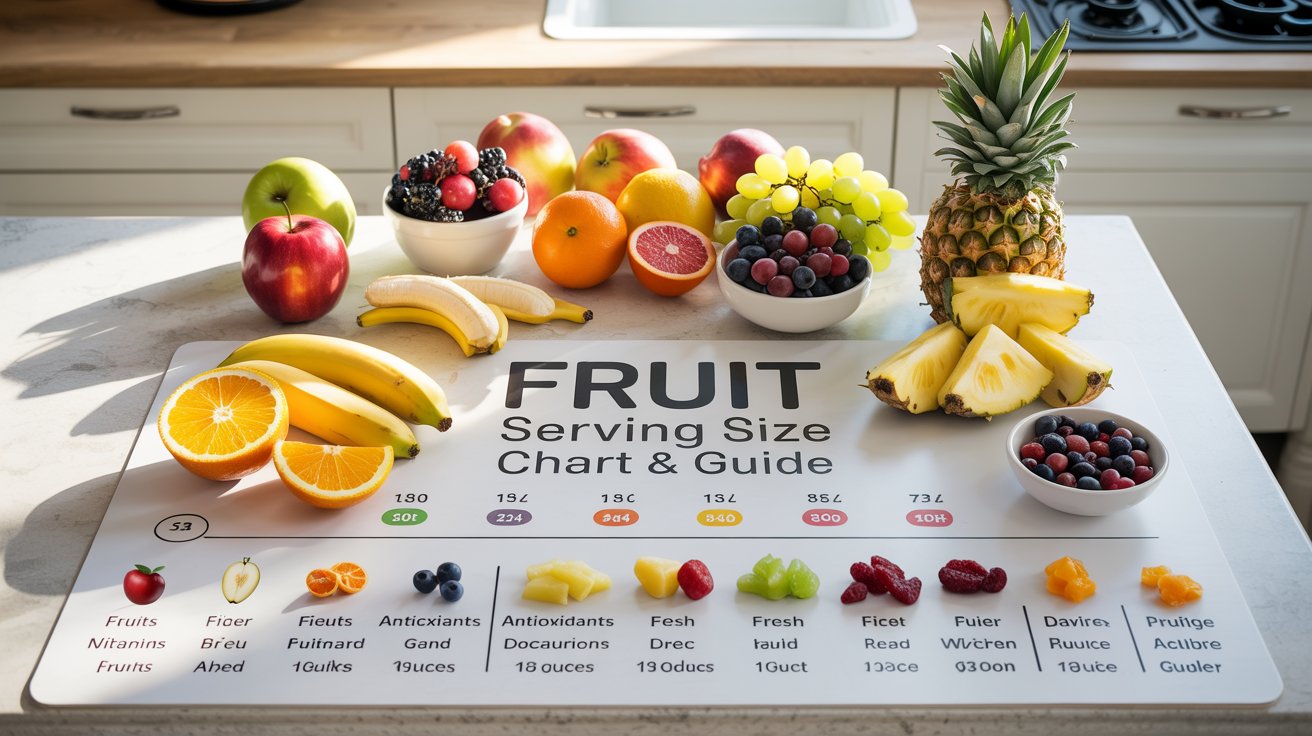
Fruit Serving Size Chart
| Fruit Type | Serving Size | Weight (Approx.) | Calories |
|---|---|---|---|
| Whole Fruit | 1 medium piece | 120–150g | 60–100 |
| Cut Fruit | 1 cup | 150–180g | 70–100 |
| Small Fruits | ½–1 cup | 75–150g | 40–80 |
| Dried Fruit | ¼ cup | 40–50g | 100–150 |
| Fruit Juice | ½–1 cup | 120–240ml | 60–120 |
👉 A 1 cup serving or 1 medium fruit is considered standard.
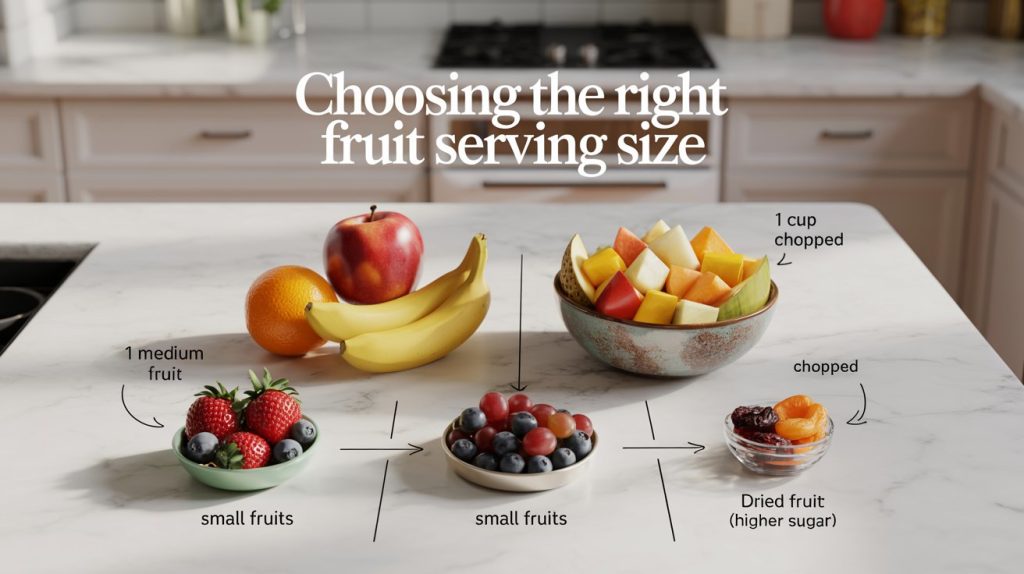
Choosing The Right Fruit Serving Size
The best portion depends on the type of fruit:
- 1 medium fruit: Apples, bananas, oranges
- 1 cup chopped: Pineapple, melon, mango
- ½–1 cup small fruits: Berries, grapes
- ¼ cup dried fruit: More concentrated sugars
For most people, 1 serving per sitting is ideal.
Fruit Serving Size Comparison: Fresh vs Dried vs Juice
Different forms of fruit affect portion sizes.
Fruit Type Comparison
| Type | Serving Size | Notes |
|---|---|---|
| Fresh | 1 cup | Best balance of nutrients |
| Dried | ¼ cup | Concentrated sugar |
| Juice | ½–1 cup | Less fiber, easy to overdrink |
Fresh fruit is generally the healthiest option.
Fruit Serving Size And Daily Recommendations
Most dietary guidelines suggest:
- 2–3 servings of fruit per day
This can include a mix of different fruits for variety and nutrition.
Fruit Serving Size And Nutrition
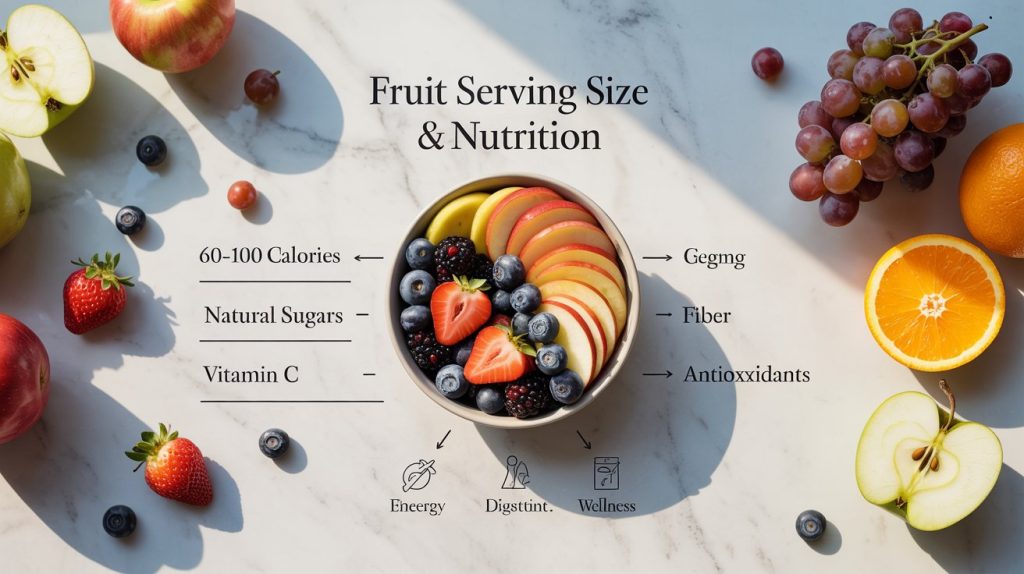
Fruits provide:
- Vitamins (like vitamin C)
- Fiber
- Antioxidants
A typical 1 serving contains:
- 60–100 calories
- Natural sugars
- Essential nutrients
Fiber helps slow sugar absorption.
Visual Guide: Fruit Serving Size
Here’s a simple way to estimate portions:
| Serving Size | Visual Comparison | Best Use |
|---|---|---|
| 1 cup | Small bowl | Standard serving |
| 1 fruit | Hand-sized | Easy portion |
| ½ cup | Half bowl | Small fruits |
Visual cues make portioning easier.
Tips For Managing Fruit Portions
- Mix different fruits: Adds variety
- Measure servings: Especially for cut fruit
- Limit fruit juice: Easy to overconsume
- Pair with protein: مثل yogurt or nuts
- Choose whole fruits: More fiber
These habits improve nutrition.
Common Mistakes With Fruit Serving Sizes
- Overeating healthy fruits: Still adds sugar
- Drinking too much juice: Lacks fiber
- Ignoring dried fruit portions: Very calorie-dense
- Not balancing meals: Missing protein or fats
Being mindful helps maintain balance.
How Fruit Serving Size Affects Your Diet
The portion of fruit you eat impacts your sugar intake and overall calorie balance. A standard serving supports health, while larger portions can increase sugar consumption.
Balancing fruit with other foods ensures better nutrition.
The Importance Of Fruits In Your Diet
Fruits are a key part of a healthy lifestyle, providing essential nutrients and natural energy. Eating the right portions helps you enjoy their benefits while maintaining balance.
Frequently Asked Questions
What Is One Serving Of Fruit?
About 1 cup or 1 medium fruit.
How Many Fruit Servings Should I Eat Daily?
Usually 2–3 servings.
Is Fruit Sugar Bad?
Natural sugar is fine in moderation.
Is Juice The Same As Whole Fruit?
No, whole fruit has more fiber.
How Do I Measure Fruit Without Tools?
Use a small bowl or one medium fruit as a guide.
Fruit serving sizes may seem simple, but they play a big role in your health. By understanding serving sizes for fruits, you can enjoy a variety of fruits while keeping your diet balanced and nutritious.
