
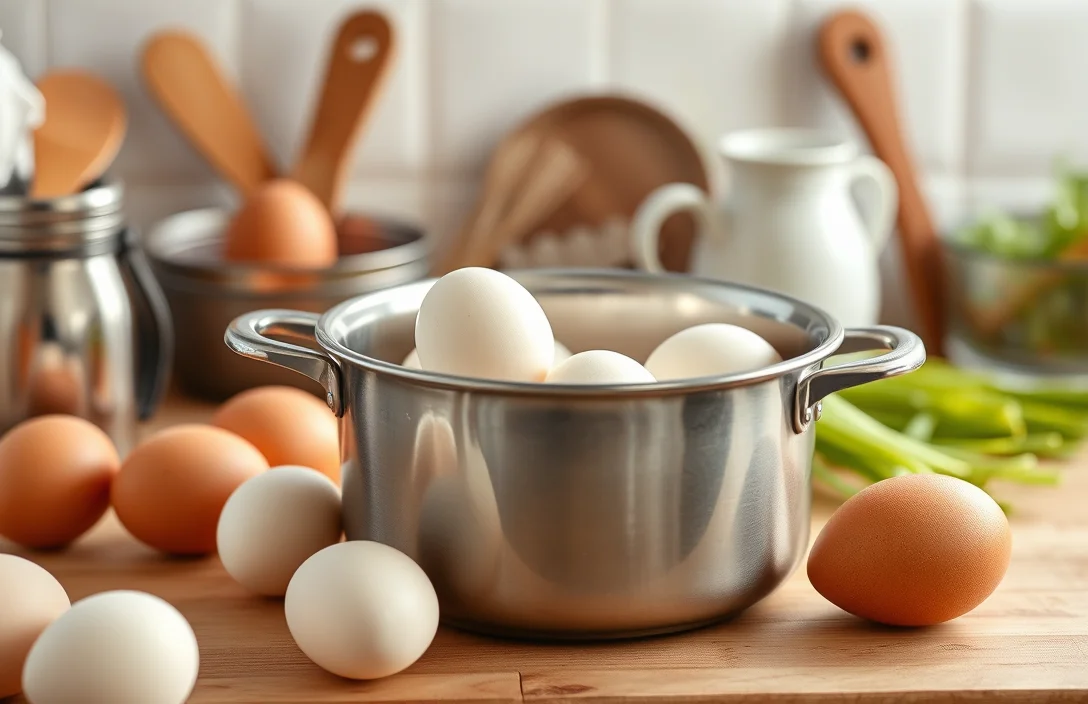
Seventy percent of American households boil eggs regularly, yet many struggle with achieving the perfect texture. Mastering egg boiling can turn a simple dish into a culinary delight, ensuring your eggs are just the right consistency for any recipe or meal.
Start with fresh eggs for best results. Boil them gently for optimal cooking. Ice baths help with peeling. Follow these steps to consistently achieve eggs that are hard, medium, or soft-boiled to your liking.
Choosing the Right Type of Eggs
Freshness significantly impacts boiling results. Opt for eggs that are at least a week old for optimal peeling. Fresh eggs tend to stick to their shells, making them difficult to peel after boiling. This is due to the lower pH levels in fresh eggs, which causes the proteins to bond more tightly to the shell.
Medium-sized eggs work best for boiling. These eggs typically have a balanced ratio of white to yolk, ensuring even cooking. Larger eggs can result in longer cooking times and uneven textures. Additionally, smaller eggs may lead to drier yolks if overcooked.
Organic eggs often come from hens raised in better conditions. While they may be more expensive, many find the flavor and quality worth the extra cost. Look for labels indicating free-range or pasture-raised, which can also enhance the overall egg quality.
Brown and white eggs have no difference in taste. The color of the shell is determined by the breed of the hen. Focus instead on freshness and size when selecting eggs for boiling. Ultimately, quality will contribute to a better final product.
Preparation Steps Before Boiling
Gather essential tools before boiling. A pot with a lid, measuring cup, and slotted spoon are vital for successful cooking. Choose a pot large enough to hold all the eggs in a single layer, which ensures even heat distribution. A lid helps maintain consistent temperature throughout the boiling process.
Inspect eggs for freshness. Cracks or abnormalities can lead to uneven cooking or contamination. Fresh eggs generally provide better results, as they have firmer whites and yolks. A simple test involves placing the egg in a bowl of water; fresh eggs will sink, while older ones float.
Adjust water temperature accordingly. Cold water creates a more gradual heating process, reducing the risk of cracking. Fill the pot with enough water to cover the eggs by about an inch. This ensures that every egg cooks uniformly and maximizes the steaming effect as the water heats.
Consider adding vinegar or salt. These ingredients can help prevent eggs from cracking and make peeling easier afterward. Vinegar works by coagulating egg whites, which seals any cracks that may develop during cooking. Salt can also enhance flavor while assisting with the peeling process.
Perfect Timing for Soft Boiled Eggs
Soft-boiled eggs require precise timing for optimal texture. For a perfect soft-boiled egg with a creamy yolk, immerse eggs in boiling water for exactly 6 to 7 minutes. Begin timing the moment the eggs hit the boiling water to ensure consistency.
After boiling, immediately transfer eggs to an ice bath. This halts the cooking process and prevents overcooking. Allow them to sit in the ice water for about 5 minutes before peeling, ensuring the whites remain firm while the yolks stay runny.
Experiment with timing to find your ideal consistency. Some prefer a slightly runnier yolk, which can be achieved by reducing the boiling time to 5 minutes. Adjust according to your preference, but always monitor closely to avoid hardening the yolk.
Practice makes perfect, so don’t be discouraged by initial attempts. Keeping a timer handy will help you learn the optimal boiling duration. Once mastered, serving soft-boiled eggs will impress your guests and elevate your breakfast routine.
Achieving Hard Boiled Perfection
Optimal boiling times directly impact the doneness of hard-boiled eggs. For fully cooked eggs with a firm yolk, set your timer for 9 to 12 minutes. Adjust the time based on your stove’s heat and egg size; larger eggs may require additional cooking.
Timing precision matters significantly. For a slightly creamier yolk, aim for 9 minutes. For a fully set yolk without any greenish ring, extend to 12 minutes. Experimenting with these times helps you discover your perfect balance.
Using a reliable timer simplifies the process. Start timing as soon as the water reaches a rolling boil and the eggs are submerged. Avoid opening the pot during cooking to maintain consistent heat.
Monitoring the water temperature ensures consistent results. If the water drops too low, eggs may not cook evenly. Maintain a steady boil throughout the cooking period for the best outcome.
Reaching your desired consistency requires practice. Keep notes on your boiling times and results for future reference. With experience, you’ll master the art of boiling eggs to perfection.
Cooling and Shelling Made Easy
Rapidly cooling boiled eggs enhances peeling ease. After removing the eggs from boiling water, immediately transfer them into an ice water bath. Fill a bowl with cold water and ice, submerging the eggs for at least 5-10 minutes. This method not only halts the cooking process but also creates steam between the shell and the egg, making removal simpler.
Chilling eggs in ice water prevents overcooking. Overcooked eggs develop a greenish-gray ring around the yolk, indicating a sulfur reaction. By cooling them quickly, you preserve their vibrant color and optimal texture. This step is crucial for achieving the perfect hard-boiled egg, maintaining both flavor and presentation.
Peeling techniques can significantly influence the outcome. Gently tap the egg on a hard surface, creating small cracks. Begin peeling from the wider end, where there is usually an air pocket. This strategy allows for easier shell removal and minimizes damage to the egg white, ensuring a clean and intact boiled egg.
Using older eggs often results in smoother peeling. Fresh eggs can be more difficult to shell due to their pH levels. If possible, buy eggs at least a week in advance before boiling. This simple tip can make a noticeable difference in your egg preparation, leading to beautifully presented meals.
Avoiding Common Boiling Mistakes
Overcrowding the pot leads to uneven cooking. When multiple eggs are added at once, water temperature drops significantly. This can cause inconsistent results, with some eggs undercooked while others may overcook. Always boil eggs in batches if necessary to maintain proper temperature and cooking time.
- Starting with cold eggs causes cracking. Allow eggs to come to room temperature before boiling. This reduces the shock from the heat, helping to prevent shells from cracking.
- Ignoring water level can lead to disaster. Ensure eggs are fully submerged in water. An insufficient water level risks exposure to air and uneven cooking.
- Rushing the cooling process results in undesired outcomes. After boiling, cool eggs immediately in ice water. This stops the cooking process and makes peeling easier.
- Skimping on timing can ruin your results. Use a reliable timer for each desired doneness level. For soft-boiled eggs, aim for 6-7 minutes, and for hard-boiled, 9-12 minutes.
- Neglecting to adjust for altitude affects consistency. Higher altitudes require longer cooking times. Be mindful of adjustments needed based on your location.
Testing Egg Freshness for Boiling
Check egg freshness easily by performing the float test. Fill a bowl with water and gently place the eggs in it. Fresh eggs will sink to the bottom and lay flat on their sides. If an egg stands upright on the bottom, it’s still good but not as fresh. Eggs that float should be discarded immediately.
Inspecting eggs visually can also provide insights. Look for any cracks or unusual spots on the shell. A clean, intact shell indicates better quality. Discoloration or a slimy texture may suggest spoilage, which means it’s best to avoid boiling these eggs.
Smell tests yield valuable information as well. Crack the egg open and take a whiff; fresh eggs have little to no odor. A strong sulfuric or rotten smell is a clear sign that the egg has gone bad and should not be consumed. Always trust your senses for safety.
Labeling eggs with the purchase date helps maintain awareness of their freshness. Use a marker to write the date on the carton or individual eggs. This practice ensures you use older eggs first, reducing waste and maximizing quality when boiling.
Quick Summary
- Start with eggs at room temperature to prevent cracking.
- Place eggs in a single layer in a saucepan and cover with cold water.
- Bring water to a rolling boil over medium-high heat.
- Once boiling, turn off the heat, cover the pot, and let sit for the desired time (6-12 minutes depending on preferred doneness).
- Transfer eggs to an ice bath immediately after cooking to stop the cooking process and make peeling easier.
- Peel eggs under running water for easier shell removal.
- Store any leftover boiled eggs in the refrigerator for up to one week.
Frequently Asked Questions
What is the best way to prepare eggs for boiling?
Start by placing the eggs in a single layer in a saucepan and cover them with cold water, ensuring the water is about an inch above the eggs. This method helps prevent cracking and ensures even cooking.
How long should I boil eggs for hard-boiled results?
For hard-boiled eggs, bring the water to a rolling boil, then cover the pan and remove it from heat. Let the eggs sit in the hot water for about 9 to 12 minutes, depending on how firm you prefer the yolk.
What should I do to make peeling the eggs easier?
To make peeling easier, consider using slightly older eggs, as fresher eggs tend to be harder to peel. After boiling, immediately transfer the eggs to an ice bath for at least 5 minutes to cool them down quickly and help separate the shell from the egg.
How can I tell if my boiled eggs are done?
You can check if your boiled eggs are done by spinning them on a flat surface; a hard-boiled egg will spin smoothly, while a raw egg will wobble. Alternatively, you can check the yolk by peeling one egg and cutting it open to assess doneness.
Can I boil eggs directly from the refrigerator?
Yes, you can boil eggs straight from the refrigerator. However, it’s best to let them sit at room temperature for about 10-15 minutes to minimize cracking due to temperature shock when placed in boiling water.
