
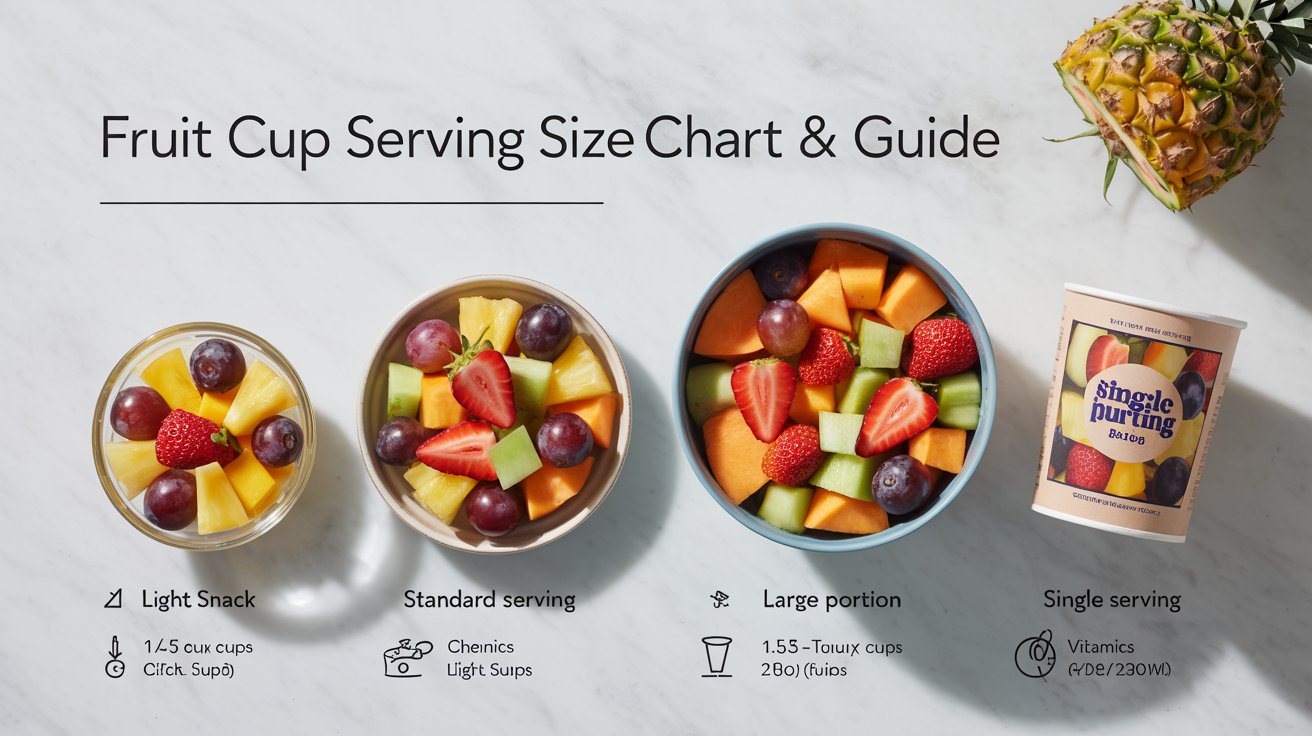
Fruit cups are a convenient and refreshing way to enjoy fruit—whether fresh, pre-packaged, or served as part of a meal. But portion sizes can vary depending on how they’re prepared. Understanding a fruit cup serving size helps you control calories, manage sugar intake, and build a balanced diet.
Why Fruit Cup Serving Size Matters
Fruit cups may seem healthy, but portion size still matters—especially when they include syrup or juice.
Knowing the right serving size helps you:
- Control natural and added sugar intake
- Manage calories
- Balance fruit with other foods
Even healthy snacks can become high in sugar if portions are too large.
Standard Fruit Cup Serving Sizes And Portions
Fruit cups are typically measured in cups, ounces, or grams.
Fruit Cup Serving Size Chart
| Serving Type | Amount | Weight (Approx.) | Calories |
|---|---|---|---|
| Small Portion | ½ cup | 80–100g | 40–60 |
| Standard Serving | 1 cup | 150–180g | 70–100 |
| Large Portion | 1.5–2 cups | 220–300g | 100–180 |
| Pre-Packaged Cup | 1 container | 100–120g | 60–90 |
👉 A 1 cup fruit cup is considered a standard serving.
Choosing The Right Fruit Cup Serving Size
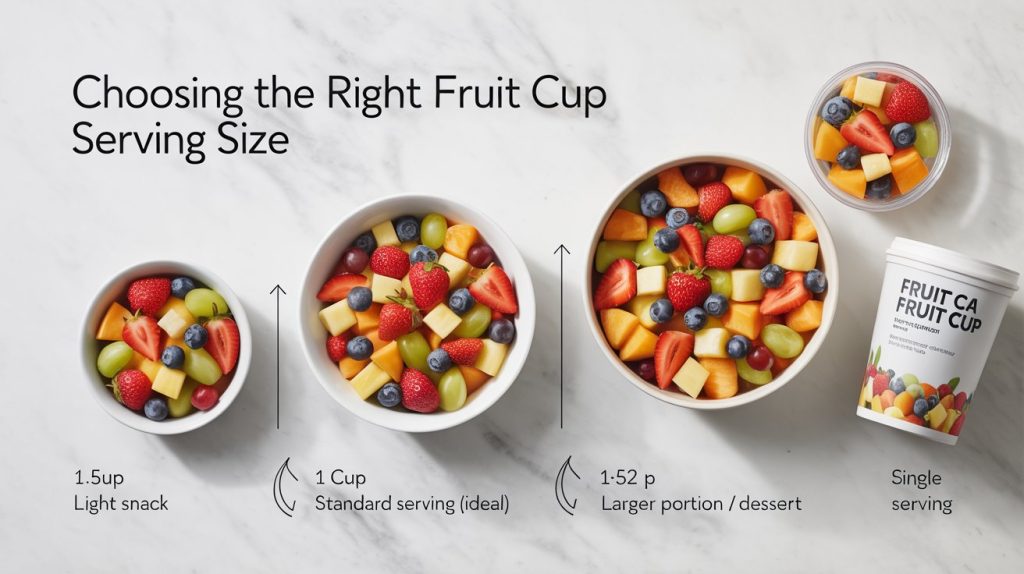
The best portion depends on your needs:
- ½ cup: Light snack
- 1 cup: Standard serving
- 1.5–2 cups: Larger portion or dessert
- Pre-packaged cup: Usually one serving
For most people, 1 cup is ideal.
Fruit Cup Serving Size Comparison: Fresh vs Syrup vs Juice
Different types of fruit cups vary in sugar content.
Fruit Cup Types Comparison
| Type | Serving Size | Notes |
|---|---|---|
| Fresh Fruit Cup | 1 cup | Lowest in added sugar |
| In Juice | 1 cup | Moderate sugar |
| In Syrup | 1 cup | Higher added sugar |
Fresh or juice-packed options are healthier choices.
Fruit Cup Serving Size And Nutrition
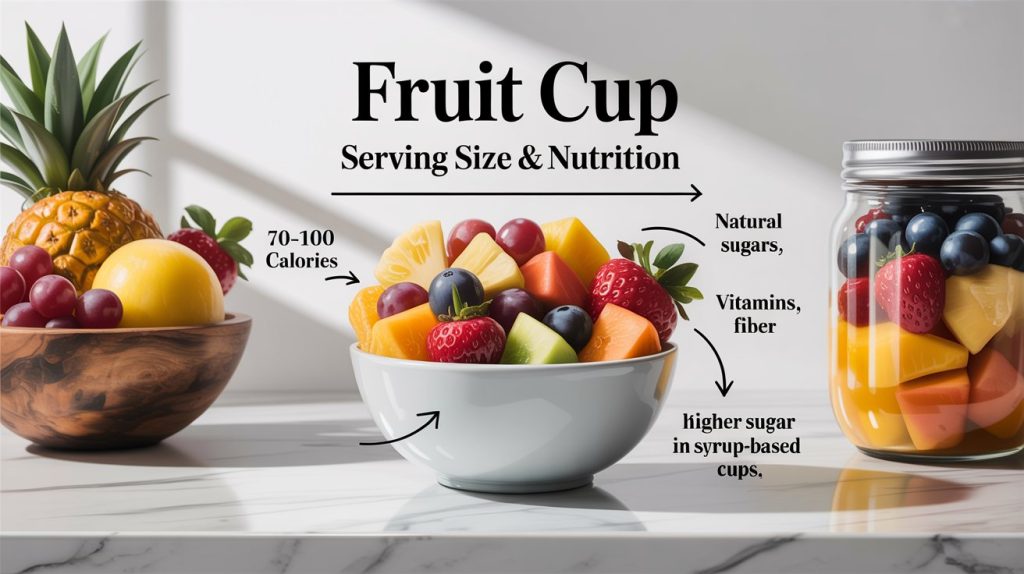
A 1 cup fruit cup typically contains:
- 70–100 calories
- Natural sugars
- Vitamins and fiber
However, syrup-based cups may contain extra sugar and calories.
Visual Guide: Fruit Cup Serving Size
Here’s a simple way to estimate portions:
| Serving Size | Visual Comparison | Best Use |
|---|---|---|
| ½ cup | Small bowl | Light snack |
| 1 cup | Full bowl | Standard serving |
| Pre-pack cup | Single container | Easy portion |
Visual cues help with portion control.
Tips For Managing Fruit Cup Portions
- Choose fresh fruit cups: Lower in added sugar
- Drain syrup or juice: Reduces sugar intake
- Use measuring cups: For homemade portions
- Pair with protein: مثل yogurt or nuts
- Avoid oversized servings: Easy to overeat
Small habits improve nutrition.
Common Mistakes With Fruit Cups
- Choosing syrup-packed fruit: Higher sugar
- Eating multiple cups: Adds extra calories
- Ignoring labels: Portion sizes vary
- Using fruit cups as dessert only: Can be part of meals
Being mindful helps you stay balanced.
How Fruit Cup Serving Size Affects Your Diet
The portion of fruit cup you eat affects your sugar and calorie intake. A standard serving fits well into a healthy diet, while larger portions or syrup-based options can increase sugar quickly.
Balancing fruit with other foods ensures better nutrition.
The Popularity Of Fruit Cups
Fruit cups are popular due to their convenience and portability. They’re commonly used in lunches, snacks, and quick meals.
Frequently Asked Questions
What Is A Standard Fruit Cup Serving Size?
About 1 cup or one small container.
Are Fruit Cups Healthy?
Yes, especially fresh or juice-packed options.
Is Syrup-Packed Fruit Bad?
It contains more added sugar, so moderation is important.
Can I Eat Fruit Cups Every Day?
Yes, in proper portions.
How Do I Measure Without Tools?
Use a small bowl or single cup container as a guide.
Fruit cup serving sizes may seem simple, but they play an important role in your nutrition. By understanding the fruit cup serving size chart, you can enjoy this convenient snack while keeping your portions balanced and healthy.
