
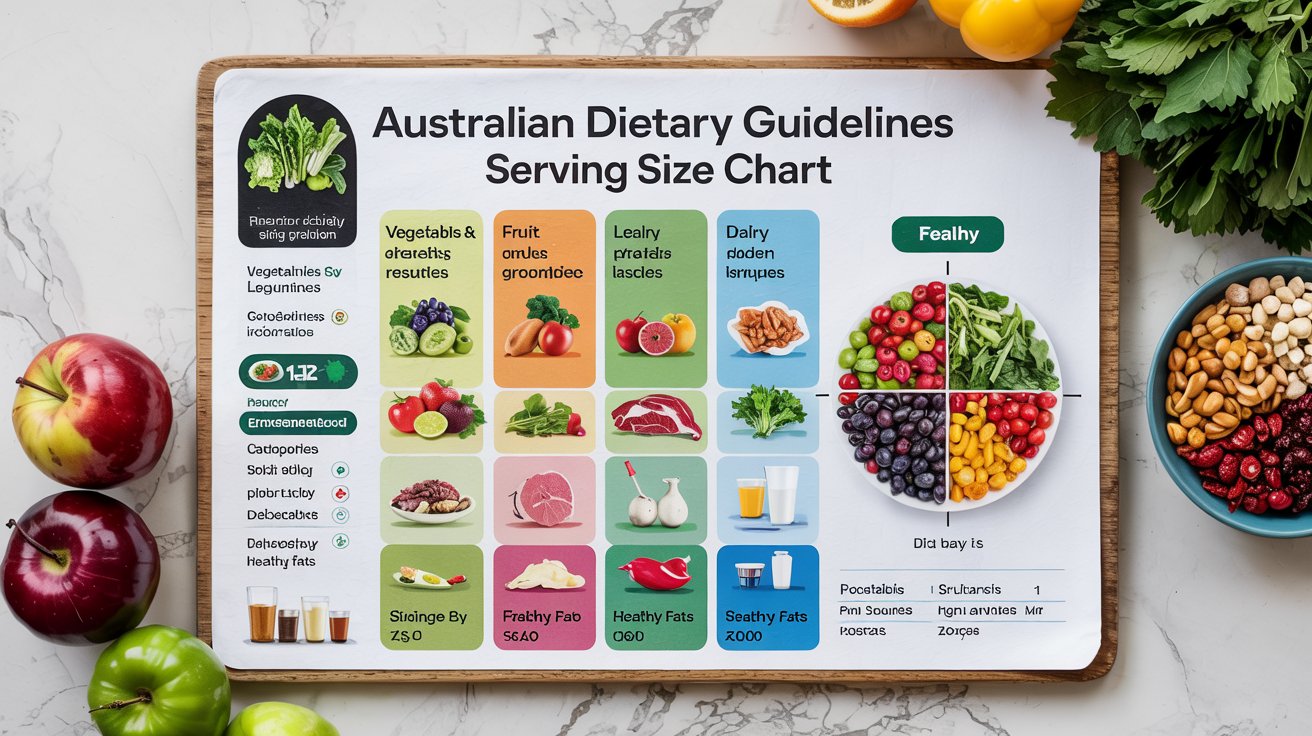
Eating well isn’t just about choosing healthy foods—it’s also about eating the right amounts. The Australian Dietary Guidelines provide clear recommendations on serving sizes to help people maintain a balanced and nutritious diet. Whether you’re planning meals or improving your eating habits, understanding these serving sizes makes healthy eating much easier.
Why Australian Dietary Serving Sizes Matter
The Australian guidelines are designed to ensure your body gets the right balance of nutrients each day. They focus on core food groups and recommended portions based on age, gender, and activity level.
Following these serving sizes helps:
- Maintain a healthy weight
- Support overall nutrition
- Reduce risk of chronic diseases
- Build consistent eating habits
These guidelines are widely used by health professionals and nutrition experts across Australia.
Standard Serving Sizes (According to Australian Guidelines)
The guidelines define a “serve” as a specific amount of food—not necessarily the portion you eat, but a standard measurement.
Australian Dietary Guidelines Serving Size Chart
| Food Group | Standard Serve Size | Examples |
|---|---|---|
| Vegetables & Legumes/Beans | 75g (1/2 cup cooked or 1 cup leafy) | Broccoli, carrots, spinach |
| Fruit | 150g (1 medium fruit or 1 cup pieces) | Apple, banana, orange |
| Grains (Cereals) | 1 slice bread or 1/2 cup cooked rice/pasta | Rice, oats, bread |
| Lean Meats & Alternatives | 65–100g cooked | Chicken, fish, eggs, tofu |
| Dairy & Alternatives | 250 ml milk or 200g yogurt | Milk, yogurt, cheese |
| Healthy Fats (Discretionary) | Small amounts | Oils, butter, spreads |
These serve sizes are used to calculate your daily recommended intake.
Recommended Daily Servings
The number of serves you need each day depends on your age and gender. Here’s a general guide for adults:
Daily Serving Recommendations (Adults)
| Food Group | Recommended Serves Per Day |
|---|---|
| Vegetables | 5–6 serves |
| Fruit | 2 serves |
| Grains | 4–6 serves |
| Lean Protein | 2–3 serves |
| Dairy | 2.5–4 serves |
These recommendations may vary for children, older adults, and highly active individuals.
Choosing The Right Serving Sizes
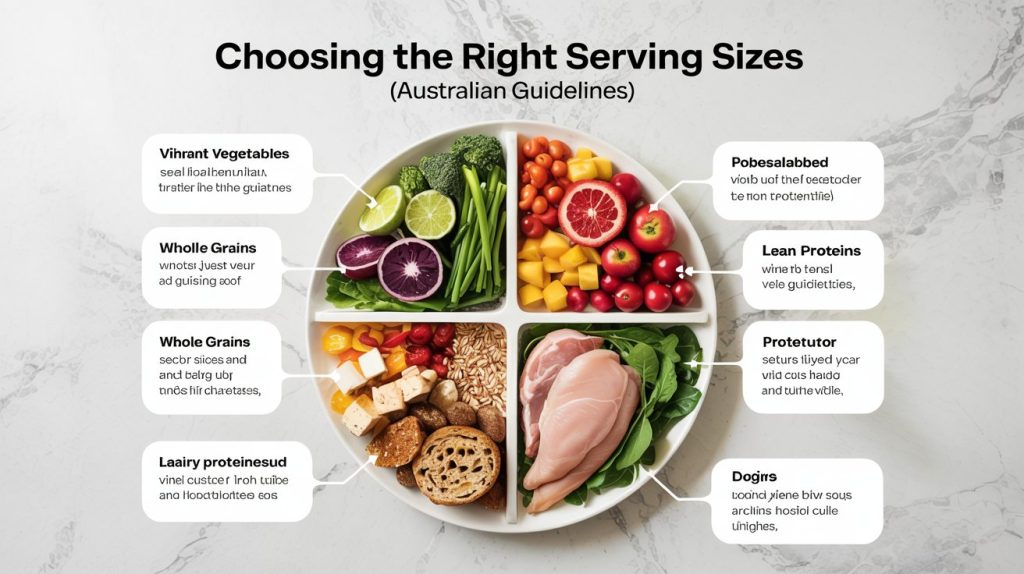
The guidelines focus on balance across all food groups:
- Vegetables: Eat plenty and include variety
- Fruits: Limit to recommended serves due to natural sugars
- Grains: Choose whole grains when possible
- Protein: Include lean and plant-based options
- Dairy: Opt for reduced-fat versions if needed
Adjust portion sizes depending on your lifestyle and energy needs.
The Australian Healthy Plate Model
A simple way to follow these guidelines visually:
- Half your plate: Vegetables and legumes
- One-quarter: Lean protein
- One-quarter: Whole grains
This method aligns closely with the official recommendations and makes meal planning easier.
Serving Sizes And Nutrition
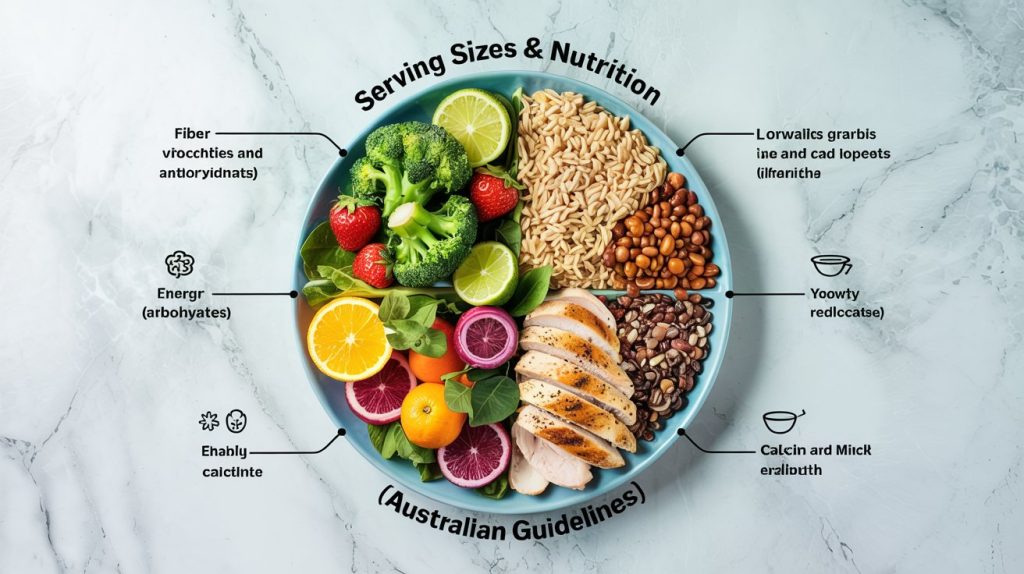
Each food group provides essential nutrients:
- Vegetables & fruits: Fiber, vitamins, antioxidants
- Grains: Energy and carbohydrates
- Protein: Muscle repair and growth
- Dairy: Calcium for bone health
Eating the right number of serves ensures your body gets all the nutrients it needs.
Visual Guide: Australian Serving Sizes
Here’s a simplified reference:
| Food Group | Serving Example | Easy Tip |
|---|---|---|
| Vegetables | 1/2 cup cooked | Eat multiple times daily |
| Fruit | 1 medium piece | Limit to 2 serves |
| Grains | 1 slice bread | Choose wholegrain |
| Protein | Palm-sized portion | Include in meals |
| Dairy | 1 cup milk | Daily intake essential |
Tips For Following Australian Serving Sizes
- Plan meals ahead: Helps meet daily serving targets
- Use measuring tools: Learn what a “serve” looks like
- Eat a variety of foods: Cover all nutrient needs
- Limit discretionary foods: Reduce sugar, salt, and fat
- Stay consistent: Build long-term habits
Small steps can make a big difference in your overall diet.
Common Mistakes When Following Serving Sizes
- Confusing “serve” with portion: A portion may include multiple serves
- Skipping vegetables: Missing out on key nutrients
- Overeating grains: Especially refined carbs
- Ignoring balance: Focusing too much on one food group
Understanding these differences helps you follow the guidelines more effectively.
How Serving Sizes Affect Your Health
Following the recommended serving sizes can:
- Improve weight management
- Reduce risk of heart disease and diabetes
- Support strong bones and muscles
- Boost overall energy and well-being
Consistent portion control is a key part of long-term health.
The Role Of Guidelines In Daily Life
The Australian Dietary Guidelines are designed to be practical and flexible. They can be adapted to different lifestyles, cultural diets, and food preferences.
By using these guidelines, you can make informed food choices without strict dieting.
Frequently Asked Questions
What Is One Serve In The Australian Guidelines?
A serve is a standard amount of food, such as 75g of vegetables or 150g of fruit.
Are Serving Sizes The Same For Everyone?
No, daily serve recommendations vary based on age, gender, and activity level.
How Many Vegetable Serves Should I Eat Daily?
Most adults should aim for 5–6 serves of vegetables per day.
What Are Discretionary Foods?
These are foods high in sugar, salt, or fat that should be eaten occasionally.
Can I Adjust Serving Sizes?
Yes, based on your energy needs and lifestyle.
Australian Dietary Guidelines serving sizes provide a clear and practical framework for healthy eating. By understanding and applying these recommendations, you can build balanced meals, improve your nutrition, and support long-term health every day.
