
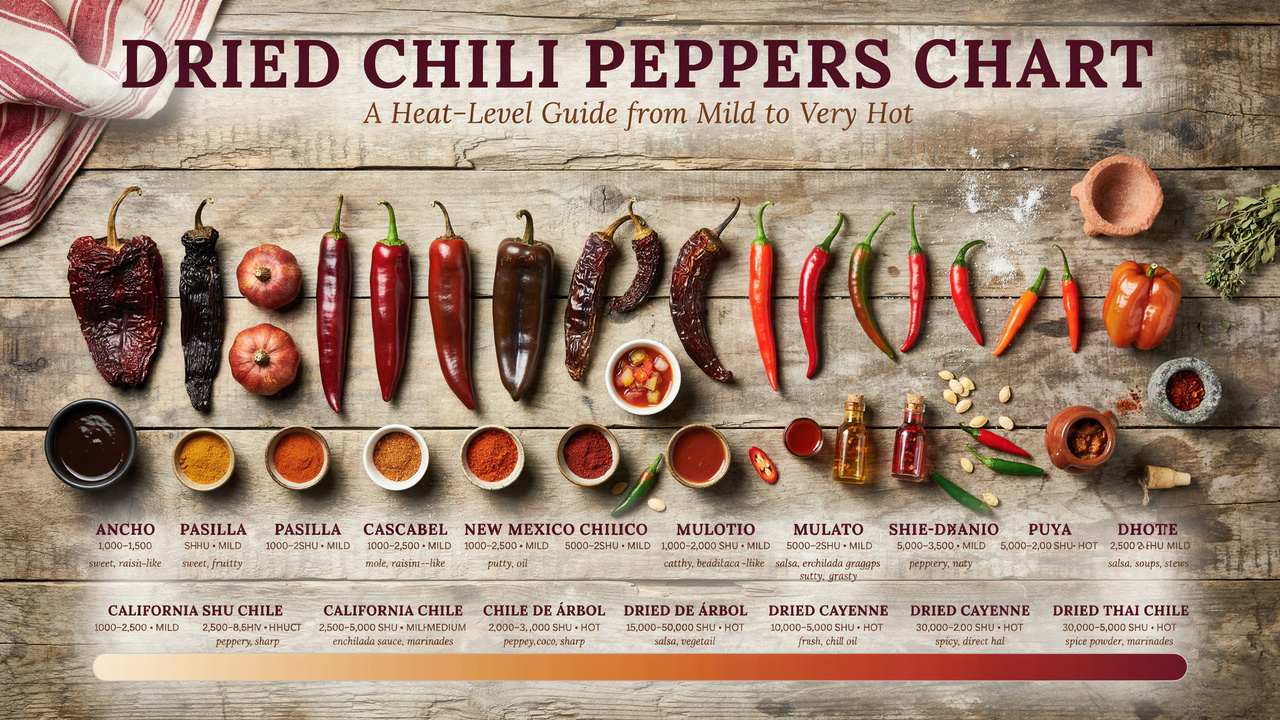
Dried chili peppers are an essential ingredient in many cuisines around the world. Drying concentrates their flavor and changes the character of the pepper, often creating deeper, smokier, fruitier, or earthier notes. From mild ancho peppers to fiery chile de árbol and smoky chipotle, each variety brings a different combination of heat and flavor. Understanding the dried chili peppers chart makes it easier to compare peppers by heat level, Scoville rating, flavor, appearance, and cooking use.
Why Dried Chili Pepper Variety Matters
Not all dried chilies are used simply to make food hotter. Many are chosen because they add a specific flavor, color, or aroma.
Mild dried chilies can provide rich fruitiness and sweetness without overwhelming a dish. Medium-hot varieties can add warmth and complexity, while very hot peppers are usually used in smaller quantities.
Drying also changes the pepper’s texture. Dried chilies can be toasted, ground into powder, soaked in water, blended into sauces, or added directly to soups and stews.
Standard Dried Chili Peppers Chart
Here are some popular dried chili peppers and their general characteristics.
Dried Chili Peppers Chart
| Dried Chili Pepper | Approx. Scoville Range | Heat Level | Flavor Profile |
|---|---|---|---|
| Ancho | 1,000–1,500 SHU | Mild | Sweet, fruity & earthy |
| Guajillo | 2,500–5,000 SHU | Mild-Medium | Fruity, tangy & slightly smoky |
| Pasilla | 1,000–2,500 SHU | Mild | Earthy, raisin-like & rich |
| Mulato | 2,500–3,000 SHU | Mild | Chocolatey, smoky & sweet |
| California Chile | 500–2,500 SHU | Mild | Fruity & slightly sweet |
| New Mexico Chile | 500–2,500 SHU | Mild | Earthy, fruity & sweet |
| Chile de Árbol | 15,000–30,000 SHU | Hot | Sharp, nutty & peppery |
| Chipotle | 2,500–8,000 SHU | Mild-Medium | Smoky, earthy & fruity |
| Cascabel | 1,000–3,000 SHU | Mild | Nutty, earthy & smoky |
| Puya | 5,000–8,000 SHU | Medium-Hot | Fruity & sharp |
| Dried Serrano | 10,000–25,000 SHU | Hot | Bright & grassy |
| Dried Habanero | 100,000–350,000 SHU | Very Hot | Fruity & tropical |
| Dried Thai Chile | 50,000–100,000 SHU | Very Hot | Sharp & spicy |
| Dried Cayenne | 30,000–50,000 SHU | Hot | Peppery & bright |
| Dried Bird’s Eye | 50,000–100,000 SHU | Very Hot | Sharp & fruity |
Scoville values are approximate because individual peppers can vary considerably.
Choosing The Right Dried Chili Pepper
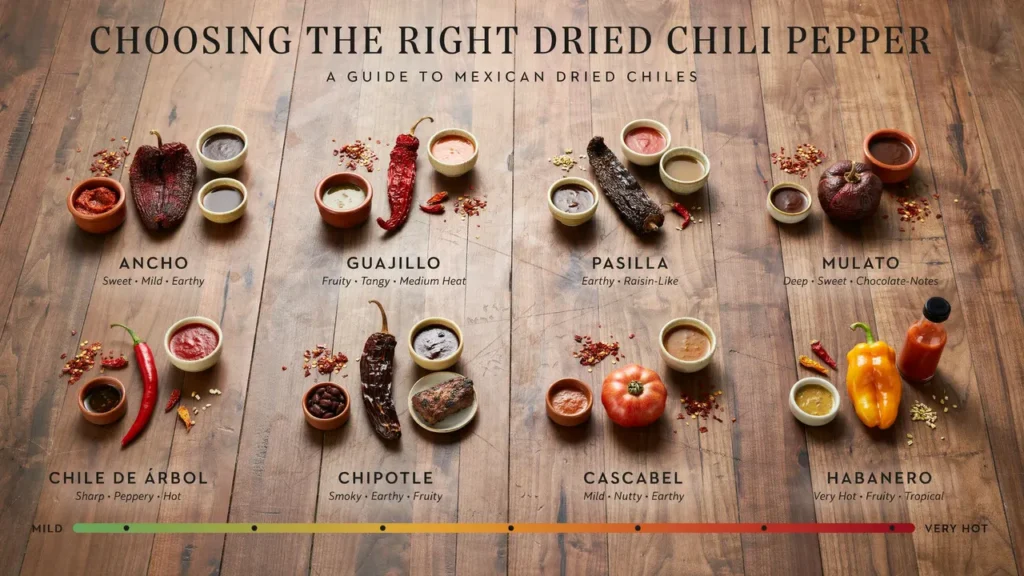
The best dried chili depends on the flavor and heat you want.
Ancho: Great for rich sauces, chili, marinades, and Mexican mole. It provides sweetness without much heat.
Guajillo: Excellent for sauces, soups, marinades, and traditional Mexican dishes. It offers fruity flavor with moderate heat.
Pasilla: Ideal when you want an earthy, raisin-like flavor in sauces and stews.
Mulato: A good choice for mole and rich sauces because of its deep, sweet, and slightly chocolate-like flavor.
Chile de Árbol: Best when you want noticeable heat in salsa, sauces, soups, and oils.
Chipotle: Perfect for adding smoky flavor to sauces, marinades, beans, and grilled foods.
Cascabel: Useful for sauces and salsas when you want a mild, nutty, earthy character.
Habanero: Best for very spicy sauces, marinades, and dishes where strong fruity heat is desired.
Dried Chili Pepper Heat Chart
| Heat Level | Scoville Range | Examples |
|---|---|---|
| Very Mild | 0–1,000 SHU | Mild dried peppers |
| Mild | 1,000–3,000 SHU | Ancho, Pasilla, Cascabel |
| Mild-Medium | 2,500–8,000 SHU | Guajillo, Chipotle, Puya |
| Medium-Hot | 8,000–30,000 SHU | Serrano, Chile de Árbol |
| Hot | 30,000–50,000 SHU | Cayenne |
| Very Hot | 50,000–100,000 SHU | Thai Chile, Bird’s Eye |
| Extreme | 100,000+ SHU | Dried Habanero and superhot varieties |
Heat levels can overlap because different peppers and growing conditions produce different results.
Dried Chili Pepper Flavor Chart
| Chili | Main Flavor | Secondary Notes |
|---|---|---|
| Ancho | Sweet | Raisin, earthy |
| Guajillo | Fruity | Tangy, slightly smoky |
| Pasilla | Earthy | Raisin, cocoa-like |
| Mulato | Sweet | Chocolate, smoke |
| Cascabel | Nutty | Earthy, smoky |
| Chipotle | Smoky | Fruity, earthy |
| Chile de Árbol | Peppery | Nutty, sharp |
| Puya | Fruity | Sharp, earthy |
| Cayenne | Peppery | Bright, dry |
| Habanero | Fruity | Tropical, floral |
| Thai Chile | Sharp | Fruity, intense |
Dried Chili Pepper Color Chart
Dried chilies can range from dark brown to bright red depending on the variety.
| Chili | Typical Color |
|---|---|
| Ancho | Dark Red-Brown |
| Guajillo | Deep Red |
| Pasilla | Dark Brown-Black |
| Mulato | Dark Brown |
| California Chile | Red |
| New Mexico Chile | Red |
| Chile de Árbol | Bright Red |
| Chipotle | Dark Brown |
| Cascabel | Deep Red-Brown |
| Puya | Dark Red |
| Cayenne | Deep Red |
| Habanero | Orange-Red |
Color can change with age and storage conditions.
Dried Chili Pepper Size Chart
Size varies between individual peppers, but these are useful general comparisons.
| Chili | Typical Size |
|---|---|
| Ancho | Large |
| Guajillo | Medium-Large |
| Pasilla | Medium-Large |
| Mulato | Medium-Large |
| California Chile | Medium-Large |
| Chile de Árbol | Small |
| Cascabel | Small-Round |
| Puya | Small-Medium |
| Cayenne | Long & Thin |
| Habanero | Small |
| Thai Chile | Small & Thin |
The shape of the pepper can make it easier to identify different varieties.
Dried Chili Pepper Uses Chart
| Chili | Common Uses |
|---|---|
| Ancho | Mole, chili, sauces |
| Guajillo | Salsas, marinades, soups |
| Pasilla | Sauces, stews, mole |
| Mulato | Mole, rich sauces |
| California Chile | Sauces, soups, seasoning |
| New Mexico Chile | Enchilada sauce, stews |
| Chile de Árbol | Salsa, chili oil, soups |
| Chipotle | Marinades, beans, sauces |
| Cascabel | Salsa, sauces, soups |
| Puya | Salsa, meat dishes |
| Cayenne | Spice blends, sauces |
| Habanero | Hot sauces, marinades |
Dried Chili Pepper For Mexican Cooking
Mexican cuisine uses a wide range of dried chilies, and different combinations can create complex sauces.
| Dish | Common Dried Chili Choices |
|---|---|
| Mole | Ancho, Mulato, Pasilla |
| Enchilada Sauce | Guajillo, New Mexico Chile |
| Red Salsa | Guajillo, Chile de Árbol |
| Adobo | Guajillo, Ancho, Chipotle |
| Birria | Guajillo, Ancho, Chile de Árbol |
| Pozole | Guajillo, New Mexico Chile |
| Chili | Ancho, Guajillo |
| Hot Salsa | Chile de Árbol, Habanero |
| Marinades | Guajillo, Ancho, Chipotle |
Regional recipes can use different combinations depending on the dish.
Dried Chili Pepper For Sauces
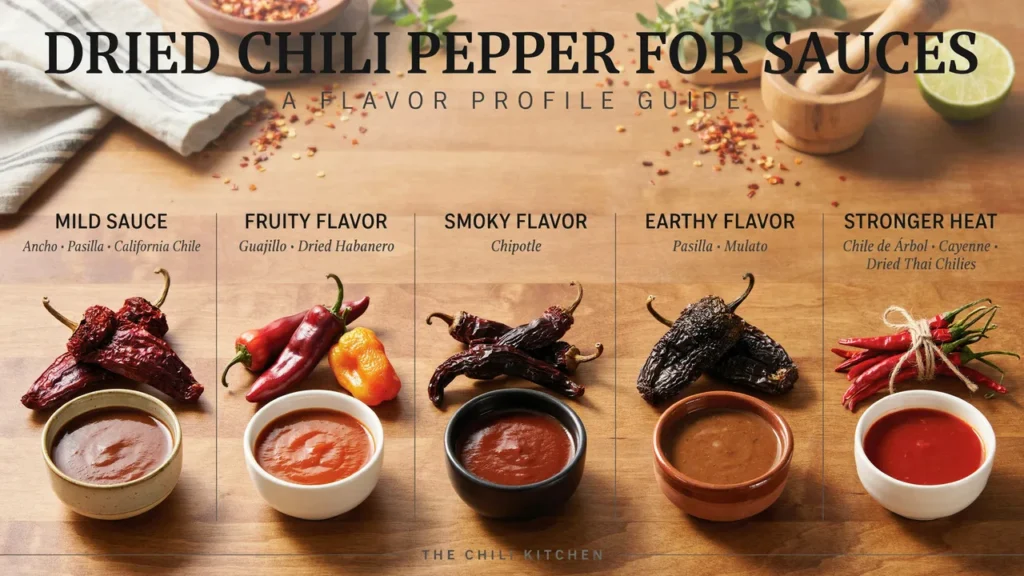
Different chilies create different sauce profiles.
For a mild sauce: Try ancho, pasilla, or California chile.
For fruity flavor: Guajillo and dried habanero are excellent choices.
For smoky flavor: Chipotle is one of the best options.
For earthy flavor: Pasilla and mulato work well.
For stronger heat: Chile de Árbol, cayenne, or dried Thai chilies can increase the spice.
Dried Chili Pepper Pairing Chart
| Food | Recommended Chili |
|---|---|
| Beef | Ancho, Guajillo, Chipotle |
| Chicken | Guajillo, Ancho, New Mexico Chile |
| Pork | Guajillo, Chipotle, Chile de Árbol |
| Seafood | Guajillo, Chile de Árbol, Habanero |
| Beans | Ancho, Chipotle |
| Rice | Guajillo, California Chile |
| Eggs | Chile de Árbol, Cayenne |
| Vegetables | Ancho, Guajillo |
| Soups | Guajillo, Pasilla |
| Stews | Ancho, Pasilla, Mulato |
Dried Chili Pepper Powder Chart
Many dried chilies are ground into powders for convenient seasoning.
| Powder | Flavor | Heat |
|---|---|---|
| Ancho Powder | Sweet & earthy | Mild |
| Guajillo Powder | Fruity & tangy | Mild-Medium |
| Chipotle Powder | Smoky & earthy | Mild-Medium |
| Cayenne Powder | Sharp & peppery | Hot |
| Habanero Powder | Fruity & intense | Very Hot |
| Chile de Árbol Powder | Peppery & sharp | Hot |
Powder can be much easier to distribute evenly throughout a dish.
Whole Vs Ground Dried Chili Peppers
| Form | Best Use | Advantage |
|---|---|---|
| Whole | Sauces, soups | Full flavor control |
| Crushed | Pizza, pasta, seasoning | Easy to sprinkle |
| Powder | Marinades, spice blends | Easy to measure |
| Flakes | Toppings, oils | Adds texture |
| Rehydrated | Salsas, sauces | Restores soft texture |
Whole peppers are especially useful when you want to toast or rehydrate them before blending.
How To Rehydrate Dried Chili Peppers
Rehydrating dried chilies is a common way to prepare them for sauces.
- Remove the stems.
- Shake out some of the seeds if desired.
- Toast briefly in a dry pan if the recipe calls for it.
- Place the peppers in hot water.
- Let them soften for around 15–30 minutes.
- Drain and blend with the other ingredients.
The soaking water may be used in some recipes, although it can sometimes have a bitter or overly spicy flavor.
How To Toast Dried Chili Peppers
Lightly toasting dried chilies can intensify their aroma.
Heat a dry skillet over medium-low heat and toast the peppers briefly on each side. Avoid burning them because burnt chilies can become bitter.
After toasting, they can be cooled and either ground into powder or rehydrated for sauces.
Dried Chili Pepper Seeds And Heat
Seeds are often blamed for most of a chili pepper’s heat, but the highest concentration of capsaicin is generally found in the placental tissue, the inner membrane to which the seeds are attached.
Removing seeds and membranes may reduce the perceived heat of a dish, but it does not guarantee that the pepper will become mild.
Common Mistakes When Using Dried Chili Peppers
Burning the peppers: Over-toasting can create bitterness.
Using too much: Dried chilies can be more concentrated in flavor than fresh peppers.
Ignoring the pepper’s flavor: A very hot pepper may overpower a delicate dish.
Not checking freshness: Old dried peppers can lose aroma and color.
Using whole peppers without preparation: Some recipes work better when chilies are toasted, soaked, or ground first.
Assuming every dried chili has the same heat: Different varieties can have dramatically different Scoville ratings.
Tips For Buying Dried Chili Peppers
Look for vibrant color: Extremely dull or faded peppers may be old.
Check flexibility: Some varieties should have a little flexibility rather than being completely brittle.
Smell the peppers: Fresh dried chilies should have a noticeable aroma.
Avoid excessive moisture: Dampness can encourage mold.
Buy small quantities: If you don’t use chilies often, smaller amounts help maintain freshness.
Store properly: Keep dried peppers in an airtight container away from heat, light, and moisture.
Dried Chili Pepper Storage Chart
| Storage Method | Recommended Conditions |
|---|---|
| Pantry | Cool, dark & dry |
| Airtight Container | Protected from moisture |
| Glass Jar | Good for long-term storage |
| Freezer | Useful for longer storage |
| Ground Powder | Airtight & away from light |
Proper storage helps preserve the flavor and aroma of dried chilies.
Dried Chili Pepper Nutrition
Dried chili peppers are generally used in relatively small amounts, so they usually contribute only a small number of calories to a meal. They can provide compounds such as capsaicin and various vitamins and antioxidants, although the nutritional contribution depends on the amount consumed.
Very hot peppers should be used carefully, especially by people who are not accustomed to high levels of spice.
Dried Chili Pepper Heat Comparison
For a quick reference:
| Chili | Approx. SHU | Heat |
|---|---|---|
| Ancho | 1,000–1,500 | Mild |
| Pasilla | 1,000–2,500 | Mild |
| Cascabel | 1,000–3,000 | Mild |
| Guajillo | 2,500–5,000 | Mild-Medium |
| Chipotle | 2,500–8,000 | Mild-Medium |
| Puya | 5,000–8,000 | Medium-Hot |
| Chile de Árbol | 15,000–30,000 | Hot |
| Cayenne | 30,000–50,000 | Hot |
| Thai Chile | 50,000–100,000 | Very Hot |
| Habanero | 100,000–350,000 | Very Hot |
Frequently Asked Questions
What Is The Mildest Dried Chili Pepper?
Ancho, pasilla, California, and New Mexico chilies are generally among the milder dried peppers commonly used in cooking.
Which Dried Chili Pepper Is The Hottest?
Dried habanero and superhot pepper varieties can be extremely hot. Their exact Scoville level depends on the specific variety and growing conditions.
What Is The Best Dried Chili For Mexican Food?
There is no single best choice. Ancho, guajillo, pasilla, mulato, and chile de árbol are all widely useful, depending on the dish.
Which Dried Chili Is Best For Mole?
Ancho, mulato, and pasilla are commonly associated with rich mole sauces because they provide deep, sweet, earthy, and complex flavors.
Which Dried Chili Is Best For Enchilada Sauce?
Guajillo and New Mexico chilies are popular choices for red enchilada-style sauces, although recipes vary by region.
Is Chipotle A Dried Chili Pepper?
Yes. Chipotle is a smoke-dried jalapeño, which gives it its characteristic smoky and earthy flavor.
Do Dried Chili Peppers Lose Their Heat?
Over time, dried chilies can lose some of their aroma, flavor, and potency. Proper storage helps preserve their quality.
Should Dried Chili Peppers Be Washed?
If they appear dusty or dirty, they can be quickly wiped or rinsed and then dried thoroughly before use. Avoid storing them while damp.
Can You Eat Dried Chili Peppers Whole?
Yes, but whole dried chilies are often toasted, rehydrated, crushed, or ground before being added to recipes.
How Long Do Dried Chili Peppers Last?
Properly stored dried chilies can remain usable for a long time, but their flavor and color gradually decline. For the best quality, use them while they still have a strong aroma and vibrant appearance.
Dried chili peppers offer an incredible range of heat, flavor, color, and aroma. Mild varieties such as ancho, pasilla, and guajillo are excellent for building depth, while chipotle adds smoky character and chile de árbol, cayenne, and habanero provide progressively stronger heat. Understanding the dried chili peppers chart makes it easier to choose the right pepper for sauces, soups, marinades, stews, salsas, and spice blends.
