
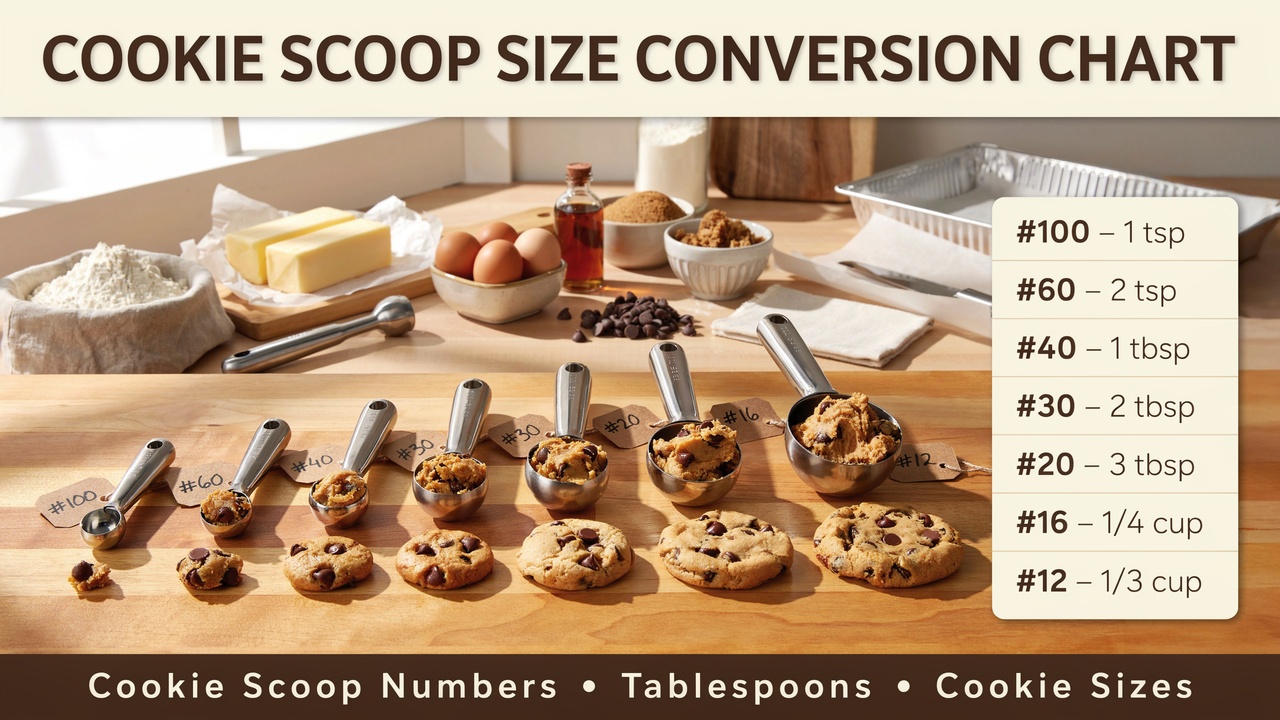
Cookie scoops make it easy to portion dough evenly, ensuring cookies bake consistently and have a uniform appearance. Cookie scoops are commonly identified by scoop numbers (#100, #60, #40, #30, #20, etc.), where a larger scoop number means a smaller scoop. Understanding a cookie scoop size conversion chart helps you convert scoop numbers to tablespoons, ounces, milliliters, and the approximate cookie size.
Whether you’re baking chocolate chip cookies, macarons, meatballs, or muffins, choosing the right scoop improves consistency and reduces guesswork.
Why Cookie Scoop Size Matters
Using the correct cookie scoop helps you:
- Bake evenly sized cookies
- Maintain consistent baking times
- Control portion sizes
- Improve recipe accuracy
- Speed up baking and meal prep
Larger scoops create bakery-style cookies, while smaller scoops are ideal for bite-sized treats.
Cookie Scoop Size Conversion Chart
| Scoop Size | Approx. Volume | Tablespoons | Milliliters | Best For |
|---|---|---|---|---|
| #100 | 0.3 oz | 1 tsp | 5 ml | Mini cookies |
| #70 | 0.5 oz | 1½ tsp | 8 ml | Small cookies |
| #60 | 0.6 oz | 2 tsp | 10 ml | Bite-sized cookies |
| #50 | 0.8 oz | 2½ tsp | 15 ml | Small drop cookies |
| #40 | 1 oz | 1 tbsp | 30 ml | Standard cookies |
| #30 | 1.5 oz | 2 tbsp | 45 ml | Large cookies |
| #20 | 2 oz | 3 tbsp | 60 ml | Bakery-style cookies |
| #16 | 2.5 oz | ¼ cup | 75 ml | Jumbo cookies |
| #12 | 3.3 oz | ⅓ cup | 100 ml | Giant cookies |
Values are approximate and may vary slightly by manufacturer.
Cookie Scoop Size by Cookie Diameter
| Scoop Size | Approx. Cookie Diameter | Typical Use |
|---|---|---|
| #100 | 1–1½ in | Mini cookies |
| #70 | 1½–2 in | Tea cookies |
| #60 | 2 in | Bite-sized treats |
| #40 | 2½–3 in | Standard homemade cookies |
| #30 | 3–3½ in | Café-style cookies |
| #20 | 4 in | Bakery cookies |
| #16 | 4½–5 in | Jumbo cookies |
Cookie size varies depending on the recipe and how much the dough spreads during baking.
Cookie Scoop Conversion Guide
| If Your Recipe Calls For | Use Scoop Size |
|---|---|
| 1 teaspoon | #100 |
| 2 teaspoons | #60 |
| 1 tablespoon | #40 |
| 2 tablespoons | #30 |
| 3 tablespoons | #20 |
| ¼ cup | #16 |
This conversion guide is useful when a recipe specifies dough volume instead of scoop numbers.
Most Common Cookie Scoop Sizes
#40 Scoop
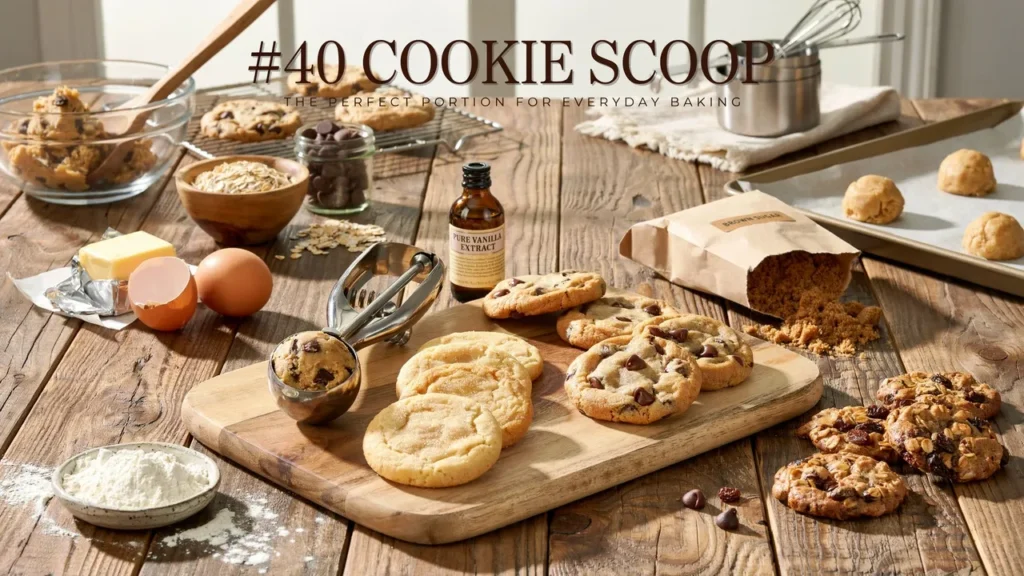
Ideal for:
- Chocolate chip cookies
- Sugar cookies
- Oatmeal cookies
- Everyday baking
#30 Scoop
Perfect for:
- Bakery-style cookies
- Large homemade cookies
- Stuffed cookies
#20 Scoop
Best for:
- Giant cookies
- Gourmet cookie shops
- Thick café-style cookies
Tips for Using Cookie Scoops
- Level each scoop for consistent cookie sizes.
- Chill sticky dough before scooping.
- Release dough directly onto lined baking sheets.
- Leave enough space between cookies to allow for spreading.
- Wash the scoop between batches if dough builds up.
Common Mistakes
- Confusing scoop numbers with size (higher numbers mean smaller scoops).
- Overfilling the scoop.
- Using different scoop sizes in the same batch.
- Placing cookies too close together.
- Ignoring baking time adjustments for larger cookies.
Frequently Asked Questions
What Is the Most Common Cookie Scoop Size?
The #40 scoop is the most popular because it holds about 1 tablespoon of dough and makes standard homemade cookies.
What Scoop Equals 2 Tablespoons?
A #30 cookie scoop is approximately 2 tablespoons.
What Scoop Is Best for Bakery Cookies?
Most bakery-style cookies use #20 or #30 scoops, depending on the desired size.
Does Scoop Number Mean Bigger or Smaller?
A larger scoop number means a smaller scoop. For example, #60 is smaller than #20.
Can Cookie Scoops Be Used for Other Foods?
Yes. Cookie scoops are excellent for portioning muffin batter, cupcake batter, meatballs, mashed potatoes, ice cream, melon balls, and more.
Conclusion
A cookie scoop size conversion chart makes it easy to match scoop numbers with tablespoons, milliliters, and cookie sizes. For everyday baking, a #40 scoop (1 tablespoon) is the most versatile choice, while #30 and #20 scoops are perfect for larger bakery-style cookies. Using the correct scoop ensures evenly baked, consistent cookies every time.
