
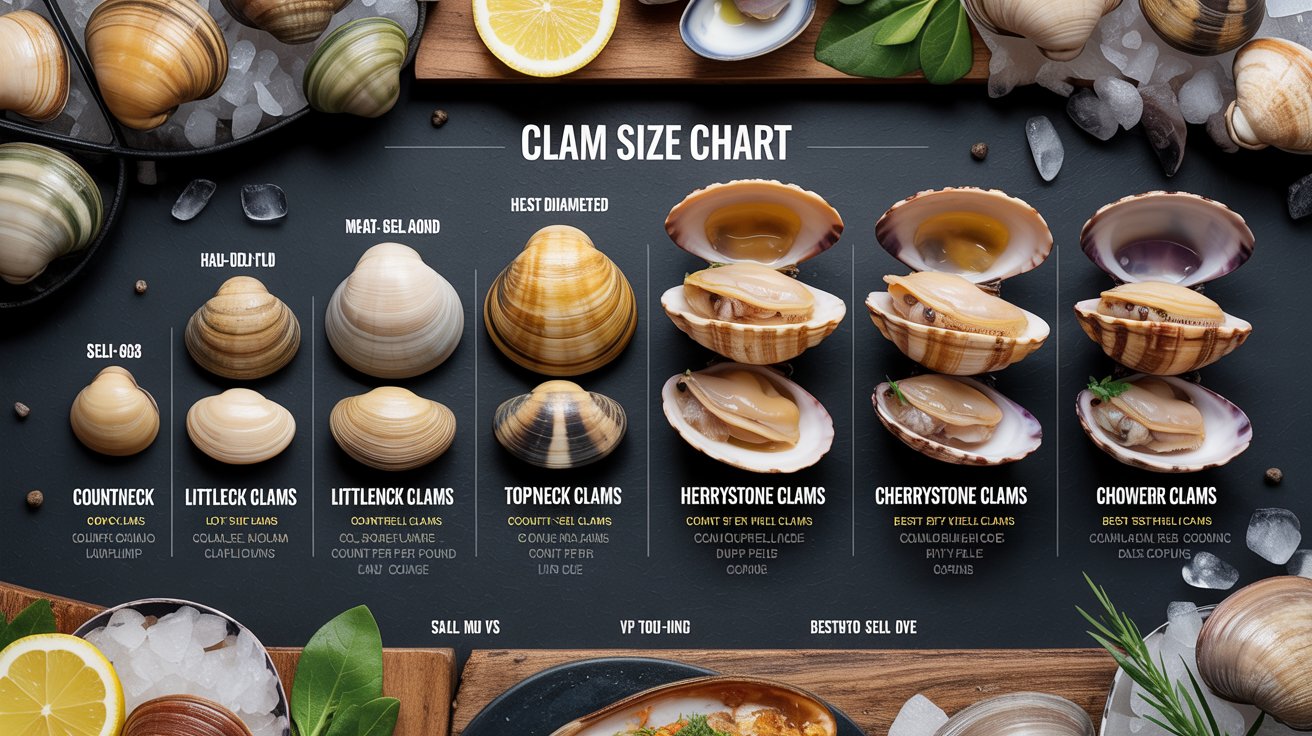
Clams are one of the most popular shellfish in the world, enjoyed in soups, pasta dishes, seafood boils, and raw bars. But many people are confused by the different clam sizes and names used in seafood markets and restaurants. Terms like littleneck, cherrystone, and chowder clams actually refer to size categories rather than separate species. Understanding a clam size chart helps seafood buyers, home cooks, and restaurant owners choose the right clams for different recipes and cooking methods.
Why Clam Size Matters
Clam size affects texture, flavor, cooking time, and serving style. Smaller clams are tender and sweet, making them perfect for raw dishes and steaming, while larger clams have firmer meat better suited for chowders and stuffed recipes.
Choosing the correct clam size also improves presentation and cooking consistency. Tiny clams cook quickly, while larger clams require more time and preparation.
Understanding clam sizing is especially useful because many clam names are based entirely on shell size.
How Clams Are Sized
Hard-shell clams are commonly categorized by shell diameter and count per pound. Here are the most common size categories used in seafood markets.
Clam Size Chart
| Clam Size Name | Approximate Shell Diameter | Count Per Pound | Best Use |
|---|---|---|---|
| Countneck | Under 1 inch | 40+ | Raw bars, appetizers |
| Littleneck | 1–2 inches | 7–10 | Steaming, raw serving |
| Topneck | Around 2 inches | 5–7 | Pasta and steaming |
| Cherrystone | 2–3 inches | 3–5 | Grilling, stuffed clams |
| Chowder Clams | 3+ inches | 1–3 | Chowders and chopped dishes |
Sizes may vary slightly depending on region and clam species.
Choosing The Right Clam Size
The best clam size depends on the recipe and cooking style. Here are some common recommendations:
- Littleneck Clams: Best for steaming and raw serving.
- Topneck Clams: Great for pasta and seafood dishes.
- Cherrystone Clams: Ideal for grilling and stuffing.
- Chowder Clams: Perfect for soups and chopped clam recipes.
Smaller clams are generally more tender, while larger clams provide meatier texture.
Clam Size Comparison: Hard-Shell Vs. Soft-Shell Clams
Different clam species also vary in texture and appearance.
Hard-Shell vs Soft-Shell Clams
| Clam Type | Shell Texture | Typical Use |
|---|---|---|
| Hard-Shell Clams | Thick, hard shell | Raw bars and steaming |
| Soft-Shell Clams | Thin shell | Frying and steaming |
Soft-shell clams are often called “steamers” in many coastal regions.
Clam Size And Cooking Time
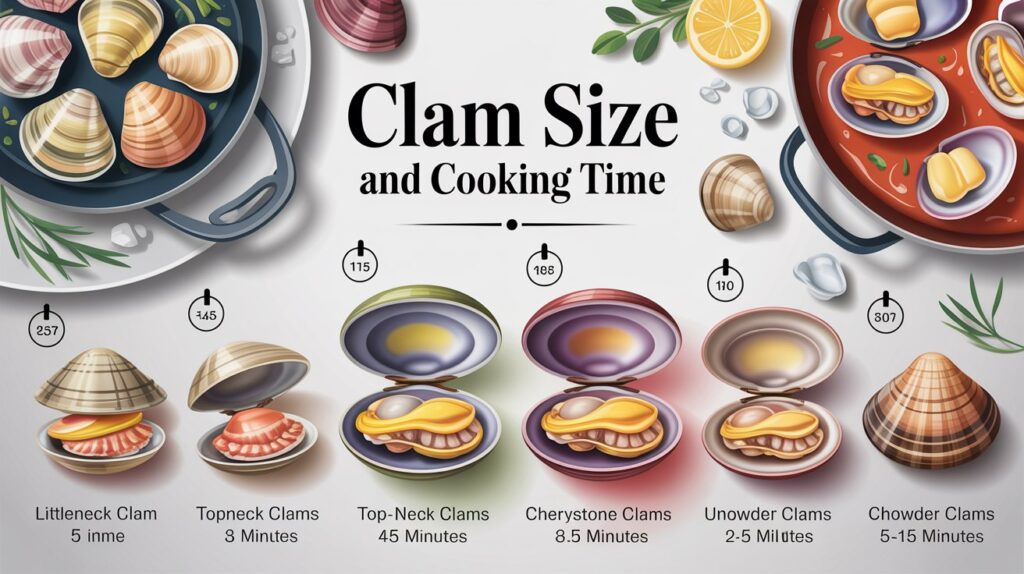
Clams cook quickly, but larger clams require slightly longer preparation.
Clam Cooking Time Chart
| Clam Size | Approximate Cooking Time |
|---|---|
| Littleneck | 5–7 minutes |
| Topneck | 6–8 minutes |
| Cherrystone | 8–10 minutes |
| Chowder Clams | 10–15 minutes |
Clams are fully cooked when their shells open.
Visual Guide: Clam Sizes
Visual comparisons help make clam sizes easier to understand.
Clam Size Visual Chart
| Clam Size | Visual Comparison | Typical Use |
|---|---|---|
| Littleneck | Golf-ball sized | Raw and steamed dishes |
| Cherrystone | Tennis-ball sized | Stuffed clams |
| Chowder Clam | Softball-sized | Soups and chowders |
Tips For Choosing Clams
- Choose tightly closed shells: Open shells may indicate dead clams.
- Store clams cold: Fresh clams should stay refrigerated.
- Avoid soaking in freshwater: Saltwater shellfish are sensitive to freshwater.
- Cook soon after purchase: Freshness greatly affects flavor.
- Discard unopened clams after cooking: They may not be safe to eat.
Proper handling improves both safety and taste.
Common Mistakes When Buying Clams
- Confusing size names with species: Littleneck and cherrystone are size categories.
- Overcooking clams: Makes meat tough and rubbery.
- Ignoring shell condition: Damaged shells may indicate poor quality.
- Using large clams raw: Bigger clams are usually tougher.
Understanding clam sizes improves seafood preparation and recipe planning.
How Clam Size Affects Flavor And Texture
Smaller clams are usually sweeter and more tender, making them ideal for raw bars and steaming. Larger clams have firmer meat better suited for soups, stuffing, and chopping.
Cooking style also changes texture significantly, especially with larger clams.
Different clam species may vary slightly in saltiness and sweetness depending on habitat.
The Popularity Of Clams
Clams have been an important seafood source for coastal communities for centuries. Today, they remain popular in cuisines worldwide, especially in dishes like clam chowder, linguine with clams, and seafood boils.
Clam harvesting and farming are major seafood industries in many coastal regions.
Frequently Asked Questions
What Is The Best Clam Size For Steaming?
Littleneck and topneck clams are excellent for steaming.
Are Cherrystone Clams Bigger Than Littlenecks?
Yes, cherrystone clams are significantly larger.
What Are Chowder Clams Used For?
Chowder clams are commonly chopped for soups and chowders.
How Do You Know If Clams Are Fresh?
Fresh clams should have tightly closed shells or close when tapped.
Why Do Clams Open During Cooking?
Clams open naturally when heated and fully cooked.
Clam size charts may seem confusing at first, but they are extremely useful for seafood shopping, cooking, and meal planning. Whether you’re steaming littlenecks or preparing chowder clams, understanding clam sizes helps you choose the perfect shellfish for every recipe.
