
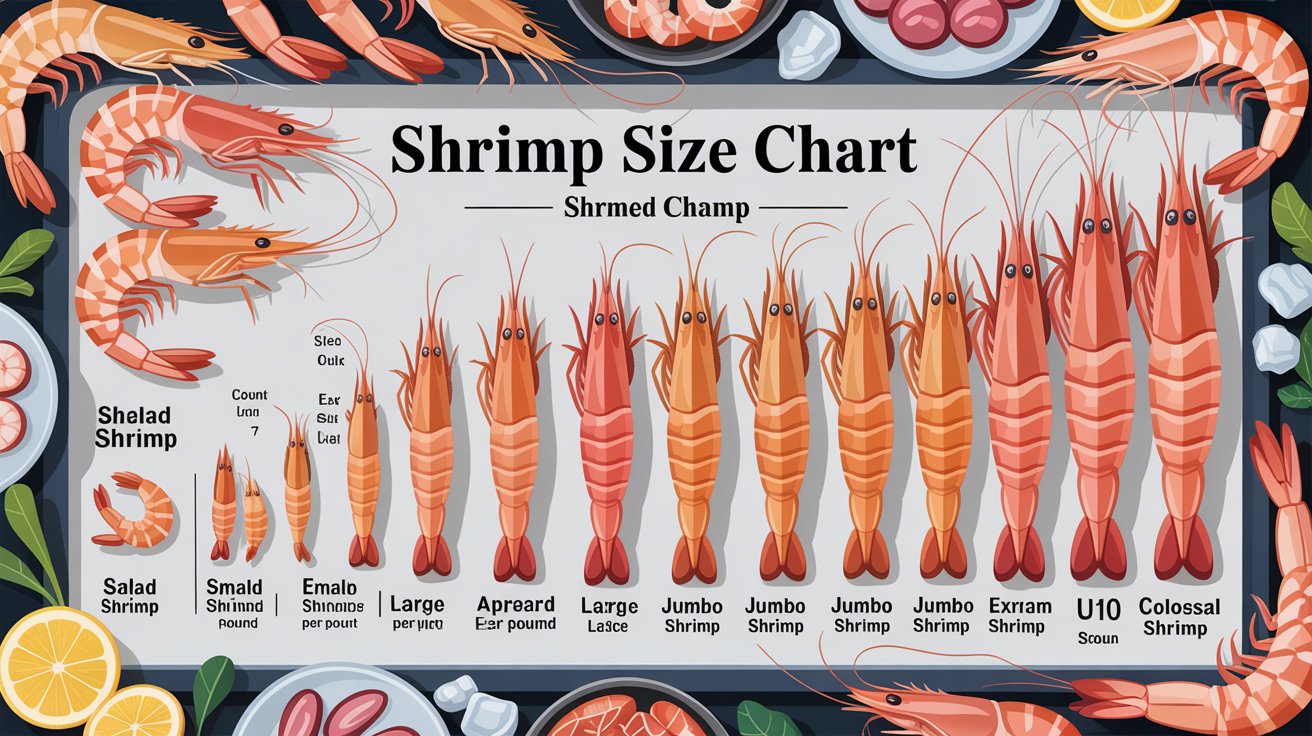
Shrimp are one of the most popular seafood choices in the world. They’re versatile, quick to cook, and used in everything from shrimp cocktails to pasta, tacos, stir-fries, and grilled dishes. But shrimp sizes can be confusing because they are usually labeled by “count per pound” instead of exact length. Understanding a shrimp size chart helps home cooks, seafood buyers, and restaurant owners choose the right shrimp for different recipes and serving styles.
Why Shrimp Size Matters
Shrimp size affects cooking time, texture, presentation, and serving portions. Smaller shrimp cook quickly and work well in salads or fried rice, while larger shrimp are ideal for grilling, shrimp cocktails, and seafood platters.
Choosing the correct shrimp size also helps prevent overcooking. Large shrimp remain juicy longer, while tiny shrimp can become rubbery very quickly.
Understanding shrimp sizing is especially important when following recipes because cooking time changes significantly between small and jumbo shrimp.
How Shrimp Sizes Are Measured
Shrimp are commonly sized by the number of shrimp per pound. For example:
- 16/20 shrimp means there are approximately 16–20 shrimp in one pound.
- U10 shrimp means “under 10 shrimp per pound,” which are extremely large.
Smaller count numbers mean larger shrimp.
Standard Shrimp Size Chart
Here are the most common shrimp size categories used in seafood markets and restaurants.
Shrimp Size Chart
| Shrimp Size Name | Count Per Pound | Approximate Length | Best Use |
|---|---|---|---|
| Colossal | U10 | 8+ inches | Grilling, premium platters |
| Extra Jumbo | 11/15 | 6–8 inches | Shrimp cocktail |
| Jumbo | 16/20 | 5–6 inches | Grilling, sautéing |
| Extra Large | 21/25 | 4–5 inches | Pasta, tacos |
| Large | 26/30 | 3–4 inches | Stir-fries, skewers |
| Medium | 31/40 | 2–3 inches | Fried rice, salads |
| Small | 41/50 | 1.5–2 inches | Soups and stuffing |
| Mini/Salad Shrimp | 51+ | Under 1.5 inches | Salads and seafood mixes |
Sizes may vary slightly depending on shrimp species and source.
Choosing The Right Shrimp Size
The best shrimp size depends on the recipe and cooking style. Here are some common recommendations:
- Colossal/Jumbo Shrimp: Best for grilling and shrimp cocktails.
- Large Shrimp: Great for pasta dishes and skewers.
- Medium Shrimp: Ideal for fried rice and stir-fries.
- Small Shrimp: Common in soups and seafood salads.
Larger shrimp provide meatier texture, while smaller shrimp distribute more evenly in mixed dishes.
Shrimp Size Comparison: Fresh Vs. Frozen
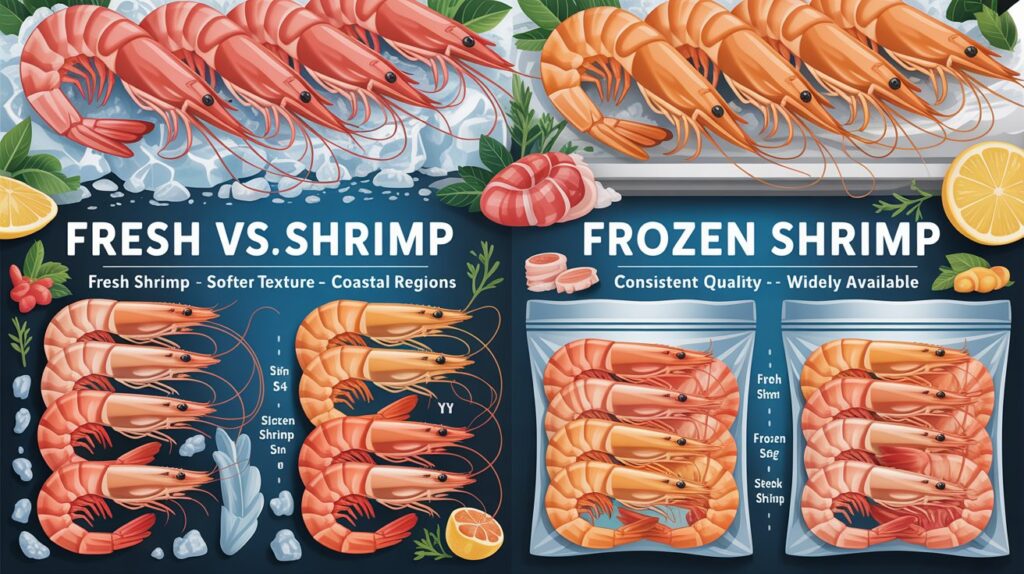
Fresh and frozen shrimp are often available in the same size categories.
Fresh vs Frozen Shrimp
| Type | Texture | Availability |
|---|---|---|
| Fresh Shrimp | Softer texture | Coastal regions |
| Frozen Shrimp | Consistent quality | Widely available |
Most frozen shrimp are flash-frozen shortly after harvest, helping preserve freshness.
Shrimp Size And Cooking Time
Shrimp cook extremely quickly, and size greatly affects cooking time.
Shrimp Cooking Time Chart
| Shrimp Size | Approximate Cooking Time |
|---|---|
| Small Shrimp | 1–2 minutes |
| Medium Shrimp | 2–3 minutes |
| Large Shrimp | 3–4 minutes |
| Jumbo Shrimp | 4–5 minutes |
Shrimp are fully cooked when they turn pink and opaque.
Visual Guide: Shrimp Sizes
Visual comparisons help make shrimp sizes easier to understand.
Shrimp Size Visual Chart
| Shrimp Size | Visual Comparison | Typical Use |
|---|---|---|
| Small Shrimp | Thumb-sized | Soups and salads |
| Medium Shrimp | Finger-length | Stir-fries |
| Jumbo Shrimp | Palm-sized | Grilling |
| Colossal Shrimp | Small lobster tail size | Premium seafood dishes |
Tips For Choosing Shrimp Sizes
- Use jumbo shrimp for presentation: Larger shrimp look more impressive.
- Choose medium shrimp for mixed dishes: Easier distribution in recipes.
- Buy peeled shrimp for convenience: Saves prep time.
- Avoid overcooking: Shrimp become rubbery very quickly.
- Check count labels carefully: Lower numbers mean larger shrimp.
Proper shrimp sizing improves both cooking results and portion planning.
Common Mistakes When Buying Shrimp
- Confusing count labels: Smaller numbers actually mean bigger shrimp.
- Choosing tiny shrimp for grilling: Small shrimp overcook easily.
- Ignoring shell-on options: Shells help retain flavor during cooking.
- Overcooking large shrimp: Even jumbo shrimp cook quickly.
Understanding shrimp sizes makes seafood preparation easier and more accurate.
How Shrimp Size Affects Flavor And Texture
Large shrimp are often meatier and firmer, making them ideal for grilling or sautéing. Smaller shrimp blend more evenly into dishes like pasta, soups, and rice.
Shell-on shrimp also tend to retain more flavor during cooking compared to peeled shrimp.
Different shrimp species may vary slightly in sweetness and texture as well.
The Global Popularity Of Shrimp
Shrimp are one of the most widely consumed seafood products in the world. They are farmed and harvested across Asia, North America, South America, and Europe.
Today, shrimp are used in cuisines ranging from sushi and curries to tacos and classic seafood boils.
Frequently Asked Questions
What Does U10 Shrimp Mean?
U10 means “under 10 shrimp per pound,” indicating very large shrimp.
What Is The Best Shrimp Size For Grilling?
Jumbo and colossal shrimp work best for grilling.
Are Larger Shrimp Better?
Not always—it depends on the recipe and desired texture.
How Long Does Shrimp Take To Cook?
Most shrimp cook within 2–5 minutes depending on size.
Why Are Shrimp Sized By Count Per Pound?
The count-per-pound system helps standardize shrimp sizing across seafood markets.
Shrimp size charts may seem confusing at first, but they are extremely helpful for cooking, shopping, and meal planning. Whether you’re grilling jumbo shrimp or adding small shrimp to pasta, understanding shrimp sizes helps you choose the perfect seafood for every recipe.
