
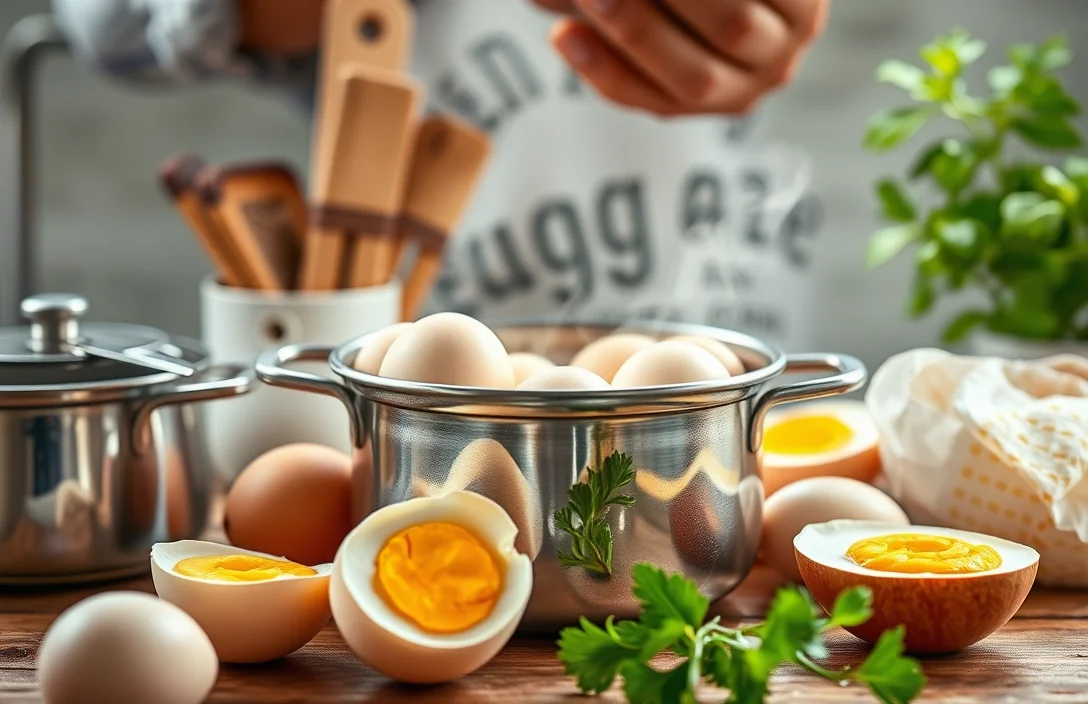
Seventy percent of people struggle with boiling eggs perfectly. Mastering this skill can elevate your breakfast game while saving time and reducing frustration. With the right techniques, you can achieve the ideal boiled egg every time, whether soft or hard-boiled.
Follow these key points for easy boiling: start with cold water, add salt or vinegar to prevent cracking, and time it precisely for your desired doneness. Cooling eggs immediately after boiling ensures easy peeling.
Choosing the Right Eggs for Boiling
Freshness impacts egg quality significantly. Look for eggs with clean, uncracked shells and a far-off expiration date. Fresh eggs typically yield better results when boiled, as they hold their shape better and have firmer whites. Always check the packaging for the date to ensure you are using the best quality available.
Sizes vary among eggs, with medium, large, and extra-large being the most common. Large eggs are often the standard in recipes, so choosing this size can simplify your cooking process. If you find a recipe that specifies a particular size, using large eggs will ensure your results align with expectations.
Organic and free-range options tend to be more flavorful. These eggs come from hens that have better living conditions, which can lead to richer yolks. While they may cost more, the taste and quality can enhance your boiled eggs, making them a worthwhile investment for special occasions or meals.
Brown eggs versus white eggs hold no significant difference in taste or quality. The color of the eggshell is determined by the breed of the hen and does not affect the flavor or nutritional value. Choose based on personal preference or availability, as both types will perform similarly during boiling.
Determining Boiling Time by Size
Boiling eggs effectively requires knowing the right time based on size. Different egg sizes will need varying boiling durations to achieve soft or hard results. Here’s a straightforward guide to help you determine the boiling time according to egg size.
- Small eggs: Boil for 4-5 minutes for soft-boiled, 9-10 minutes for hard-boiled.
- Medium eggs: Boil for 5-6 minutes for soft-boiled, 10-11 minutes for hard-boiled.
- Large eggs: Boil for 6-7 minutes for soft-boiled, 11-12 minutes for hard-boiled.
- X-Large eggs: Boil for 7-8 minutes for soft-boiled, 12-13 minutes for hard-boiled.
- Jumbo eggs: Boil for 8-9 minutes for soft-boiled, 13-14 minutes for hard-boiled.
Adjusting the time allows for precision in achieving your desired doneness. Factors such as altitude and starting egg temperature can also influence cooking time. Keep these variations in mind for perfect results every time.
Benefits of an Ice Bath
Chilling boiled eggs in an ice bath immediately stops the cooking process. Placing the eggs in ice-cold water after boiling ensures that they don’t overcook, which preserves their texture and prevents a greenish ring from forming around the yolk. This method enhances the overall quality of the boiled eggs, making them easier to peel later.
- Fill a large bowl with ice and cold water before cooking.
- Once boiling is complete, use a slotted spoon to transfer the eggs directly into the ice bath.
- Allow the eggs to sit in the ice bath for at least 5-10 minutes.
- After cooling, gently tap the eggs to crack the shells before peeling.
- Peeling is more straightforward due to the temperature shock from the ice bath.
Cooling eggs quickly not only aids in easier peeling but also enhances their flavor and texture. Experimenting with this technique will yield consistently good results every time you boil eggs, making your culinary tasks simpler.
Techniques for Peeling Boiled Eggs
Start by cooling eggs promptly. Once boiled, placing them in an ice bath for about 5-10 minutes will help contract the egg inside, making the shell easier to remove. This simple technique ensures a smoother peeling process, minimizing the risk of damaging the egg white.
Gently tapping the egg’s surface creates small cracks. After cooling, lightly tap the egg against a hard surface, like a countertop. This action helps break the shell into smaller pieces, making it easier to peel off without tearing the egg white.
- Rolling the egg on the counter can also help. Apply gentle pressure while rolling to loosen the shell from the egg white.
- Peeling under running water can assist in shell removal. The water helps separate the shell from the egg, allowing for easy peeling.
- Starting at the wider end may be beneficial. This area often contains an air pocket, making the initial peel easier.
Practice these techniques for better results. Experimenting with different methods will help you find what works best for you, ensuring a successful peeling experience every time.
Differences Between Soft and Hard Boiled Eggs
Texture varies significantly between soft and hard boiled eggs. Soft boiled eggs typically feature a runny yolk, providing a creamy consistency that pairs well with toast or salads. In contrast, hard boiled eggs have a fully cooked yolk and firm whites, making them ideal for slicing in salads or using as snacks. The cooking time determines the final texture of the egg.
Cooking methods differ primarily in timing. For soft boiled eggs, bring water to a boil, then gently lower the eggs and cook them for about 6 to 7 minutes. This duration allows the whites to set while keeping the yolk deliciously gooey. On the other hand, hard boiled eggs require a longer cooking time of 9 to 12 minutes, ensuring that both the white and yolk are fully cooked.
Cooling techniques also impact the final result. After cooking soft boiled eggs, immediately transfer them to an ice bath to stop the cooking process. This rapid cooling helps maintain the desired runny yolk. Conversely, for hard boiled eggs, a brief cooling in cold water is sufficient, as the goal is to have a firm yolk without the risk of overcooking.
Adjusting for Altitude Effects
Boiling eggs requires adjustments at higher altitudes due to lower atmospheric pressure. At elevations above 3,000 feet, water boils at a lower temperature, which affects cooking time. Consequently, you will need to increase the boiling duration to ensure eggs cook thoroughly.
- Increase boiling time by 1-2 minutes for every 1,000 feet above sea level. For example, if you are at 5,000 feet, boil eggs for an additional 2-4 minutes.
- Monitor the eggs closely using a timer. Overcooking can lead to rubbery textures or green rings around the yolk.
- Consider using a thermometer to check water temperature, ensuring it reaches around 212°F before starting your timer.
- Experiment with different boiling times to find your preferred doneness. Take notes on the exact times for future reference.
- Try covering the pot while boiling to retain heat and potentially reduce cooking time slightly.
Adjustments become crucial for achieving perfect results. Mastering these techniques ensures your eggs come out just right, regardless of elevation.
Storing and Flavoring Boiled Eggs
Storing boiled eggs properly ensures freshness and flavor. Keep them in their shells until you’re ready to eat. Refrigerate eggs in a covered container to maintain their quality. If peeled, store them submerged in water to prevent drying out, changing the water daily. Consume within a week for the best taste and safety.
Flavoring boiled eggs can elevate their taste significantly. Try marinating them in soy sauce or vinegar-based mixtures for a savory twist. Infuse flavors by adding herbs and spices to the water before boiling. After cooking, sprinkle with salt, pepper, or smoked paprika for an extra kick. Experiment with different seasonings to find your favorite combination.
Creating deviled eggs offers a creative way to enjoy boiled eggs. Combine the yolks with mayonnaise, mustard, and spices for a rich filling. Pipe or spoon the mixture back into the whites for an attractive presentation. Garnish with herbs or paprika to impress guests and enhance flavor. These variations can make for delightful appetizers or snacks.
Quick Summary
- Choose eggs that are at least a week old for easier peeling.
- Place eggs in a single layer in a saucepan and cover with cold water.
- Bring water to a rolling boil, then cover the pot and remove from heat.
- Let the eggs sit in hot water for 9-12 minutes, depending on desired doneness.
- Transfer eggs to an ice bath immediately after cooking to stop the cooking process.
- Peel eggs under running water for easier shell removal.
- Store any leftover boiled eggs in the refrigerator for up to one week.
Frequently Asked Questions
1. What is the best method to boil eggs?
The best method to boil eggs is to place them in a pot, cover them with cold water, and bring the water to a rolling boil. Once boiling, cover the pot, remove it from heat, and let it sit for 9-12 minutes depending on your desired doneness.
2. How long should I boil eggs for soft or hard yolks?
For soft yolks, boil the eggs for about 6-7 minutes. For hard yolks, aim for 9-12 minutes of boiling time.
3. Should I add salt or vinegar to the water?
Adding salt or vinegar can help prevent cracks and make peeling easier, but it’s not necessary. If your eggs are fresh, they’re more likely to be harder to peel, so older eggs are preferable for boiling.
4. How do I know when the eggs are done boiling?
You can start a timer once the pot is covered after boiling, or you can do a water test by plunging one egg into cold water to see if it’s cooked to your liking. Cutting one open is also a reliable way to check doneness.
5. What’s the best way to cool boiled eggs?
The best way to cool boiled eggs is to transfer them to an ice bath immediately after cooking. This helps stop the cooking process and makes peeling easier by contracting the egg inside the shell.
