
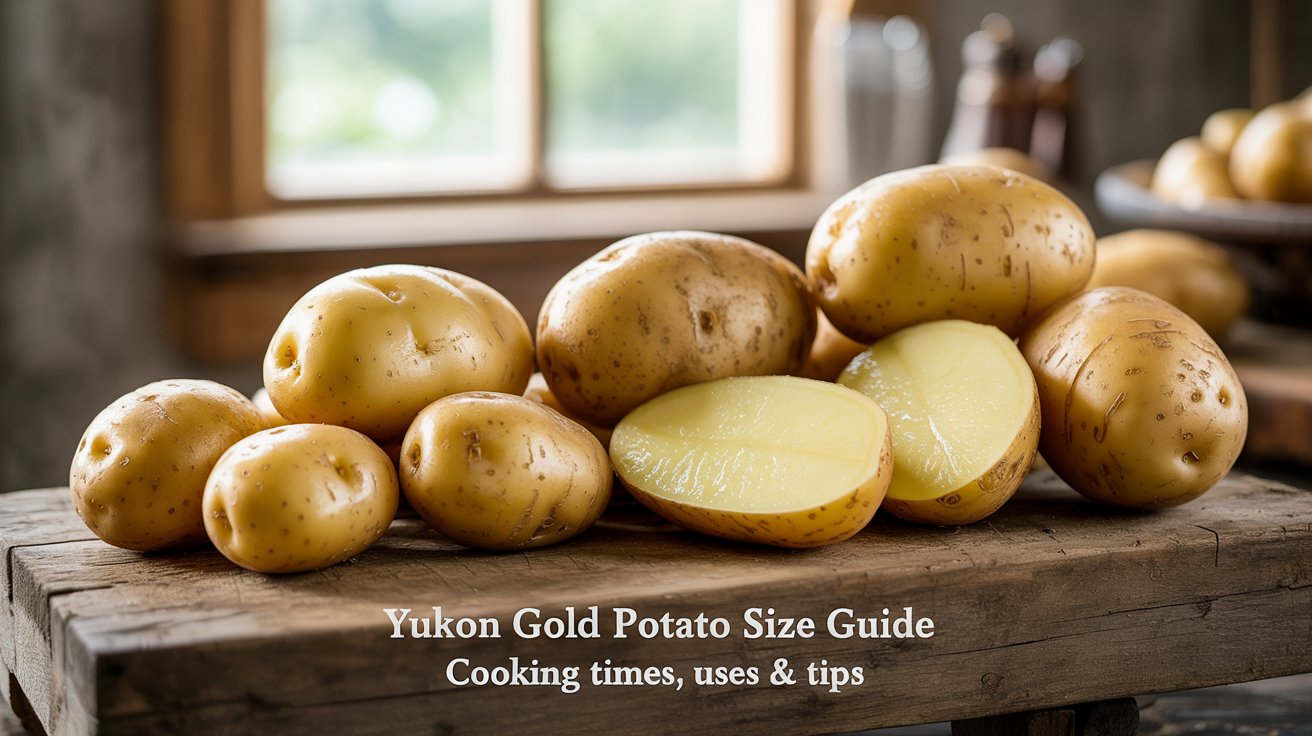
Yukon Gold potatoes are a kitchen staple that can transform any meal into a delicious comfort food. Their creamy texture and buttery flavor make them perfect for everything from hearty mashed potatoes to crispy roasted delights. Trust me, once you know how to cook with the right size Yukon Golds, your dishes will shine!
In this guide, you’ll find a detailed size chart for Yukon Gold potatoes, including how their size impacts cooking methods and recipe applications. Expect to learn about total time, difficulty, and servings, so you can cook with confidence.
Yukon Gold Potato Overview
Yukon Gold potatoes are a beloved variety known for their creamy texture and rich flavor. Understanding their origin, unique characteristics, and best uses helps home cooks appreciate how to select the right size for their culinary needs.
Origin and History
Yukon Gold potatoes originated in Canada in the 1960s, developed by a horticulturist named Gary Johnston. They were bred specifically for their golden skin and yellow flesh, making them visually appealing as well as delicious. Today, they are cultivated in many regions, particularly in North America, and are recognized for their versatility in the kitchen.
Unique Characteristics
- Skin: Thin, smooth, and yellow, often with a slightly waxy feel.
- Flesh: Golden-yellow, moist, and creamy, ideal for mashing and roasting.
- Flavor: Nutty and buttery, making them a favorite for various dishes.
Best Uses
Yukon Gold potatoes excel in many cooking methods due to their balanced starch content. Here are some of their best uses:
- Mashed Potatoes: Creamy and flavorful, perfect for comfort food.
- Roasting: Their waxy texture holds up well when roasted, resulting in crispy edges.
- Soups and Stews: They add creaminess and body to hearty dishes.
Chef’s tip: For the best mashed potatoes, boil them until fork-tender, about 15-20 minutes, then drain and let them steam dry for a minute before mashing.
Yukon Potato Size Chart
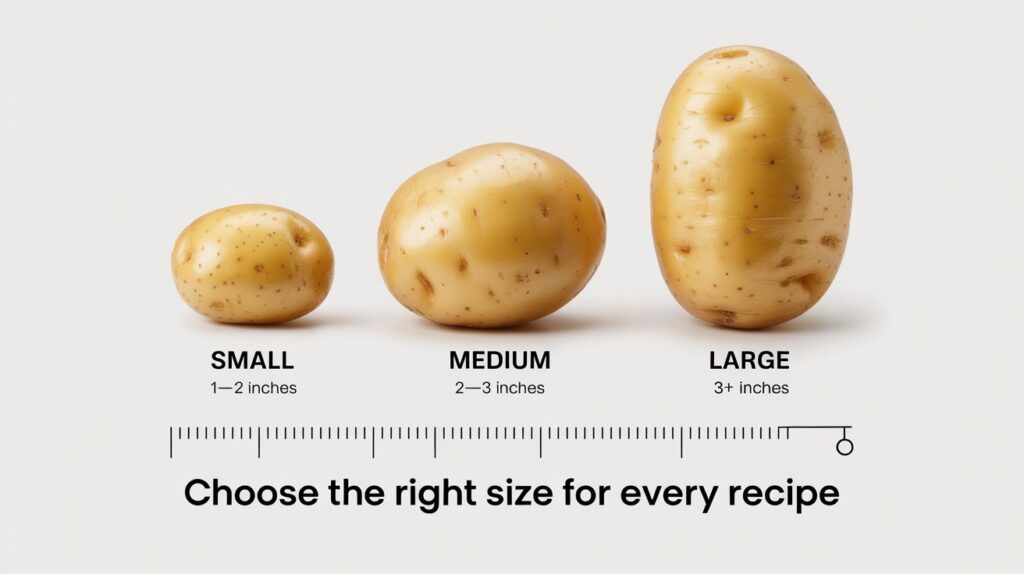
Understanding the size classifications of Yukon Gold potatoes can greatly influence your cooking methods and recipe choices. Each size category has distinct characteristics that affect texture, cooking time, and flavor. Here’s a detailed breakdown of the small, medium, and large Yukon potatoes.
? Yukon Gold Potato Size Chart
| Size | Diameter | Weight (Approx.) | Best Uses | Cook Time |
|---|---|---|---|---|
| Small | 1–2 in | 3–5 oz (85–140 g) | Roasting whole, salads | 15–20 min boil |
| Medium | 2–3 in | 5–8 oz (140–225 g) | Mashing, baking, frying | 20 min boil |
| Large | 3–4+ in | 8–12 oz (225–340 g) | Baking, soups, casseroles | 45–60 min bake |
Size Classifications
- Small Yukon Potatoes: Typically 1 to 2 inches in diameter. These potatoes are ideal for roasting whole or using in salads. Their thin skins are tender, and they cook quickly.
- Medium Yukon Potatoes: Ranging from 2 to 3 inches in diameter. These are versatile and can be used for mashing, baking, or frying. They offer a balance between flavor and texture.
- Large Yukon Potatoes: Over 3 inches in diameter. Best for baking or making creamy mashed potatoes. Their starchy interior results in a fluffy texture.
Chef’s tip: When selecting potatoes, look for firm, smooth skins without blemishes for the best flavor and texture.
| Small | 1-2 inches | Roasting, Salads |
| Medium | 2-3 inches | Mashing, Baking, Frying |
| Large | Over 3 inches | Baking, Creamy Mashed Potatoes |
Cooking Methods by Size
Understanding how potato size affects cooking methods is crucial for achieving the best results in your dishes. Different sizes of Yukon Gold potatoes require varied cooking techniques to ensure they are perfectly cooked, whether you’re boiling, baking, or roasting them.
Boiling Guide
For small Yukon Gold potatoes (about 2-3 inches in diameter), place them in a pot of salted water and bring it to a boil over medium-high heat. Boil for 15-20 minutes until fork-tender. You can check readiness by piercing the potato with a fork; it should slide in easily.
Baking Techniques
Medium Yukon Gold potatoes (3-4 inches) are perfect for baking. Preheat your oven to 400°F (200°C). Scrub the potatoes, poke a few holes with a fork, and rub them with 1 tablespoon of olive oil and a pinch of salt. Bake for 45-60 minutes until the skin is crispy and the inside is soft, checking for doneness by squeezing gently; they should yield slightly.
Roasting Tips
Large Yukon Gold potatoes (4-5 inches) work best for roasting. Cut them into even chunks, about 1-2 inches, for uniform cooking. Toss with 2 tablespoons of olive oil, salt, and pepper. Roast in a preheated oven at 425°F (220°C) for 30-35 minutes, turning halfway through, until they are golden brown and crispy on the outside, and soft inside. The aroma should be inviting, and the potatoes should feel tender when pierced with a fork.
Recommended Recipes by Size
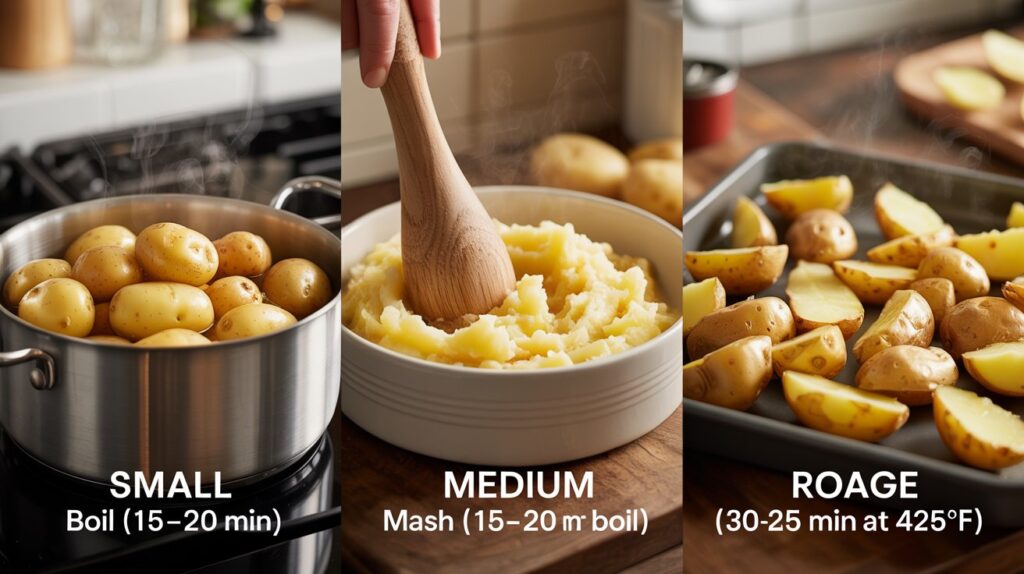
This section highlights delicious recipes tailored to different sizes of Yukon Gold potatoes. Choosing the right size can enhance the flavor and texture of your dish, making your cooking experience even more enjoyable.
Small Potato Recipes
- Roasted Baby Yukon Potatoes
- 1 pound small Yukon Gold potatoes
- 3 tablespoons olive oil
- 1 teaspoon garlic powder
- Salt and pepper to taste
- Preheat your oven to 425°F (220°C).
- Wash the potatoes thoroughly and halve them. In a mixing bowl, toss the potatoes with olive oil, garlic powder, salt, and pepper.
- Spread the potatoes on a baking sheet in a single layer. Roast for 25-30 minutes until golden brown and crispy, flipping halfway through.
Chef’s tip: For extra crispiness, ensure the potatoes are dry before tossing them with oil.
Medium Potato Dishes
- Yukon Gold Mashed Potatoes
- 2 pounds medium Yukon Gold potatoes
- ½ cup heavy cream
- 4 tablespoons unsalted butter
- Salt to taste
- Peel and chop the potatoes into even chunks. Place them in a pot of salted water and bring to a boil.
- Cook for 15-20 minutes until fork-tender, then drain and return to the pot.
- Add heavy cream and butter, then mash until smooth. Adjust salt to taste.
Pro tip: For creamier potatoes, use a potato ricer instead of a masher.
Large Potato Uses
- Baked Yukon Gold Potato
- 4 large Yukon Gold potatoes
- 2 tablespoons olive oil
- Salt and pepper to taste
- Preheat your oven to 400°F (200°C).
- Scrub the potatoes clean and poke holes with a fork. Rub with olive oil, then season with salt and pepper.
- Bake for 45-60 minutes, until the skin is crispy and the inside is soft. Test doneness by inserting a knife; it should slide in easily.
Warning: Do not wrap the potatoes in foil as this will prevent the skin from getting crispy.
Selecting the Right Size
Choosing the right size of Yukon Gold potatoes is essential for achieving the desired texture and flavor in your dishes. Each size of potato serves a different purpose in cooking, so understanding these distinctions can elevate your culinary creations.
- For Mashed Potatoes: Opt for medium-sized Yukon Gold potatoes, typically weighing about 6-8 ounces each. These potatoes have a balanced starch content, which results in creamy, fluffy mashed potatoes. Begin by peeling and chopping them into uniform chunks of roughly 1-2 inches. Boil in salted water for 15-20 minutes until fork-tender, and drain well before mashing to remove excess moisture.
- For Salads: Use small to medium-sized potatoes, around 4-6 ounces, as they hold their shape better when cooked. Cut them into halves or quarters for even cooking. Boil them in salted water for 10-15 minutes until just tender; they should be firm enough to hold up in a salad. Once cooked, let them cool slightly before tossing them with your favorite dressing and fresh herbs.
- For Soups: Larger Yukon Gold potatoes, weighing 8-12 ounces, work best for soups where you want hearty chunks. Peel and dice them into 1-inch cubes, then sauté in a bit of olive oil over medium heat for 5-7 minutes until they start to brown slightly. Add them to your broth after the initial ingredients have simmered, allowing 20-25 minutes for them to soften and absorb the flavors of the soup.
Storage Tips for Yukon Potatoes
Proper storage of Yukon Gold potatoes based on their size is crucial to maintaining their freshness and flavor. Understanding how to store different sizes will help you get the most out of your potatoes, whether you plan to use them soon or keep them for a while.
- Short-term Storage: For Yukon Gold potatoes that are medium to large in size, store them in a cool, dark, and well-ventilated place, such as a pantry or a cupboard. Avoid exposing them to direct sunlight, as this can lead to sprouting. Ideally, keep them at temperatures between 45°F to 50°F (7°C to 10°C) for optimal freshness.
- Long-term Storage: If you have small Yukon potatoes, you can store them in a breathable bag, like a burlap sack or a paper bag, to help maintain airflow. For longer storage, consider keeping them in the refrigerator, but keep in mind that cold temperatures can convert starch to sugar, affecting their flavor. The best long-term approach is to store them in a cool, dark, and humid environment, ideally around 40°F (4°C).
- Signs of Spoilage: Regularly check your Yukon potatoes for signs of spoilage, which can include soft spots, sprouting, or a greenish tint. If you notice any soft or wrinkled areas, it’s best to discard those potatoes. Green skin indicates the presence of solanine, a toxic compound, so remove any green parts before cooking, or discard the potato if it’s too green.
Common Cooking Mistakes
Cooking with Yukon Gold potatoes can yield delicious results, but there are a few common errors that can affect your dish. Understanding these mistakes will help you achieve the perfect texture and flavor in your recipes.
- Overcooking: One of the most frequent errors is overcooking Yukon Gold potatoes. When boiled or baked for too long, they can become mushy and lose their creamy texture. Aim to boil them for about 15-20 minutes until tender when pierced with a fork, or bake at 400°F (200°C) for 45-60 minutes depending on their size. Keep an eye on them and check for doneness at the lower end of the time range.
- Incorrect Size Use: Using the wrong size of Yukon Gold potatoes can lead to uneven cooking. For example, larger potatoes will take longer to cook than smaller ones. If your recipe calls for medium-sized potatoes, don’t substitute with large ones without adjusting the cooking time. To ensure even cooking, try to use potatoes that are similar in size; if some are larger, cut them into smaller pieces to match the smaller ones.
- Improper Seasoning: Another mistake is under-seasoning or over-seasoning the potatoes. Yukon Golds have a naturally rich flavor, but they benefit greatly from the right amount of seasoning. When boiling, add about 1 tablespoon of salt to the water for every 2 quarts of water. If you’re roasting them, toss with 2 tablespoons of olive oil and season with salt and pepper to taste before baking at 425°F (220°C) for 30-40 minutes. Always taste and adjust as needed!
Nutritional Information
Understanding the nutritional benefits of Yukon Gold potatoes is essential for making informed choices in your cooking. These potatoes not only enhance your dishes with their creamy texture and buttery flavor but also provide valuable nutrients that contribute to a balanced diet.
- Calories and Macronutrients: A medium-sized Yukon Gold potato (about 5.3 ounces or 150 grams) contains approximately 130 calories, 30 grams of carbohydrates, 2 grams of protein, and less than 1 gram of fat. This makes them a low-calorie option for filling, nutritious meals.
- Vitamins and Minerals: Yukon Gold potatoes are rich in vitamins and minerals, including Vitamin C (about 30% of the daily value), Vitamin B6, potassium, and magnesium. These nutrients are vital for immune function, energy metabolism, and heart health.
- Health Benefits: Incorporating Yukon Gold potatoes into your diet can support digestive health due to their fiber content. Additionally, their low glycemic index makes them a suitable choice for maintaining stable blood sugar levels, which is beneficial for those managing diabetes.
Chef’s tip: To maximize the health benefits, consider leaving the skin on when cooking Yukon Gold potatoes, as many nutrients are found just beneath the skin.
Quick Summary
| Prep Time | Cook Time | Total Time | Servings |
|---|---|---|---|
| 10 minutes | 20-30 minutes | 30-40 minutes | 4 servings |
- Choose the right size: Use small Yukon potatoes for boiling and larger ones for baking.
- Uniform cutting: Cut potatoes into even pieces for consistent cooking.
- Check doneness: Use a fork to test tenderness; they should be easily pierced.
- Don’t overcook: Overcooked potatoes can become mushy; aim for a firm texture.
- Flavor boost: Add salt to boiling water to enhance the natural flavor.
Frequently Asked Questions
Can I make this ahead of time? How to store and reheat?
You can prepare Yukon potatoes in advance by washing and cutting them into your desired sizes. Store them in an airtight container in the refrigerator for up to 24 hours and reheat by boiling or roasting until heated through.
What can I substitute for Yukon potatoes?
If you’re looking for a substitute, you can use red potatoes or fingerling potatoes as they have a similar texture and flavor profile. Just keep in mind that cooking times may vary slightly.
How do I know when it’s done?
15-20 minutes for boiling or 30-40 minutes for roasting at 400°F (200°C). A sharp knife should easily pierce through the potato without resistance.
Can I freeze this? How long does it last?
Yes, you can freeze cooked Yukon potatoes, and they will last for up to 3 months in the freezer. Make sure to cool them completely before placing them in freezer-safe bags to avoid freezer burn.
Why did my Yukon potatoes turn out mushy?
Your Yukon potatoes may have turned out mushy if they were overcooked or if they were too small, which can lead to quicker cooking times. Make sure to monitor them closely and stick to the recommended cooking times based on their size.
