

A commissary kitchen is a licensed, shared commercial kitchen space where food businesses can prepare and store food. It offers a flexible, affordable solution for startups, caterers, and food truck operators who need professional kitchen facilities without the massive overhead of building their own.
Ever dreamed of launching your own food business, maybe a charming bakery or a bustling food truck, but felt overwhelmed by the thought of setting up a professional kitchen? You’re not alone! Many aspiring food entrepreneurs hit a wall when they realize the cost and complexity of commercial kitchens. But what if there was a smarter, more accessible way to bring your culinary creations to life? We’re here to demystify a concept that’s revolutionizing the food industry: the commissary kitchen. Get ready to discover how this shared-space solution can be your secret weapon to success!
What Exactly Is a Commissary Kitchen? The Sweet Details!
Think of a commissary kitchen as a communal kitchen for food professionals. It’s a fully equipped, commercially licensed space that multiple food businesses can rent on an hourly, daily, or monthly basis. These aren’t your grandma’s community center kitchens; they are professional-grade facilities designed to meet strict health department regulations. They provide everything from ovens and ranges to prep tables, refrigeration, dishwashing stations, and storage. It’s the perfect stepping stone for anyone who needs a commercial kitchen but doesn’t want the commitment of owning one.
Why the Buzz Around Commissary Kitchens? The Big Picture
The rise of the commissary kitchen is directly linked to the booming food industry, especially the growth of food trucks, catering services, and small-batch food producers. For many, building a brand-new commercial kitchen can cost hundreds of thousands of dollars, plus ongoing expenses for utilities, maintenance, and staffing. Commissary kitchens offer a much more accessible entry point, significantly lowering the financial barrier to entry. They allow entrepreneurs to test their business models, scale production, and operate legally without a massive upfront investment. It’s a smart business strategy that fosters innovation and entrepreneurship in the food world.
Breaking Down the Commissary Kitchen: What’s Inside?
When you rent space in a commissary kitchen, you’re not just getting an empty room. You’re gaining access to a fully outfitted professional kitchen designed for efficiency and compliance. Here’s a typical breakdown of what you can expect:
- Cooking Equipment: Commercial-grade ovens, ranges, stovetops, griddles, deep fryers, and microwaves.
- Preparation Areas: Stainless steel prep tables, cutting boards, and ample counter space.
- Refrigeration & Storage: Walk-in refrigerators, freezers, dry storage shelves, and often individual lockable storage units.
- Sanitation Facilities: Commercial dishwashers, three-compartment sinks, handwashing stations, and waste disposal areas that meet health code standards.
- Ventilation: Professional hood systems with fire suppression to handle cooking fumes safely.
- Utilities: Access to gas, electricity, water, and often propane.
- Safety Features: Fire extinguishers, first-aid kits, and adherence to all local health and safety regulations.
Some commissary kitchens may also offer additional services like:
- Loading docks or service windows
- Ice machines
- Packaging supplies
- Marketing support or networking opportunities
- Business support services (e.g., accounting, legal referrals)
Who Uses Commissary Kitchens? A Diverse Culinary Crew
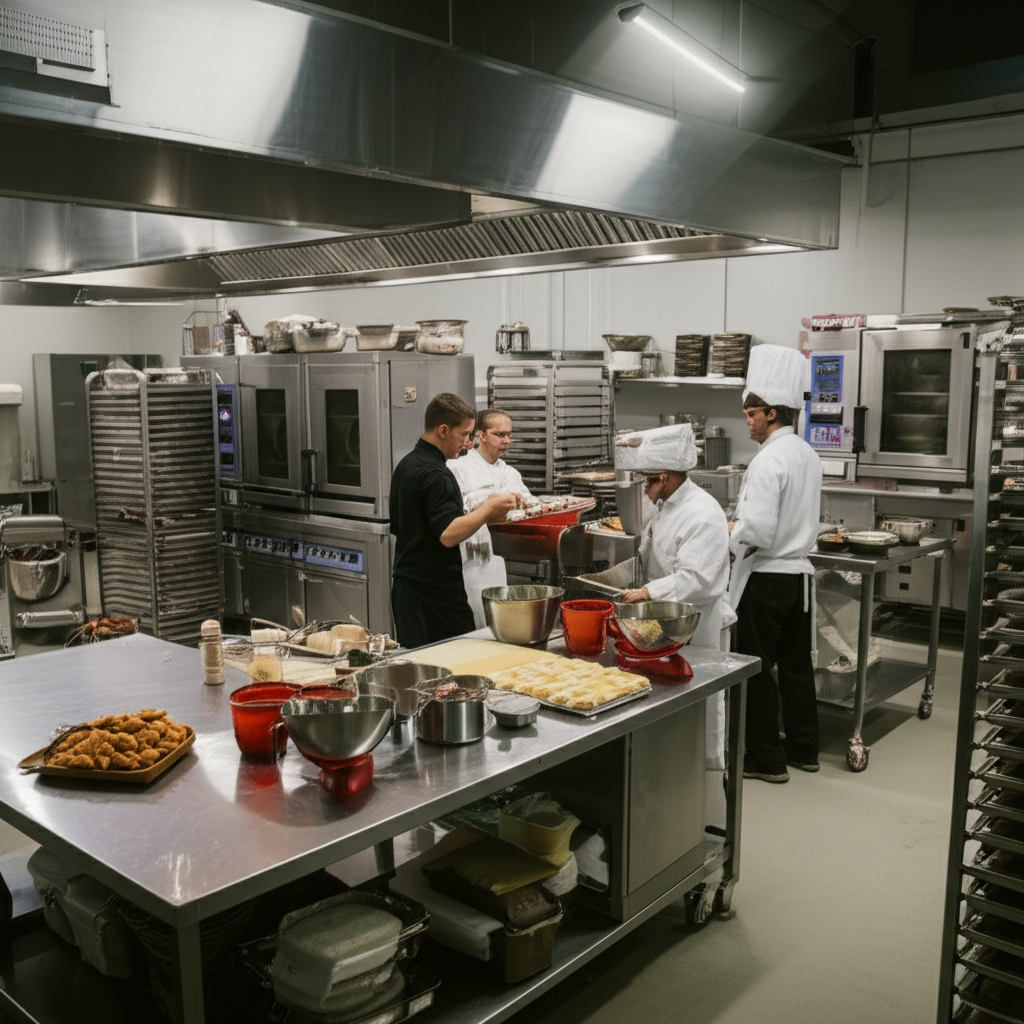
Commissary kitchens cater to a wide array of food-focused businesses and individuals. Their flexibility makes them ideal for various needs:
- Food Truck Operators: Often the primary users, food trucks are legally required to have a licensed commercial kitchen for prep, storage, and cleaning.
- Caterers: Whether for small parties or large events, caterers need a space to prepare food in bulk and store it safely before delivery.
- Bakers and Pastry Chefs: Those selling cakes, cookies, breads, or other baked goods often start in commissary kitchens to build their customer base.
- Small-Batch Food Producers: Think artisanal jams, sauces, spice blends, or packaged snacks. They need a regulated space to produce their goods.
- Cottage Food Law Supplementation: In some areas, individuals operating under cottage food laws (which allow home-based food businesses) might use commissary kitchens to produce items that exceed home kitchen limitations or require specific commercial equipment.
- New Restaurants or Cafes: Before opening their own brick-and-mortar location, businesses might use commissary kitchens to test menus, build brand awareness, and generate revenue.
- Event Pop-Ups and Ghost Kitchens: Businesses operating solely for delivery or temporary events find commissary kitchens to be an efficient base of operations.
The “Shocking Truth”: Why Commissary Kitchens Aren’t Just About Renting Space
The “shocking truth” isn’t about a hidden danger, but rather the profound impact commissary kitchens have on democratizing the food industry and fostering entrepreneurial dreams. Here’s what might surprise you:
1. Lowering the Barrier to Entry Dramatically: The sheer cost of building or leasing a traditional commercial kitchen is astronomical. A commissary kitchen can cost a fraction of that, often ranging from $20 to $100+ per hour, or a few hundred to a few thousand dollars per month for dedicated space. This affordability allows passionate individuals with great ideas but limited capital to enter the market. For instance, a baker might spend $50,000-$200,000+ to build out a commercial bakery space. With a commissary, they might spend $500-$2,000 per month for kitchen access, a massive difference!
2. Ensuring Legal Compliance is Built-In: Navigating the labyrinth of health department regulations can be daunting. Commissary kitchens are already inspected and approved by local health authorities. This means the facility meets all the necessary standards for sanitation, equipment, and safety. For a new business owner, this is an immense relief and saves countless hours of research and potential headaches. Understanding local health codes is crucial; the FDA provides extensive resources on food facility requirements, which commissary kitchens are designed to meet.
3. Access to Professional-Grade Equipment: You get to use top-tier equipment that would be prohibitively expensive for a startup to purchase. This includes powerful convection ovens, industrial mixers, blast chillers, and specialized tools that ensure consistent quality and efficient production. Imagine trying to bake hundreds of cookies in a home oven versus a commercial convection oven – the difference in speed and uniformity is staggering.
4. Scalability and Flexibility: As your business grows, you can often rent more hours or larger spaces within the commissary. If you have a big catering order, you can book more time. If it’s a slow month, you can reduce your usage. This flexibility is invaluable for managing cash flow and adapting to market demands. Unlike a fixed lease on a commercial space, you’re not locked into a large, inflexible commitment.
5. Collaboration and Community: While you operate your own business, being in a commissary kitchen often means being around other food professionals. This can lead to valuable networking, shared knowledge, potential collaborations, and even a supportive community. You might learn a new technique, find a supplier recommendation, or get advice on marketing from a fellow tenant.
Commissary Kitchen vs. Traditional Kitchen: A Comparison
To truly appreciate the commissary model, let’s compare it to the traditional route:
| Feature | Commissary Kitchen | Traditional Commercial Kitchen |
|---|---|---|
| Upfront Cost | Low (deposit, first rental payment) | Very High (construction, equipment purchase, leasehold improvements) |
| Monthly Expenses | Variable (based on usage, hourly/daily/monthly rental fees) | High & Fixed (rent, utilities, maintenance, insurance, staffing) |
| Equipment | Shared, professional-grade | Owned or leased, exclusive use |
| Compliance & Licensing | Facility is pre-licensed and inspected | Owner is responsible for all licensing, permits, and inspections |
| Flexibility | High (scale usage up or down easily) | Low (tied to a long-term lease) |
| Maintenance & Repairs | Handled by commissary management | Owner’s responsibility |
| Space Dedication | Shared prep time/space, or dedicated unit | Exclusive use of the entire facility |
How to Find and Use a Commissary Kitchen: Your Step-by-Step Guide
Ready to dive in? Here’s how to navigate the world of commissary kitchens:
Step 1: Research Local Options
Start by searching online for “commissary kitchens near me,” “shared commercial kitchens,” or “food incubators” in your area. Many cities and regions have organizations dedicated to supporting food entrepreneurs, and they often operate or list commissary kitchen spaces. Look for:
- Websites of local food business support organizations.
- Local government economic development or small business resources.
- Online marketplaces for commercial kitchen rentals.
You might also find resources from university extension programs or culinary arts schools that offer kitchen space.
Step 2: Understand the Regulations in Your Area

Before signing any agreement, it’s crucial to understand your local health department’s requirements for food businesses, especially those operating out of shared kitchens. What permits do you need? What are the specific rules for food trucks or caterers using a commissary? Resources like your local Department of Public Health or Small Business Administration (SBA) can provide guidance on licensing and permits.
Step 3: Tour Potential Kitchens
Once you’ve identified a few options, schedule tours. During your visit, pay attention to:
- Cleanliness: Is the kitchen well-maintained and sanitary?
- Equipment: Does it have the specific equipment you need? Is it in good working order?
- Space Availability: How much prep and storage space is typically available? Are there dedicated units or shared access?
- Hours of Operation: Do their hours align with your production schedule?
- Staff: Are the staff helpful and knowledgeable?
- Safety Features: Are fire suppression systems, extinguishers, and emergency exits clearly marked and accessible?
Step 4: Review the Rental Agreement Carefully
This is critical! Read the contract thoroughly. Key things to look for:
- Pricing Structure: Hourly, daily, monthly rates? Are there different tiers for different levels of access?
- Included Utilities: Are gas, electricity, water, and trash removal included, or billed separately?
- Storage: What kind of storage is provided (refrigerated, freezer, dry)? Is it shared or private?
- Insurance Requirements: What type of liability insurance do you need to carry?
- Cancellation Policy: What happens if you need to stop using the space?
- Rules and Regulations: What are the specific policies for using the equipment, cleaning, and waste disposal?
Don’t hesitate to ask for clarification on any point you don’t understand. Understanding terms like “hold harmless agreements” is also important for business owners.
Step 5: Get Your Permits and Insurance
Before you start cooking, ensure you have all the necessary business licenses and permits from your local authorities. You will also need to secure your own business liability insurance, as most commissary kitchens require tenants to have it for their protection and the protection of the facility.
Step 6: Schedule Your Production Time
Most commissary kitchens operate on a reservation system. Book your time slots in advance to ensure you get the equipment and space you need for your production runs. Communicate with the management about your anticipated needs.
The Advantages and Disadvantages: A Balanced Bite
Like any business decision, using a commissary kitchen comes with its own set of pros and cons.
Advantages:
- Cost-Effective: Significantly lower startup and operating costs compared to a traditional kitchen.
- Regulatory Compliance: Facility is pre-approved, simplifying health department interactions.
- Access to Professional Equipment: Use high-quality tools without the purchase price.
- Flexibility: Scale your usage based on business demand.
- Reduced Maintenance Burden: Management handles equipment upkeep and facility repairs.
- Location Access: Often located in accessible areas, sometimes with good proximity to target markets.
- Support Network: Potential for community and shared knowledge with other food entrepreneurs.
Disadvantages:
- Shared Space: You might have to coordinate with other users for popular equipment or prep times.
- Limited Availability: Prime time slots can be booked quickly.
- Less Customization: You can’t renovate or customize the space to your exact brand aesthetic.
- Dependence on Management: You rely on the commissary’s upkeep and operational policies.
- Potential for Scheduling Conflicts: Peak demand can lead to busy periods and competition for resources.
- Storage Limitations: While often available, storage might be more limited than in a dedicated facility.
Frequently Asked Questions About Commissary Kitchens
What is the main purpose of a commissary kitchen?
The main purpose is to provide licensed, equipped commercial kitchen space at an affordable rate for food businesses that cannot afford or do not need their own dedicated facility.
Are commissary kitchens expensive?
They are significantly less expensive than building or leasing a traditional commercial kitchen. Costs vary based on location and services, but they offer a much lower barrier to entry.
Do I need my own permits to use a commissary kitchen?
While the commissary kitchen facility itself is licensed, you will typically need to obtain your own business permits and licenses from local authorities to operate your food business legally.
Can I store my ingredients and finished products in a commissary kitchen?
Yes, most commissary kitchens offer various types of storage, including refrigerated, freezer, and dry storage, often with options for private or shared shelving.
What kind of businesses typically use commissary kitchens?
Food trucks, caterers, bakers, small-batch food producers, and startups testing new concepts are common users of commissary kitchens.
Is a commissary kitchen the same as a ghost kitchen?
Not exactly. A ghost kitchen is a delivery-only restaurant kitchen. A commissary kitchen is a shared facility that enables many types of food businesses, including ghost kitchens, food trucks, and caterers, to operate.
What are the health code requirements for a commissary kitchen?
Commissary kitchens must adhere to strict health codes covering sanitation, food storage, equipment maintenance, waste disposal, and pest control, as mandated by local health departments. They are regularly inspected to ensure compliance.
The Flavor of Success: Is a Commissary Kitchen Right for You?
The decision to use a commissary kitchen hinges on your specific business needs, budget, and growth plans. If you’re just starting out, testing a new product line, or operating a mobile food business like a food truck or catering service, a commissary kitchen is likely an excellent fit. It allows you to focus on your culinary craft and customer service, rather than getting bogged down in the complexities and costs of managing a commercial kitchen facility.
For many, it’s the stepping stone that bridges the gap between a home kitchen dream and a thriving food business reality. It provides the essential infrastructure and regulatory compliance needed to operate legally and professionally, all while keeping overhead low. By understanding what a commissary kitchen offers, you can make an informed decision that sets your food business up for delicious success.
