
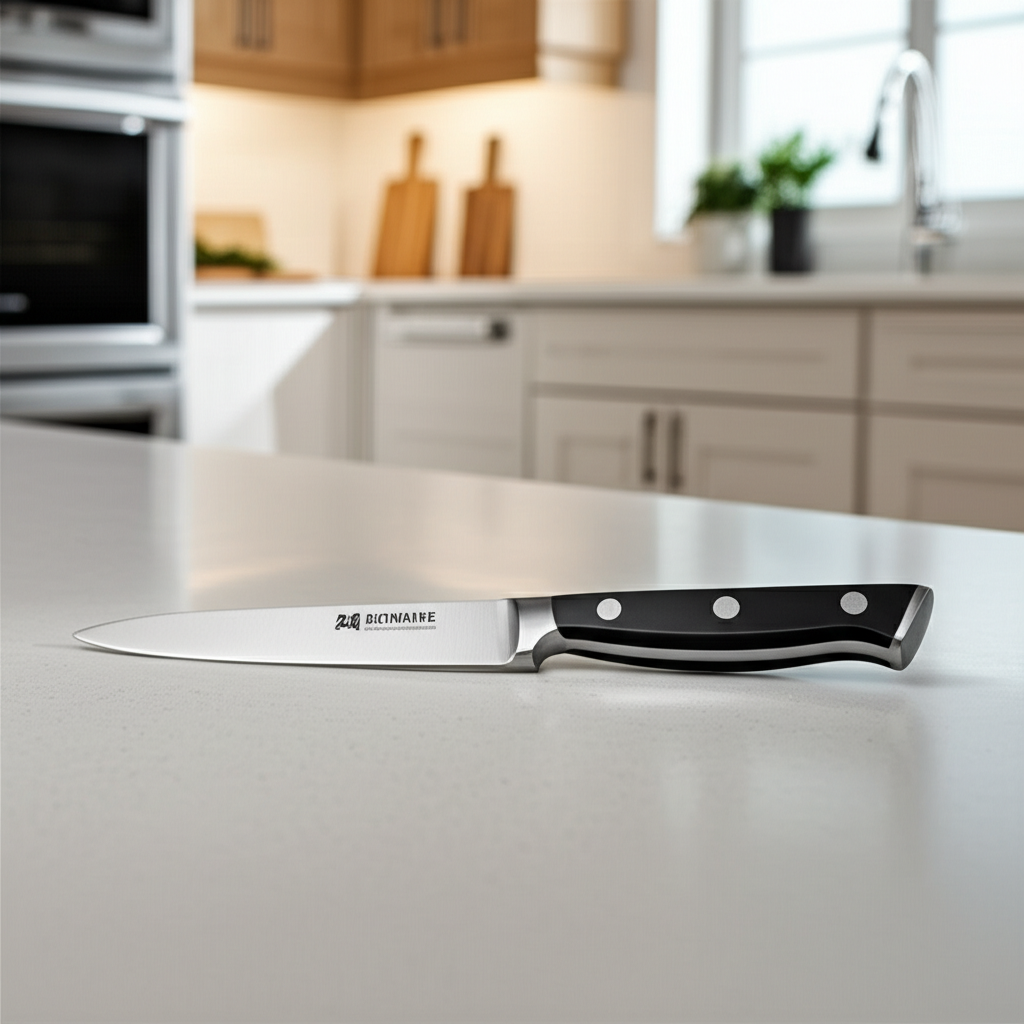
The average kitchen knife’s angle typically falls between 15 to 20 degrees per side, meaning a total of 30 to 40 degrees. This precise angle is crucial for achieving a balance of sharpness and durability, making your everyday chopping tasks easier and safer.
Ever found yourself staring at your knife block, wondering if your trusty chef’s knife is as sharp as it could be? Or perhaps you’ve noticed some knives seem to glide through tomatoes while others struggle? You’re not alone! Understanding the “degree” of your kitchen knife might sound a bit technical, but it’s actually a simple concept that can make a world of difference in your cooking. It’s about how the edge is ground. A sharper edge cuts more cleanly, but can also be more prone to damage. A more durable edge might not be as razor-sharp. We’re going to demystify this kitchen mystery, breaking down what that angle means for you and your meals. Get ready to chop with confidence, because we’re revealing the truth about your knife’s angle!
Unveiling the Mystery: What Degree is the Average Kitchen Knife?
Let’s cut to the chase! When we talk about the “degree” of a kitchen knife, we’re referring to the angle at which the blade’s edge is ground. Think of it like the point on a pencil – the sharper and finer the point, the smaller the angle. For most Western-style kitchen knives, like your everyday chef’s knife, Santoku, or utility knife, the ideal angle is typically between 15 to 20 degrees per side. This means the total included angle of the edge is between 30 to 40 degrees.
This range isn’t just a random number; it’s a carefully considered sweet spot. A steeper angle (like 20 degrees) offers more durability, meaning the edge is less likely to chip or dull quickly. This is often preferred for tougher tasks or for knives that see a lot of use. On the other hand, a shallower angle (like 15 degrees) results in a much sharper, more precise edge that can slice through delicate ingredients with ease. Many Japanese knives, for instance, are ground to a sharper 10-15 degree angle per side, giving them their renowned cutting ability.
So, when you pick up your favorite knife, remember that its angle is a key factor in how it performs. It’s the secret behind that satisfying “slice” rather than a “tear” through your food. We’ll explore why this matters so much for your kitchen tasks and how you can even check and maintain these angles yourself.
Why Does the Knife’s Angle Matter So Much?
You might be thinking, “Does this angle really make that big of a difference?” The answer is a resounding yes! The angle of your knife’s edge directly impacts its:
- Cutting Performance: A sharper angle creates a finer edge that can slice through food more cleanly and with less effort. This is especially noticeable when working with delicate ingredients like tomatoes, herbs, or soft fruits.
- Durability: A wider angle creates a more robust edge that is less prone to chipping or becoming dull. This is beneficial for knives used for tougher tasks like chopping through hard vegetables or even boning meats.
- Ease of Sharpening: While not always the case, generally, shallower angles can be easier to maintain with simple sharpening stones, whereas steeper angles might require more specialized tools or techniques to achieve the same level of sharpness.
- Safety: A dull knife is actually more dangerous than a sharp one. When a knife is dull, you need to apply more pressure, increasing the risk of the knife slipping and causing an injury. A properly angled and sharp knife cuts with less force, offering greater control.
Think about it like this: a sharp chisel with a fine edge can shave off paper-thin curls of wood, while a blunter chisel will just gouge and tear. The same principle applies to your kitchen knives. The right angle ensures your knife is a precise tool, not a clumsy one.
Understanding Different Knife Grinds and Angles
Knives aren’t just ground at a single angle; the way the bevel is formed also plays a role. You’ll often hear terms like “double bevel” and “single bevel.”
Double Bevel vs. Single Bevel
Most Western kitchen knives are what’s called “double bevel.” This means the blade has two symmetrical bevels, one on each side, meeting at the very edge. This is what creates that 15-20 degree angle per side we discussed.
- Pros: Excellent all-around performance, good balance of sharpness and durability, suitable for most kitchen tasks, easier to maintain for beginners.
- Cons: Can sometimes drag on softer ingredients compared to single bevel knives.
Japanese knives, particularly specialized ones like sushi knives (yanagiba) or vegetable knives (usuba), often feature a “single bevel.” This means the bevel is ground only on one side of the blade, with the other side being flat or having a very subtle concave hollow. This allows for incredibly precise cuts, especially for slicing fish or finely mincing vegetables.
- Pros: Exceptionally sharp and precise cuts, ideal for delicate slicing and detailed work.
- Cons: Requires more skill to sharpen and maintain, can be less durable if not handled properly, primarily designed for specific tasks.
Table: Common Knife Angles and Their Applications
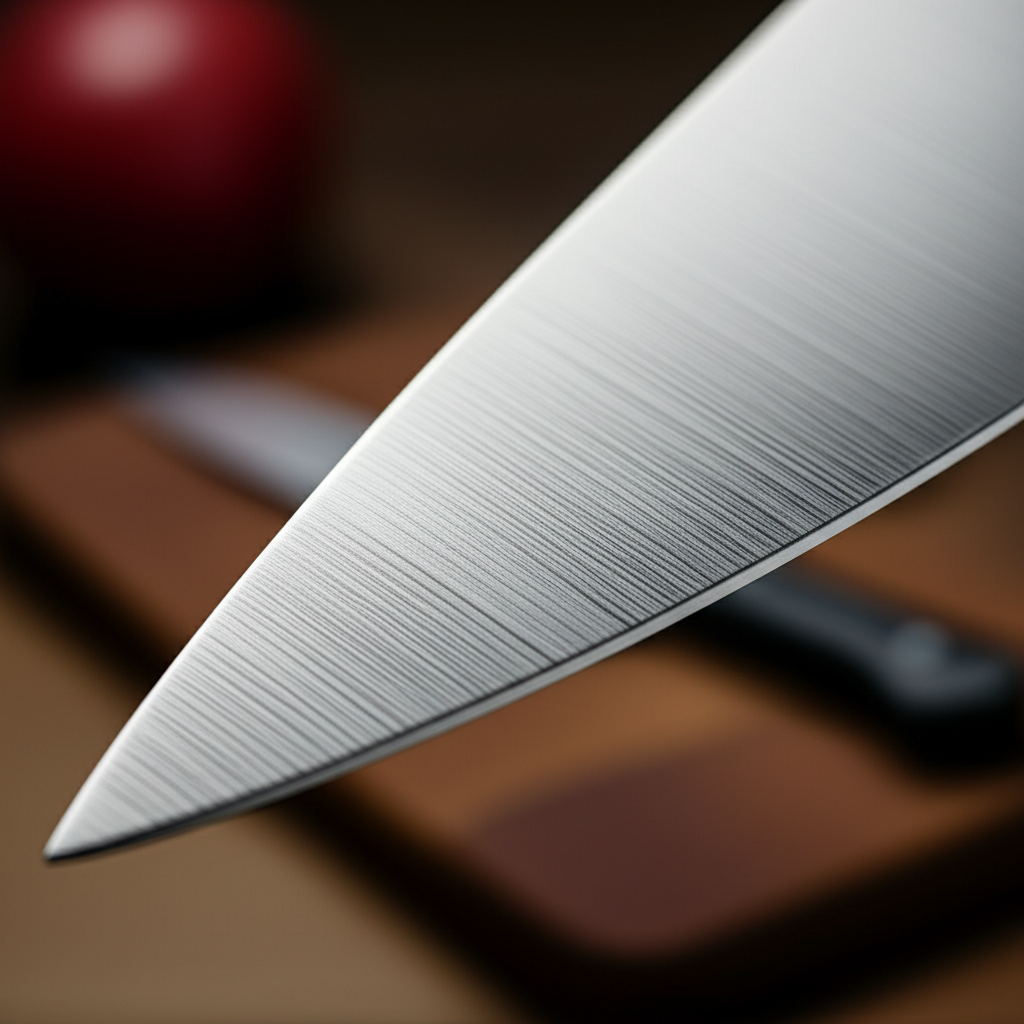
To give you a clearer picture, here’s a look at typical angles and what they’re best suited for:
| Angle per Side (Degrees) | Total Angle (Degrees) | Typical Knife Types | Best For |
|---|---|---|---|
| 10-15 | 20-30 | Japanese knives (e.g., Santoku, Nakiri), some paring knives | Delicate slicing, precision work, mincing herbs |
| 15-18 | 30-36 | Most Western chef’s knives, utility knives | All-purpose slicing, chopping vegetables and meats |
| 18-20 | 36-40 | Heavier duty knives, boning knives, some chef’s knives | Chopping through tougher ingredients, increased edge durability |
As you can see, the angle is carefully chosen to match the knife’s intended use. A chef’s knife needs to handle a variety of tasks, hence the balanced angle, while a specialized sushi knife prioritizes ultimate sharpness for precise slicing.
How to Check the Angle of Your Kitchen Knife
You don’t need fancy equipment to get a good idea of your knife’s angle. Here are a few beginner-friendly methods:
Method 1: The “Coin” Method (Visual Estimation)
This is a quick and easy way to get a ballpark figure.
- Find a Coin: Grab a standard US quarter.
- Position the Knife: Place the knife flat on a cutting board.
- Lean the Blade: Gently lean the blade to the side until the edge touches the board.
- Compare to the Coin: Now, try to position the quarter upright against the side of the blade, near the edge.
- Estimate: If the side of the blade lines up roughly with the thickness of the quarter, your angle is probably around 20-22 degrees. If it’s leaning out more, it’s a wider angle; if it’s leaning in more, it’s a sharper angle.
This method is more for a general understanding. For more precision, especially when sharpening, you’ll want to use other techniques.
Method 2: Using a Sharpening Guide
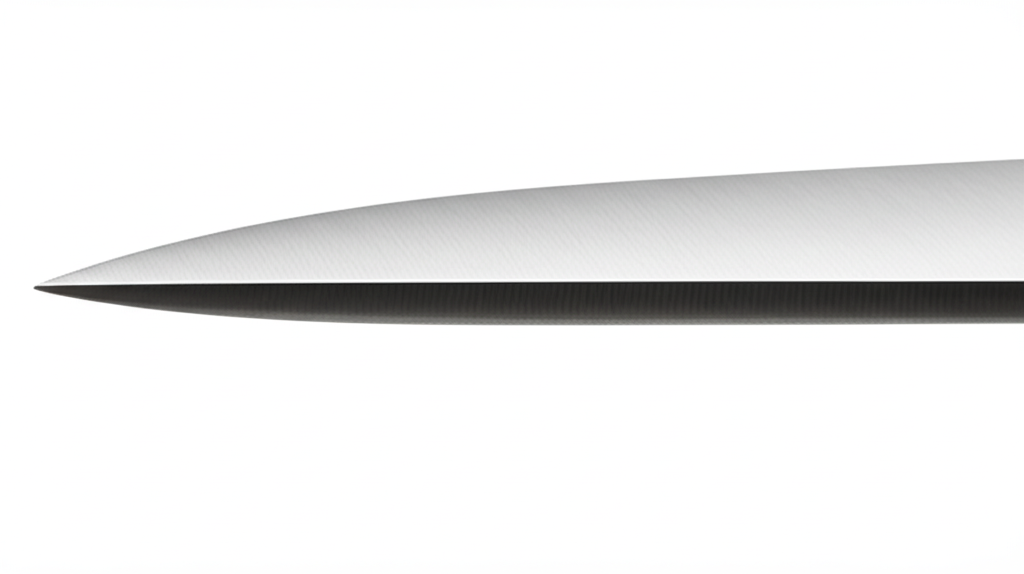
Many sharpening systems, whether they are electric sharpeners, pull-through sharpeners, or whetstones with angle guides, come with built-in angle guides. These are specifically designed to hold your knife at a consistent angle.
- Electric Sharpeners: These often have slots that are pre-set to specific angles (e.g., 15 or 20 degrees). You simply pull the knife through the slot.
- Pull-Through Sharpeners: Similar to electric sharpeners, these have angled slots with abrasive materials.
- Whetstones with Guides: When using whetstones, you can purchase small angle guides that clip onto the spine of the knife. These guides rest on the stone, ensuring your blade maintains the correct angle as you sharpen.
Using a guide is the most foolproof way for beginners to maintain a consistent angle during sharpening. Brands like SharpeningSupplies.com offer great resources on understanding these guides.
Method 3: The “Marker” Trick (For Sharpening)
This is a fantastic visual aid when you’re learning to sharpen on whetstones.
- Color the Edge: Take a washable marker (like a Sharpie) and color the very edge bevel of your knife on both sides.
- Sharpen Lightly: Take a few strokes on your sharpening stone at what you think is the correct angle.
- Check the Mark: Wipe the blade clean and examine the edge.
- Analyze:
- If the marker is removed evenly along the entire bevel, you’ve found your angle!
- If the marker is only removed from the very tip of the edge, your angle is too steep.
- If the marker is removed from the entire bevel but also some of the flat side of the blade, your angle is too shallow.
- Adjust and Repeat: Adjust your angle slightly and repeat the process until the marker is removed cleanly from the bevel.
This trick is invaluable for developing the muscle memory needed for hand sharpening.
Maintaining Your Knife’s Angle: Simple Sharpening Tips
Once you know your knife’s ideal angle, keeping it that way is key to effortless cooking. Dull knives are frustrating and dangerous, but a little regular maintenance goes a long way.
Sharpening vs. Honing
It’s important to distinguish between sharpening and honing:
- Sharpening: This process actually removes metal from the blade to create a new, sharp edge. It’s done when the knife has become dull.
- Honing: This process realigns the microscopic teeth of the blade’s edge that get bent out of shape during normal use. It doesn’t remove metal, but rather straightens the existing edge. Honing should be done more frequently than sharpening.
A honing steel is your best friend for daily maintenance. Most Western knives benefit from honing before each use. For sharpening, you’ll typically do it less often, depending on how much you use your knives and what materials you cut.
Sharpening Methods for Beginners
Don’t be intimidated by sharpening! Here are some accessible methods:
1. Pull-Through Sharpeners
These are arguably the easiest for beginners. They have pre-set angled slots with abrasive wheels or carbide cutters.
- Pros: Very easy to use, quick results, consistent angle.
- Cons: Can be aggressive and remove more metal than necessary, may not achieve the absolute sharpest edge possible, can sometimes damage finer Japanese knives.
How to Use: Simply pull the knife blade through the designated slots, alternating sides if instructed. Follow the manufacturer’s directions carefully.
2. Electric Sharpeners
These are faster versions of pull-through sharpeners, using motorized abrasive wheels.
- Pros: Fastest method, very easy to use, consistent angles.
- Cons: Can remove a lot of metal, may overheat the blade if not used correctly, generally more expensive.
How to Use: Follow the manufacturer’s instructions. Typically, you’ll pull the knife through the angled slots. Some have different stages for coarse sharpening and fine honing.
3. Whetstones (Sharpening Stones)
This is the traditional method and offers the most control and the best results, though it has a steeper learning curve.
- Pros: Offers the sharpest possible edge, best control over the angle, good for all types of knives (including Japanese), can repair damaged edges.
- Cons: Requires practice to maintain a consistent angle, takes more time.
How to Use (Basic Steps):
- Soak the Stone: If you’re using a water stone, soak it in water until bubbles stop rising (follow stone instructions).
- Find Your Angle: Use your marker trick or a guide to set your 15-20 degree angle.
- Sharpen One Side: Place the blade on the stone at your chosen angle and push forward and slightly across the stone, as if slicing a thin layer off. Lift the blade.
- Sharpen the Other Side: Flip the knife and repeat on the other side, aiming for the same angle and number of strokes.
- Develop a Burr: Continue sharpening, alternating sides, until you feel a slight “burr” (a tiny rough edge) along the opposite side of the blade.
- Refine the Edge: Use lighter pressure on finer grit stones to remove the burr and polish the edge.
- Clean Up: Rinse the knife thoroughly and dry it. Clean your whetstone.
For a comprehensive guide on using whetstones, resources like Kitchen Knife Forums offer excellent, in-depth tutorials.
The Importance of Angle Guides
If you’re new to whetstones, using an angle guide is highly recommended. These small metal clips attach to the spine of your knife and rest on the stone, helping you maintain that crucial consistent angle. They are an inexpensive tool that can save you a lot of frustration and help you achieve much better results.
Common Kitchen Knife Angle Myths Debunked
There’s a lot of information out there, and sometimes it can be confusing. Let’s clear up a few common myths:
- Myth: All knives should be sharpened to the same angle.
Truth: Different knives and different tasks call for different angles. A delicate paring knife might benefit from a sharper angle, while a heavy cleaver might need a more robust one. - Myth: Sharpening ruins your knives.
Truth: Proper sharpening, done correctly and not excessively, actually preserves your knives by maintaining a functional and safe edge. It’s dullness and neglect that truly harm a knife. - Myth: Honing steels are for sharpening.
Truth: Honing realigns the edge; it doesn’t remove metal. Sharpening removes metal to create a new edge. You need both, but they serve different purposes. - Myth: You need expensive tools for sharp knives.
Truth: While high-end tools can offer more control, you can achieve very sharp knives with affordable pull-through sharpeners, basic whetstones, and even some DIY methods if done carefully. The key is consistency and understanding the angle.
Understanding these distinctions will help you care for your knives more effectively and get the best performance from them.
What Angle is Your Average Kitchen Knife? A Practical Look
So, what does this all mean for your everyday cooking? It means that the 15-20 degree angle per side is a fantastic baseline for most kitchen knives because it offers a great compromise.
- For everyday chopping of vegetables and fruits: This angle provides enough sharpness to slice cleanly without being so acute that it chips easily when you hit a harder piece of food.
- For slicing cooked meats: A good sharp edge helps create clean slices, preventing tearing and making your roasts look as good as they taste.
- For general prep work: It’s versatile enough to handle a wide variety of tasks, from mincing garlic to dicing onions.
If your knife feels like it’s struggling, or if you notice it dulling very quickly, it might be that the edge angle has been compromised, or it simply needs to be sharpened. Regularly checking and maintaining this angle ensures your knife remains a joy to use.
FAQ: Your Kitchen Knife Angle Questions Answered
Q1: How do I know if my knife is too dull?
A1: A dull knife will require more pressure to cut through food, will crush delicate items like tomatoes instead of slicing them, and might feel like it’s “skipping” off the surface of ingredients.
Q2: Can I sharpen my knives at home?
A2: Absolutely! With the right tools and a little practice, sharpening your knives at home is very achievable and rewarding.
Q3: What’s the difference between a 15-degree and a 20-degree angle?
A3: A 15-degree angle per side is sharper and better for delicate tasks, while a 20-degree angle per side is more durable and better for general use and tougher ingredients.
Q4: How often should I sharpen my kitchen knives?
A4: This depends on usage. For home cooks, sharpening every 2-3 months is often sufficient, especially if you hone regularly. Professional chefs might sharpen weekly.
Q5: What’s the best way to maintain my knife’s edge between sharpenings?
A5: Use a honing steel regularly (before each use is ideal) to realign the edge. Also, avoid cutting on hard surfaces like glass or stone, and wash and dry your knives by hand.
Q6: Do Japanese knives really need a different angle than Western knives?
A6: Yes, typically. Japanese knives are often made of harder steel, allowing them to hold a finer, sharper edge (around 10-15 degrees per side). Western knives are usually made of slightly softer steel, which benefits from a more durable angle (around 15-20 degrees per side).
Conclusion: Sharpen Your Skills, Sharpen Your Knives
Understanding the angle of your kitchen knife isn’t about becoming a cutlery expert overnight; it’s about empowering yourself with simple knowledge that makes cooking easier, safer, and more enjoyable. That average 15-20 degree angle per side is your gateway to a sharper, more efficient kitchen. Whether you choose a quick pull-through sharpener or the traditional whetstone, the key is consistency and a little bit of practice.
By regularly honing and occasionally sharpening your knives to maintain that optimal angle, you’ll notice a significant difference in how your tools perform. No more struggling with dull blades; just smooth, effortless cuts that make meal preparation a pleasure. So, go ahead, check your knives, perhaps try a new sharpening technique, and rediscover the joy of cooking with a perfectly sharp blade. Happy chopping!
