
Vegetables are an essential part of a healthy diet, packed with vitamins, minerals, and fiber—but how much is actually considered one serving? Whether you’re preparing a salad, cooking a side dish, or planning balanced meals, understanding a vegetable serving size chart helps you get the right amount for both nutrition and satisfaction.
Why Vegetable Serving Size Matters
Vegetables are low in calories but high in nutrients, making them one of the best foods for overall health. Still, portion size matters when it comes to balancing meals and meeting daily intake goals.
Knowing proper serving sizes helps you:
- Meet daily vegetable recommendations
- Balance your plate with other food groups
- Avoid overeating or undereating
For most adults, eating multiple servings of vegetables per day is recommended for optimal health.
Standard Vegetable Serving Sizes And Portions
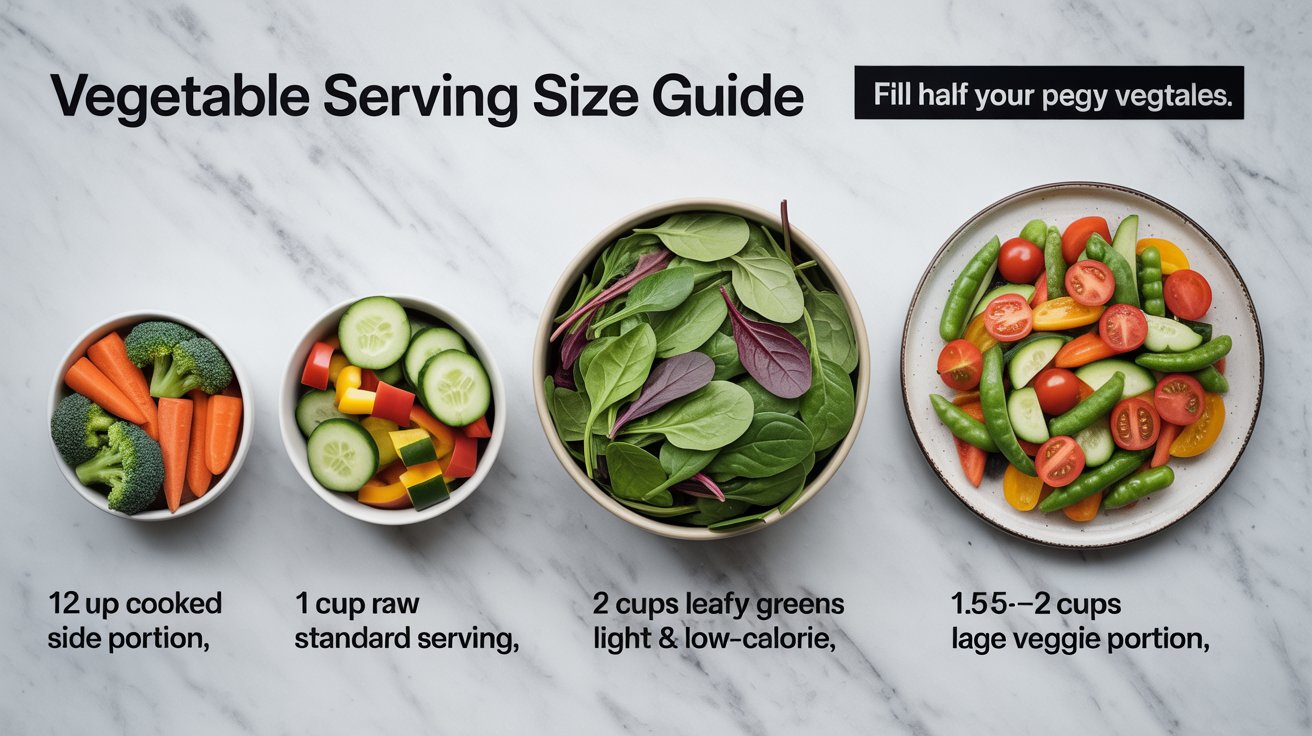
Vegetables are typically measured in cups (raw or cooked) or by weight. Here’s a general guide:
Vegetable Serving Size Chart
| Serving Type | Amount | Weight (Approx.) | Examples |
|---|---|---|---|
| Small Portion | ½ cup cooked | 75–90g | Carrots, broccoli, spinach |
| Standard Serving | 1 cup raw | 80–100g | Salad greens, cucumbers |
| Leafy Greens | 2 cups raw | 60–80g | Lettuce, spinach |
| Large Portion | 1.5–2 cups | 120–180g | Mixed vegetables, stir-fries |
These values can vary slightly depending on the type of vegetable.
Choosing The Right Vegetable Serving Size
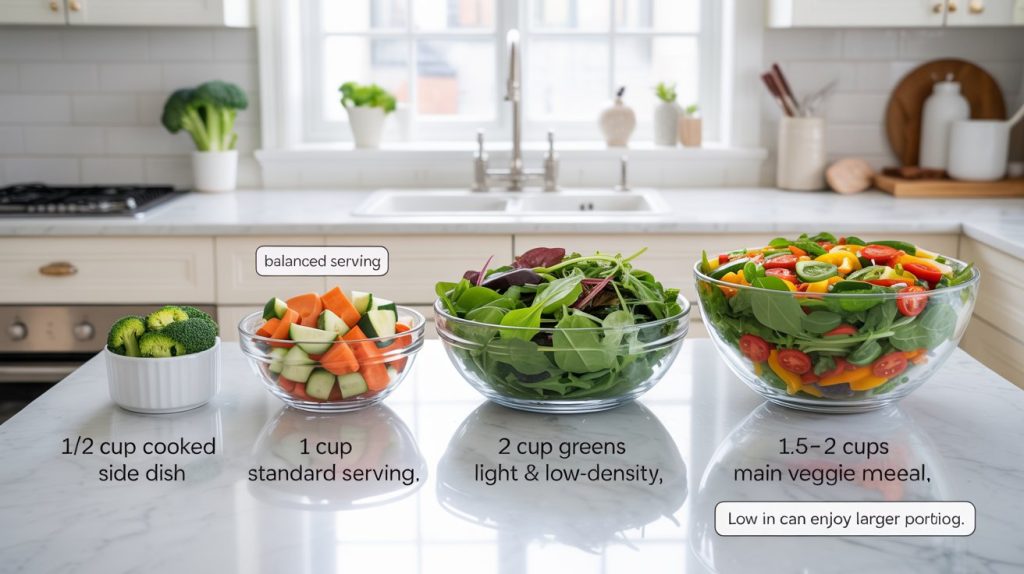
The best portion depends on your meal:
- ½ cup cooked: Ideal as a side dish
- 1 cup raw: Standard serving for most vegetables
- 2 cups leafy greens: Needed due to lower density
- 1.5–2 cups: Great for salads or main veggie dishes
Since vegetables are low in calories, you can often enjoy larger portions.
Vegetable Serving Size Comparison: Raw Vs Cooked
Vegetables change in volume when cooked.
Raw vs Cooked Vegetables
| Form | Volume Change | Texture | Serving Tip |
|---|---|---|---|
| Raw | Full volume | Crunchy | Best for salads |
| Cooked | Shrinks | Soft, tender | Use more raw before cooking |
For example, 1 cup of raw spinach may shrink to about ½ cup when cooked.
Vegetable Serving Size And Nutrition
Vegetables are nutrient-dense and low in calories.
A standard serving (1 cup raw or ½ cup cooked) typically contains:
- 20–50 calories
- High fiber
- Vitamins like A, C, and K
Because they’re so healthy, most people benefit from eating multiple servings daily.
Visual Guide: Vegetable Serving Size
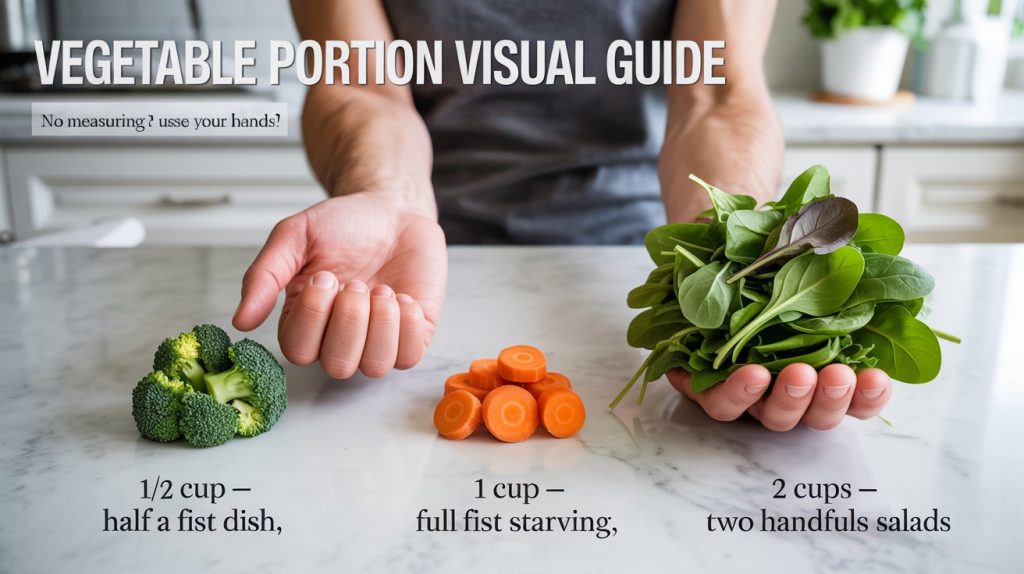
Here’s an easy way to estimate portions:
| Serving Size | Visual Comparison | Best Use |
|---|---|---|
| ½ cup | Half a fist | Side dish |
| 1 cup | Full fist | Standard serving |
| 2 cups | Two handfuls | Salads |
These visuals help when you don’t have measuring tools.
Tips For Measuring And Eating Vegetables
- Fill half your plate with veggies: Easy way to balance meals
- Mix different types: Adds variety and nutrients
- Use measuring cups: Helpful for accuracy
- Cook lightly: Preserves nutrients
- Include veggies in every meal: Breakfast, lunch, and dinner
Consistency is key for health benefits.
Common Mistakes When Choosing Vegetable Serving Size
- Eating too little: Missing out on nutrients
- Overcooking: Reduces nutritional value
- Not varying vegetables: Limits nutrient intake
- Ignoring portions in mixed dishes: Hard to track intake
Being mindful helps you get the most benefits.
How Vegetable Serving Size Affects Your Meal
Vegetables add volume, color, and nutrients to your meals. Larger portions can make meals more filling without adding many calories, while smaller portions may leave your plate unbalanced.
Including enough vegetables improves both taste and nutrition.
The Importance Of Vegetables In Daily Diet
Vegetables have been a key part of healthy diets worldwide for centuries. They support digestion, boost immunity, and help maintain overall well-being.
Frequently Asked Questions
What Is A Standard Serving Size Of Vegetables?
About 1 cup raw or ½ cup cooked.
How Many Vegetable Servings Should I Eat Daily?
Most adults should aim for 3–5 servings per day.
Can I Eat Too Many Vegetables?
Generally, vegetables are safe to eat in large amounts, but balance is important.
Do All Vegetables Have The Same Serving Size?
Most follow similar guidelines, but leafy greens require larger portions.
How Can I Measure Vegetables Without Tools?
Use visual cues like your fist or handful.
Vegetable serving sizes may seem simple, but they play a big role in your health and nutrition. By understanding the vegetable serving size chart, you can build balanced meals and enjoy the benefits of healthy eating every day.
