
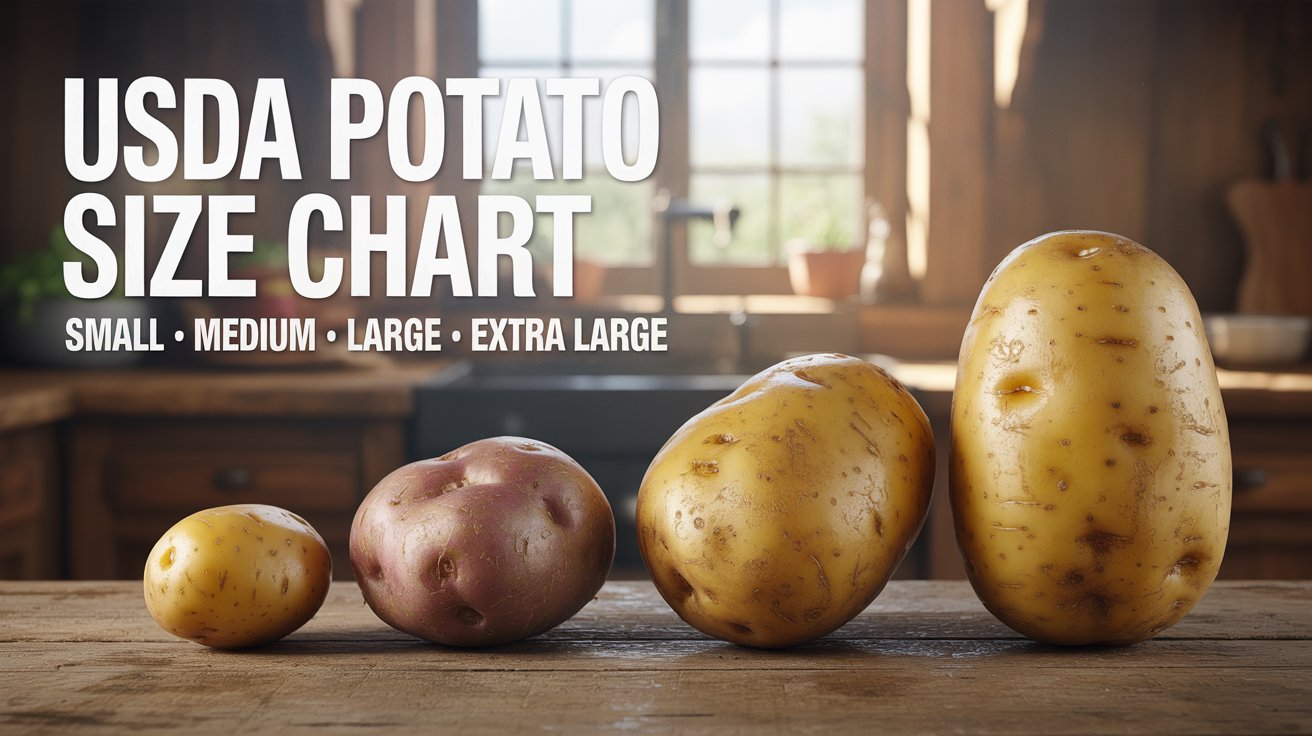
Potatoes are the ultimate comfort food, transforming any meal into a cozy experience. Whether you’re whipping up a creamy potato gratin for a dinner party or simple roasted potatoes for a weeknight side, the right size potato makes all the difference. Let’s get those taste buds tingling!
This guide features a USDA potato size chart to help you choose the perfect spud for your recipes. You’ll get insight on cooking methods and three tested recipes for small, medium, and large potatoes, ensuring every dish shines.
USDA Potato Size Chart
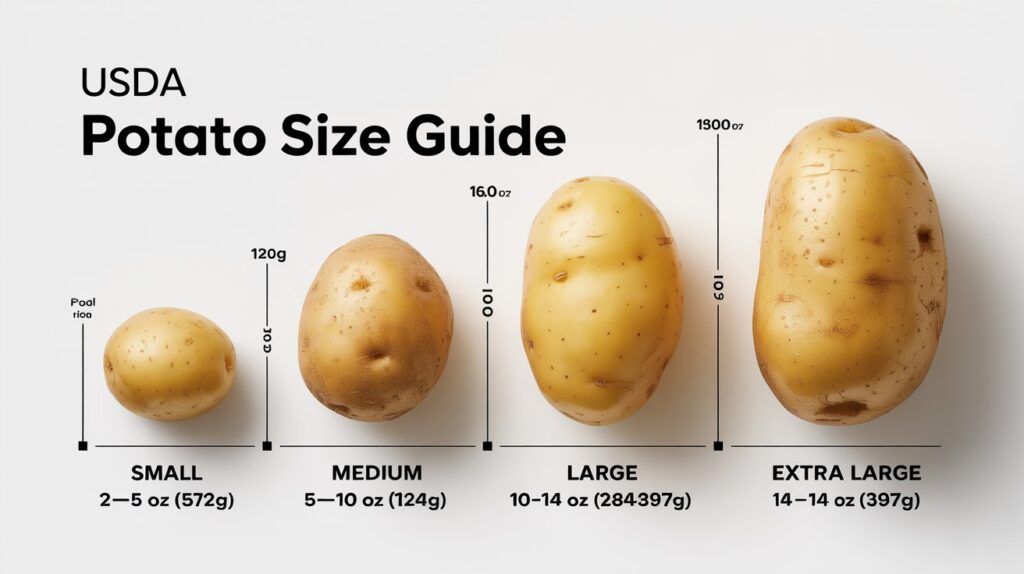
The USDA Potato Size Chart provides a visual representation of the various potato sizes and their ideal culinary applications. Understanding these sizes is crucial for selecting the right potatoes for your recipes, ensuring optimal cooking times and results.
| Small | 2-5 oz | 57-142 g | Roasting, salads, boiling |
| Medium | 5-10 oz | 142-284 g | Mashing, baking, soups |
| Large | 10-14 oz | 284-397 g | French fries, casseroles, baking |
| Extra Large | 14 oz and above | 397 g and above | Stuffed potatoes, baking |
“Chef’s tip: Always choose potatoes that are firm and free from blemishes for the best flavor and texture.”
- Small potatoes: Ideal for quick cooking methods; they retain moisture well.
- Medium potatoes: Versatile for a variety of dishes, perfect for mashing or baking.
- Large potatoes: Great for frying and producing uniform pieces.
- Extra large potatoes: Perfect for making stuffed dishes or baked potatoes with a fluffy interior.
Descriptions of Potato Sizes
Understanding the different sizes of potatoes is essential for selecting the right type for your recipes. Each size has unique characteristics that impact cooking methods and flavor profiles. Here’s a breakdown of small, medium, and large potatoes, along with their best uses in the kitchen.
Small Potatoes
Small potatoes, typically measuring 1 to 2 inches in diameter, are perfect for quick cooking methods such as boiling, roasting, or grilling. Their tender skins make them ideal for dishes where you want to keep the skin intact.
- Examples: Baby Yukon Gold, Red Bliss
- Best Uses: Salads, side dishes, and as a garnish
- Cooking Time: Boil for 12-15 minutes until fork-tender
Medium Potatoes
Medium potatoes range from 2 to 3 inches in diameter and are the most versatile. They can be used in a wide variety of recipes, from hearty soups to creamy mashed potatoes.
- Examples: Russet, Idaho
- Best Uses: Mashed potatoes, baking, and casseroles
- Cooking Time: Bake at 400°F (200°C) for 45-60 minutes until soft
Large Potatoes
Large potatoes measure over 3 inches in diameter and are best suited for baking or making fries. Their higher starch content results in a fluffy texture when cooked.
- Examples: Large Russets
- Best Uses: Baked potatoes, fries, and potato salads
- Cooking Time: Bake at 375°F (190°C) for 60-75 minutes
“Chef’s tip: Choose potatoes that feel firm and heavy for their size; avoid any with blemishes or sprouting.”
Cooking Methods by Size
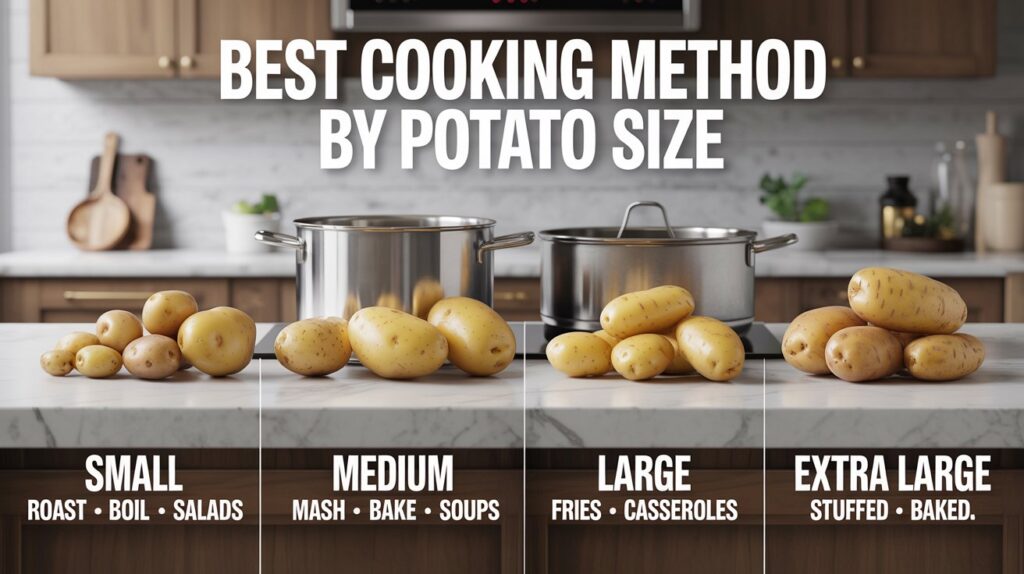
Understanding the best cooking techniques for different potato sizes can elevate your dishes and ensure optimal texture and flavor. Each size of potato has unique characteristics that lend themselves well to specific cooking methods, from roasting to boiling.
Small Potato Techniques
- Boiling: Cook small potatoes (like new potatoes) in salted water for about 15-20 minutes until fork-tender. They should feel soft but firm when pierced.
- Roasting: Toss with 2 tablespoons olive oil and seasonings, then roast at 400°F (200°C) for 25-30 minutes, shaking the pan halfway. Look for a crispy exterior and tender interior.
- Steaming: Steam small potatoes for 10-15 minutes until tender. They should be easy to pierce with a fork while retaining a slight bite.
Medium Potato Techniques
- Baking: Bake medium potatoes (like Yukon Gold) at 425°F (220°C) for about 45-60 minutes. The skin should be crispy while the inside is fluffy and light.
- Mashed: Boil peeled and cubed medium potatoes in salted water for 15-20 minutes until tender. Mash with ½ cup milk and 4 tablespoons butter until smooth and creamy.
- Frying: Cut into wedges and fry in 350°F (175°C) oil for about 5-7 minutes until golden brown and crispy.
Large Potato Techniques
- Stuffing: Bake large potatoes at 375°F (190°C) for about 60-75 minutes. After baking, scoop out the insides for stuffing. The skin should be crispy, and the flesh should be soft.
- Slow Cooking: Cut large potatoes into chunks and add to a slow cooker with broth, cooking on low for 6-8 hours. They should be tender and easily mashable.
- Grilling: Slice large potatoes into thick rounds and grill for 20-25 minutes, flipping halfway. Look for grill marks and a tender, smoky flavor.
Nutritional Comparison by Size
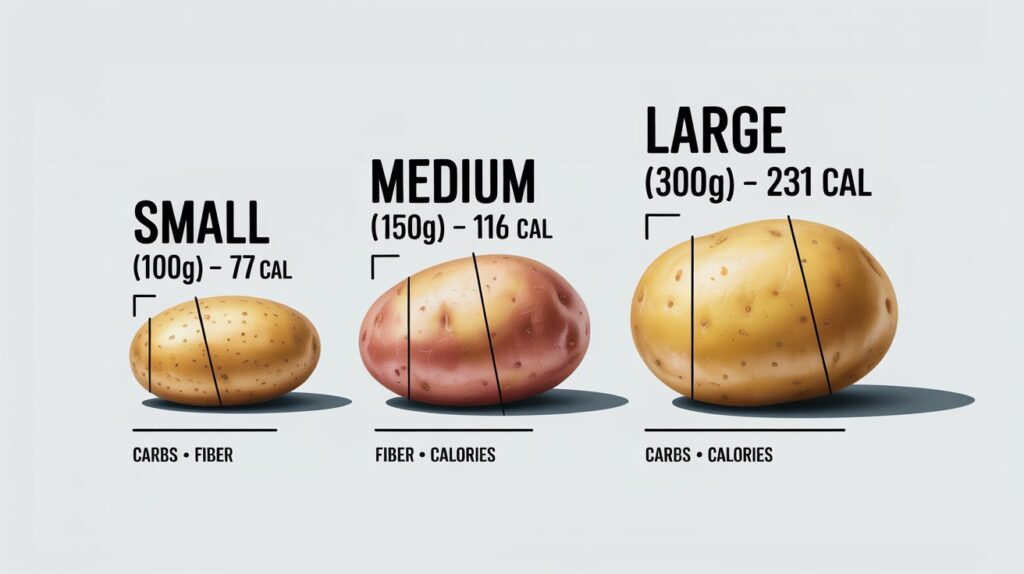
| Size | Calories | Carbs | Fiber |
|---|---|---|---|
| Small (100g) | 77 | 17g | 2g |
| Medium (150g) | 116 | 26g | 2.5g |
| Large (300g) | 231 | 52g | 5g |
Recipes for Small Potatoes
Small potatoes, often called baby potatoes or new potatoes, are tender, flavorful, and perfect for a variety of dishes. In this section, I’ll share three delicious recipes that highlight their unique qualities, making them the star of your meal. Each recipe is easy to follow, ensuring you can enjoy these little gems in no time!
Recipe 1: Garlic Herb Roasted Small Potatoes
Prep Time: 10 minutes
Cook Time: 30 minutes
Chef’s tip: Choose potatoes that are uniform in size for even cooking.
- 1½ pounds small potatoes (680g)
- 3 tablespoons olive oil
- 4 cloves garlic, minced
- 1 tablespoon fresh rosemary, chopped
- 1 teaspoon salt
- ½ teaspoon black pepper
- Preheat your oven to 425°F (220°C). Line a baking sheet with parchment paper.
- In a large bowl, combine the small potatoes, olive oil, minced garlic, rosemary, salt, and pepper. Toss until well coated.
- Spread the potatoes on the prepared baking sheet in a single layer. Roast for 25-30 minutes, turning halfway through, until golden brown and crispy.
| Nutrition Info (per serving) | Amount |
|---|---|
| Calories | 180 |
| Fat | 8g |
Recipe 2: Creamy Potato Salad with Small Potatoes
Prep Time: 15 minutes
Cook Time: 20 minutes
Chef’s tip: For a lighter version, swap out mayonnaise for Greek yogurt.
- 1 pound small potatoes (450g)
- ¼ cup mayonnaise
- 2 tablespoons Dijon mustard
- 2 tablespoons apple cider vinegar
- 1 stalk celery, diced
- 2 green onions, sliced
- Salt and pepper to taste
- Place the small potatoes in a pot, cover with water, and bring to a boil. Cook for 15-20 minutes until tender. Drain and let cool.
- Once cool, cut the potatoes in half and place them in a large mixing bowl. Add the mayonnaise, Dijon mustard, vinegar, celery, and green onions.
- Toss gently to combine, seasoning with salt and pepper. Chill in the refrigerator for at least 30 minutes before serving.
Recipe 3: Small Potato Skewers
Prep Time: 20 minutes
Cook Time: 15 minutes
Chef’s tip: Soak skewers in water for 30 minutes to prevent burning on the grill.
- 1 pound small potatoes (450g)
- 2 tablespoons olive oil
- 1 teaspoon paprika
- Salt and pepper to taste
- Wooden or metal skewers
Recipes for Medium Potatoes
Medium potatoes, typically measuring 2 to 3 inches in diameter, are incredibly versatile and can be used in a variety of delicious dishes. In this section, I’ll share three tested recipes that highlight the wonderful texture and flavor of medium potatoes, ensuring your meals are both satisfying and flavorful.
Recipe 1: Garlic Roasted Medium Potatoes
This recipe brings out the rich, earthy flavor of medium potatoes with a garlic-infused finish.
- 1.5 pounds medium potatoes, halved
- 3 tablespoons olive oil
- 4 cloves garlic, minced
- 1 teaspoon dried rosemary
- Salt and pepper to taste
- Preheat your oven to 425°F (220°C). Line a baking sheet with parchment paper.
- In a large bowl, toss the halved potatoes with olive oil, minced garlic, rosemary, salt, and pepper until evenly coated.
- Spread the potatoes out in a single layer on the prepared baking sheet. Roast for 30-35 minutes, turning halfway through, until golden brown and tender when pierced with a fork.
Chef’s tip: For extra crispiness, broil the potatoes for the last 2-3 minutes, watching closely to prevent burning.
Recipe 2: Creamy Potato Salad
This classic potato salad is perfect for picnics and barbecues, offering a creamy texture and tangy flavor.
- 2 pounds medium potatoes, diced
- ¾ cup mayonnaise
- 2 tablespoons Dijon mustard
- ½ cup celery, diced
- ½ cup red onion, diced
- Salt and pepper to taste
- Bring a large pot of salted water to a boil. Add the diced potatoes and cook for 10-12 minutes until fork-tender. Drain and let cool to room temperature.
- In a large bowl, mix the mayonnaise, Dijon mustard, celery, red onion, salt, and pepper. Fold in the cooled potatoes gently to combine.
- Refrigerate for at least 1 hour before serving to allow the flavors to meld.
Pro tip: Use Greek yogurt instead of mayonnaise for a lighter version!
Recipe 3: Cheesy Potato Casserole
This hearty casserole is a comfort food classic, perfect for family gatherings.
- 3 pounds medium potatoes, peeled and thinly sliced
- 2 cups shredded cheddar cheese
- 1 cup sour cream
- 1 cup milk
- 1 teaspoon garlic powder
- Salt and pepper to taste
- Preheat your oven to 350°F (175°C). Grease a 9×13-inch baking dish.
- In a large bowl, combine the sour cream, milk, garlic powder, salt, and pepper. Layer half of the sliced potatoes in the prepared dish, then pour half of the sour cream mixture over the top. Sprinkle with 1 cup of cheddar cheese.
- Repeat the layers with the remaining potatoes, sour cream mixture, and top with the remaining cheese. Cover with aluminum foil and bake for
Recipes for Large Potatoes
Large potatoes are versatile and hearty, perfect for creating satisfying meals. Here are three tested recipes that highlight the best uses for large potatoes, ensuring your cooking is both delicious and fulfilling. Each recipe emphasizes exact measurements and cooking techniques for optimal results.
1. Loaded Baked Potatoes
- 4 large russet potatoes (about 1 pound each)
- ½ cup sour cream
- 1 cup shredded cheddar cheese
- 6 slices cooked bacon, crumbled
- 3 green onions, chopped
- 2 tablespoons olive oil
- Salt and pepper to taste
- Preheat your oven to 400°F (200°C). Rinse the potatoes under cold water and pat dry.
- Rub each potato with olive oil and sprinkle with salt. Place them directly on the oven rack and bake for 45-60 minutes until tender and the skin is crispy.
- Remove the potatoes and let them cool slightly. Slice them open and fluff the insides with a fork.
- Top with sour cream, cheese, bacon, and green onions. Serve warm.
Chef’s tip: For extra flavor, add a dash of garlic powder to the potato filling.
2. Potato Gratin
- 3 large Yukon Gold potatoes, thinly sliced
- 2 cups heavy cream
- 1 cup grated Gruyère cheese
- 2 cloves garlic, minced
- Salt and pepper to taste
- 2 tablespoons butter
- Preheat your oven to 375°F (190°C). Grease a 9×13 inch baking dish with butter.
- Layer half of the potato slices in the dish. Season with salt, pepper, and half of the minced garlic.
- Pour half of the cream over the potatoes and sprinkle with half of the Gruyère cheese.
- Repeat the layers with the remaining potatoes, cream, garlic, and cheese. Bake for 1 hour or until golden and bubbly.
Pro tip: Let the gratin rest for 10 minutes before serving to allow it to set.
3. Mashed Potato Cakes
- 2 large potatoes, peeled and quartered
- 1 egg
- ½ cup all-purpose flour (60g)
- ¼ cup grated Parmesan cheese
- Salt and pepper to taste
- 2 tablespoons olive oil for frying
- Boil potatoes in salted water for 15-20 minutes until tender. Drain and let cool.
- In a large bowl, mash the potatoes until smooth. Mix in the egg, flour, Parmesan, salt, and pepper until well combined.
- Form the mixture into patties. Heat olive oil in a skillet over medium heat.
- Fry the patties for 3-4 minutes on each side until golden brown. Serve warm.
Warning: Don’t overcrowd the pan or the cakes won’t crisp up properly.
Selecting and Storing Potatoes
Choosing the right potatoes based on their size is crucial for achieving the best results in your cooking. Proper storage techniques also ensure your potatoes stay fresh for longer, which is essential for any home cook. Here’s how to select and store potatoes effectively, aligned with the USDA potato size chart.
- Selecting Potatoes by Size: When choosing potatoes, consider their size as indicated in the USDA chart. For example, small potatoes (2-3 ounces) are perfect for roasting or adding to salads, while medium potatoes (4-6 ounces) are ideal for mashing or baking. Large potatoes (8 ounces and above) are great for stuffing or making French fries. Look for firm, smooth skin without blemishes or sprouts.
- Inspecting Freshness: Always check for freshness by gently squeezing the potato. It should feel firm to the touch. Avoid any that are soft, wrinkled, or have green spots, as these can indicate spoilage or toxicity due to solanine.
- Storing Potatoes: Store potatoes in a cool, dark place with good ventilation, such as a pantry or a cellar. The ideal temperature is between 45°F (7°C) and 50°F (10°C). Never store them in the refrigerator, as this can alter the flavor and texture.
- Avoiding Common Mistakes: Do not wash potatoes before storing, as moisture can lead to rot. Instead, keep them dry and clean until just before use. Keep them away from onions, as the gases emitted can cause both to spoil faster.
Quick Summary
| Prep Time | Cook Time | Total Time | Servings |
|---|---|---|---|
| 5 minutes | Varies by size | Varies by size | Varies |
- Understand Sizes: Familiarize yourself with USDA potato sizes: small, medium, large, and extra-large.
- Cooking Times: Adjust cooking times based on potato size; larger potatoes take longer to cook.
- Uniform Cutting: Cut potatoes into uniform pieces for even cooking.
- Use a Thermometer: Check doneness with a thermometer; potatoes should reach 210°F for perfect tenderness.
- Storage Matters: Store potatoes in a cool, dark place to maintain freshness.
- Peeling Preference: Decide whether to peel or leave skin on based on recipe and preference.
Frequently Asked Questions
Can I make potato dishes ahead of time? How to store and reheat?
You can prepare potato dishes ahead of time; just store them in an airtight container in the fridge for up to 3 days. To reheat, place them in a preheated oven at 350°F (175°C) until heated through, usually about 15-20 minutes.
What can I substitute for a specific potato size if I can’t find it?
If you’re missing a specific potato size, you can use a larger potato and cut it down to the desired size, keeping the ratio roughly the same. For example, if you need a medium potato, use a large one and cut it into 1-inch chunks.
How do I know when my potatoes are done cooking?
Your potatoes are done when they are tender and can be easily pierced with a fork, usually taking about 15-20 minutes in boiling water. For baked potatoes, they should feel soft when squeezed gently, which takes about 45-60 minutes at 400°F (200°C).
Can I freeze potatoes from the USDA size chart? How long do they last?
You can freeze cooked potatoes, but raw potatoes do not freeze well and can turn mushy. Cooked potatoes can last in the freezer for up to 10-12 months if stored in a freezer-safe container.
What if I don’t have a kitchen scale to measure potato sizes?
If you don’t have a kitchen scale, you can use the USDA potato size chart as a visual guide; a medium potato is about the size of a computer mouse. Alternatively, you can use a measuring cup to estimate sizes, as 1 medium potato is roughly equivalent to 1 cup diced.
