
Sugar is found in many foods—from drinks and desserts to everyday snacks. While it adds sweetness and flavor, consuming too much sugar can impact your health. Understanding a sugar serving size helps you manage intake, read labels correctly, and make better dietary choices.
Why Sugar Serving Size Matters
Sugar is high in calories but provides little nutritional value. It can quickly add up, especially in processed foods and beverages.
Knowing the right serving size helps you:
- Control calorie intake
- Reduce risk of weight gain and health issues
- Monitor added sugar in your diet
Being aware of sugar portions is key to maintaining a balanced diet.
Standard Sugar Serving Sizes And Portions
Sugar is typically measured in teaspoons (tsp) or grams (g).
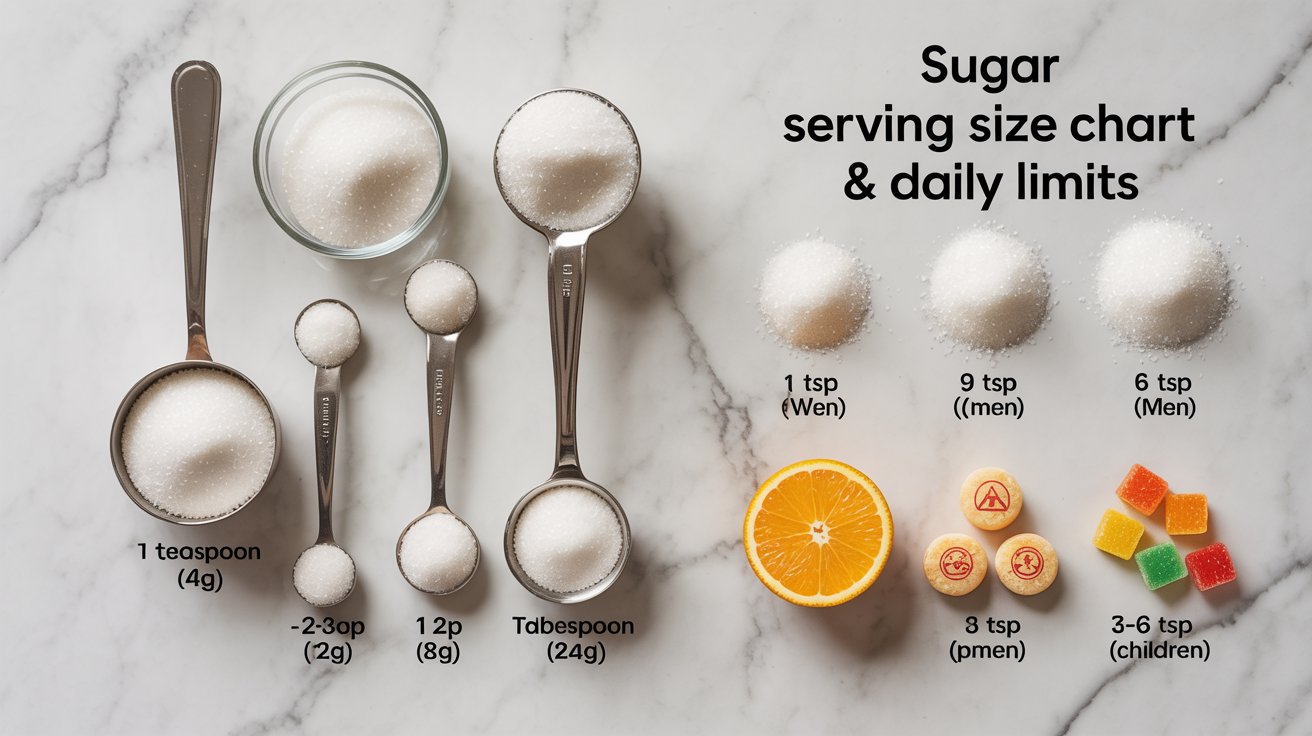
Sugar Serving Size Chart
| Serving Type | Amount | Weight (Approx.) | Calories |
|---|---|---|---|
| Small Portion | 1 tsp | 4g | 16 |
| Standard Serving | 2–3 tsp | 8–12g | 30–50 |
| Tablespoon | 1 tbsp | 12g | 48 |
| Large Portion | 2 tbsp | 24g | 90–100 |
👉 1 teaspoon of sugar = about 4 grams.
Choosing The Right Sugar Serving Size
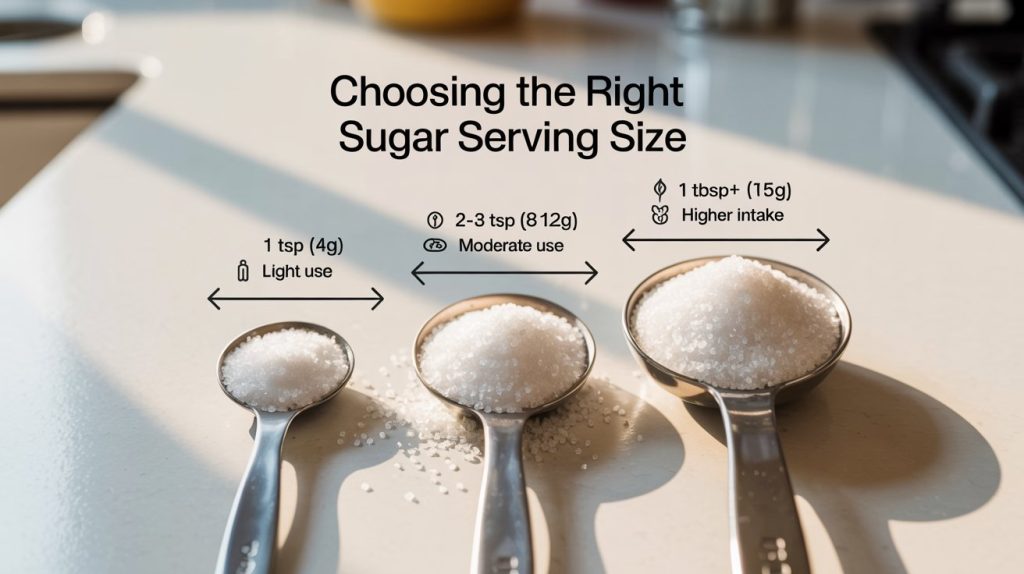
The best amount depends on your daily intake:
- 1 tsp: Light use (coffee or tea)
- 2–3 tsp: Moderate use
- 1 tbsp+: Higher intake, often in desserts
Keeping sugar intake low is generally recommended for better health.
Sugar Serving Size And Daily Limits
Health organizations provide guidelines for sugar intake.
Recommended Daily Sugar Intake
| Group | Recommended Limit |
|---|---|
| Adults | 25–36g (6–9 tsp) |
| Women | ~25g (6 tsp) |
| Men | ~36g (9 tsp) |
| Children | 12–25g (3–6 tsp) |
👉 These limits refer to added sugar, not natural sugar in fruits.
Sugar Serving Size Comparison: Natural Vs Added
Not all sugar is the same.
Natural vs Added Sugar
| Type | Source | Notes |
|---|---|---|
| Natural | Fruits, milk | Comes with nutrients |
| Added | Soda, candy | Extra calories, fewer nutrients |
Focusing on reducing added sugar is most important.
Sugar Serving Size And Nutrition
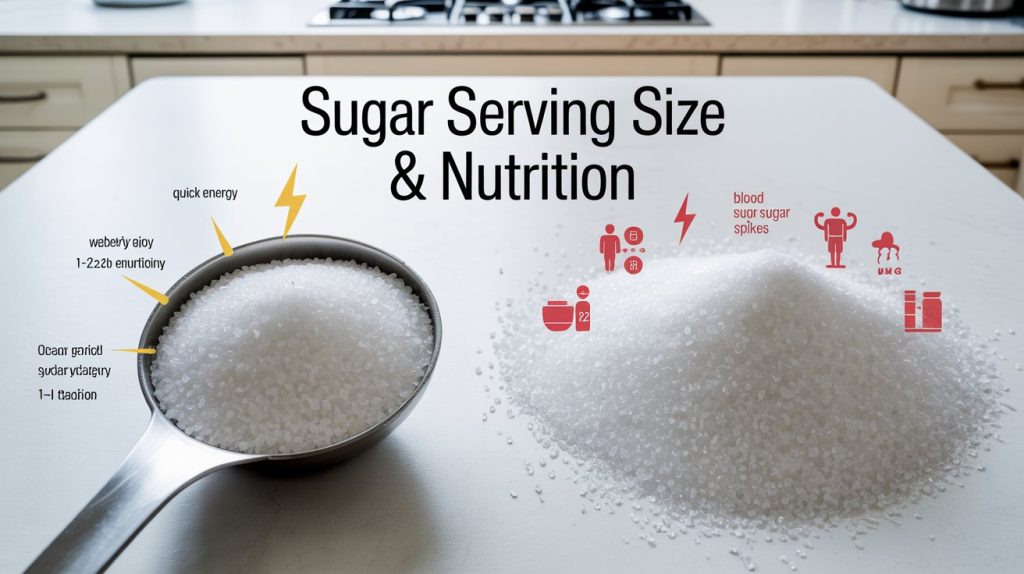
Sugar provides:
- Quick energy
- Calories (empty calories)
But too much sugar can lead to:
- Weight gain
- Blood sugar spikes
- Increased health risks
Moderation is key.
Visual Guide: Sugar Serving Size
Here’s a simple way to estimate sugar portions:
| Amount | Visual Comparison | Use |
|---|---|---|
| 1 tsp | Small spoon | Tea/coffee |
| 1 tbsp | Full spoon | Recipes |
| 6–9 tsp | Small pile of sugar | Daily limit |
Visual cues help you stay within limits.
Tips For Managing Sugar Intake
- Read nutrition labels: Check added sugar
- Limit sugary drinks: Major source of sugar
- Use less in beverages: Reduce gradually
- Choose natural foods: Fruits over sweets
- Watch hidden sugars: In sauces and snacks
Small changes can significantly reduce intake.
Common Mistakes With Sugar Serving Size
- Ignoring hidden sugars: Found in many processed foods
- Underestimating portions: Sugar adds up quickly
- Drinking calories: Beverages contain high sugar
- Assuming natural equals unlimited: Still needs moderation
Awareness helps you make better choices.
How Sugar Serving Size Affects Your Diet
The amount of sugar you consume directly impacts your overall health. Staying within recommended limits helps maintain energy levels and reduces health risks.
Balancing sugar intake ensures a healthier lifestyle.
The Role Of Sugar In Diets
Sugar has been a part of human diets for centuries, but modern diets often include far more added sugar than needed. Managing serving sizes is essential for better health.
Frequently Asked Questions
What Is One Serving Of Sugar?
About 1 teaspoon (4 grams).
How Much Sugar Should I Have Daily?
Around 6–9 teaspoons depending on age and gender.
Is Natural Sugar Better Than Added Sugar?
Yes, because it comes with nutrients.
Can I Completely Avoid Sugar?
You can avoid added sugar, but natural sugar is found in many healthy foods.
How Do I Measure Sugar Without Tools?
Use a teaspoon as a guide.
Sugar serving sizes may seem small, but they have a big impact on your health. By understanding the sugar serving size chart, you can control your intake, make smarter choices, and maintain a balanced diet.
