
There is something special about enjoying a warm bowl of soup on a cold evening. Soup is more than just food—it brings comfort, warmth, and a chance to gather around the table with family and friends. From creamy tomato soup to hearty chicken noodle, a well-served bowl of soup can turn a simple meal into a satisfying experience.
Understanding the proper soup serving size helps with meal planning, portion control, and making sure everyone gets the right amount.
Prep Time: 10 minutes
Cook Time: 20 minutes
Total Time: 30 minutes
Difficulty: Easy
Servings: 4
Soup Serving Size
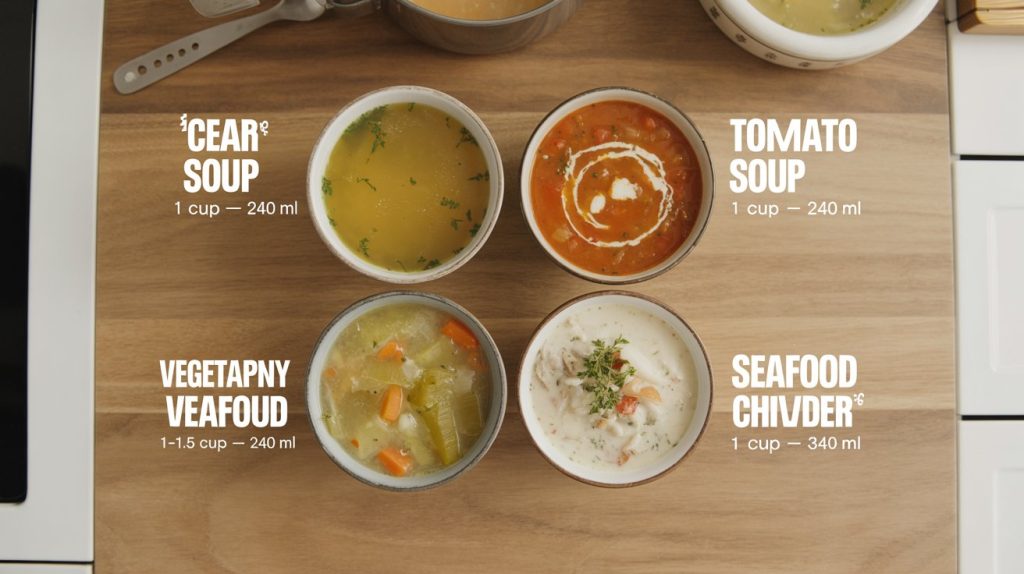
Soup serving size refers to the amount of soup typically served to one person. Knowing the right portion helps prevent food waste, improves meal planning, and ensures every guest receives a satisfying bowl.
The ideal serving size often depends on whether the soup is served as a starter or the main dish.
Standard Soup Serving Sizes
| Soup Type | Serving Size (Cups) | Milliliters (ml) | When Served |
|---|---|---|---|
| Light broth soups | 1 cup | 240 ml | Starter or appetizer |
| Chunky soups | 1 – 1.5 cups | 240 – 360 ml | Starter or light meal |
| Pureed soups | 1 – 1.25 cups | 240 – 300 ml | Starter or main dish |
| Hearty stews or chowders | 1.5 cups | 360 ml | Main course |
Why Soup Serving Size Matters
Choosing the correct portion size provides several benefits.
Nutritional Balance
Serving appropriate portions helps control calorie intake and ensures balanced meals.
Cost Efficiency
Proper serving sizes help reduce food waste and make better use of ingredients.
Guest Satisfaction
When everyone receives a proper portion, the dining experience becomes more enjoyable.
Chef’s tip: Always measure soup with a liquid measuring cup or ladle to maintain consistent portions.
How Soup Serving Sizes Work
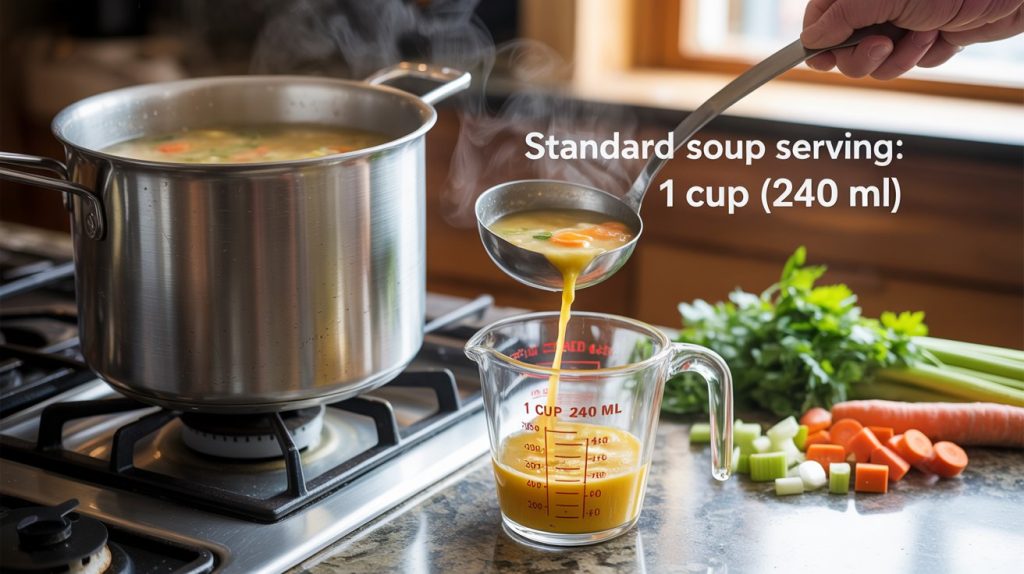
In most cases, the standard serving size for soup is about 1 cup (240 ml). However, this amount may change depending on the soup type and whether it is the main dish.
Typical Serving Size by Soup Style
| Soup Style | Typical Portion |
|---|---|
| Light broth soups | 1 cup (240 ml) |
| Pureed soups | 1.25 cups (300 ml) |
| Hearty soups or stews | 1.5 cups (360 ml) |
If soup is served with bread, salad, or other dishes, smaller portions are usually enough.
Chef’s tip: Prepare slightly more soup than needed. Soup often tastes even better the next day.
Key Benefits of Using Proper Soup Portions
Portion Control
Serving measured portions helps control calories and prevent overeating.
Consistency
Using standard serving sizes ensures everyone gets the same amount.
Better Meal Planning
Knowing the correct portions makes grocery shopping and meal preparation easier.
A typical serving of soup is 1 to 1.5 cups (240–360 ml) per person depending on the dish.
Step-by-Step Guide to Determining Soup Portions
Identify the Type of Soup
Different soups have different densities. Creamy chowders are heavier than clear broths.
Consider the Occasion
If soup is served as an appetizer, serve about 1 cup (240 ml).
If it is the main dish, increase to 1.5 to 2 cups (360–480 ml).
Use Measuring Tools
A standard ladle holds about ½ cup (120 ml). Using a ladle helps maintain consistent portions.
Adjust for Appetite
If you are serving soup with bread, rice, or salad, smaller portions may be sufficient.
Plan for Leftovers
When cooking for guests, it is better to prepare slightly more soup to avoid running out.
Chef’s tip: For soup tastings or multiple soup options, serve ½ cup (120 ml) sample portions.
Common Mistakes to Avoid
Ignoring Portion Sizes
Serving too little may leave guests hungry, while too much leads to waste.
Not Considering Side Dishes
If soup is served with bread or salad, reduce the portion slightly.
Using Oversized Bowls
Large bowls may lead to overfilling and inconsistent portions.
Overestimating Guest Appetite
Start with moderate servings and allow guests to request additional soup if desired.
Serving Size by Soup Thickness
| Soup Type | Recommended Serving |
|---|---|
| Thin soups (broths) | 1 cup (240 ml) |
| Chunky soups | 1 – 1.5 cups (240–360 ml) |
| Thick soups (chowders) | 1.5 cups (360 ml) |
Tips for Serving Soup Successfully
Adjust Portions for Meal Type
If soup is the main meal, serve larger portions.
Consider Guest Preferences
Children or light eaters may prefer smaller servings.
Prepare Extra Soup
Making slightly more soup ensures everyone can enjoy a second serving.
Serving Size Chart
| Soup Type | Starter Portion | Main Course Portion |
|---|---|---|
| Broth-based soups | 1 cup | 1.5 cups |
| Cream-based soups | ¾ cup | 1.5 cups |
| Chunky or hearty soups | 1 cup | 2 cups |
Chef’s tip: Always prepare a little more soup than needed—leftovers can be enjoyed later.
Real Examples of Soup Serving Sizes
Standard Serving
A typical serving of soup is 1 cup (240 ml) for appetizers.
Hearty Meal Portion
If soup is the main dish, serve 1.5 cups (360 ml) per person.
Children’s Portion
Children usually need ½ cup (120 ml) depending on age and appetite.
Example Calculation
If you are serving 6 adults with hearty soup:
| Guests | Portion per Person | Total Soup Needed |
|---|---|---|
| 6 adults | 1.5 cups | 9 cups (about 2.1 liters) |
For safety, preparing about 10 cups (2.4 liters) ensures there is enough for everyone.
Quick Summary
Prep Time: 15 minutes
Cook Time: 30 minutes
Total Time: 45 minutes
Servings: 4
Important tips:
• Measure soup portions using standard cups
• A 1-cup ladle works best for serving
• Store leftover soup in airtight containers for up to 3 days
• Garnish with fresh herbs just before serving
• Aim for a smooth and balanced consistency
Frequently Asked Questions
Can I make soup ahead of time?
Yes. Soup can be prepared in advance and stored in an airtight container in the refrigerator for up to 3 days.
What can I use instead of chicken broth?
You can substitute vegetable broth or water. Adding herbs or soy sauce can improve the flavor.
How do I know when soup is done cooking?
Soup is ready when the vegetables are tender and the flavors are well combined. Most soups simmer for 20–30 minutes.
Can soup be frozen?
Yes. Most soups can be frozen for up to 2–3 months if stored in airtight containers.
What if I don’t have an immersion blender?
You can use a regular blender. Allow the soup to cool slightly before blending to prevent splashing.
