
Imagine a plate of perfectly cooked shrimp, their sweet, briny flavor bursting with every bite. This dish is not just a weeknight staple; it transforms any meal into a special occasion. Juicy shrimp sautéed with garlic and herbs make for a quick dinner that will have your family asking for seconds!
Total time: 20 minutes, Difficulty: Easy, Servings: 4.
History of Shrimp Sizes
The sizing of shrimp has a rich history rooted in both culinary practices and commercial fishing. Understanding shrimp sizes is essential for cooks, as it directly influences cooking times, textures, and overall dish presentation.
Origin of Shrimp Sizing
The practice of sizing shrimp began as a way to standardize portions for both retail and culinary purposes. Traditionally, shrimp were categorized based on their size, which indirectly relates to their age and growth stage. The most common sizing methods include:
- Count per pound: This method indicates how many shrimp are in a pound, with smaller numbers representing larger shrimp (e.g., U10 means under 10 shrimp per pound).
- Acronyms: Terms like U10, U15, and 16/20 are frequently used in markets to denote specific size categories.
Importance in Cooking
Knowing shrimp sizes is crucial for achieving the desired texture and flavor in dishes. Here’s why it matters:
- Cooking Time: Larger shrimp take longer to cook, while smaller shrimp cook quickly. For instance, U10 shrimp may need 4-5 minutes on medium heat, whereas U30 shrimp might only need 2-3 minutes.
- Presentation: Size affects how shrimp appear in dishes. Larger shrimp can be visually stunning as a centerpiece, while smaller shrimp blend well in sauces and salads.
Chef’s tip: Always choose shrimp sizes that suit your recipe to ensure even cooking and optimal flavor.
Shrimp Size Chart
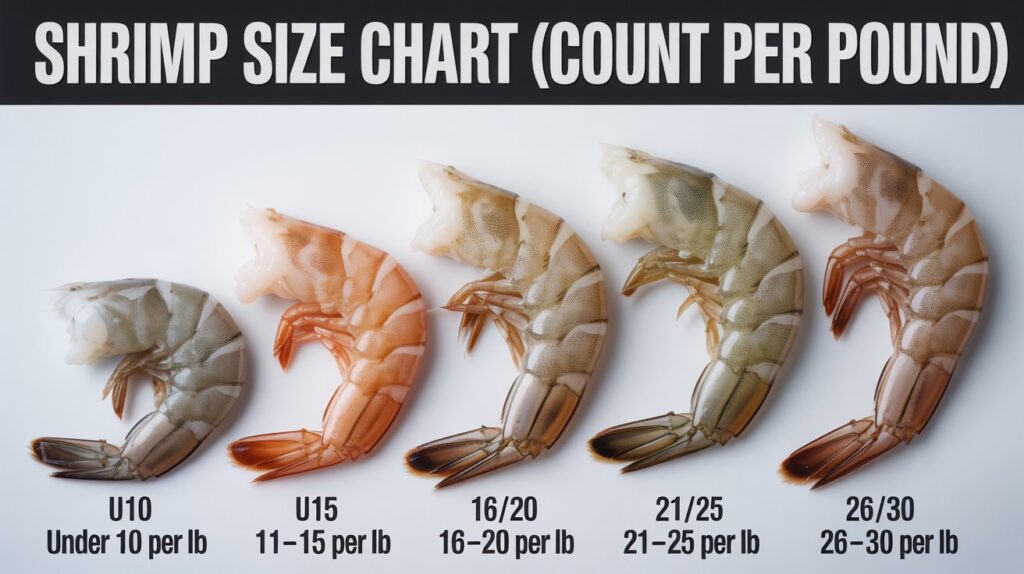
Understanding shrimp sizes is crucial when selecting the right shrimp for your recipes. Different sizes not only affect cooking times but also the presentation and overall flavor of your dish. Below, you’ll find a detailed chart of shrimp sizes, including U10 and U15 categories, along with other common sizes.
| Size | Count Per Pound | Best Uses |
|---|---|---|
| U10 | Under 10 | Grilling, BBQ |
| U15 | 11–15 | Cocktail, Pasta |
| 16/20 | 16–20 | Sauté, Fry |
| 21/25 | 21–25 | Stir-fry |
| 26/30 | 26–30 | Soup, Tacos |
| 31/40 | 31–40 | Appetizers |
Chef’s tip: When choosing shrimp, consider the dish you’re preparing. Larger shrimp hold up well on the grill, while smaller shrimp are excellent in soups.
By knowing these sizes, you can better plan your meals and ensure you have the right shrimp for your cooking needs. Remember, the right size can make all the difference in your final dish!
Choosing Shrimp for Recipes
Selecting the right size of shrimp can significantly impact your dish’s texture and flavor. Different cooking methods and recipes call for specific shrimp sizes, and knowing these can help you achieve the best results in your cooking.
- Consider Cooking Methods: When grilling or skewering shrimp, larger sizes like U10 (10 shrimp per pound) or U15 (15 shrimp per pound) are ideal. They hold up better against high heat and won’t overcook as quickly, ensuring a juicy bite. Conversely, for soups or stews, smaller shrimp like 41/50 are perfect, as they cook rapidly and blend well with other ingredients.
- Taste and Texture Differences: Larger shrimp offer a meatier texture and a bolder flavor, making them perfect for dishes where shrimp is the star. On the other hand, smaller shrimp are often more tender and absorb flavors more readily, which is great for salads or pasta dishes. Consider the role shrimp plays in your dish when choosing the size.
- Know the Counts: Refer to shrimp size charts, which typically list counts per pound, such as U10, U15, or 21/25. For example, U10 indicates there are about 10 shrimp in a pound, making it visually easier to estimate how much to buy based on the number of servings you need.
- Visual Cues: When purchasing shrimp, look for a firm texture and a slightly translucent appearance. Avoid any that appear dull or have black spots. Fresh shrimp should have a mild ocean scent, not a strong fishy odor.
Buying Fresh Shrimp
Choosing fresh shrimp is crucial for ensuring the best flavor and texture in your dishes. This section provides practical tips on what to look for when buying shrimp and how to communicate effectively with fishmongers to get the best quality.
- Look for clarity and sheen: Fresh shrimp should have a slightly translucent appearance with a shiny exterior. Avoid any that look dull or have black spots, as these may indicate spoilage.
- Check the smell: Fresh shrimp should have a mild, briny scent reminiscent of the ocean. If the shrimp smells overly fishy or ammonia-like, it’s best to steer clear.
- Examine the texture: The flesh should be firm and springy to the touch. If the shrimp feels mushy or slimy, it’s a sign that it may not be fresh.
- Inspect the shells: If buying shell-on shrimp, look for intact shells with no signs of discoloration or dark patches. Broken shells can indicate mishandling or aging.
How to Ask Fishmongers
- Be specific about your needs: Let the fishmonger know what size shrimp you’re looking for, referring to sizes like U10 or U15. This helps them provide you with options that suit your recipes.
- Inquire about sourcing: Ask where the shrimp comes from. Local or sustainably sourced shrimp are often fresher and better for the environment.
- Request for a sample: Don’t hesitate to ask for a small sample to assess the quality before purchasing. A good fishmonger will appreciate your diligence.
Recipes by Shrimp Size
Choosing the right shrimp size can significantly enhance your dish, both in flavor and presentation. Here, we’ll explore some delicious recipes tailored to U10, U15, and smaller shrimp, highlighting their unique characteristics and the best ways to showcase their textures and flavors.
Recipes for U10 Shrimp
U10 shrimp are large and meaty, making them perfect for grilling and sautéing. Here’s a standout recipe:
Chef’s tip: Marinating U10 shrimp enhances their flavor and tenderness.
- 1 pound U10 shrimp, peeled and deveined
- 2 tablespoons olive oil
- 3 cloves garlic, minced
- 1 tablespoon lemon juice
- 1 teaspoon smoked paprika
- Salt and pepper to taste
- In a bowl, combine olive oil, garlic, lemon juice, smoked paprika, salt, and pepper. Whisk until well mixed.
- Add the U10 shrimp, toss to coat, and let marinate for 15-30 minutes.
- Preheat your grill to medium-high heat (about 400°F or 200°C). Grill the shrimp for 2-3 minutes on each side until they turn pink and opaque.
Recipes for U15 Shrimp
U15 shrimp are versatile and can be used in various dishes. Here’s a quick recipe for a flavorful stir-fry:
- 1 pound U15 shrimp, peeled and deveined
- 2 tablespoons soy sauce
- 1 tablespoon sesame oil
- 1 cup mixed bell peppers, sliced
- 2 green onions, chopped
- 1 tablespoon ginger, minced
- In a large skillet over medium heat, add sesame oil. Once hot, add ginger and sauté for 1 minute until fragrant.
- Add the U15 shrimp and bell peppers, cooking for 4-5 minutes until the shrimp are pink and the peppers are tender.
- Stir in soy sauce and green onions, cooking for an additional minute before serving.
Recipes for Smaller Shrimp
Smaller shrimp are ideal for salads and pasta dishes. Try this refreshing shrimp salad:
- 1 pound small shrimp, peeled and deveined
- 4 cups mixed greens
- 1 avocado, diced
- 1 cup cherry tomatoes, halved
- 2 tablespoons olive oil
- 1 tablespoon lime juice
- Salt and pepper to taste
- In a saucepan, bring salted water to a boil. Add the small shrimp and cook for 2-3 minutes until they turn pink. Drain and cool.
- In a large bowl, combine mixed greens, avocado, cherry tomatoes, and cooked shrimp.
- Drizzle with olive oil and lime juice, tossing gently. Season with salt and pepper before serving.
Common Mistakes with Shrimp
Understanding the common pitfalls when cooking with shrimp can make all the difference in achieving a delicious dish. Whether it’s overcooking or selecting the wrong size, these mistakes can compromise the flavor and texture of your shrimp. Here’s what to watch out for:
Overcooking
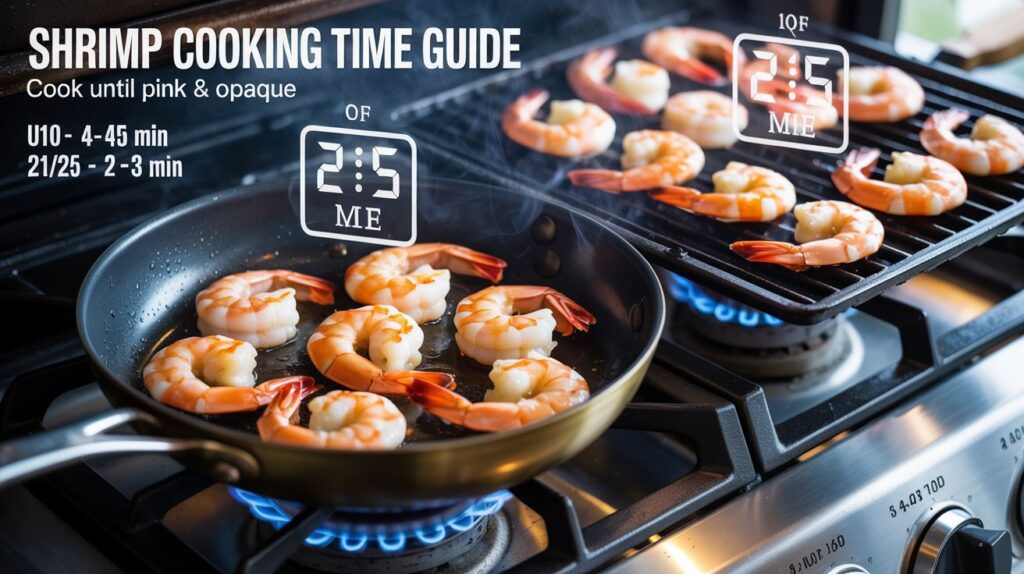
Shrimp is incredibly delicate and can go from perfectly cooked to rubbery in a matter of seconds. Here are some tips to avoid overcooking:
- Cooking Time: Shrimp cooks quickly, usually in 2-3 minutes over medium-high heat. Look for a pinkish color and an opaque appearance.
- Texture Check: When shrimp curl into a letter “C,” they are cooked. If they curl into an “O,” they’re likely overcooked.
- Remove from Heat: Always remove shrimp from heat as soon as they’re done to prevent carryover cooking.
Selecting the Wrong Size
Choosing the right shrimp size for your recipe is crucial for both cooking time and presentation. Here’s a quick reference:
| U10 | Less than 10 | Grilled or BBQ |
| U15 | 10-15 | Stir-fry or Sauté |
| 21/25 | 21-25 | Salads or Pasta |
| 31/40 | 31-40 | Appetizers or Tacos |
Always consider the size specified in recipes. If a recipe calls for U15 shrimp and you use U10, adjust the cooking time accordingly to avoid overcooking.
Chef’s tip: If you’re unsure about cooking time, start with less and add more time as needed. You can always cook shrimp longer, but you can’t uncook them!
Quick Summary
| Prep Time | Cook Time | Total Time | Servings |
|---|---|---|---|
| 5 minutes | 10 minutes | 15 minutes | 4 servings |
- Know your sizes: Understand shrimp sizes by count per pound for accurate cooking.
- Cooking time: Cook shrimp for 2-3 minutes per side until opaque and firm.
- Thawing method: Always thaw shrimp in the fridge overnight or under cold running water.
- Shell on/off: Leave shells on for grilling for extra flavor.
- Seasoning: Use a simple mix of salt, pepper, and lemon for freshness.
- Freshness count: Choose shrimp that smells like the sea, not fishy.
- Cooking temperature: Use medium-high heat for a perfect sear.
Frequently Asked Questions
Can I make shrimp dishes ahead of time? How to store and reheat?
You can prepare shrimp dishes ahead of time, but it’s best to store them in an airtight container in the refrigerator for up to 2 days. Reheat gently in a skillet over low heat to avoid overcooking the shrimp.
What can I substitute for large shrimp?
If you don’t have large shrimp, you can use medium shrimp instead, adjusting the cooking time slightly as they will cook faster. Alternatively, you can use scallops or diced chicken for a different protein option.
How do I know when shrimp is done cooking?
Shrimp is cooked when it turns a pink and opaque color and forms a C-shape. Typically, this takes about 2-3 minutes per side depending on the size.
Can I freeze shrimp? How long does it last?
You can freeze raw or cooked shrimp for up to 3 months in an airtight container. Just make sure to thaw them in the refrigerator before cooking or reheating.
What if I don’t have a shrimp deveiner?
If you don’t have a shrimp deveiner, you can use a small paring knife to carefully cut along the back to remove the shell and the vein. Just be gentle to avoid breaking the shrimp while cleaning.
