
Are you curious about shirataki noodles but unsure which size fits your meals best? Choosing the right shirataki noodle size can make a big difference in your cooking and eating experience.
Whether you’re aiming for a quick stir-fry or a hearty soup, knowing the perfect noodle size helps you save time and enjoy every bite. In this guide, you’ll find a clear and simple shirataki noodles size chart that answers all your questions.
Keep reading to discover how to pick the ideal noodle size for your favorite dishes and make your meals both tasty and satisfying.
Shirataki Noodles Basics
Shirataki noodles are a popular choice for healthy and low-calorie meals. They come from a plant called konjac. These noodles have almost no calories and very little carbs.
People use shirataki noodles as a substitute for regular pasta. They are translucent, slightly chewy, and absorb flavors well. Knowing the sizes helps you pick the best type for your dish.
What Are Shirataki Noodles
Shirataki noodles are made from the konjac root. This root contains glucomannan, a type of fiber. When processed, it forms jelly-like noodles. These noodles contain mostly water and fiber.
They are low in calories and do not raise blood sugar. Many use them for weight loss and healthy eating. Their texture is different from wheat noodles but pleasant.
Common Sizes Available
Shirataki noodles come in various shapes and sizes. The most common size is thin, similar to angel hair pasta. Another type is thicker, like fettuccine or udon.
Some packages have noodle bundles weighing 7 to 8 ounces. Others offer smaller or larger portions. The size affects cooking time and how they fit in recipes.
Choosing the right size helps make your meal more enjoyable. Thin noodles work well in soups and light dishes. Thicker noodles suit stir-fries and hearty meals.
Portion Sizes Explained
Understanding portion sizes is key to enjoying shirataki noodles without overeating. These noodles are low in calories and carbs, but serving size matters. Knowing the right portion helps with meal planning and tracking nutrition. This section breaks down the common serving sizes and measurements.
Standard Serving Size
A typical serving of shirataki noodles is about 85 grams or 3 ounces. This amount fills a bowl but feels light compared to regular pasta. Many packages list this size as one serving. It suits one person for a light meal or side dish.
Calorie And Carb Counts
Shirataki noodles have roughly 10 to 20 calories per serving. Carbs are very low, usually under 3 grams. This makes them ideal for low-carb or calorie-conscious diets. The noodles offer fiber but almost no fat or protein.
Weight Vs Volume Measurements
Weight is the most accurate way to measure shirataki noodles. Volume can be tricky because the noodles hold water. One cup of drained noodles weighs less than one cup when packed. Weigh noodles after draining for best results.
Size Chart Breakdown
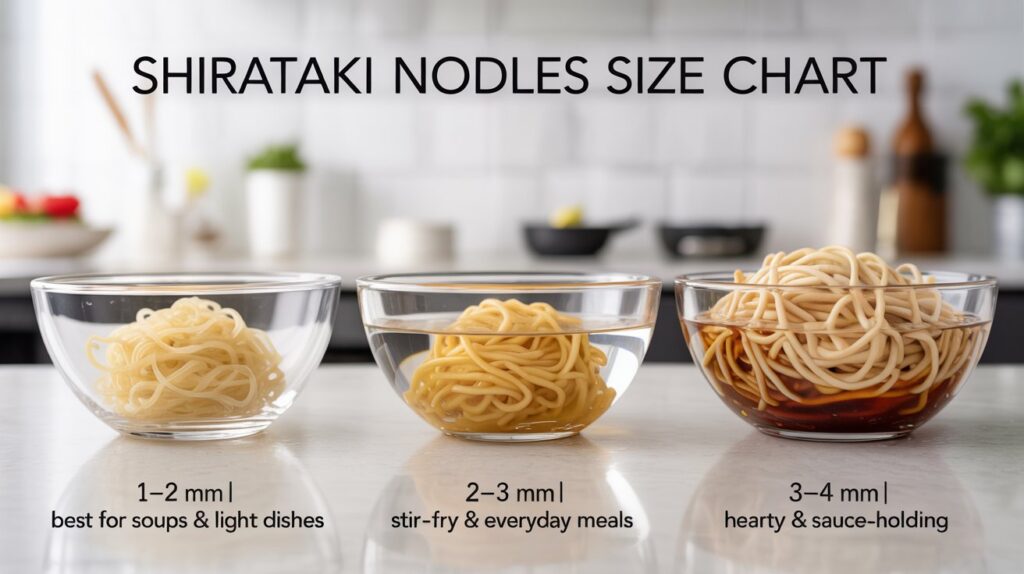
Understanding the Shirataki noodles size chart helps you pick the right portion. Sizes vary by package and serving needs. This breakdown makes it easy to choose your perfect amount.
Shirataki Noodles Size Chart
| Noodle Size | Approx. Width | Best Uses | Texture Feel | Typical Serving |
|---|---|---|---|---|
| Thin (Angel Hair) | 1–2 mm | Soups, light stir-fries | Soft, delicate | 100 g |
| Medium | 2–3 mm | Stir-fries, noodle bowls | Balanced, springy | 150 g |
| Thick (Udon-style) | 3–4 mm | Hearty meals, saucy dishes | Chewy, filling | 200–250 g |
Small Portions
Small portions usually weigh about 100 grams. They suit light meals or side dishes. Ideal for snacks or small salads. Low calories make them great for weight control.
Medium Portions
Medium portions range from 150 to 200 grams. Good for regular meals or main dishes. Enough to fill most adults comfortably. Balances quantity and calorie intake well.
Large Portions
Large portions weigh 250 grams or more. Perfect for big appetites or sharing. Great for hearty meals or family dinners. Provides plenty of volume with few calories.
Measuring Shirataki Noodles
Measuring shirataki noodles helps control serving size and calories. These noodles have high water content, so weight matters more than volume. Accurate measuring ensures you get the right portion for your meal and diet plan.
Using Kitchen Scales
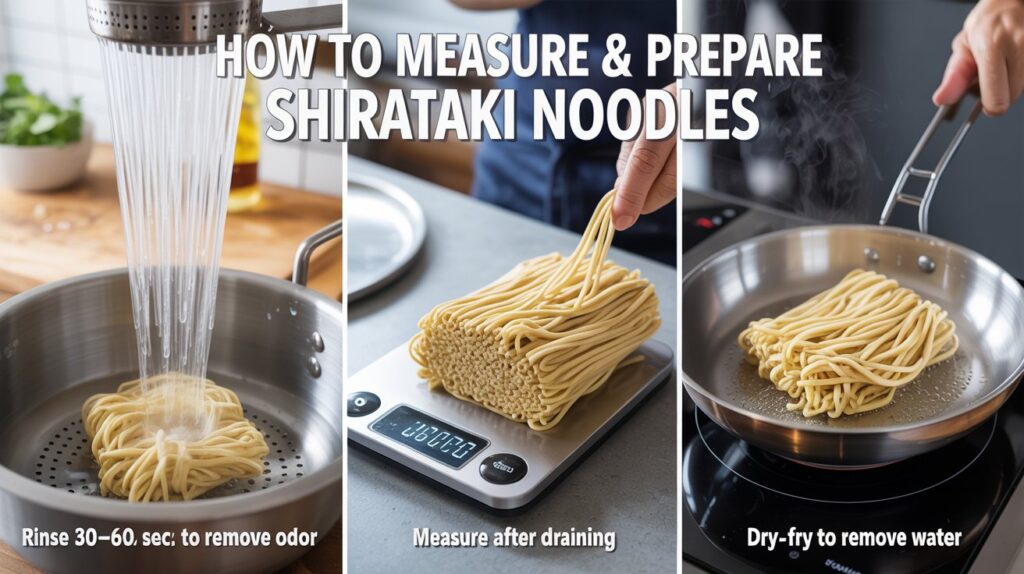
Kitchen scales give the most accurate measurement of shirataki noodles. Start by draining and rinsing the noodles well. Place a bowl on the scale and zero it out. Add noodles until you reach the desired weight. This method avoids guesswork and helps track nutrition precisely.
Visual Portion Guides
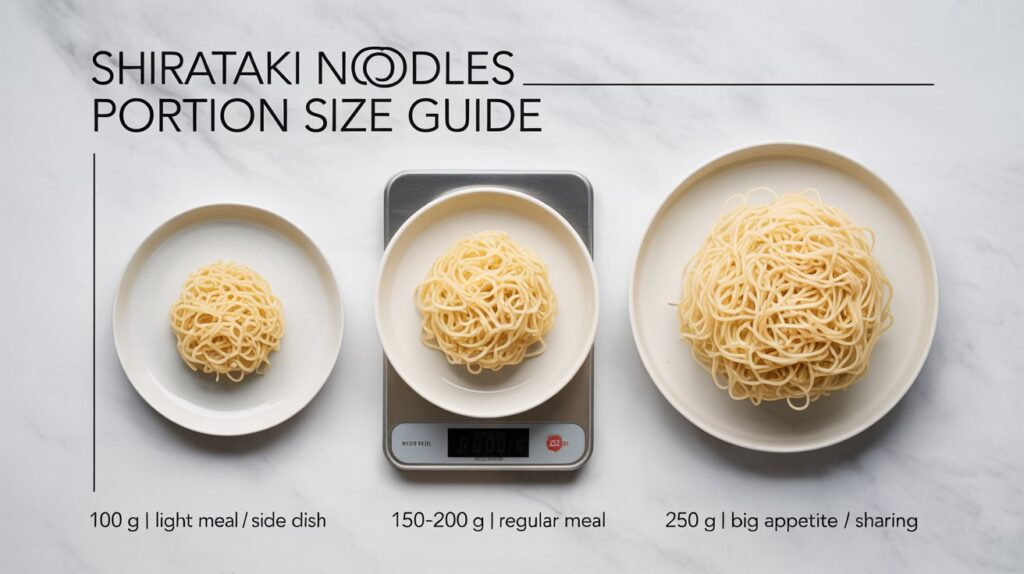
Visual guides help estimate serving sizes without tools. A typical serving of shirataki noodles looks like a small fist or a tennis ball. You can also compare portions to common objects like a smartphone or a deck of cards. These simple tricks help you serve the right amount quickly.
Adjusting Portions For Meals
Adjusting portions of shirataki noodles helps create meals that fit your goals. The noodles are low in calories and carbs, so portion size matters for balance. Serving sizes change depending on your diet type and number of people eating. This section guides you on how to adjust shirataki noodle portions for different meal needs.
For Low-calorie Diets
Shirataki noodles are perfect for low-calorie meals. Use about 100 grams per serving to keep calories low. This portion fills your plate without adding many calories. Pair with plenty of vegetables and lean proteins. Small portions help control calorie intake and keep you full longer.
For High-protein Meals
Increase shirataki noodles to 150 grams for meals rich in protein. The noodles add volume without many calories. Add chicken, tofu, or beans for protein. This balance supports muscle growth and recovery. Larger noodle portions help create a satisfying meal with enough energy.
For Family Serving Sizes
For family meals, multiply noodle portions by the number of people. Use around 100 grams per person as a guide. Cook noodles in larger batches to save time. Mix noodles with sauces, vegetables, and proteins for variety. Adjust portions based on each person’s appetite and age.
Cooking Tips For Perfect Portions
Cooking Shirataki noodles right helps you enjoy their unique texture and flavor. Proper portion control makes meals balanced and tasty. These tips guide you through easy steps for perfect servings every time.
Rinsing And Draining
Start by rinsing Shirataki noodles well under cold water. This step removes their natural smell. Drain the noodles thoroughly to avoid extra moisture. Use a colander or strainer for best results.
Reducing Excess Water
After draining, dry noodles on a clean cloth or paper towel. Squeeze gently to remove more water. Cooking in a hot pan helps evaporate leftover water. This improves texture and helps sauce stick better.
Combining With Other Ingredients
Add noodles to cooked vegetables, meats, or sauces. Mix well to absorb flavors evenly. Use portion sizes from your Shirataki noodles size chart. This keeps meals filling without overeating.
Common Mistakes With Portions
Understanding the right portion size of shirataki noodles can be tricky. Many people make mistakes that affect their meal plans and calorie intake. These errors often lead to eating too much or too little. Knowing common portion mistakes helps control your diet better. It also improves your cooking and serving habits.
Overestimating Serving Sizes
People often think one package equals one serving. Shirataki noodles come in various sizes, but serving size is usually smaller. Eating the whole package can double or triple calories unknowingly. Always measure noodles before cooking. Use a kitchen scale or measuring cup for accuracy.
Ignoring Noodle Expansion
Shirataki noodles absorb water and expand after cooking. A small dry portion can look large when cooked. This expansion can trick you into eating more than planned. Measure noodles before cooking, not after. Keep this in mind to avoid overeating.
Skipping Nutritional Labels
Many skip reading the nutrition facts on the package. Labels show exact serving size, calories, and nutrients. Ignoring this information causes portion errors. Take a moment to check the label each time. This habit helps maintain a balanced diet with shirataki noodles.
Buying Guide Based On Size
Choosing the right size of Shirataki noodles can improve your cooking experience. Size affects portion control, cooking time, and meal variety. This guide helps you pick the best size for your needs and lifestyle.
Choosing Packages For Singles
Single-serving packages are small and easy to store. They usually contain about 7 to 8 ounces of noodles. Perfect for quick meals or snacks. No waste and simple to prepare. Ideal for busy people or those who eat alone.
Bulk Buying For Families
Large packages offer more noodles at once. They range from 16 ounces to over 30 ounces. Great for families or group meals. Saves money and reduces shopping trips. Store leftovers in the fridge for a few days.
Specialty Sizes And Shapes
Shirataki noodles come in various shapes and sizes. Thin angel hair, thick fettuccine, or even rice-like grains. Each shape suits different recipes and sauces. Choose the one that fits your dish best. Experiment to find your favorite texture and style.
Frequently Asked Questions
What Are The Common Sizes Of Shirataki Noodles?
Shirataki noodles typically come in widths of 1mm to 4mm. They are available as thin strands or flat, wider types. Sizes affect texture and cooking time. Knowing the size helps select the best noodle for your recipe.
How Does Shirataki Noodle Size Affect Cooking Time?
Thicker Shirataki noodles take longer to cook than thinner ones. Thin noodles usually need just 2-3 minutes. Thicker or flat noodles may require 5-7 minutes. Adjust cooking time based on noodle size for perfect texture.
Can Shirataki Noodle Size Impact Calorie Content?
No, Shirataki noodle size does not change calorie content. These noodles are very low-calorie regardless of size. Calories mainly depend on serving size, not the noodle width or shape.
Where Can I Find A Shirataki Noodles Size Chart?
Shirataki noodles size charts are available on packaging or brand websites. They show noodle width and type for easy comparison. Size charts help in choosing the right noodles for your dish.
Conclusion
Shirataki noodles come in different sizes for various dishes. Choose the size that fits your recipe best. Thin noodles work well in soups and stir-fries. Thicker noodles hold sauce better for pasta dishes. Knowing the size helps you cook and serve perfectly.
Enjoy healthy meals with the right noodle choice. Experiment with sizes to find what you like most. Simple and tasty meals start with good ingredients. Keep this size chart handy for easy cooking decisions.
