
Milk is a nutrient-rich beverage that provides calcium, protein, and essential vitamins—but how much is considered one serving? Whether you’re adding it to cereal, coffee, or drinking it on its own, understanding the serving size of milk helps you manage portions and maintain a balanced diet.
Why Milk Serving Size Matters
Milk is healthy, but it also contains calories, fat (depending on type), and natural sugars (lactose). Portion size plays a key role in overall nutrition.
Knowing the right serving size helps you:
- Meet daily calcium needs
- Control calorie intake
- Balance your diet with other foods
Drinking too much or too little can affect your nutrition goals.
Standard Milk Serving Sizes And Portions
Milk is typically measured in cups or milliliters (ml).
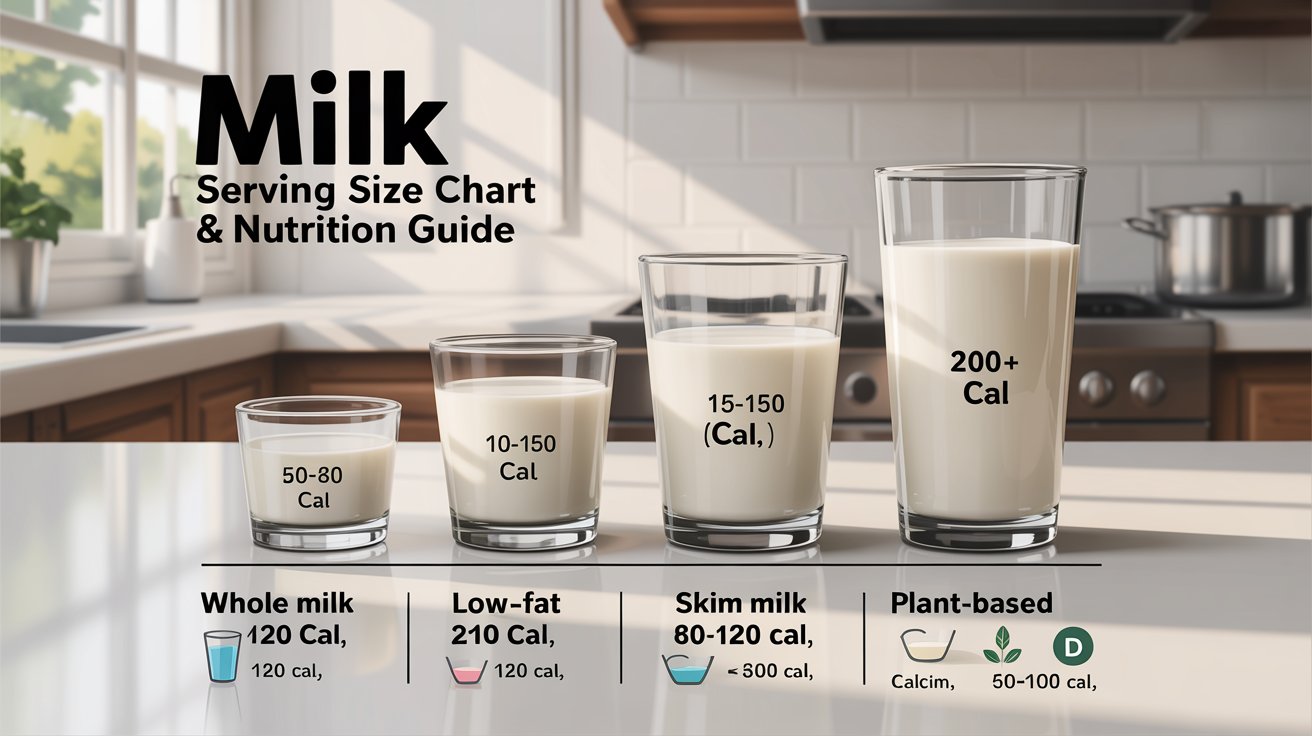
Milk Serving Size Chart
| Serving Type | Amount | Volume (Approx.) | Calories* |
|---|---|---|---|
| Small Portion | ½ cup | 120 ml | 50–80 |
| Standard Serving | 1 cup | 240 ml | 100–150 |
| Large Portion | 1.5–2 cups | 360–480 ml | 150–300 |
| Full Glass | 2+ cups | 500 ml+ | 300+ |
*Calories vary depending on milk type (whole, low-fat, skim).
Choosing The Right Milk Serving Size
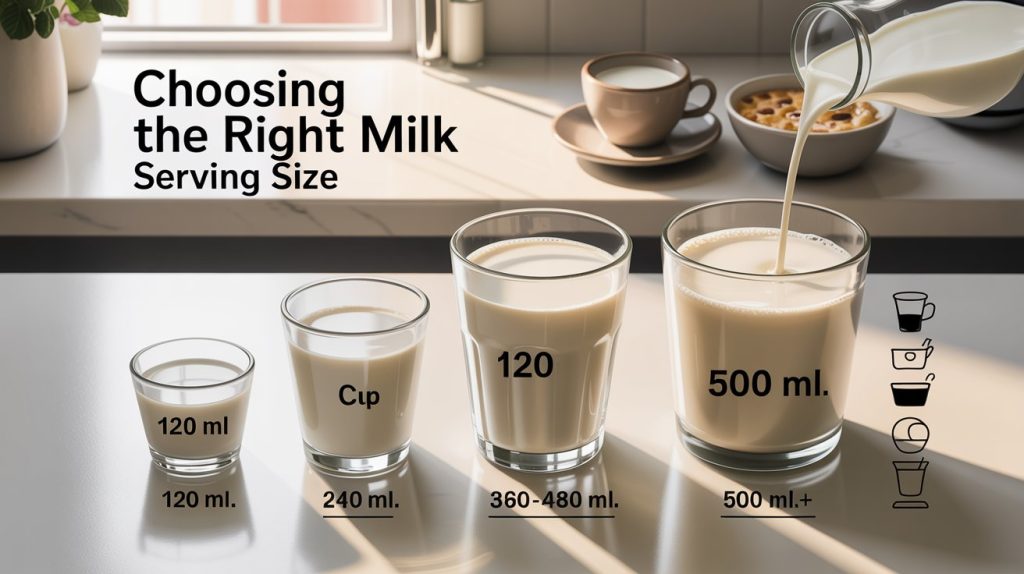
The best portion depends on how you’re consuming milk:
- ½ cup: For coffee, tea, or cooking
- 1 cup: Standard serving for drinking or cereal
- 1.5–2 cups: Larger drink or post-workout
- 2+ cups: Often more than needed in one sitting
For most people, 1 cup (240 ml) is the ideal serving.
Milk Serving Size Comparison: Different Types
Different types of milk vary in calories and fat.
Milk Type Comparison
| Milk Type | Serving Size | Calories (1 cup) | Notes |
|---|---|---|---|
| Whole Milk | 1 cup | ~150 | Higher fat |
| Low-Fat (2%) | 1 cup | ~120 | Moderate fat |
| Skim Milk | 1 cup | ~80–100 | Low fat |
| Plant-Based | 1 cup | 60–120 | Varies by type (almond, soy) |
Choosing the right type depends on your dietary needs.
Milk Serving Size And Nutrition
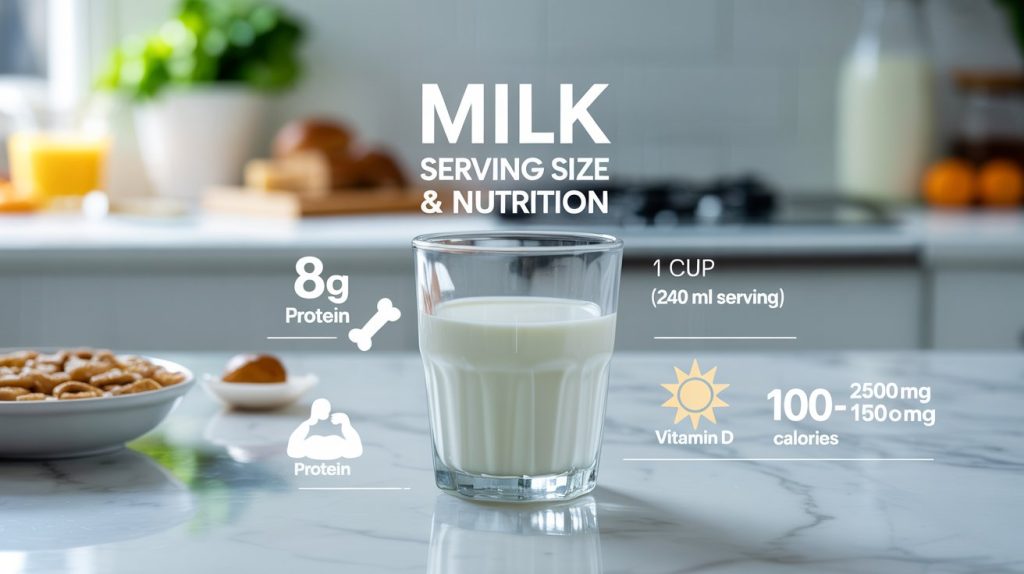
Milk is rich in:
- Calcium
- Protein
- Vitamin D (fortified)
A 1 cup serving typically contains:
- 8g protein
- 250–300mg calcium
- 100–150 calories
It’s an important part of many balanced diets.
Visual Guide: Milk Serving Size
Here’s a simple way to estimate portions:
| Serving Size | Visual Comparison | Best Use |
|---|---|---|
| ½ cup | Small cup | Coffee or tea |
| 1 cup | Standard glass | Drinking, cereal |
| 2 cups | Large glass | Bigger portion |
Visual cues help when measuring without tools.
Tips For Managing Milk Portions
- Use measuring cups: For accuracy
- Choose appropriate fat level: Based on your diet
- Avoid oversized glasses: Helps control intake
- Pair with meals: Improves nutrient absorption
- Check labels: Especially for flavored milk
Small habits help maintain balance.
Common Mistakes When Drinking Milk
- Drinking too much at once: Adds extra calories
- Ignoring fat content: Whole milk has more calories
- Using large cups: Leads to bigger portions
- Not tracking added milk: In coffee or cereal
Being mindful helps you stay on track.
How Milk Serving Size Affects Your Diet
The amount of milk you drink affects your daily calorie and nutrient intake. A standard serving supports bone health and nutrition, while excessive intake can add unnecessary calories.
Balancing milk with other foods ensures a well-rounded diet.
The Role Of Milk In Daily Nutrition
Milk has long been a staple in many diets due to its rich nutrient content and versatility. It’s commonly consumed at breakfast or used in cooking and beverages.
Frequently Asked Questions
What Is A Standard Serving Size Of Milk?
About 1 cup (240 ml).
How Many Servings Of Milk Should I Have Daily?
Typically 2–3 servings, depending on dietary needs.
Is Whole Milk Better Than Skim Milk?
It depends—whole milk has more fat, while skim is lower in calories.
Can I Drink Milk Every Day?
Yes, in appropriate portions.
How Do I Measure Milk Without Tools?
Use a standard glass as an estimate for 1 cup.
Milk serving sizes may seem simple, but they play a key role in your nutrition. By understanding the serving size of milk, you can enjoy its benefits while keeping your portions balanced and healthy.
