
Cheese is that magical ingredient that can elevate any dish from ordinary to extraordinary. Whether melted on a hot slice of pizza, sprinkled over a fresh salad, or enjoyed with a glass of wine, the right amount of cheese can make all the difference. You’ll find yourself craving these cheesy delights every week!
Here’s what you’ll discover: exact serving sizes for popular cheeses like cheddar and mozzarella, along with tips on measuring, and easy recipe ideas that fit those serving sizes perfectly. You’ll learn how to make every meal a cheesy masterpiece!
Cheese Types Overview
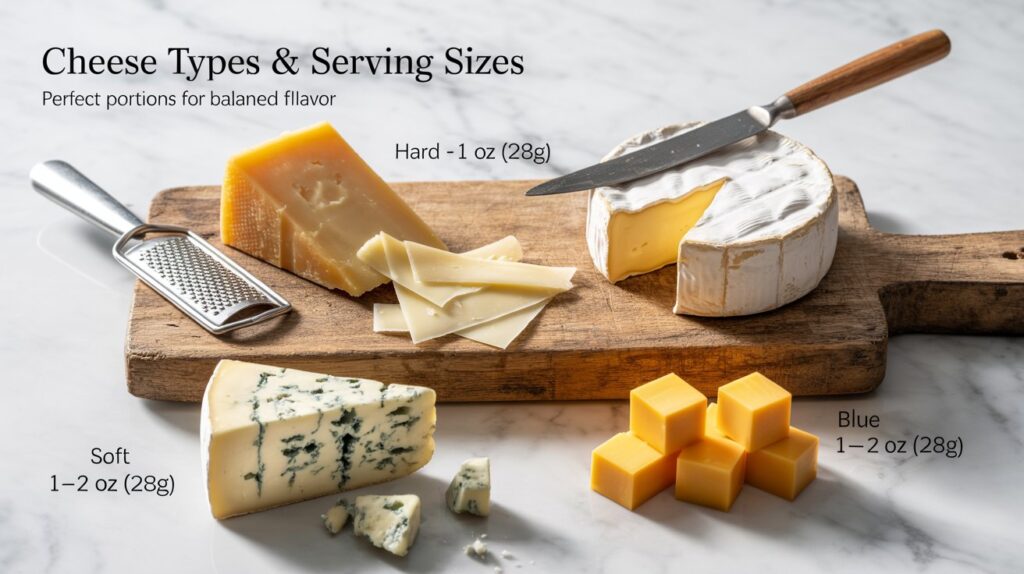
Understanding the types of cheese is essential when considering serving sizes, as each type has unique characteristics and flavors that can enhance your meals. The right serving size can elevate a dish or a cheese board, ensuring that flavors are balanced and everyone enjoys the experience.
Hard Cheeses
Hard cheeses, such as Parmesan and aged Gouda, are dense and flavorful. They tend to be used in smaller serving sizes due to their strong taste and texture.
- Recommended serving size: 1 ounce (28 grams)
- Usage: Grated over pasta, shaved in salads, or paired with fruits and nuts.
Soft Cheeses
Soft cheeses like Brie and Cream Cheese have a creamy texture and milder flavors. They are often enjoyed in larger portions and can be spread or sliced.
- Recommended serving size: 2 ounces (56 grams)
- Usage: Spread on crusty bread, used in dips, or layered in sandwiches.
Blue Cheeses
Blue cheeses, such as Roquefort and Gorgonzola, offer a distinct flavor profile that can be powerful. They are typically used sparingly due to their pungent taste.
- Recommended serving size: 1 ounce (28 grams)
- Usage: Crumbled on salads, paired with honey, or incorporated into dressings.
Chef’s tip: When serving cheese, always let it come to room temperature for the best flavor experience.
| Cheese Type | Serving Size | Visual Reference | Best Use |
|---|---|---|---|
| Hard (Cheddar, Parmesan) | 1 oz (28g) | 2 dice cubes | Grating, slicing |
| Soft (Brie, Goat) | 1–2 oz (28–56g) | 2 tbsp spread | Spreading, salads |
| Blue Cheese | 1 oz (28g) | ¼ cup crumbled | Salads, sauces |
| Shredded Cheese | ¼ cup (28g) | Small handful | Toppings |
| Cream Cheese | 2 tbsp (28g) | Golf ball size | Spreads |
Recommended Serving Sizes
Understanding the recommended serving sizes for different types of cheese can help you create balanced meals and avoid overindulgence. Here, I’ll provide specific serving sizes for popular cheeses, along with practical tips on how to incorporate them into your recipes.
Cheddar Cheese
- Recommended serving size: 1 ounce (28g)
- Usage: Ideal for sandwiches, burgers, or as a snack with crackers.
Mozzarella Cheese
- Recommended serving size: 1 ounce (28g)
- Usage: Great for salads, pizzas, or melted over dishes.
Goat Cheese
- Recommended serving size: 1 ounce (28g)
- Usage: Perfect for salads, spread on toast, or in pasta dishes.
Chef’s tip: When measuring cheese, use a food scale for accuracy, especially if you’re following a recipe that requires precise amounts.
| Cheddar Cheese | 1 ounce (28g) |
| Mozzarella Cheese | 1 ounce (28g) |
| Goat Cheese | 1 ounce (28g) |
Remember, these serving sizes can be adjusted based on personal dietary needs or recipe requirements, but they serve as a good guideline for portion control.
Visual Serving Size Guide
This section provides a quick reference for serving sizes of different types of cheese, helping you gauge how much to use in recipes or meal planning. Understanding these measurements can enhance your culinary experience, ensuring that your dishes are well-balanced and flavorful.
By Weight
When measuring cheese by weight, it’s helpful to know the standard serving sizes for various types. Here’s a quick guide:
- Hard Cheese (e.g., Parmesan, Pecorino): 1 ounce (28g) per serving
- Soft Cheese (e.g., Brie, Cream Cheese): 1 ounce (28g) per serving
- Blue Cheese: 1 ounce (28g) per serving
- Shredded Cheese (e.g., Cheddar, Mozzarella): 1/4 cup (28g) per serving
By Volume
Measuring cheese by volume can be practical in recipes where you need to fold or sprinkle cheese:
| Grated Parmesan | 2 tablespoons (30ml) |
| Shredded Mozzarella | 1/2 cup (120ml) |
| Cream Cheese | 2 tablespoons (30ml) |
| Cubes of Cheddar | 1/4 cup (60ml) |
Chef’s tip: Always remember that cheese can vary in density, so measuring by weight is often more accurate than by volume.
Measuring Cheese Accurately
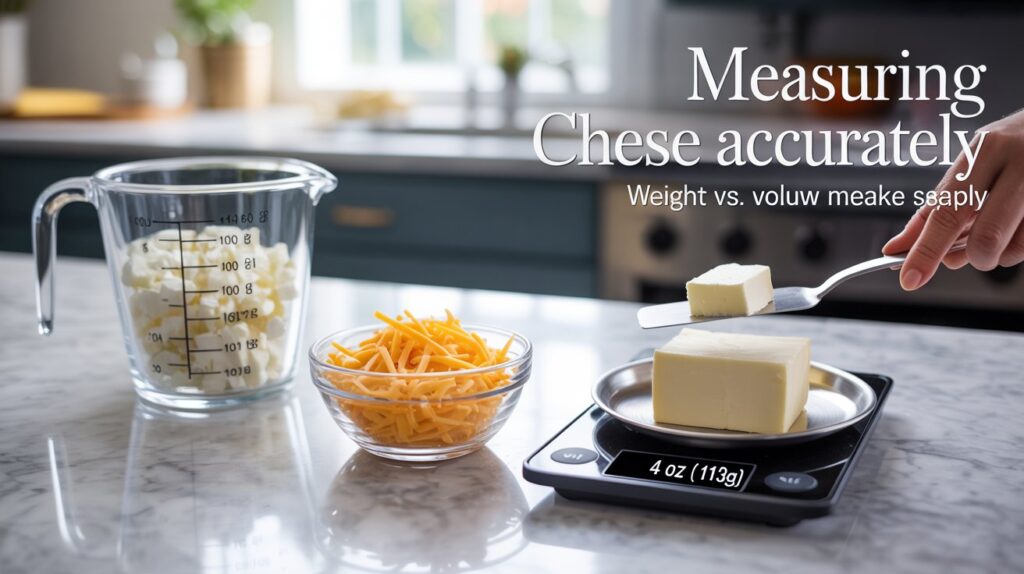
Understanding how to measure cheese accurately is crucial for achieving the right flavor and texture in your dishes. Whether you’re grating, slicing, or cubing, knowing the proper serving sizes helps in meal planning and ensures you have enough cheese for your recipes.
- Weight vs. Volume: Different cheeses have varying densities, which makes weighing them more accurate than measuring by volume. For instance, 1 cup of shredded cheddar weighs about 4 ounces (113g), while the same volume of crumbled feta weighs around 6 ounces (170g). Always consult a trusted source for the weight of the cheese you’re using to avoid inconsistencies.
- Using Kitchen Scales: A digital kitchen scale is an invaluable tool for measuring cheese. Place a bowl on the scale and reset it to zero (tare) before adding your cheese. For soft cheeses like cream cheese, use a spatula to scoop and level the cheese into the bowl until you reach your desired weight. Aim for precise measurements, like 4 ounces (113g) for a standard serving.
- Common Serving Sizes: For general guidelines, a typical serving size of cheese is about 1.5 ounces (42g) for hard cheeses and 2 ounces (57g) for soft cheeses. Remember that serving sizes may vary based on the dish you’re preparing—adjust accordingly for cheeseboards or recipes requiring more cheese.
- Watch for Common Mistakes: One frequent error is assuming all cheese types measure the same way. For example, shredded cheese can compact, resulting in more weight than expected. Always fluff your cheese before measuring it to avoid packing it down too tightly.
Incorporating Cheese into Meals
Understanding the right serving size of cheese is essential for creating balanced dishes that are both satisfying and flavorful. This section provides practical examples of how to incorporate cheese into salads and pasta dishes, ensuring you get the most out of this delicious ingredient while maintaining proper portion control.
Cheese in Salads
When adding cheese to salads, the serving size can significantly enhance flavor without overwhelming the dish. Here are some common cheese types and recommended amounts:
- Feta cheese: ¼ cup (about 38g) crumbled for a refreshing Greek salad.
- Parmesan cheese: 2 tablespoons (about 15g) shaved over a Caesar salad.
- Goat cheese: 2 ounces (about 56g) for a mixed greens salad.
Chef’s tip: Crumbled cheese should be evenly distributed to avoid clumping and ensure every bite is flavorful.
Cheese in Pasta Dishes
Incorporating cheese into pasta can elevate the dish while also providing creaminess and depth. Here’s how to measure cheese for different pasta recipes:
| Ricotta cheese | ½ cup (about 120g) | Stuffed shells or lasagna. |
| Mozzarella cheese | 1 cup (about 125g) shredded | Baked ziti or pizza. |
| Parmesan cheese | ¼ cup (about 25g) grated | Sprinkled on spaghetti or fettuccine alfredo. |
For creamy sauces, remember to fold in cheese gradually, allowing it to melt and blend. If the sauce gets too thick, whisk in a splash of pasta cooking water to loosen it up.
Recipe Ideas with Cheese Sizes
This section provides specific recipes that showcase recommended serving sizes for cheese, making it easier to plan meals and create balanced dishes. Knowing how much cheese to use can elevate your cooking, ensuring each bite is just right!
Cheese Platter
A cheese platter is a delightful way to serve a variety of cheeses, perfect for gatherings or as an appetizer. Aim for about 1-2 ounces (28-56g) of cheese per person. Here’s how to assemble a vibrant cheese platter:
- 4 ounces (113g) cheddar cheese, cubed
- 4 ounces (113g) brie cheese, sliced
- 4 ounces (113g) goat cheese, crumbled
- 1 cup (150g) assorted grapes
- 1 cup (120g) mixed nuts
- 1 cup (200g) sliced baguette
- Start by placing the cubed cheddar cheese in one corner of a large platter.
- Next, add the sliced brie cheese next to it, creating a nice contrast in textures.
- Sprinkle the crumbled goat cheese around the platter for a creamy touch.
- Fill in the gaps with grapes and nuts, ensuring a colorful presentation.
- Finally, add the sliced baguette to one side for a crunchy element. Serve immediately.
Chef’s tip: Include a small dish of honey or fig jam to complement the cheeses!
Cheesy Pasta Bake
This comforting cheesy pasta bake is a crowd-pleaser! Use about ½ cup (60g) of cheese per serving for a rich flavor. Here’s a simple recipe:
- 8 ounces (225g) penne pasta
- 2 cups (480ml) marinara sauce
- 1 cup (120g) shredded mozzarella cheese
- ½ cup (60g) grated Parmesan cheese
- 1 tablespoon olive oil
- Salt and pepper to taste
- Preheat the oven to 350°F (175°C). Bring a pot of salted water to a boil and cook the penne for 7-8 minutes until al dente.
- Drain the pasta and return it to the pot. Stir in the marinara sauce and ½ cup of mozzarella cheese, mixing well.
- Transfer the mixture to a greased 9×13-inch (23×33 cm) baking dish.
- Top with the remaining mozzarella and Parmesan cheese, ensuring an even layer.
- Bake for 25-30 minutes until the cheese is bubbly and golden brown. Enjoy!
| Ingredient | Amount |
|---|---|
| Pasta | 8 ounces (225g) |
| Marinara Sauce | 2 cups (480ml) |
| Mozzarella Cheese | 1 cup (120g) |
| Parmesan Cheese | ½ cup |
Pairing Cheese with Other Foods
Pairing cheese with complementary foods and drinks can elevate your dining experience, making each bite more delightful. Understanding how flavors work together will help you determine the right serving size of cheese, enhancing both taste and presentation.
Wine Pairings
Wine can beautifully complement cheese, enhancing its flavors. Here are some classic pairings based on cheese types:
- Brie: Pairs well with Chardonnay or sparkling wine. Serve about 2 ounces (56g) of Brie per person.
- Cheddar: Aged Cheddar goes wonderfully with Cabernet Sauvignon. Aim for 1.5 ounces (42g) per serving.
- Blue Cheese: Suits sweet wines like Port. A serving size of 1 ounce (28g) is ideal to avoid overpowering the palate.
Fruit and Nut Pairings
Fresh fruit and nuts can add texture and flavor to your cheese platter. Consider these pairings:
- Gouda: Pair with sliced apples or pears. Include about 3-4 slices of fruit per serving.
- Goat Cheese: Complement with walnuts or figs. Use about 1 ounce (28g) of nuts per person.
- Parmesan: Enjoy with almonds or dried apricots. A serving size of 1 ounce (28g) of cheese works well with 2-3 apricots.
Chef’s tip: Arrange your cheese, fruits, and nuts on a board for a beautiful presentation, ensuring each cheese is labeled with its name for easy identification.
| Brie | Chardonnay | Apple Slices | 2 ounces (56g) |
| Cheddar | Cabernet Sauvignon | Walnuts | 1.5 ounces (42g) |
| Blue Cheese | Port | Figs | 1 ounce (28g) |
| Gouda | Prosecco | Pear Slices | 2 ounces (56g) |
Quick Summary
| Prep Time | Cook Time | Total Time | Servings |
|---|---|---|---|
| 5 minutes | N/A | 5 minutes | 4 servings |
- Measure accurately: Use a kitchen scale for precise serving sizes, typically 1 ounce per person.
- Pair wisely: Match cheese types with complementary foods for enhanced flavors.
- Temperature matters: Serve cheese at room temperature for optimal taste and texture.
- Keep it fresh: Store cheese properly in wax paper to maintain moisture and flavor.
- Use variety: Offer a mix of textures and flavors to cater to different palates.
Frequently Asked Questions
Can I make this cheese dish ahead of time? How to store and reheat?
You can prepare cheese dishes ahead of time and store them in an airtight container in the fridge for up to 3 days. To reheat, simply warm it in the oven at 350°F (175°C) until heated through, usually about 15-20 minutes.
What can I substitute for a specific cheese?
If you’re out of a specific cheese, you can usually substitute with another cheese that has a similar texture and flavor profile; for example, if you need cheddar, try Monterey Jack or Gouda as alternatives. Just keep in mind that it may slightly alter the taste of the final dish.
How do I know when the cheese is melted and ready?
You’ll know the cheese is melted when it’s bubbly and has a smooth, creamy texture, usually taking about 5-10 minutes over medium heat. If you see a slight browning on top, it’s a good indicator that it’s ready to serve!
Can I freeze leftover cheese? How long does it last?
You can freeze cheese, but it’s best to do so in blocks or shredded; it lasts up to 6 months in the freezer. Just remember to wrap it tightly in plastic wrap and then in aluminum foil to prevent freezer burn.
What if I don’t have a cheese grater?
If you don’t have a cheese grater, you can use a sharp knife to cut the cheese into small pieces or thin slices, or even a food processor if you have one. Just ensure the pieces are uniform to help with melting and even cooking.
