
Bread is a staple food enjoyed around the world, from breakfast toast to sandwiches and side servings. But with so many types and slice sizes available, it’s easy to eat more than intended. Understanding the serving size of bread helps you manage portions, balance your meals, and keep your nutrition on track.
Why Bread Serving Size Matters
Bread is a major source of carbohydrates, and portion size directly affects calorie intake and blood sugar levels.
Knowing the right serving size helps you:
- Control calories and carbs
- Balance meals with protein and vegetables
- Avoid overeating
Even healthy breads, like whole grain, should be eaten in the right portions.
Standard Bread Serving Sizes And Portions
Bread serving size is usually measured by slices or weight.
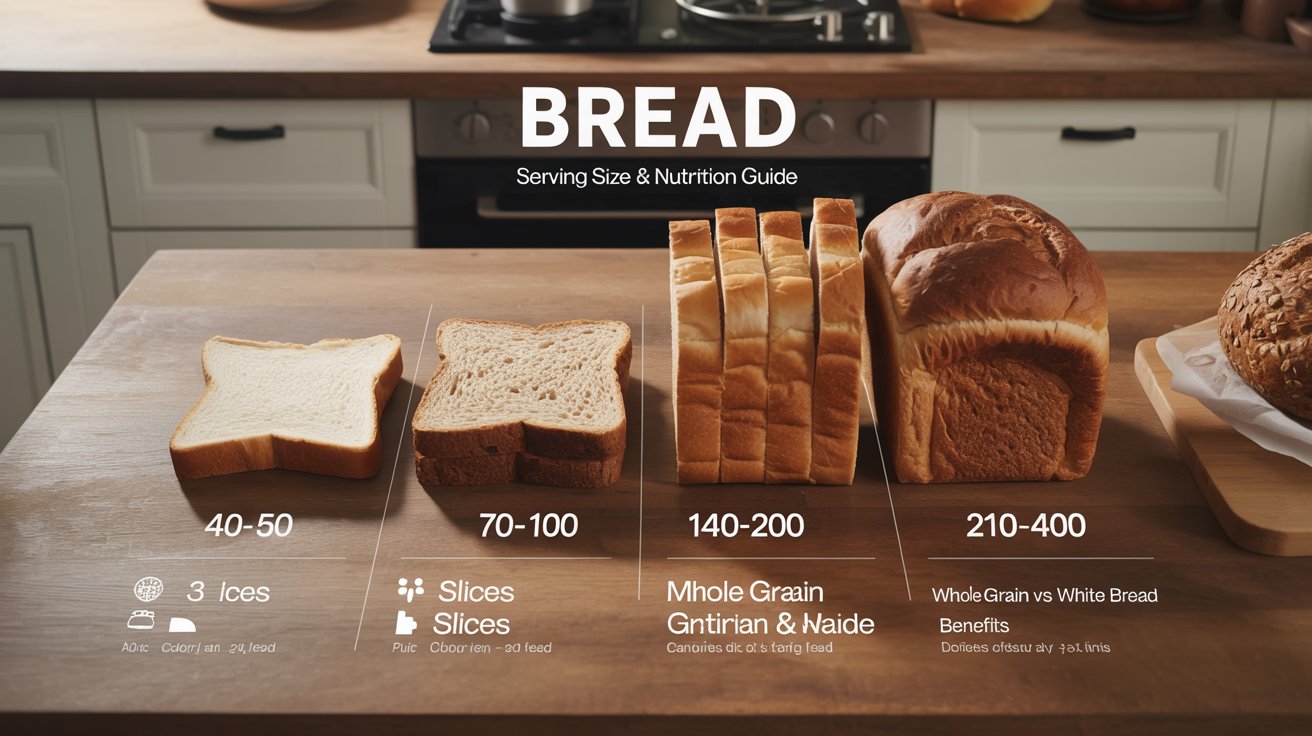
Bread Serving Size Chart
| Serving Type | Amount | Weight (Approx.) | Calories |
|---|---|---|---|
| Small Portion | ½ slice | 10–15g | 40–50 |
| Standard Serving | 1 slice | 25–30g | 70–100 |
| Sandwich Serving | 2 slices | 50–60g | 140–200 |
| Large Portion | 3–4 slices | 75–120g | 210–400 |
Values vary depending on bread type (white, whole wheat, multigrain).
Choosing The Right Bread Serving Size
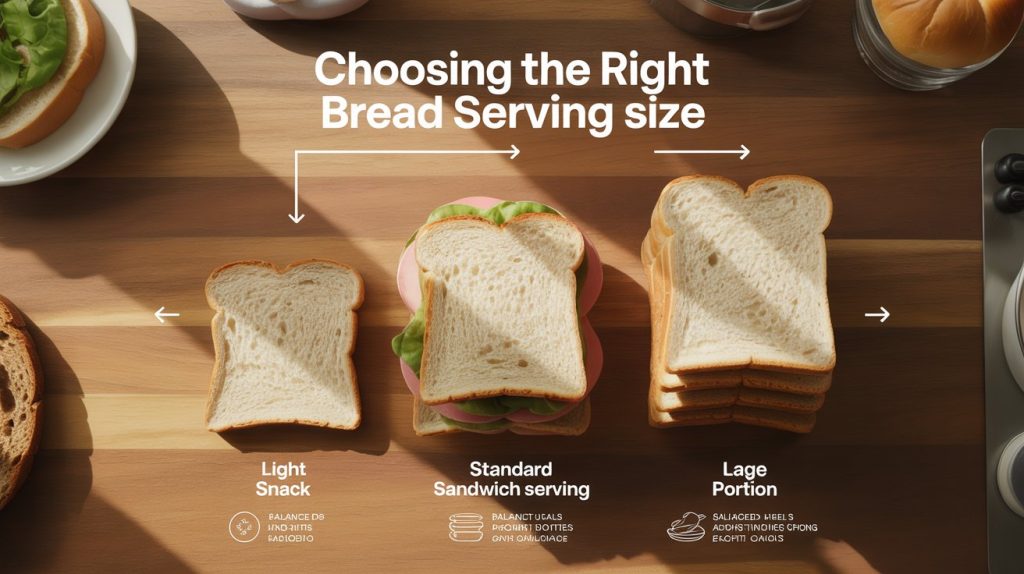
The best portion depends on your meal:
- 1 slice: Ideal as a side or light snack
- 2 slices: Standard for sandwiches
- 3–4 slices: Larger portion, often more than needed
For most people, 1–2 slices per meal is a balanced choice.
Bread Serving Size Comparison: Different Types
Different breads have different densities and sizes.
Bread Type Comparison
| Bread Type | Typical Serving | Notes |
|---|---|---|
| White Bread | 1 slice | Softer, lighter |
| Whole Wheat | 1 slice | More fiber, more filling |
| Multigrain | 1 slice | Denser, nutrient-rich |
| Artisan Bread | 1 thick slice | Larger, heavier portions |
| Flatbread | 1 piece | Varies in size |
Denser breads may require smaller portions.
Bread Serving Size And Nutrition
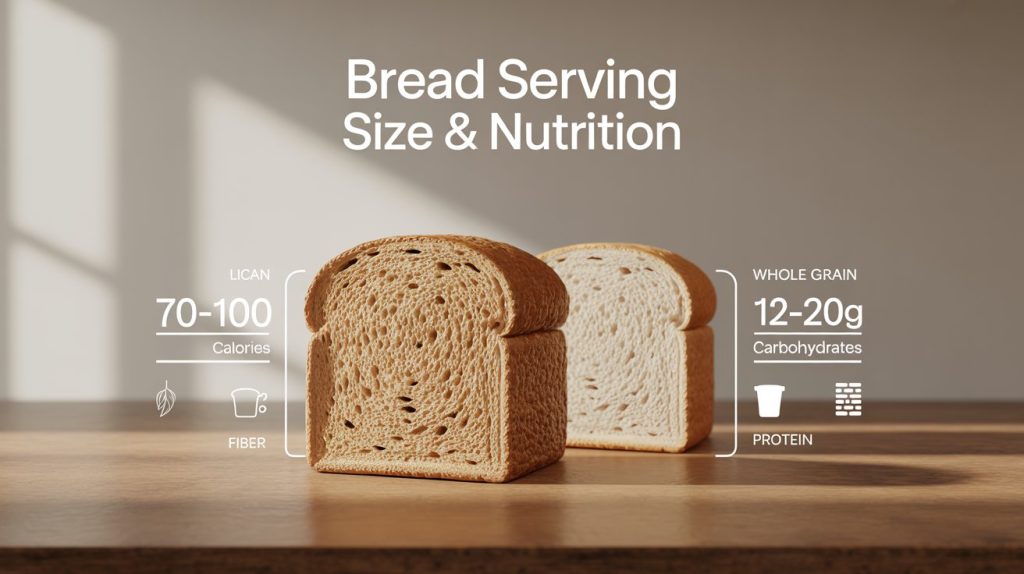
Bread provides energy but can vary in nutrients.
A 1 slice serving typically contains:
- 70–100 calories
- 12–20g carbohydrates
- Small amounts of protein
Whole grain bread offers more fiber and nutrients than white bread.
Visual Guide: Bread Serving Size
Here’s a simple way to estimate portions:
| Serving Size | Visual Comparison | Best Use |
|---|---|---|
| 1 slice | Hand-sized piece | Standard serving |
| 2 slices | Sandwich | Meal portion |
| 3–4 slices | Stacked slices | Large portion |
Visual cues help with quick portioning.
Tips For Managing Bread Portions
- Stick to 1–2 slices per meal: Keeps portions balanced
- Choose whole grain: More filling and nutritious
- Watch toppings: Butter and spreads add calories
- Pair with protein: مثل eggs or peanut butter
- Avoid mindless eating: Don’t snack directly from the loaf
Simple habits can improve your diet.
Common Mistakes When Eating Bread
- Eating too many slices: Easy to overconsume
- Ignoring portion size: Leads to excess carbs
- Choosing refined bread only: Less nutritious
- Adding high-calorie toppings: Increases total intake
Being mindful helps maintain balance.
How Bread Serving Size Affects Your Meal
The amount of bread you eat can change your meal’s balance. Too much bread can make meals carb-heavy, while the right portion complements proteins and vegetables.
Balancing bread intake helps create a healthier plate.
The Role Of Bread In Daily Diets
Bread has been a staple food for centuries and remains a key part of many diets. Its versatility makes it suitable for breakfast, lunch, and snacks.
Frequently Asked Questions
What Is A Standard Serving Size Of Bread?
One slice is considered a standard serving.
Is Two Slices Of Bread Too Much?
No, it’s a typical portion for a sandwich.
Is Whole Wheat Bread Better?
Yes, it usually contains more fiber and nutrients.
Can I Eat Bread Every Day?
Yes, in moderation as part of a balanced diet.
How Do I Measure Bread Without a Scale?
Use slices as a guide—1 slice equals one serving.
Bread serving sizes may seem simple, but they play a big role in your nutrition. By understanding the serving size of bread, you can enjoy it in the right amount while keeping your meals balanced and satisfying.
