
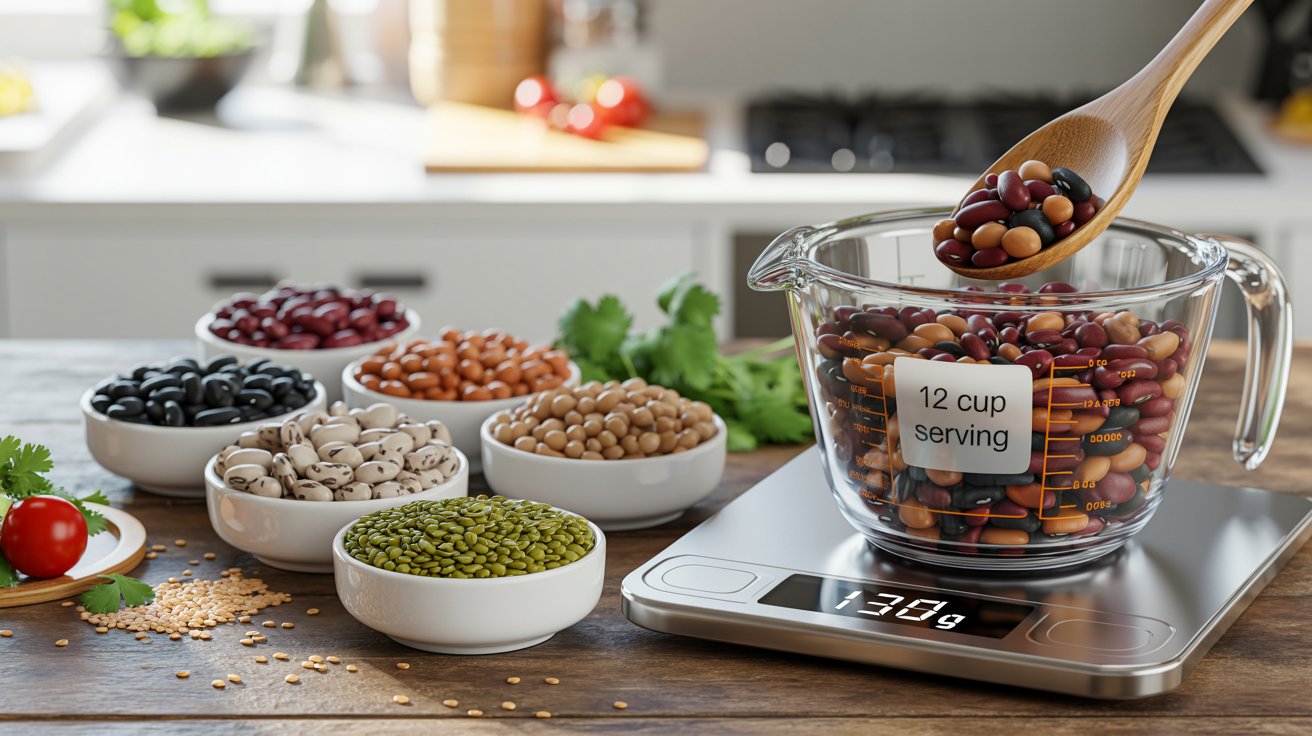
Two-thirds of Americans do not consume the recommended servings of beans, missing out on their health benefits. Beans are rich in protein, fiber, and essential nutrients, making them an excellent choice for plant-based diets. Proper serving sizes can enhance your meals and support your nutritional goals.
Beans should be served in 1/2 cup portions for cooked varieties and 1 cup for raw. Aim for 3-4 servings per week to reap health benefits, such as improved digestion and heart health. Meal planning with beans can lead to satisfying, nutritious meals.
Recommended Serving Sizes
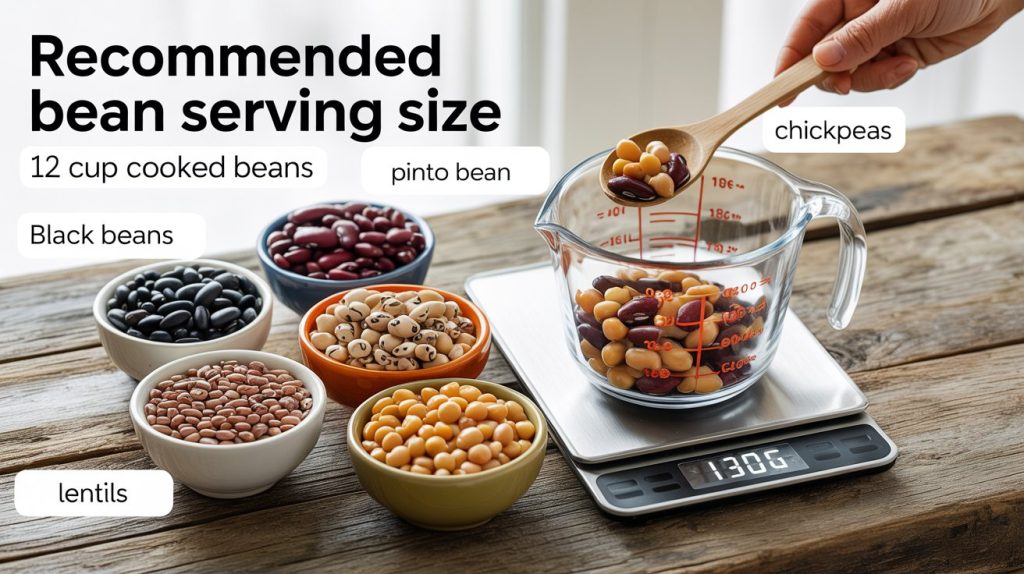
Standard serving sizes vary among different types of beans. Generally, a typical serving is about ½ cup of cooked beans. This portion provides a good source of protein, fiber, and essential nutrients while being manageable for meal planning.
Black beans are popular and offer a rich flavor. For these, ½ cup cooked also remains the standard. Chickpeas, another favorite, can be enjoyed in the same ½ cup serving. Pinto beans, kidney beans, and navy beans similarly align with this portion guideline.
Adjustments may be necessary based on personal dietary needs. If aiming for higher protein intake, consider increasing to ¾ cup. For those watching caloric intake, sticking to the standard ½ cup may be best. Always consider the overall balance of your meal to ensure nutritional adequacy.
Familiarizing yourself with these serving sizes will simplify your meal planning. Incorporating a variety of beans can enhance flavors and textures in your dishes while supporting health goals. Remember to rinse canned beans to reduce sodium and enhance digestibility.
Beans Serving Size Chart
| Bean Type | Serving Size | Calories | Protein |
|---|---|---|---|
| Black Beans | ½ cup cooked | ~114 kcal | 8 g |
| Kidney Beans | ½ cup cooked | ~120 kcal | 8 g |
| Pinto Beans | ½ cup cooked | ~120 kcal | 8 g |
| Chickpeas | ½ cup cooked | ~134 kcal | 7 g |
| Navy Beans | ½ cup cooked | ~127 kcal | 8 g |
| Lentils | ½ cup cooked | ~115 kcal | 9 g |
✔ Standard serving: ½ cup cooked beans (about 130 g)
Beans in a Balanced Meal
Incorporating beans into your meals enhances nutritional value. Begin by assessing your overall dietary needs, focusing on protein, fiber, and essential nutrients. Beans serve as excellent plant-based protein sources that can replace or complement animal proteins. Aim for a balanced plate by pairing beans with whole grains, vegetables, and healthy fats.
- Determine your daily protein needs. Generally, adults require about 46-56 grams of protein daily, depending on age and activity level.
- Choose a variety of beans. Incorporating different types such as black beans, kidney beans, and chickpeas can provide diverse nutrients and flavors.
- Measure appropriate serving sizes. A typical serving is about half a cup of cooked beans, which provides approximately 7-10 grams of protein and 6-8 grams of fiber.
- Combine beans with other food groups. Pairing beans with whole grains like brown rice or quinoa increases the overall protein quality and provides a complete amino acid profile.
- Experiment with recipes. Incorporating beans into soups, salads, and stir-fries can make meals more satisfying and nutritious.
Balancing beans within your diet can lead to improved health and well-being. Focus on enjoying the variety and versatility that beans offer in your meals.
Comparing Bean Varieties
Serving sizes differ significantly among various bean types, impacting meal planning. For instance, a standard serving of cooked black beans is approximately 1/2 cup, which provides around 114 calories and 8 grams of protein. In contrast, kidney beans also suggest a 1/2 cup serving but offer slightly more calories at 120 and similar protein content. Understanding these differences aids in balanced meal preparation.
Navy beans, often overlooked, have a 1/2 cup serving size with around 127 calories and 8 grams of protein. Pinto beans, popular in many dishes, also follow the 1/2 cup guideline, featuring about 120 calories. These subtle variations can influence your overall calorie and nutrient intake.
Lentils, while not traditional beans, serve as a great plant-based protein alternative with a recommended serving size of 1/2 cup cooked, yielding around 115 calories and 9 grams of protein. Exploring these options allows you to diversify your meals while meeting protein needs effectively.
Chickpeas, another nutritious choice, have a serving size of 1/2 cup cooked, providing approximately 134 calories and 7 grams of protein. Recognizing the specific serving sizes for each variety helps in creating balanced, protein-rich meals that align with your dietary goals.
Nutrition Per ½ Cup of Beans
| Nutrient | Amount |
|---|---|
| Calories | 110–130 kcal |
| Protein | 7–9 g |
| Fiber | 6–8 g |
| Carbohydrates | 20 g |
| Fat | <1 g |
Cooking vs. Canned Beans
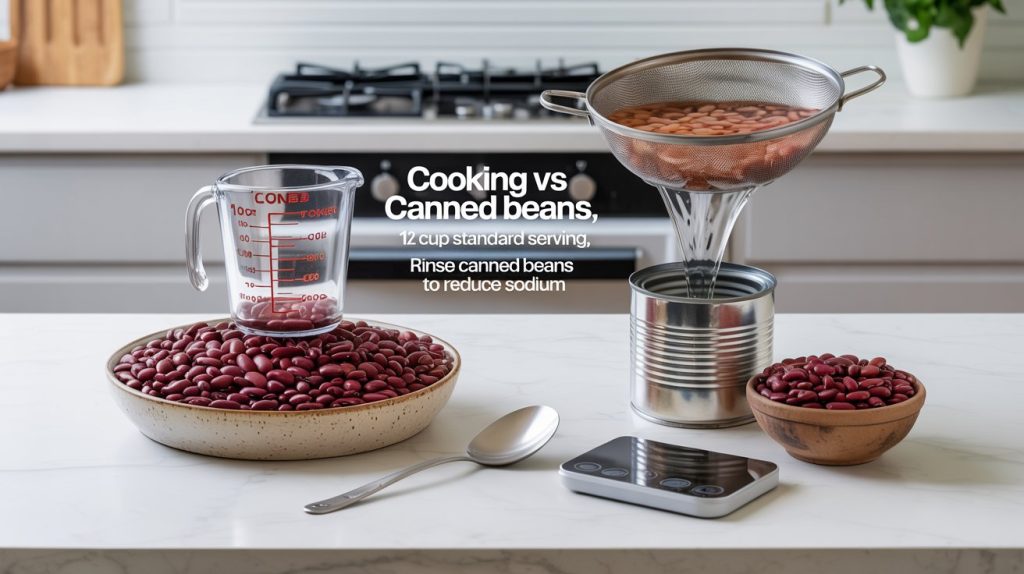
Serving size differs significantly between cooked and canned beans. Typically, a serving of cooked beans is about ½ cup, while canned beans can vary based on the liquid content. Canned beans often include added sodium, which can affect overall meal preparation and seasoning.
Cooked beans maintain their texture and nutrient density, making them a great choice for various dishes. Measuring a ½ cup of cooked beans gives you around 120-130 calories, providing a substantial source of protein and fiber. In contrast, canned beans typically come pre-cooked, but it’s crucial to rinse them to reduce excess sodium before measuring out a serving.
Rinsing canned beans can lower their sodium content significantly, making them healthier for your diet. After rinsing, the serving size still remains at about ½ cup, which will yield similar nutritional benefits as a serving of freshly cooked beans. Ultimately, understanding these differences ensures you plan meals effectively, keeping your dietary needs and preferences in mind.
Beans for Protein Needs
Adjust servings based on protein needs. Knowing your daily protein requirement is crucial for determining how much to include in your meals. Generally, adults should aim for 46-56 grams of protein daily, depending on age, gender, and activity level. Using beans as a primary protein source requires careful consideration of their serving size to meet these needs.
- Calculate personal protein goals. Start by identifying your specific protein requirement. For example, if your target is 50 grams, you can plan your meals accordingly.
- Identify bean protein content. Different beans offer varying protein amounts. For instance, one cup of cooked black beans provides about 15 grams of protein. Use this information to guide your serving sizes.
- Plan meals around protein. Divide your protein needs among meals and snacks. If your goal is 50 grams, consider incorporating beans into two meals, aiming for a cup in each, which would total 30 grams from beans alone.
- Adjust based on dietary variety. Include other protein sources like nuts, seeds, or grains to complement your meals. This balance ensures you meet your protein goals without relying solely on beans.
Monitoring your intake regularly will help you adjust servings as needed. Staying aware of your protein sources and their contributions is key to effective meal planning.
Portion Control Tips
Measuring beans accurately enhances meal planning. Use a standard measuring cup for dry beans, which typically equates to around 1/4 cup serving. For cooked beans, a 1/2 cup is an effective portion size, providing a good balance of protein and fiber. Regularly using these measurements simplifies your cooking process and ensures nutritional needs are met.
Investing in a kitchen scale can provide precision. Weighing beans allows for exact portion control, particularly for those who prefer specific gram measurements. Generally, 130 grams of cooked beans serves one person well, fitting nicely into a balanced meal. This approach is especially useful for meal prep and portioning for the week.
Utilizing visual cues can also aid in serving sizes. A 1/2 cup of cooked beans roughly matches the size of a standard ice cream scoop. This method can be helpful when measuring without tools. Remembering these visual references can streamline the cooking process and reduce any confusion around portioning.
Incorporating variety keeps meals interesting. Mix different types of beans throughout the week to enhance flavors and textures. This practice not only boosts nutritional benefits but also aids in maintaining portion sizes by using a mix of beans in salads, soups, or stir-fries.
Common Misconceptions
Many people believe that beans are low in protein compared to animal sources. In reality, beans are an excellent source of plant-based protein, providing substantial amounts per serving. One cup of cooked beans contains about 15 grams of protein, which can significantly contribute to daily requirements.
Another misconception surrounds the calorie content of beans. While they may seem high in calories, most of these calories come from complex carbohydrates and fiber, which are beneficial for overall health. Understanding the nutritional profile helps in making informed choices about incorporating them into meals.
Some individuals think that beans should only be eaten in small quantities due to their gas-producing effects. Gradually increasing bean intake can help the digestive system adapt. Pairing beans with spices like cumin or fennel might also reduce discomfort.
Many assume all beans have the same nutritional value. Different varieties, such as black beans, kidney beans, or chickpeas, have unique nutrient profiles. Exploring various types can enhance meal diversity and nutritional benefits while helping to meet dietary guidelines effectively.
Lastly, some people underestimate the versatility of beans in cooking. They can be added to salads, soups, and main dishes, making them easy to incorporate into daily meals. Experimenting with different recipes can lead to discovering enjoyable ways to include them in your diet.
Quick Summary
- Beans are a nutrient-dense food, providing protein, fiber, and essential vitamins.
- A standard serving size of cooked beans is typically ½ cup (about 130 grams).
- Different types of beans may have slightly varying serving suggestions, so always check specific guidelines.
- Beans can be a versatile ingredient, used in salads, soups, and main dishes.
- Proper portion sizes can help manage calorie intake while maximizing nutritional benefits.
- Including beans in your diet can support digestive health due to their high fiber content.
- Beans are generally low in fat and can be a good substitute for meat in vegetarian and vegan diets.
Frequently Asked Questions
What is the standard serving size for cooked beans?
The standard serving size for cooked beans is typically 1/2 cup. This portion provides a good balance of protein, fiber, and essential nutrients, making it a great addition to a balanced diet.
How many servings of beans should I aim for each week?
It is generally recommended to include 3-4 servings of beans in your weekly diet. This helps you meet your protein needs while also benefiting from the fiber and other nutrients beans provide.
Are there different serving sizes for different types of beans?
While the standard serving size is 1/2 cup for most cooked beans, some varieties may have slightly different nutritional profiles. Regardless, maintaining this serving size will help you effectively manage your dietary intake.
Can I use beans as a substitute for meat in my meals?
Yes, beans can be an excellent substitute for meat, especially in dishes like chili, soups, and salads. Just ensure you adjust the serving size accordingly to maintain balanced protein intake.
How can I incorporate beans into my diet without overdoing it?
To avoid overconsumption, start by adding beans gradually to your meals, using the standard serving size as a guide. Pair them with a variety of vegetables and whole grains to create well-rounded meals that meet your dietary needs.
