
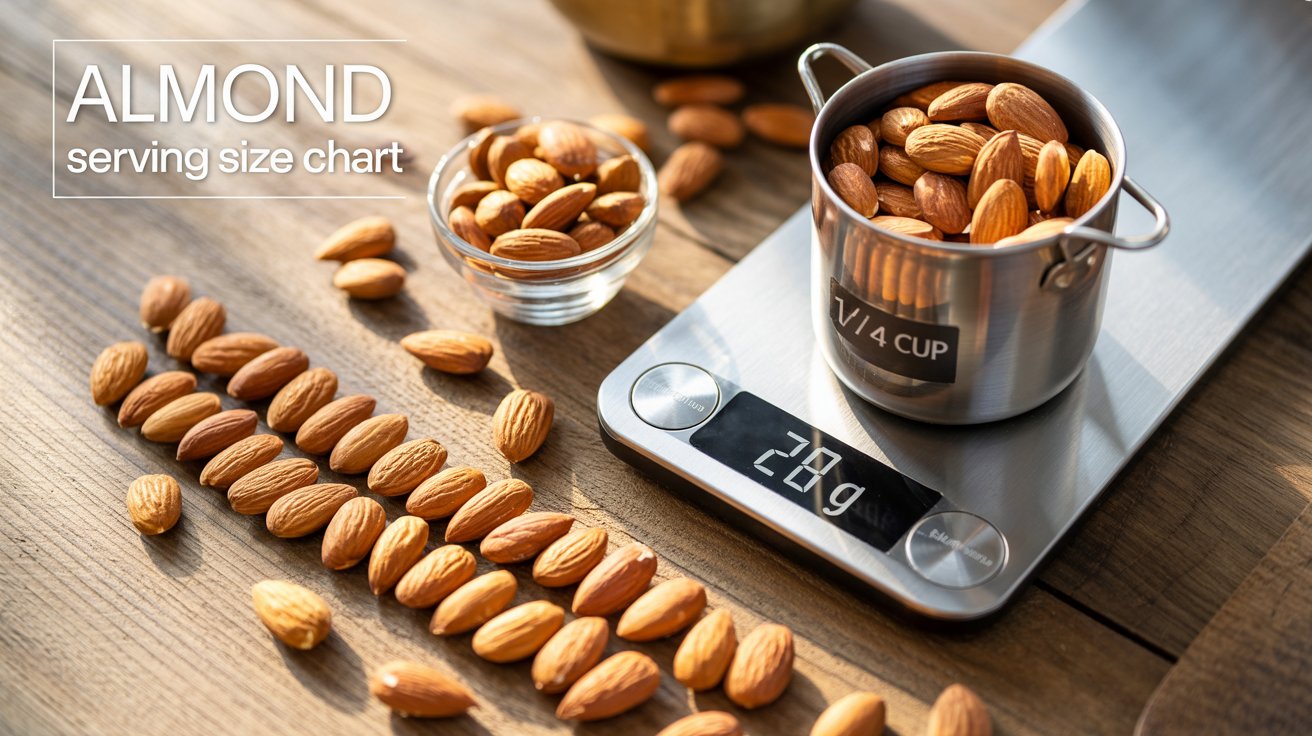
The small, crunchy almond is popular in diets around the world. But a common question many people ask is: what is the right serving size of almonds? Some eat just a few as a snack, while others add handfuls to salads or yogurt. Getting the serving size right is more important than most realize. It can help with weight control, keep calories in check, and give your body the nutrients it needs.
Many think all nuts are similar, but almonds have their own unique profile. They are packed with healthy fat, protein, fiber, and important vitamins like vitamin E. However, almonds are also calorie-dense, so eating too many can add up quickly. Let’s explore what a true serving of almonds looks like, why it matters, and how to include the right amount in your daily routine.
What Is A Standard Serving Size Of Almonds?
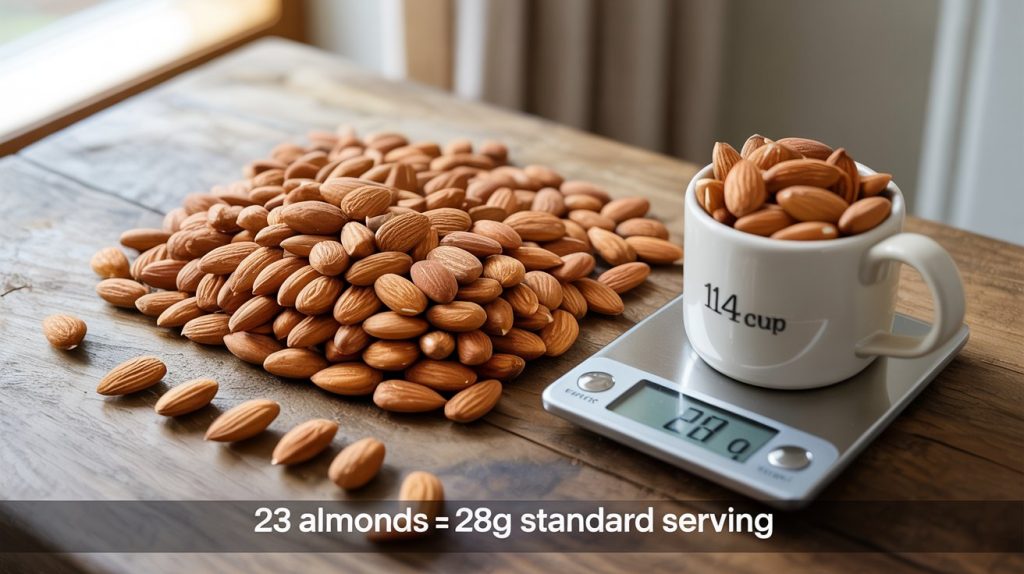
A standard serving is 28 grams. This is about 23 whole almonds. Most nutrition labels and health guidelines use this amount. You may also see this described as a “handful,” but hands are different sizes, so counting is more accurate.
Here’s a quick look at the numbers for a standard serving:
| Serving Size | Whole Almonds | Grams | Calories |
|---|---|---|---|
| 1 serving | 23 | 28g | 164 |
| Half serving | 12 | 14g | 82 |
| Double serving | 46 | 56g | 328 |
For most adults, 28 grams is the right amount for a snack or to add to a meal. It balances nutrition with calories.
Almond Serving Size Chart
| Serving Type | Almonds | Weight | Calories |
|---|---|---|---|
| Standard serving | 23 almonds | 28 g | 164 kcal |
| Half serving | 12 almonds | 14 g | 82 kcal |
| Double serving | 46 almonds | 56 g | 328 kcal |
| Small portion | 10 almonds | ~12 g | ~70 kcal |
✔ Recommended serving: 23 almonds (28 g)
Nutritional Value Of A Serving Of Almonds
Almonds are nutrient-dense. In just one serving, you get healthy fat, protein, fiber, and several vitamins and minerals.
| Nutrient | Amount (per 28g) | % Daily Value (approx.) |
|---|---|---|
| Calories | 164 | 8% |
| Protein | 6g | 12% |
| Fat | 14g (1g sat.) | 22% |
| Fiber | 3.5g | 14% |
| Vitamin E | 7.3mg | 37% |
| Magnesium | 76mg | 19% |
These values show how almonds give you a lot of nutrition in a small amount. But it’s also easy to eat more than you need if you’re not careful.
Why Serving Size Matters
Eating the right serving size is important for a few reasons:
- Calorie Control: Almonds are high in calories. Eating too many can lead to weight gain, especially if you snack mindlessly.
- Nutrient Balance: One serving gives you a big dose of vitamin E and magnesium. More is not always better—going over can lead to getting too much fat or missing out on other foods.
- Blood Sugar Impact: Almonds are low in carbs and help slow the release of sugar into your blood. But eating a lot at once can still affect your overall calorie intake.
Many people underestimate how many calories nuts have. For example, a large handful might be two or three servings. This can turn a healthy snack into a high-calorie treat.
How To Measure A Serving Without A Scale
Not everyone has a kitchen scale. Here are some simple ways to measure a serving:
- Count 23 almonds for one serving.
- A serving usually fits in a small shot glass or a 1/4 cup measure.
- Place the almonds in the palm of your hand (not the whole hand).
Here’s a quick comparison for visual reference:
| Measurement | Almonds (approx.) | Grams |
|---|---|---|
| 1/4 cup | 23 | 28 |
| 1 tablespoon | 5 | 6 |
| Palm of hand | 18-23 | 22-28 |
Some beginners forget that sliced or chopped almonds weigh the same as whole. If you’re using slivers, use a measuring cup rather than counting.
How Many Almonds Can You Eat Per Day?
The right daily amount depends on your goals and total calorie needs. Most nutrition experts recommend 1–2 servings per day, or 23–46 almonds.
- If you’re trying to lose weight, stick to one serving as a snack.
- For high activity or if you need more calories, two servings can fit into your diet.
Remember, almonds are not the only source of healthy fat you might eat in a day. If you also eat other nuts, seeds, or avocado, adjust your serving size.
How To Store Almonds
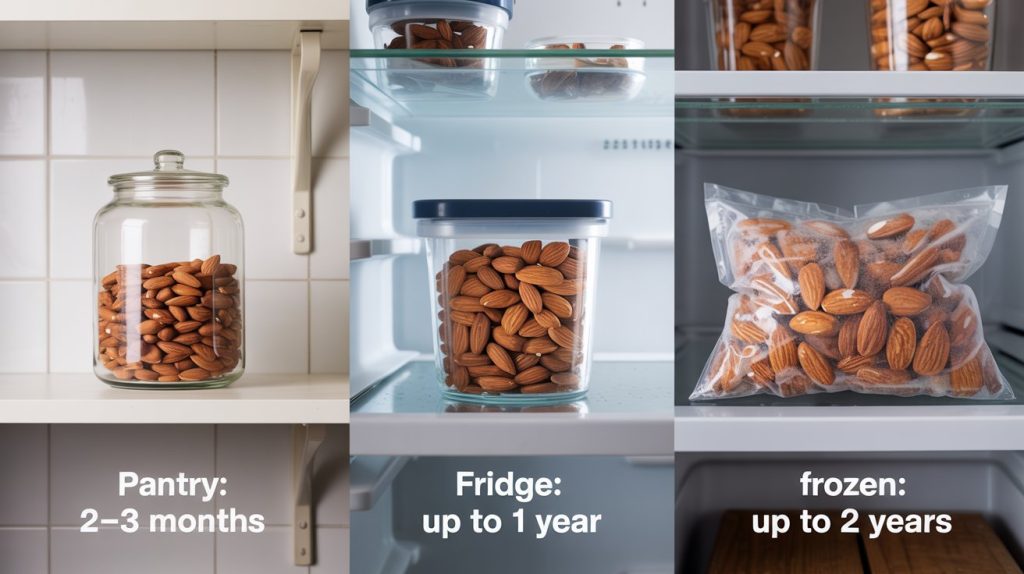
| Type | Storage Time |
|---|---|
| Raw almonds (pantry) | 2–3 months |
| Refrigerated | up to 1 year |
| Frozen | up to 2 years |
Keep almonds in an airtight container to prevent rancidity.
Mistakes People Make With Almond Serving Size
Many people make these common mistakes:
- Not measuring: Grabbing handfuls without counting usually leads to overeating.
- Ignoring added flavors: Flavored almonds (honey-roasted, salted) often have extra sugar and salt, making the snack less healthy.
- Using almonds as a “free food”: Because almonds are healthy, some people eat as much as they want. But the calories can add up quickly.
A less obvious mistake is forgetting about almonds in other foods. Almond milk, almond butter, and almond flour also add calories and fat. Track all sources to avoid going over your daily needs.
Best Ways To Include Almonds In Your Diet
Almonds are easy to add to your day:
- Eat them raw as a snack
- Add to oatmeal or yogurt
- Mix into salads for crunch
- Use almond butter on toast
Choose unsalted and unflavored almonds for the healthiest option. Roasted or raw almonds both keep their nutrition, but roasting may improve taste and texture for some people.
If you want more details on almond nutrition, the Wikipedia Almond page has useful information.
Two Insights Beginners Often Miss
First, the skin on almonds contains most of the fiber and antioxidants. Eating blanched (skinless) almonds means you lose some health benefits.
Second, soaking almonds overnight changes their texture and may make them easier to digest for some people, but it does not change the calorie content. Always count soaked or roasted almonds the same as raw.
Frequently Asked Questions
How Many Calories Are In A Serving Of Almonds?
One serving (28 grams or 23 almonds) has about 164 calories. This includes healthy fats, protein, and some carbohydrates.
Is It Okay To Eat More Than One Serving Per Day?
Yes, but be mindful of calories. Two servings (46 almonds) give you over 320 calories, which is a lot for a snack. Adjust based on your total daily needs.
Are There Side Effects From Eating Too Many Almonds?
Eating too many almonds can cause weight gain due to high calories. Some people may also experience digestive discomfort from too much fiber.
Do Sliced Or Chopped Almonds Have A Different Serving Size?
No, the serving size is still 28 grams. But it is harder to count pieces, so use a measuring cup (1/4 cup) for accuracy.
Are Roasted Almonds Less Healthy Than Raw?
Roasted almonds keep most of their nutrients. They may lose a small amount of vitamin E, but the difference is minor. Choose unsalted versions for best health.
Getting the right serving size of almonds is a small habit that can bring big benefits. Count or measure your almonds, choose plain varieties, and enjoy them as a healthy part of your diet. Small changes like this add up to better health over time.
