
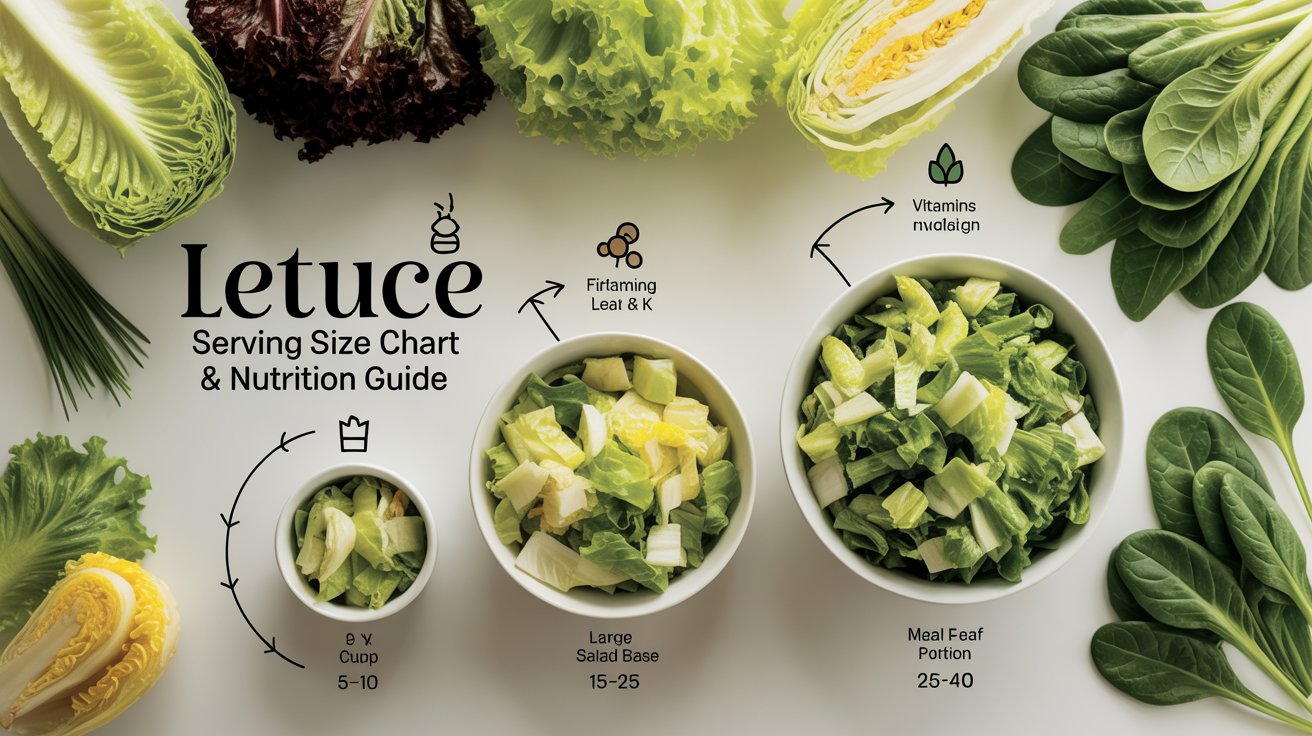
Lettuce is a light, refreshing vegetable commonly used in salads, wraps, and sandwiches. Because it’s low in calories and high in water content, it’s easy to eat large amounts without thinking about portion size. Understanding the serving size for lettuce helps you build balanced meals while getting the most nutritional benefits.
Why Lettuce Serving Size Matters
Lettuce may seem “free” to eat, but portion size still plays a role in meal balance and nutrition tracking.
Knowing the right serving size helps you:
- Build balanced salads and meals
- Track nutrients accurately
- Combine lettuce with proteins and healthy fats
Since lettuce is low in calories, it’s often recommended to eat generous portions.
Standard Lettuce Serving Sizes And Portions
Lettuce is usually measured in cups (raw, chopped).
Lettuce Serving Size Chart
| Serving Type | Amount | Weight (Approx.) | Calories |
|---|---|---|---|
| Small Portion | 1 cup | 25–30g | 5–10 |
| Standard Serving | 2 cups | 50–70g | 10–15 |
| Large Salad Base | 3–4 cups | 75–120g | 15–25 |
| Meal Portion | 4–6 cups | 120–180g | 25–40 |
Because lettuce is very light, servings are larger compared to other vegetables.
Choosing The Right Lettuce Serving Size
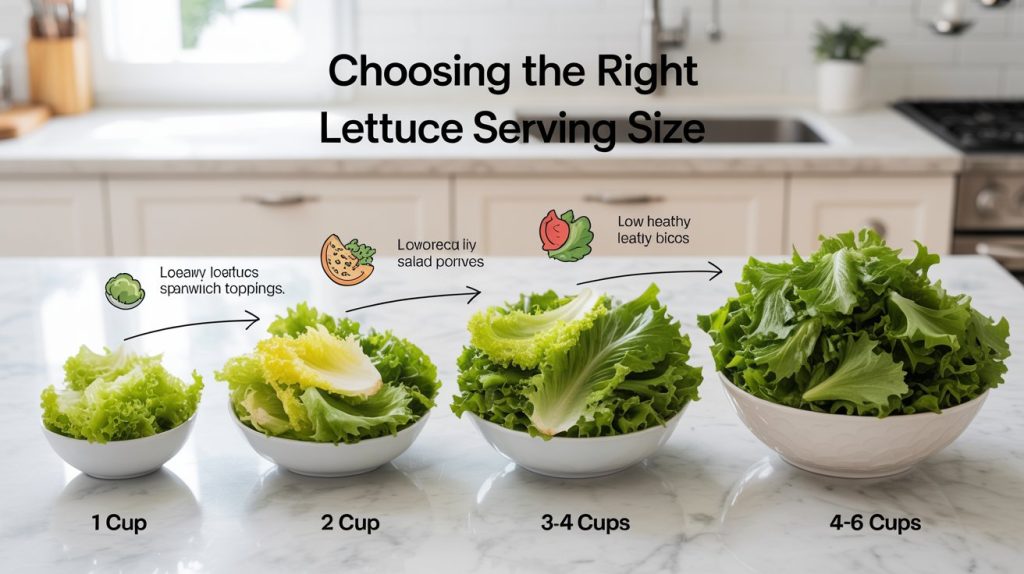
The best portion depends on how you’re using it:
- 1 cup: Light topping for sandwiches or wraps
- 2 cups: Standard serving for salads
- 3–4 cups: Base for a full salad meal
- 4–6 cups: Large meal-sized salad
Lettuce is often eaten in larger portions without adding many calories.
Lettuce Serving Size Comparison: Different Types
Different lettuce varieties vary slightly in density.
Lettuce Type Comparison
| Type | Typical Serving | Texture | Notes |
|---|---|---|---|
| Iceberg | 2 cups | Crisp, watery | Lower in nutrients |
| Romaine | 2 cups | Crunchy | More nutrients |
| Leaf Lettuce | 2 cups | Soft | Light and delicate |
| Spinach (leafy green) | 2 cups | Tender | More nutrient-dense |
Leafier greens may feel lighter but offer more nutrients.
Lettuce Serving Size And Nutrition
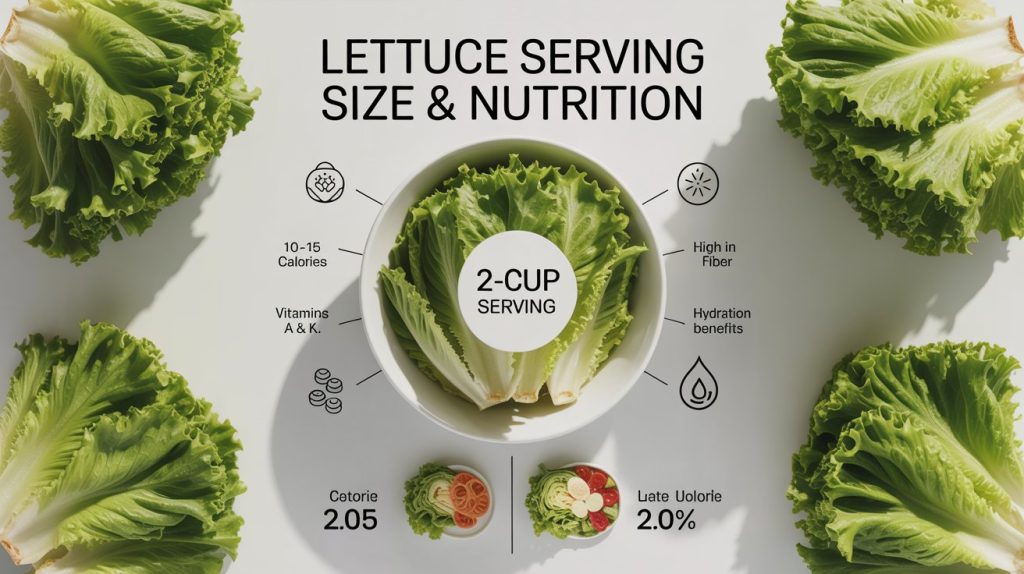
Lettuce is low in calories but provides:
- Fiber
- Vitamin A and K
- Hydration
A 2-cup serving typically contains:
- 10–15 calories
- Small amounts of fiber
- Essential vitamins
Adding dressings and toppings increases calories significantly.
Visual Guide: Lettuce Serving Size
Here’s a simple way to estimate portions:
| Serving Size | Visual Comparison | Best Use |
|---|---|---|
| 1 cup | Small handful | Topping |
| 2 cups | Two handfuls | Side salad |
| 4 cups | Large bowl | Meal salad |
These visuals help when you don’t measure.
Tips For Measuring And Eating Lettuce
- Use handfuls as a guide: Easy portioning
- Wash and dry well: Improves texture
- Mix with other veggies: Adds nutrients
- Go light on dressing: Controls calories
- Use as a base: Add protein and grains
Simple steps improve your meals.
Common Mistakes When Eating Lettuce
- Using too much dressing: Adds extra calories
- Eating only lettuce: Lacks balance
- Not measuring portions: Hard to track intake
- Choosing low-nutrient types only: Less benefit
Balancing your salad makes it more nutritious.
How Lettuce Serving Size Affects Your Meal
Lettuce adds volume and freshness to meals without adding many calories. Larger portions can help you feel full while keeping meals light and healthy.
Pairing lettuce with protein and healthy fats creates a complete meal.
The Role Of Lettuce In Healthy Diets
Lettuce has long been a staple in healthy eating due to its low calorie content and versatility. It’s widely used in salads, wraps, and low-carb meals.
Frequently Asked Questions
What Is A Standard Serving Size Of Lettuce?
About 2 cups of raw lettuce.
Can I Eat Unlimited Lettuce?
Generally yes, but balance with other nutrients.
Is Lettuce Good For Weight Loss?
Yes, it’s low in calories and high in volume.
Does Lettuce Have Nutritional Value?
Yes, especially darker varieties like romaine.
How Do I Measure Lettuce Without Tools?
Use handfuls—two handfuls equal about 2 cups.
Lettuce serving sizes may seem large, but they are designed to support healthy eating. By understanding the serving size for lettuce, you can build balanced, satisfying meals while keeping your nutrition on track.
