
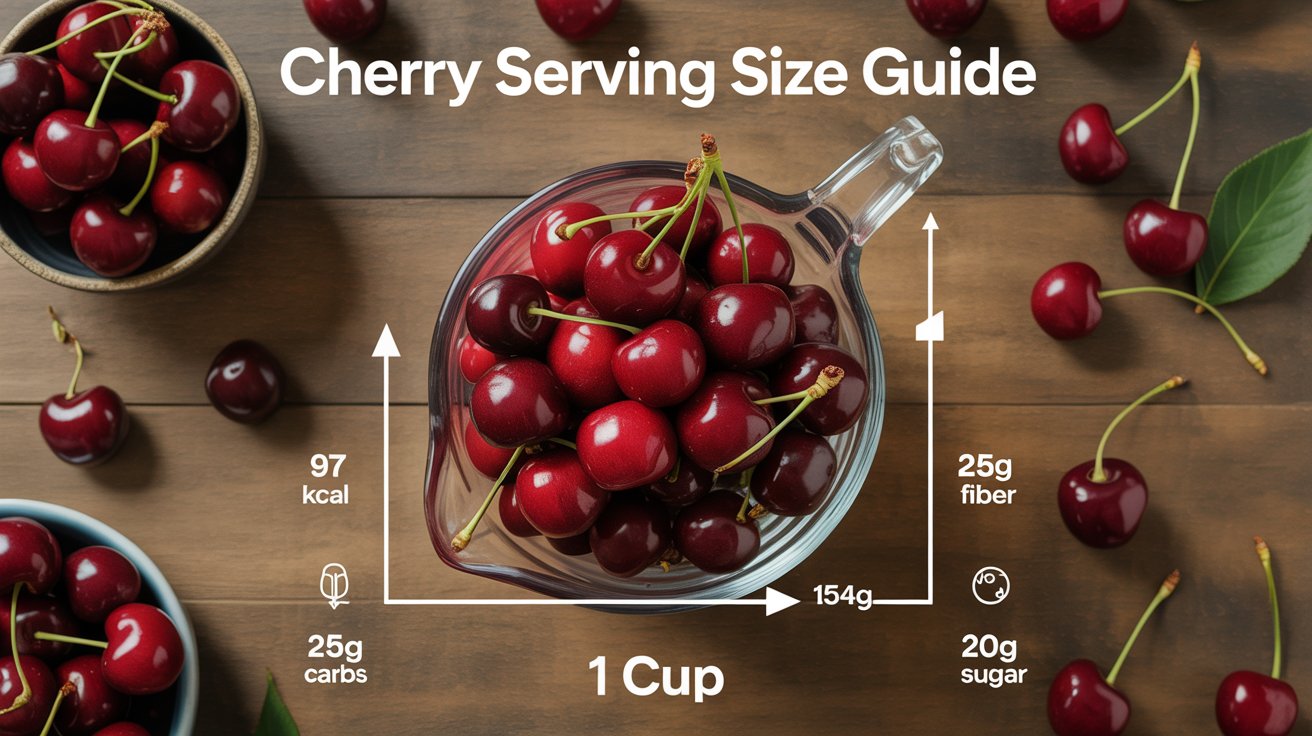
Cherries are like nature’s candy, bursting with sweetness and a hint of tartness that makes every bite a delight. Whether you’re tossing them into a salad, baking them into a pie, or just snacking on them fresh, cherries elevate any dish with their vibrant flavor and beautiful color. You won’t be able to resist!
Key details: This guide covers the recommended serving size for cherries, including nutritional benefits and recipe ideas. Total time: 10 minutes, Difficulty level: Easy, Servings: 1 cup.
Cherries: Nutritional Overview
Cherries are not only delicious but also packed with numerous health benefits. Understanding the recommended serving size can help you incorporate this superfruit into your diet effectively, ensuring you enjoy both their flavor and nutritional advantages.
| Serving Type | Measurement | Weight |
|---|---|---|
| Fresh cherries (pitted) | 1 cup | ~154 g |
| Whole cherries | ~20–25 cherries | ~150 g |
| Cherry halves | 1 cup | ~150 g |
| Dried cherries | ¼ cup | ~40 g |
✔ 1 cup of fresh cherries (about 154 g) is the recommended serving size.
Health Benefits
- Rich in Antioxidants: Cherries contain anthocyanins, which are powerful antioxidants that combat oxidative stress and inflammation in the body.
- Supports Joint Health: The anti-inflammatory properties of cherries have been shown to reduce symptoms of arthritis and gout, making them excellent for joint health.
- Boosts Sleep Quality: Tart cherries are a natural source of melatonin, which can help regulate sleep cycles and improve sleep quality.
Recommended Serving Size
- One serving: A standard serving size for cherries is typically one cup (about 154 grams) of pitted cherries. This amount provides a balance of nutrients without overindulging.
- Enjoying cherries: Incorporate this serving size into your meals by adding them to yogurt, salads, or smoothies. They can also be used as a topping for desserts or enjoyed on their own as a healthy snack.
Nutritional Information per Serving
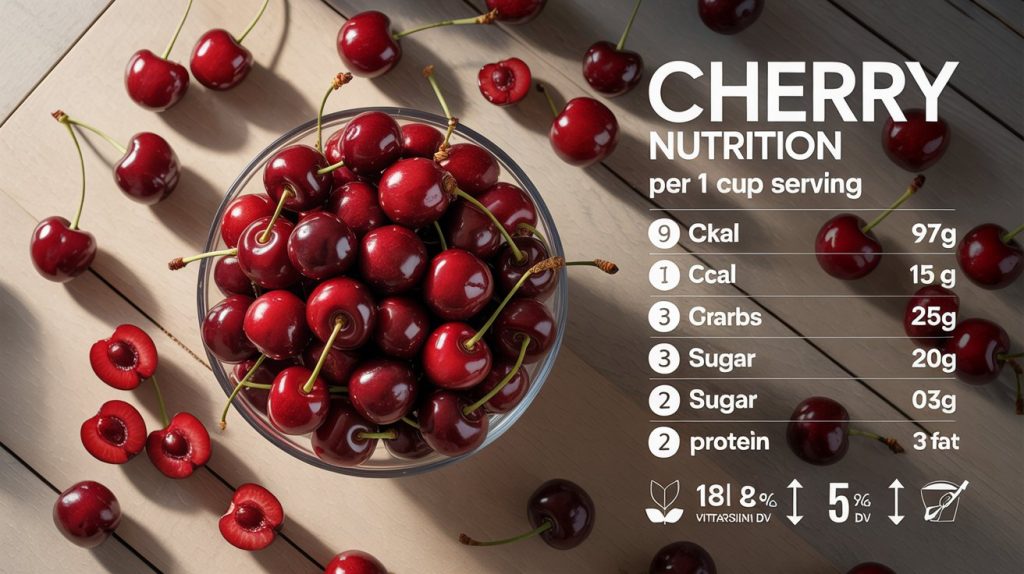
This section provides a comprehensive breakdown of the nutritional content in a standard serving of cherries, which is typically about 1 cup (154 grams). Understanding these details can help you appreciate the health benefits of cherries and how they fit into your diet.
A 1-cup serving (154 g) provides approximately:
| Nutrient | Amount |
|---|---|
| Calories | 97 kcal |
| Carbohydrates | 25 g |
| Fiber | 3 g |
| Sugar | 20 g |
| Protein | 2 g |
| Fat | 0.3 g |
Vitamins and Minerals
Cherries are not only delicious but also packed with vitamins and minerals, contributing to their status as a healthful fruit. Here’s what you get in a 1-cup serving:
- Vitamin C: 18% of the Daily Value (DV)
- Potassium: 8% of the DV
- Vitamin A: 2% of the DV
- Iron: 2% of the DV
- Calcium: 2% of the DV
Chef’s tip: Cherries are a great source of antioxidants, which can help reduce inflammation and promote heart health.
By incorporating a serving of cherries into your meals, you’re not just enjoying a tasty treat but also boosting your intake of essential nutrients!
Recipe Ideas for Cherry Serving Size
Cherries are not only delicious but also versatile in the kitchen. Using the recommended serving size of about 1 cup (154g) of cherries can enhance various dishes, adding a burst of flavor and a touch of sweetness. Below are three delightful recipes that incorporate cherries effectively while making the most of this serving size.
Cherry Smoothie
- 1 cup fresh or frozen cherries (154g)
- 1 banana, peeled
- 1 cup almond milk (240ml) or any milk of choice
- 1 tablespoon honey or maple syrup (optional)
- ½ teaspoon vanilla extract
- In a blender, combine the cherries, banana, almond milk, honey, and vanilla extract. Blend until smooth, about 30-45 seconds.
- The smoothie should have a velvety consistency and be a rich pink color. If it’s too thick, add a little more milk.
- Pour into a glass and enjoy immediately for the best flavor and texture!
Chef’s tip: For an extra creamy smoothie, add a tablespoon of Greek yogurt!
Cherry Salad
- 1 cup pitted cherries, halved (154g)
- 2 cups mixed greens (e.g., arugula, spinach)
- ¼ cup crumbled feta cheese (38g)
- 2 tablespoons balsamic vinaigrette
- ¼ cup walnuts, chopped (30g)
- In a large bowl, toss together the mixed greens, cherries, feta cheese, and walnuts.
- Drizzle with balsamic vinaigrette and gently fold the ingredients to combine. The salad should look vibrant and colorful.
- Serve immediately for a fresh and crunchy texture!
Cherry Sauce
- 1 cup fresh or frozen cherries, pitted (154g)
- ½ cup sugar (100g)
- ¼ cup water (60ml)
- 1 teaspoon lemon juice
- In a small saucepan over medium heat, combine cherries, sugar, and water. Stir until the sugar dissolves, about 2-3 minutes.
- Bring to a gentle boil and simmer for 10-15 minutes until the sauce thickens and coats the back of a spoon.
- Remove from heat and stir in lemon juice. The sauce should be glossy and thick. Let it cool before serving over pancakes or desserts.
Pro tip: This sauce can be stored in the fridge for up to two weeks!
Selecting Fresh Cherries
Choosing the right cherries is critical for enjoying their sweet, juicy flavor, especially when considering serving sizes. Fresh cherries not only add vibrant color to your dishes but also pack a nutritional punch. Here’s how to pick the best cherries for your recipes.
- Inspect the Color: Look for cherries that are deep red or dark purple, depending on the variety. They should have a glossy sheen, which indicates freshness. Avoid any that are dull or have noticeable blemishes.
- Check the Firmness: Gently squeeze a cherry; it should feel firm and plump. If it’s too soft, it may be overripe or starting to spoil. Remember, ripe cherries should not have any wrinkled skin.
- Look at the Stems: Fresh cherries should still have their green stems attached. These stems indicate freshness, while dried or brown stems can suggest older cherries. Choose cherries with stems that are vibrant and flexible.
- Avoid Bad Cherries: Stay clear of any cherries with bruises, cracks, or signs of mold. These defects can affect the overall taste and texture, making them less enjoyable. If you spot any that are leaking juice, they are best left behind.
- Consider Serving Size: A typical serving size for cherries is about 1 cup (154g), which contains around 97 calories. This amount is perfect for snacking, adding to salads, or incorporating into desserts.
Chef’s tip: For the best flavor, consume cherries soon after purchase, as they can lose their sweetness and texture over time.
Storing Cherries Properly
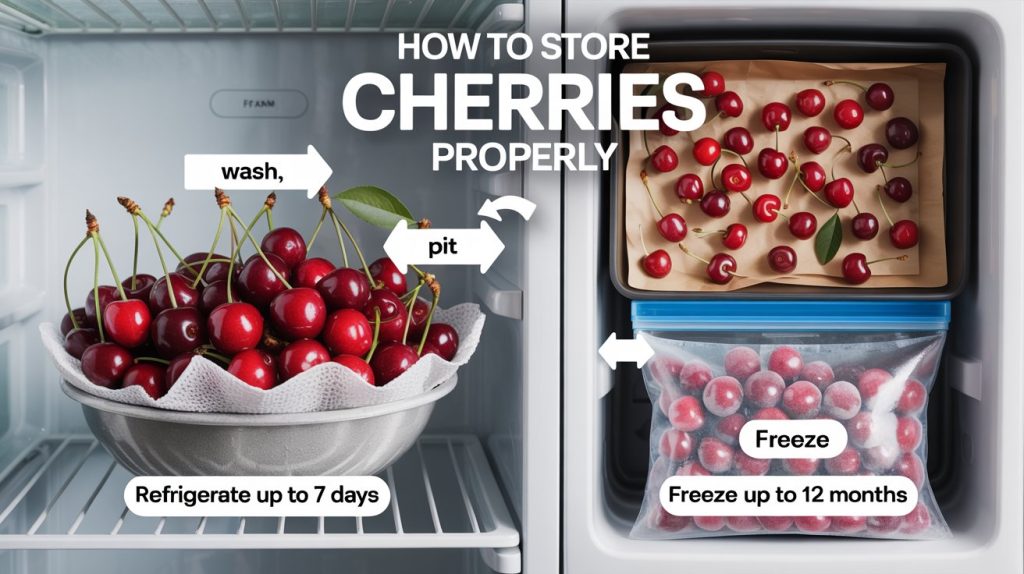
Storing cherries correctly is essential to maintain their freshness and flavor, ensuring that you can enjoy them in the recommended serving sizes. Proper storage not only extends their shelf life but also preserves their delightful taste and nutritional benefits.
- Refrigeration Tips: Start by keeping your cherries in the refrigerator as soon as you bring them home. Place them unwashed in a breathable container, such as a colander or a bowl lined with a paper towel. This prevents moisture buildup, which can lead to mold. They should stay fresh for up to a week, but be sure to check for any overripe ones daily, as they can spoil quickly.
- Freezing Cherries: If you have more cherries than you can consume in a week, freezing them is a great option. Rinse and dry the cherries thoroughly, then remove the stems and pits. Spread them in a single layer on a baking sheet lined with parchment paper and freeze for about 2 hours. Once frozen, transfer them to an airtight freezer bag, removing as much air as possible. Properly frozen cherries can last for up to a year, making them perfect for smoothies, desserts, or sauces later on.
Chef’s tip: Always freeze cherries in their whole form to maintain their texture and flavor. You can pit them before or after freezing, but doing it beforehand makes them easier to use later!
Health Considerations for Cherries
Understanding the health implications of cherries can enhance your enjoyment and utilization of this delightful fruit. While cherries offer numerous benefits, it’s essential to be aware of potential allergies and digestive effects associated with their consumption, especially in regards to serving size.
Allergies
- Possible Allergens: Some individuals may experience allergic reactions to cherries, which can include symptoms like itching, swelling, or gastrointestinal distress. If you have a known allergy to other stone fruits like peaches or plums, proceed with caution.
- Serving Size Caution: For those with allergies, it’s advisable to start with a small portion, such as 1/4 cup (about 35g) of fresh cherries, to monitor for any adverse reactions.
Digestive Benefits
- Rich in Fiber: Cherries are a great source of dietary fiber, with approximately 3 grams in every cup (about 140g). This fiber content aids in digestion and can help prevent constipation.
- Recommended Serving Size: A serving of 1 cup of cherries is ideal for reaping the digestive benefits while providing a satisfying treat. This amount can also be incorporated into various recipes without overwhelming your digestive system.
Including cherries in your diet can promote digestive health and provide a deliciously sweet snack, but moderation is key, especially if you’re prone to allergies. Enjoy responsibly!
Serving Suggestions for Cherries
Cherries are not only delicious on their own, but they also shine in various dishes. Understanding how to serve them can enhance their flavor and make your meals more enjoyable. Here are some tips on the best pairings and plating ideas for cherries.
Best Pairings
- For a refreshing summer salad, toss together 1 cup of pitted cherries, 4 cups of mixed greens, ¼ cup of crumbled feta cheese, and ¼ cup of toasted walnuts. Drizzle with a simple vinaigrette made from 2 tablespoons of balsamic vinegar and 2 tablespoons of olive oil.
- Cherries pair beautifully with chocolate. Melt 4 ounces of dark chocolate and dip whole cherries into it, then chill on wax paper for a delightful treat. The combination of sweet and tart cherries with rich chocolate is irresistible.
- For breakfast, mix ½ cup of chopped cherries into your morning oatmeal or yogurt. Top with 1 tablespoon of honey and a sprinkle of cinnamon for added flavor and sweetness.
Plating Ideas
- To create an elegant dessert, serve a scoop of vanilla ice cream in a bowl, topped with warm cherry compote made by simmering 1 cup of pitted cherries with 2 tablespoons of sugar and 1 tablespoon of lemon juice until thickened, about 10 minutes.
- For a vibrant cheese board, arrange a variety of cheeses, crackers, and a small bowl of pitted cherries. This colorful presentation invites guests to enjoy the fresh fruit alongside savory flavors.
- When serving cherries as a snack, present them in a clear glass bowl to showcase their bright color. Pair with cheese cubes for a quick and visually appealing appetizer.
Chef’s tip: Always wash cherries thoroughly under running water to remove pesticides and dirt before serving or cooking.
Quick Summary
| Prep Time | 10 minutes |
|---|---|
| Cook Time | 0 minutes |
| Total Time | 10 minutes |
| Servings | 2-4 servings |
- Measure carefully: Aim for 1 cup of pitted cherries per serving.
- Freshness counts: Use firm, vibrant cherries for the best flavor.
- Wash thoroughly: Rinse cherries under cold water before serving.
- Serve chilled: Refrigerate for at least 30 minutes before serving.
- Pair wisely: Cherries complement cheese and yogurt beautifully.
Frequently Asked Questions
Can I make this ahead of time? How to store and reheat?
Yes, you can prepare cherries ahead of time by washing and pitting them. Store them in an airtight container in the refrigerator for up to 3-5 days and enjoy them cold or at room temperature.
What can I substitute for fresh cherries?
If you don’t have fresh cherries, you can use frozen cherries as a substitute, just remember to thaw them before using. Dried cherries can also work, but they will have a different texture and sweetness level.
How do I know when the serving size is right?
A standard serving size for cherries is about 1 cup of pitted cherries or approximately 150 grams. If it feels like a generous handful, you’re on the right track!
Can I freeze cherries? How long does it last?
Yes, you can freeze cherries for up to 6-12 months. Just wash, pit, and spread them in a single layer on a baking sheet to freeze before transferring to a freezer bag.
What if I don’t have a cherry pitter?
If you don’t have a cherry pitter, you can use a small knife to carefully cut the cherry in half and remove the pit by twisting it out. Alternatively, a sturdy straw can also work to push the pit out from the bottom.
