
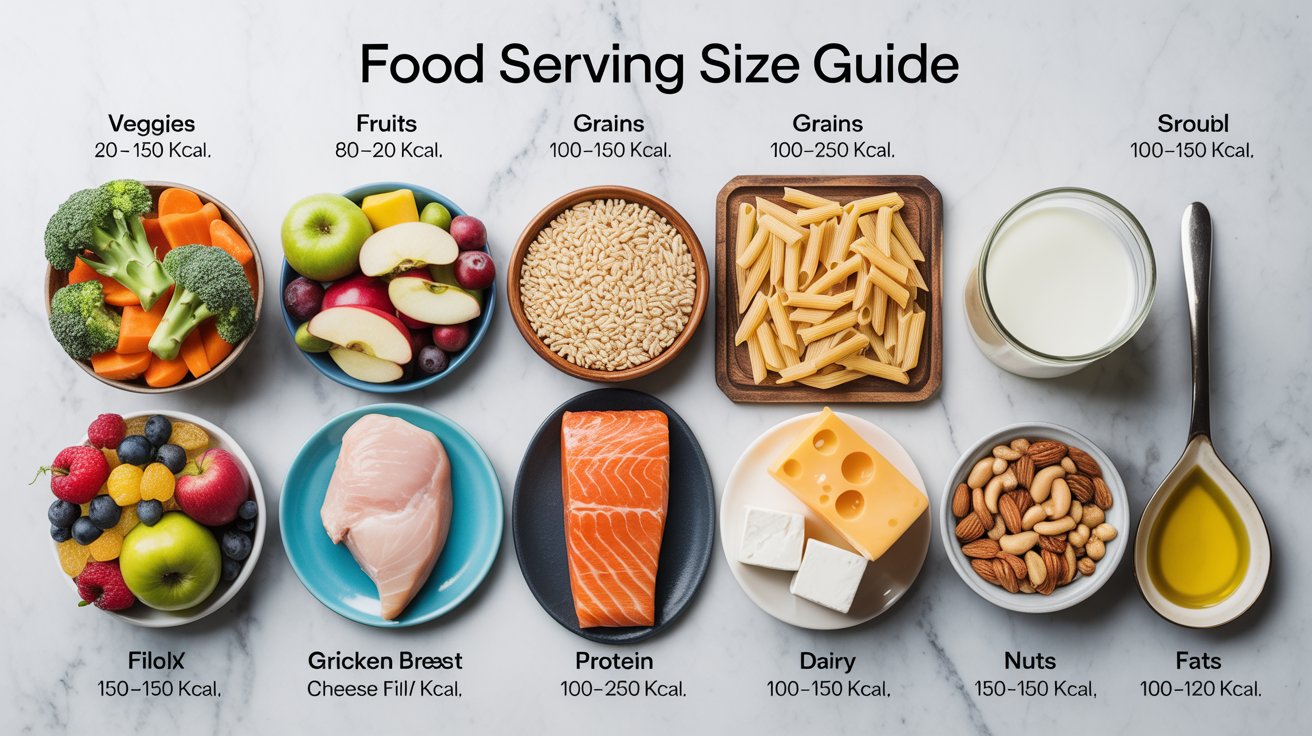
Understanding serving sizes is one of the most important parts of healthy eating—but it can also be confusing. What counts as one serving of rice, meat, vegetables, or snacks? Knowing a serving size chart for foods helps you control portions, balance meals, and manage calories without guesswork.
Why Food Serving Sizes Matter
Serving sizes are not just about how much you eat—they help you understand nutrition, calories, and portion control.
Knowing proper serving sizes helps you:
- Maintain a balanced diet
- Control calorie intake
- Avoid overeating or undereating
Whether you’re cooking at home or eating out, portion awareness makes a big difference.
Standard Serving Sizes Across Food Groups
Different food groups have different recommended serving sizes. Here’s a general guide:
Food Serving Size Chart
| Food Group | Serving Size | Example | Calories (Approx.) |
|---|---|---|---|
| Vegetables | 1 cup raw / ½ cup cooked | Broccoli, carrots | 20–50 |
| Fruits | 1 cup | Apple slices, berries | 80–100 |
| Grains (Cooked) | ½ cup | Rice, pasta | 100–150 |
| Protein (Meat) | 3–4 oz | Chicken, beef | 150–250 |
| Fish | 3–4 oz | Salmon, tuna | 150–250 |
| Dairy | 1 cup | Milk, yogurt | 100–150 |
| Cheese | 1–1.5 oz | Cheddar, mozzarella | 100–120 |
| Nuts & Seeds | 1 oz (small handful) | Almonds, peanuts | 150–180 |
| Fats & Oils | 1 tbsp | Olive oil, butter | 100–120 |
These are general recommendations and may vary based on dietary needs.
Choosing The Right Serving Size
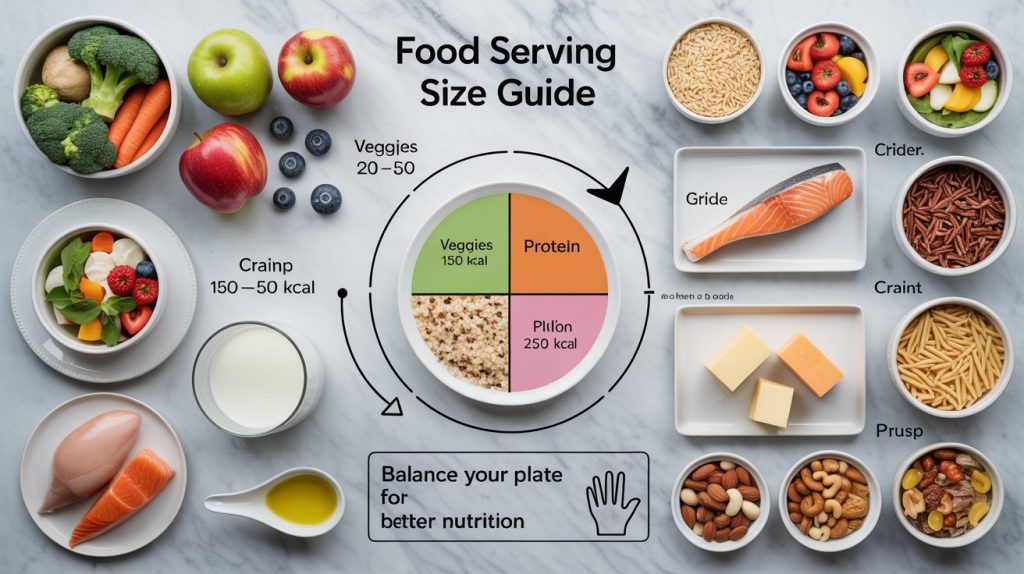
The right portion depends on your lifestyle and goals:
- Weight management: Stick to standard serving sizes
- Active lifestyle: Slightly larger portions may be needed
- Balanced meals: Combine protein, carbs, and vegetables
A good rule: fill half your plate with vegetables, one-quarter with protein, and one-quarter with grains.
Serving Size Comparison: Raw Vs Cooked Foods
Cooking can change the volume and weight of food.
Raw vs Cooked Food Portions
| Food Type | Raw Portion | Cooked Portion | Notes |
|---|---|---|---|
| Rice | ¼ cup | ½–¾ cup | Expands أثناء cooking |
| Pasta | ½ cup dry | 1–1.5 cups | Doubles in size |
| Meat | 4 oz raw | 3 oz cooked | Shrinks due to moisture loss |
| Vegetables | 1 cup raw | ½ cup cooked | Shrinks when cooked |
Understanding this helps you measure more accurately.
Serving Size And Nutrition
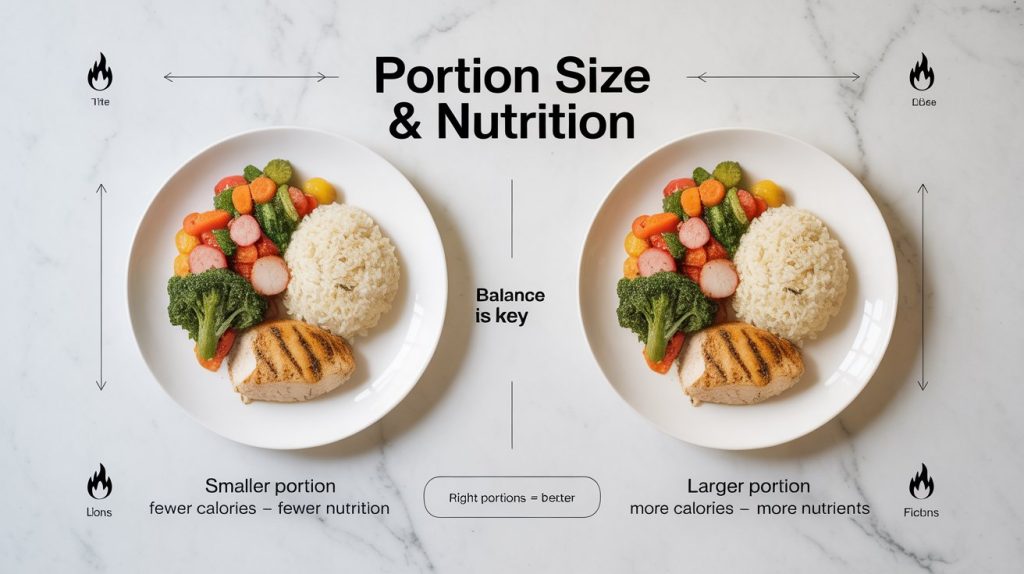
Portion size directly affects your calorie and nutrient intake.
For example:
- Larger portions = more calories
- Smaller portions = fewer nutrients
Balancing portion sizes ensures you get enough nutrients without overeating.
Visual Guide: Food Serving Sizes
Here’s an easy way to estimate portions without measuring tools:
| Food Type | Visual Comparison | Serving Size |
|---|---|---|
| Meat/Fish | Palm of hand | 3–4 oz |
| Rice/Pasta | Half a cup | ½ cup cooked |
| Vegetables | Full fist | 1 cup |
| Cheese | Two dice | 1 oz |
| Nuts | Small handful | 1 oz |
Visual cues make portioning simple and practical.
Tips For Managing Serving Sizes
- Use smaller plates: Helps control portions
- Read nutrition labels: Check serving sizes
- Measure food when possible: Especially for calorie tracking
- Avoid eating from large packages: Portion into bowls
- Balance your plate: Include all food groups
Consistency is key for long-term habits.
Common Mistakes With Serving Sizes
- Confusing portion with serving: A portion may contain multiple servings
- Not measuring foods: Leads to inaccurate intake
- Overestimating healthy foods: Even healthy foods have calories
- Ignoring snacks: Small bites can add up
Being aware of these mistakes helps you stay on track.
How Serving Sizes Affect Your Diet
Serving sizes determine how balanced your meals are. Too much of one food group can throw off your nutrition, while proper portions create a well-rounded diet.
Learning portion control helps improve both health and eating habits.
The Importance Of Portion Awareness
Modern portion sizes have increased over time, especially in restaurants. Understanding standard serving sizes helps you return to healthier eating patterns.
Frequently Asked Questions
What Is A Serving Size?
A serving size is a standard amount of food used for nutrition guidelines.
Is Serving Size The Same For Everyone?
No, it can vary based on age, activity level, and goals.
How Can I Measure Without Tools?
Use visual cues like your hand or common objects.
Why Are Serving Sizes Important?
They help control calories and maintain a balanced diet.
Can I Eat More Than One Serving?
Yes, depending on your needs—but be mindful of total intake.
Serving sizes may seem small, but they play a big role in your health. By understanding this serving size chart for foods, you can make smarter choices, balance your meals, and enjoy your food without overthinking portions.
