
Cereal is one of the most convenient breakfast options—but it’s also one of the easiest foods to overeat. A quick pour can turn into two or three servings without you realizing it. Understanding a cereal serving size helps you manage portions, control calories, and build a more balanced breakfast.
Why Cereal Serving Size Matters
Cereal may seem light, but many varieties are high in carbohydrates and added sugars. Portion size plays a big role in how healthy your breakfast actually is.
Knowing the right serving size helps you:
- Control calorie and sugar intake
- Balance your meal with milk and toppings
- Avoid unintentionally overeating
Even healthy cereals can become high-calorie meals if portions are too large.
Standard Cereal Serving Sizes And Portions
Cereal is usually measured in cups (volume) or grams (weight).
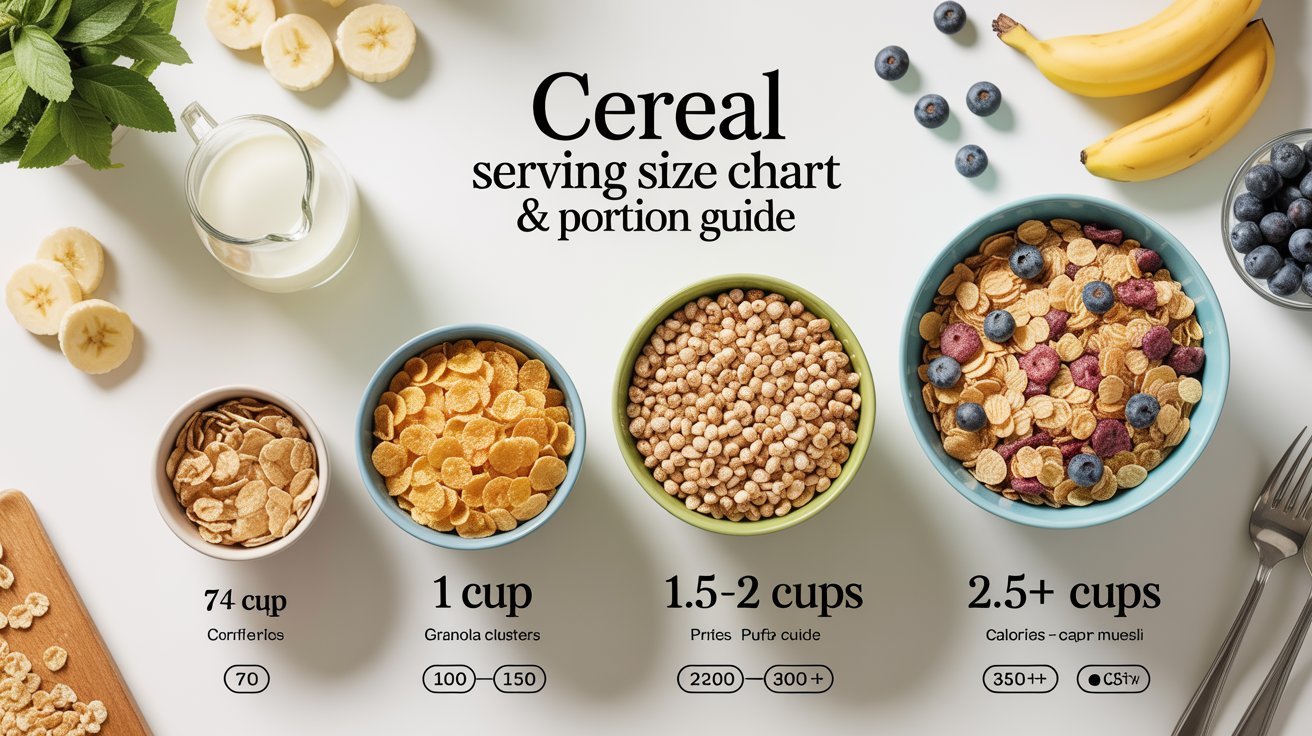
Cereal Serving Size Chart
| Serving Type | Amount (Cups) | Weight (Approx.) | Calories |
|---|---|---|---|
| Small Portion | ¾ cup | 20–25g | 70–100 |
| Standard Serving | 1 cup | 25–40g | 100–150 |
| Large Portion | 1.5–2 cups | 50–80g | 200–300 |
| Oversized Bowl | 2.5+ cups | 90g+ | 350+ |
These values vary depending on the type of cereal (flakes, granola, or puffed).
Choosing The Right Cereal Serving Size
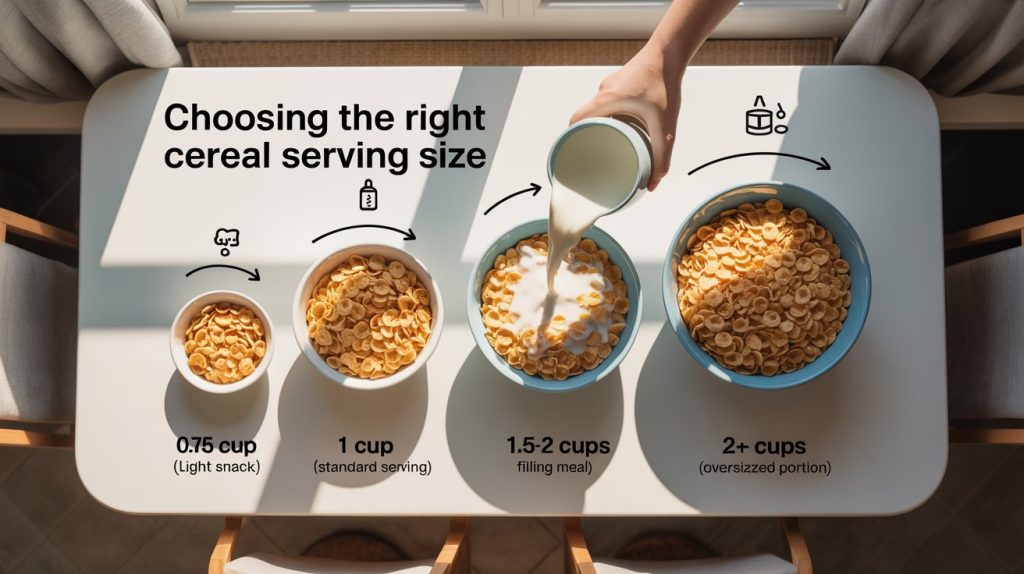
The best portion depends on your needs:
- ¾ cup: Light breakfast or snack
- 1 cup: Standard serving for most people
- 1.5–2 cups: More filling meal
- 2+ cups: Often more than recommended
Measuring your cereal instead of pouring freely helps maintain control.
Cereal Serving Size Comparison: Different Types
Different cereals have different densities, which affects portion size.
Cereal Type Comparison
| Cereal Type | Serving Size (Typical) | Notes |
|---|---|---|
| Flakes | 1 cup | Light, airy |
| Granola | ½–¾ cup | Dense, higher calories |
| Puffed Cereal | 1–1.5 cups | Very light |
| Muesli | ½–1 cup | Dense with nuts and grains |
Granola and muesli usually require smaller portions.
Cereal Serving Size And Nutrition
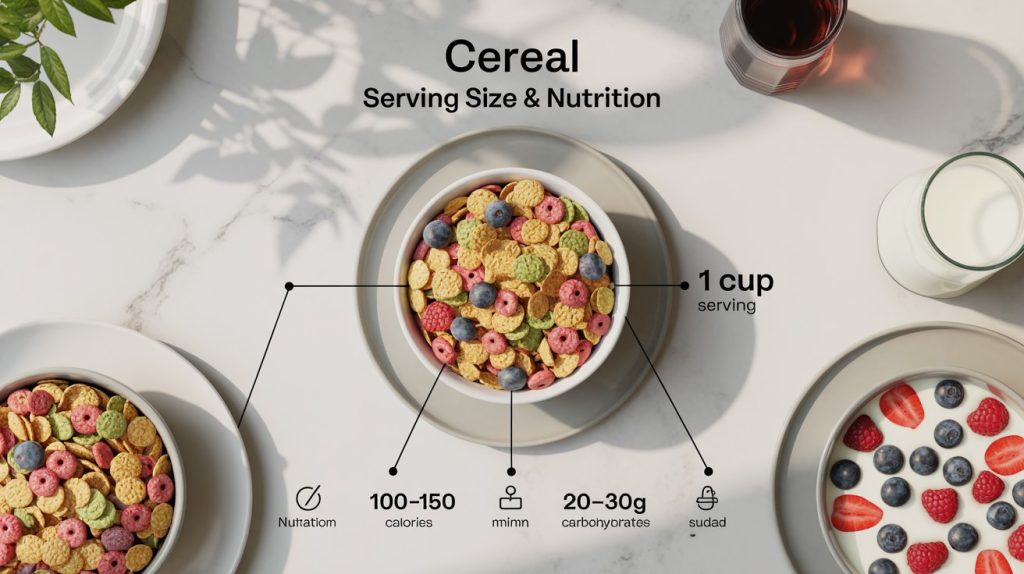
Cereal nutrition varies widely depending on ingredients.
A 1 cup serving typically contains:
- 100–150 calories
- 20–30g carbohydrates
- Added sugar (varies by brand)
Adding milk, sugar, or fruit increases total calories.
Visual Guide: Cereal Serving Size
Here’s a simple way to estimate portions:
| Serving Size | Visual Comparison | Best Use |
|---|---|---|
| ¾ cup | Small bowl layer | Light meal |
| 1 cup | Standard bowl | Breakfast serving |
| 2 cups | Full bowl | Large portion |
Visual cues help prevent overpouring.
Tips For Measuring Cereal Portions
- Use a measuring cup: Most accurate method
- Check the label: Serving sizes vary by cereal
- Pour into a bowl first: Avoid eating from the box
- Add protein: مثل milk, yogurt, or nuts
- Choose whole-grain options: More filling and nutritious
These habits help create a balanced breakfast.
Common Mistakes When Eating Cereal
- Overpouring cereal: Easy to exceed serving size
- Ignoring nutrition labels: Serving sizes vary
- Adding too much sugar: Increases calories
- Using large bowls: Makes portions look smaller
Being mindful helps you stay on track.
How Cereal Serving Size Affects Your Breakfast
The portion of cereal you eat can turn a light breakfast into a high-calorie meal. A standard serving with milk and fruit creates a balanced, satisfying start to your day.
The Popularity Of Cereal
Cereal has been a breakfast staple for decades due to its convenience and variety. From classic flakes to granola mixes, it remains a popular choice worldwide.
Frequently Asked Questions
What Is A Standard Serving Size Of Cereal?
About 1 cup or 25–40 grams.
Why Does Cereal Serving Size Seem Small?
Because cereals are calorie-dense, especially sugary ones.
Is 2 Cups Of Cereal Too Much?
It can be more than one serving depending on the type.
How Can I Make Cereal Healthier?
Add fruit, nuts, and use low-sugar options.
Do All Cereals Have The Same Serving Size?
No, it varies by type and density.
Cereal serving sizes may seem small, but they make a big difference in your daily nutrition. By understanding the cereal serving size chart, you can enjoy your breakfast while keeping your portions balanced and healthy.
