
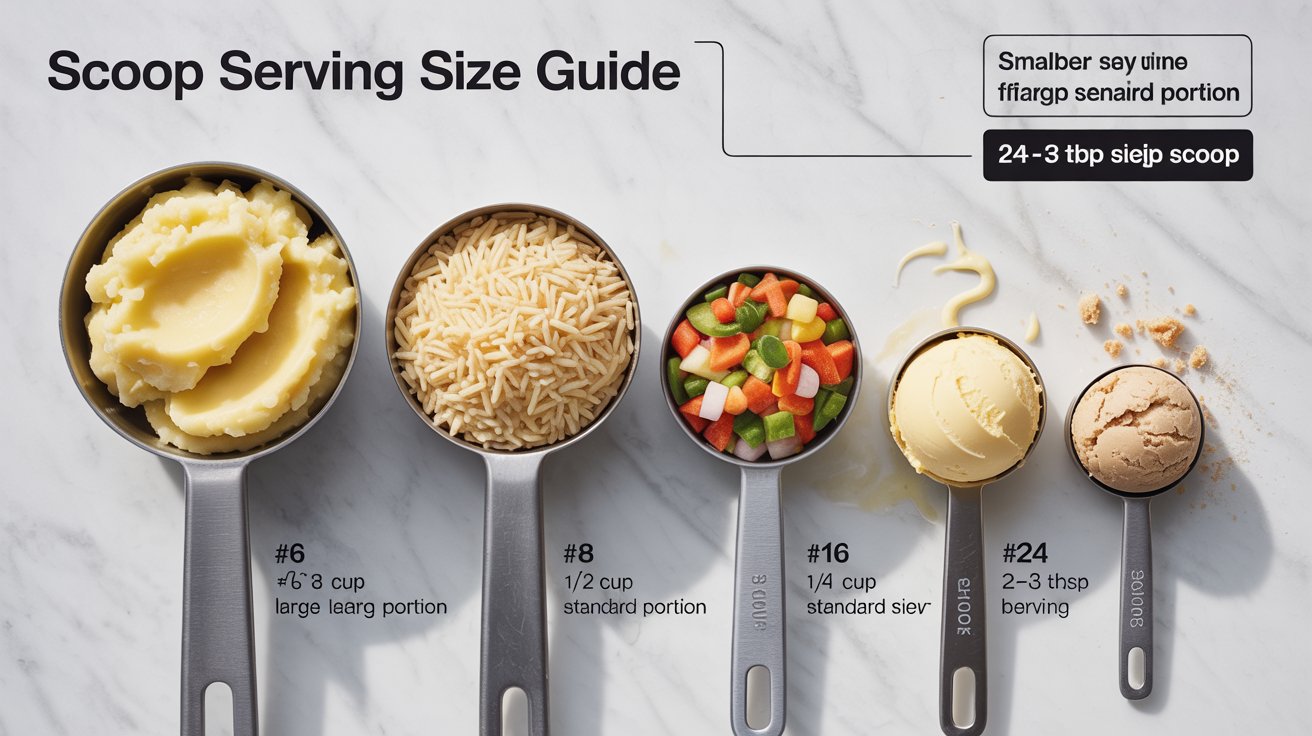
Scoops are commonly used to measure food portions—from ice cream and protein powder to rice, mashed potatoes, and cafeteria servings. But not all scoops are the same. The size can vary depending on what you’re serving and the type of scoop used. Understanding a scoop serving size chart helps you portion food accurately, control calories, and maintain consistency in cooking or serving.
Why Scoop Serving Size Matters
A “scoop” might sound simple, but it can represent very different amounts depending on the context. One scoop of ice cream is not the same as one scoop of protein powder or rice.
Knowing scoop sizes helps you:
- Control portion sizes
- Maintain consistent servings
- Track calories and nutrition more accurately
This is especially important in meal prep, food service, and dieting.
Standard Scoop Sizes And Measurements
Scoops are typically measured in ounces, milliliters, or cup fractions. In food service, scoops are often numbered (disher scoops), where the number indicates how many scoops fit into a quart.
Scoop Serving Size Chart
| Scoop Size (Number) | Volume (oz) | Volume (ml) | Cups (Approx.) | Common Use |
|---|---|---|---|---|
| #6 Scoop | 5.3 oz | 160 ml | ⅔ cup | Large portions, mashed foods |
| #8 Scoop | 4 oz | 120 ml | ½ cup | Rice, side dishes |
| #10 Scoop | 3.2 oz | 95 ml | ⅓ cup | Vegetables, fillings |
| #12 Scoop | 2.7 oz | 80 ml | ¼–⅓ cup | Ice cream, small portions |
| #16 Scoop | 2 oz | 60 ml | ¼ cup | Standard serving size |
| #20 Scoop | 1.6 oz | 47 ml | 3 tbsp | Smaller portions |
| #24 Scoop | 1.3 oz | 38 ml | 2–3 tbsp | Cookies, batters |
The smaller the scoop number, the larger the portion.
Choosing The Right Scoop Size
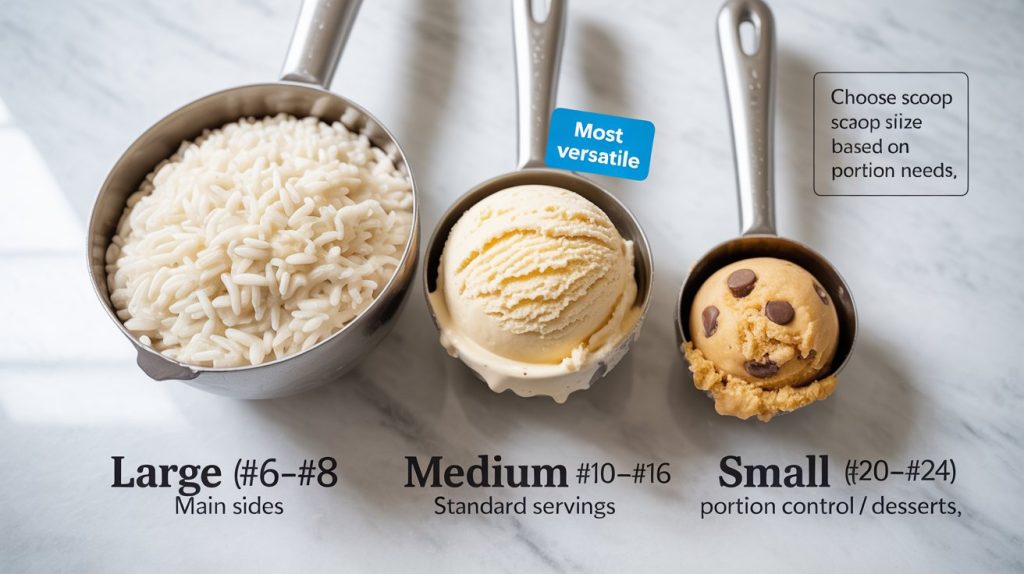
The best scoop depends on what you’re serving:
- Large scoops (#6–#8): Ideal for main sides like rice or mashed potatoes
- Medium scoops (#10–#16): Great for standard servings
- Small scoops (#20–#24): Perfect for portion control or desserts
Using the correct scoop ensures consistency in both cooking and presentation.
Scoop Serving Size Comparison: Different Foods
Different foods can fill a scoop differently based on density.
Scoop Size by Food Type
| Food Type | Typical Scoop Size | Notes |
|---|---|---|
| Ice Cream | #12–#16 | Rounded scoop |
| Rice | #8–#10 | Leveled scoop |
| Protein Powder | Varies (30g avg) | Depends on brand scoop |
| Mashed Potatoes | #8–#12 | Soft, easy to shape |
| Cookie Dough | #20–#24 | Small, uniform portions |
Always consider food density when measuring.
Scoop Serving Size And Nutrition
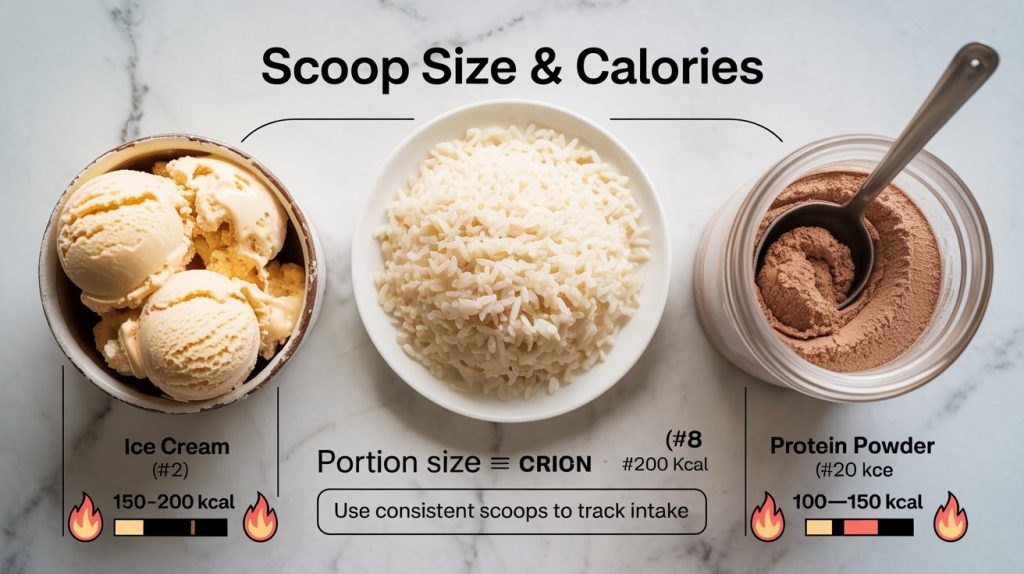
Portion size directly affects calorie intake.
For example:
- 1 scoop of ice cream (#12): ~150–200 calories
- 1 scoop of rice (#8): ~200 calories
- 1 scoop of protein powder: ~100–150 calories
Using a consistent scoop helps you track your intake more accurately.
Visual Guide: Scoop Serving Size
Here’s a simple way to picture scoop sizes:
| Scoop Size | Visual Comparison | Best Use |
|---|---|---|
| #8 | Half cup scoop | Rice, sides |
| #16 | Ice cream scoop | Standard portions |
| #24 | Small spoonful | Dough, small items |
These comparisons make it easier to estimate portions.
Tips For Using Scoops Accurately
- Level the scoop: For consistent portions
- Use the right tool: Different foods need different scoop sizes
- Don’t pack too tightly: Can increase portion size
- Clean between uses: Keeps portions accurate
- Check measurements: Especially for nutrition tracking
Consistency is key when using scoops.
Common Mistakes When Using Scoops
- Assuming all scoops are equal: Sizes vary widely
- Overfilling scoops: Leads to larger portions
- Ignoring food density: Affects actual weight
- Not leveling scoops: Causes inconsistency
Avoiding these mistakes ensures better portion control.
How Scoop Size Affects Serving
The scoop size you choose determines how much food is served each time. Larger scoops can quickly increase portion sizes and calories, while smaller scoops help with portion control and presentation.
Using the right scoop keeps servings balanced and consistent.
The Role Of Scoops In Food Service
Scoops are widely used in restaurants, cafeterias, and catering to ensure uniform portions. They help maintain consistency, control costs, and provide equal servings to customers.
Frequently Asked Questions
What Does Scoop Size Number Mean?
It shows how many scoops fit into one quart—the smaller the number, the larger the scoop.
What Is The Most Common Scoop Size?
#16 (about ¼ cup) is commonly used for standard servings.
Are Protein Scoops Standard?
No, they vary by brand, so always check the label.
How Do I Measure Without a Scoop?
Use measuring cups or spoons as an alternative.
Why Is My Scoop Portion Inconsistent?
It may be overfilled, packed too tightly, or not leveled.
Scoop serving sizes may seem simple, but they play a big role in portion control and consistency. By understanding the scoop serving size chart, you can measure food accurately and enjoy better-balanced meals every time.
