
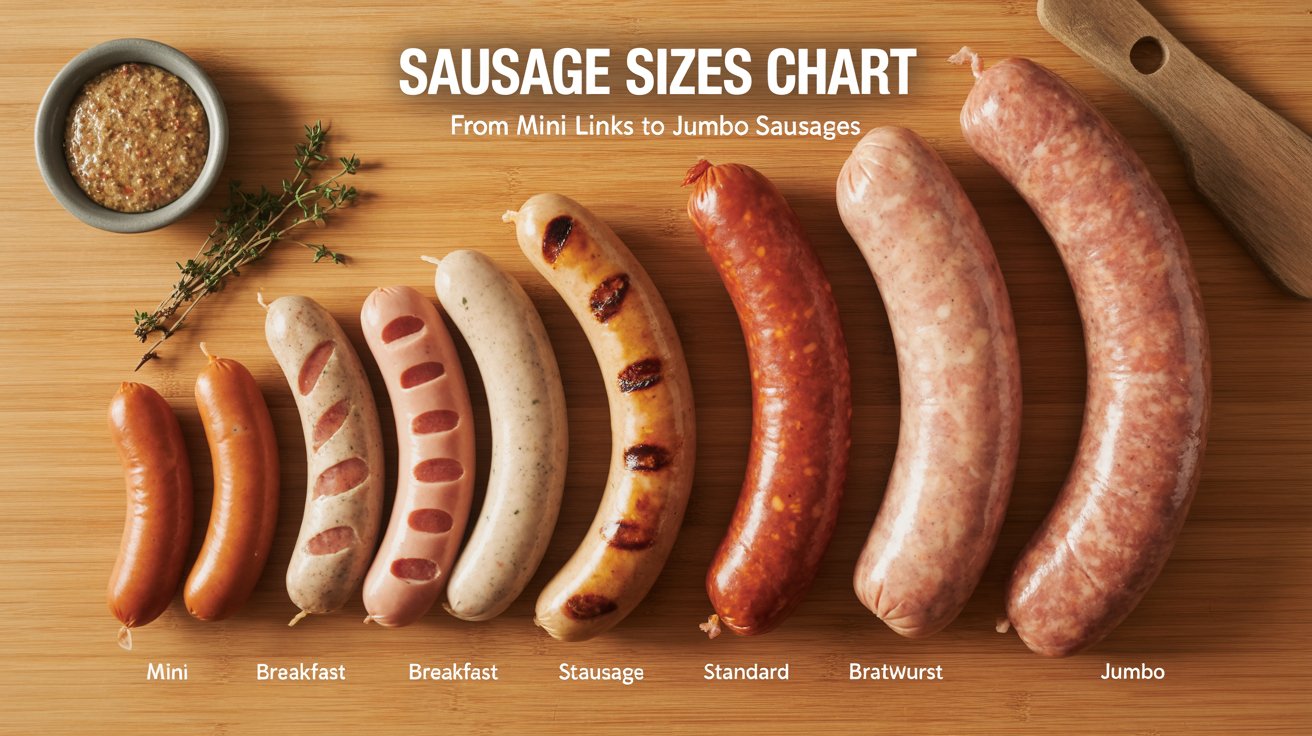
Sausages come in a wide variety of sizes—from small breakfast links to large bratwursts and specialty sausages. But have you ever wondered how sausage sizes are categorized and how much is considered a serving? Understanding a sausage sizes chart helps you choose the right type for your meal, control portions, and cook more accurately.
Why Sausage Size Matters
Sausage size affects more than just appearance—it influences cooking time, texture, and portion control. Smaller sausages cook faster and are great for breakfast, while larger ones are more filling and often used as main dishes.
Knowing the right size helps you:
- Control portion sizes and calories
- Choose the right sausage for your recipe
- Ensure even cooking
Whether you’re grilling, frying, or baking, size plays an important role.
Standard Sausage Sizes And Measurements
Sausages are typically measured by length, diameter, and weight.
Sausage Sizes Chart
| Sausage Type | Length (Approx.) | Diameter | Weight (Approx.) | Best Use |
|---|---|---|---|---|
| Cocktail/ Mini | 2–3 inches | Thin | 15–25g | Appetizers, snacks |
| Breakfast Link | 3–4 inches | Thin | 30–45g | Breakfast meals |
| Standard Sausage | 4–5 inches | Medium | 60–90g | Everyday cooking |
| Bratwurst/Italian | 5–6 inches | Thick | 100–150g | Grilling, main dishes |
| Jumbo Sausage | 6–8 inches | Very thick | 150–250g | Hearty meals, sandwiches |
Sizes may vary depending on the region and recipe.
Choosing The Right Sausage Size
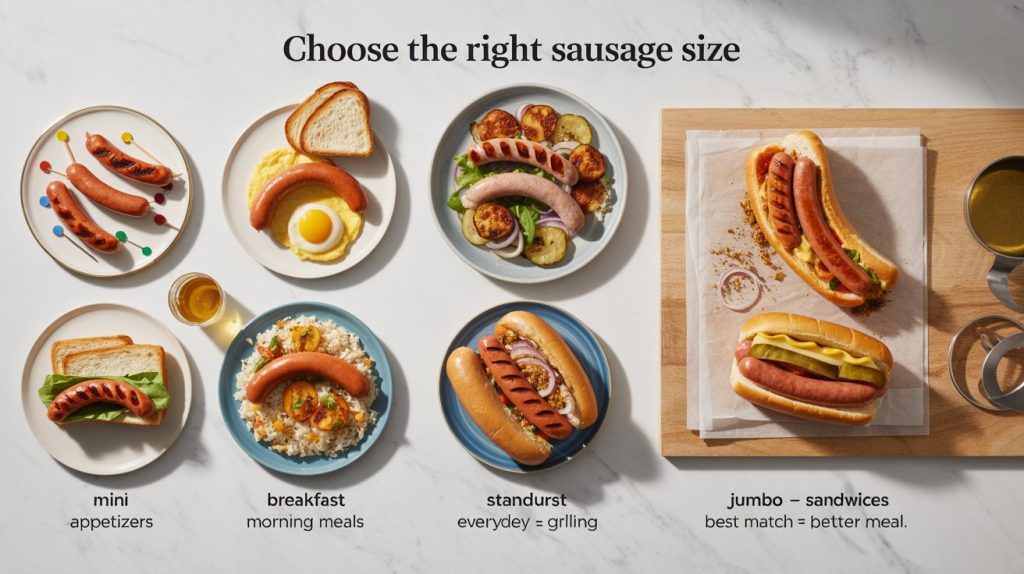
The best sausage size depends on your meal:
- Mini sausages: Perfect for parties and appetizers
- Breakfast links: Ideal for morning meals
- Standard sausages: Great for everyday cooking
- Bratwurst/Italian: Best for grilling and main dishes
- Jumbo sausages: Suitable for large portions or sandwiches
Matching size to your dish improves both taste and presentation.
Sausage Size Comparison: Fresh Vs Processed
Sausages can differ depending on how they’re made.
Fresh vs Processed Sausages
| Type | Size Variety | Texture | Notes |
|---|---|---|---|
| Fresh | Custom sizes | Juicy, soft | Needs cooking |
| Processed | Uniform | Firm | Pre-cooked or cured |
Fresh sausages often vary more in size, while processed ones are more consistent.
Sausage Size And Nutrition
Sausage size directly impacts calorie and fat intake.
For example:
- Small sausage (30g): ~80–100 calories
- Standard sausage (70g): ~180–250 calories
- Large sausage (150g): ~400+ calories
Larger sausages also contain more fat and sodium, so portion control is important.
Visual Guide: Sausage Sizes
Here’s a simple way to picture sausage sizes:
| Size | Visual Comparison | Best Use |
|---|---|---|
| Mini | Finger-sized | Snacks |
| Breakfast | Short pen | Breakfast |
| Standard | Hot dog size | Everyday meals |
| Jumbo | Large sausage roll | Main dish |
These visuals help when selecting or cooking sausages.
Tips For Measuring And Cooking Sausages
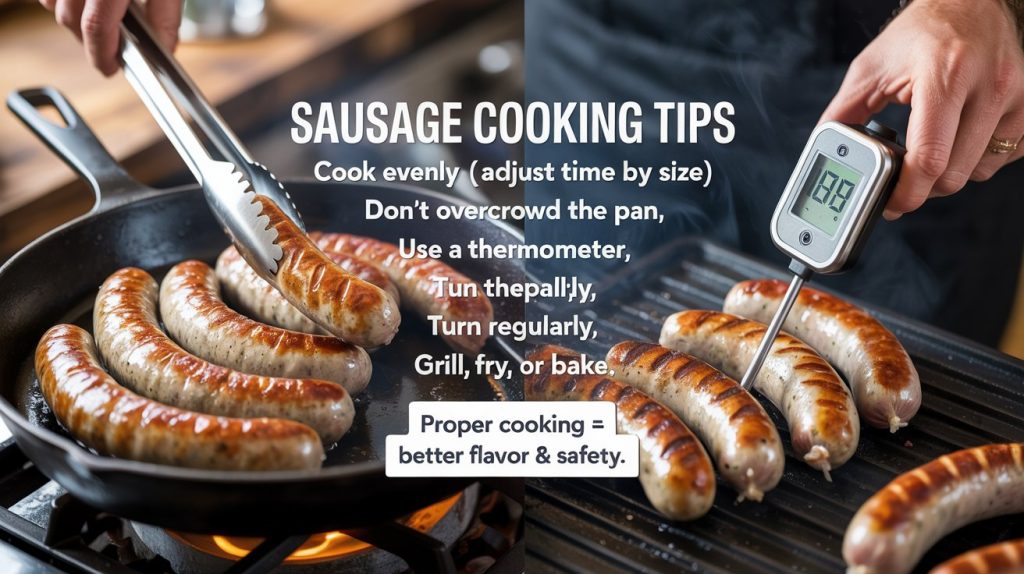
- Cook evenly: Adjust time based on size
- Avoid overcrowding: Ensures proper browning
- Use a thermometer: Internal temp should be safe
- Turn regularly: Prevents burning
- Match cooking method: Grill, fry, or bake depending on size
Proper cooking improves flavor and safety.
Common Mistakes When Choosing Sausage Size
- Choosing too large portions: Can increase calories
- Uneven cooking: Larger sausages need more time
- Ignoring fat content: Bigger sausages often have more fat
- Not matching size to dish: Can affect presentation
Avoiding these mistakes leads to better meals.
How Sausage Size Affects Your Meal
The size of the sausage determines how it fits into your meal. Smaller sausages complement dishes, while larger ones often become the main protein.
Balancing sausage size with sides creates a more satisfying meal.
The Variety Of Sausages Worldwide
Sausages are enjoyed worldwide in many forms—from small snack-sized links to large traditional varieties. Each culture has its own preferred sizes and styles.
Frequently Asked Questions
What Is A Standard Sausage Size?
About 4–5 inches long and 60–90g in weight.
How Many Sausages Is One Serving?
Usually 1–2 standard sausages, depending on size.
Are Bigger Sausages Healthier?
Not necessarily—they often contain more fat and calories.
Can I Cook Different Sizes Together?
Yes, but adjust cooking times accordingly.
How Do I Measure Sausage Without Tools?
Use visual comparisons like finger or hot dog size.
Sausage sizes may seem like a small detail, but they play a big role in cooking and portion control. By understanding the sausage sizes chart, you can choose the right size for any meal and enjoy better-balanced, more satisfying dishes every time.
