
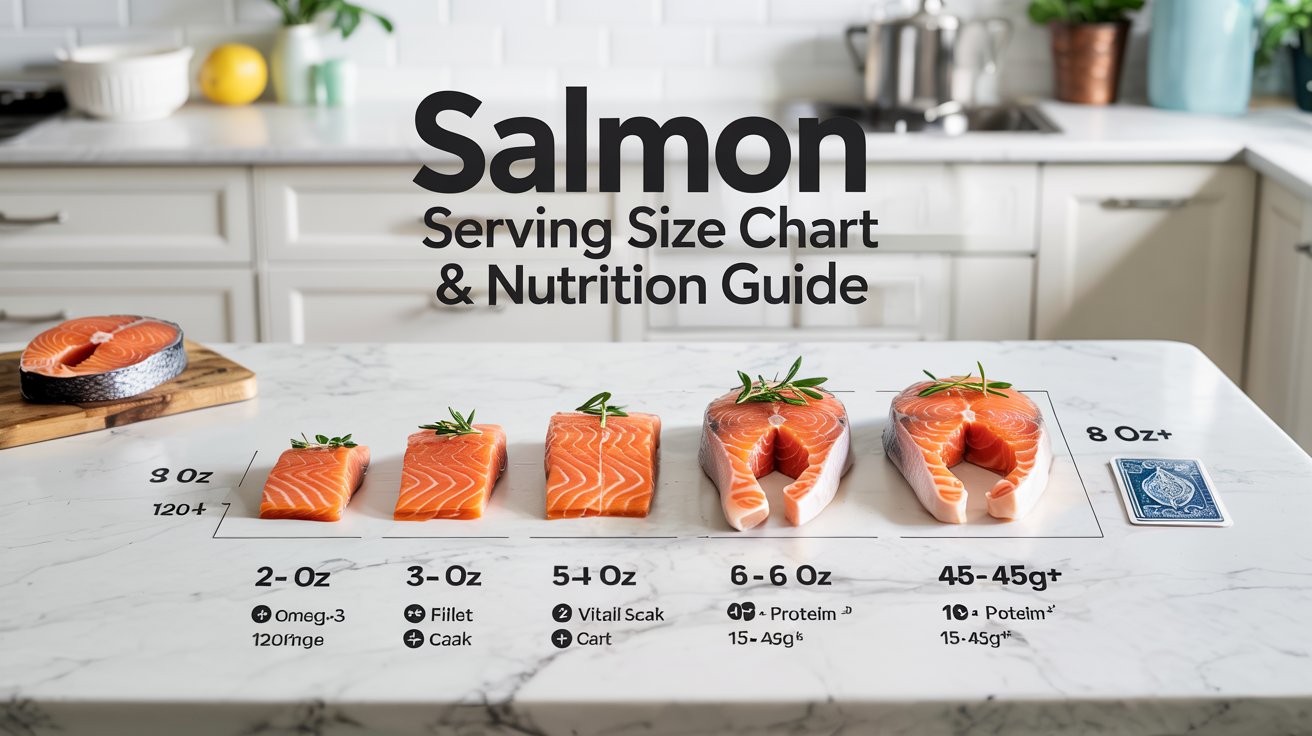
Salmon is one of the healthiest protein choices, known for its rich flavor and high levels of omega-3 fatty acids. But how much salmon should you eat in one serving? Understanding a salmon serving size chart helps you balance your meals, control portions, and get the most nutritional benefits.
Why Salmon Serving Size Matters
Salmon is packed with nutrients, but it’s also calorie-dense due to its healthy fats. Portion size plays a key role in managing your overall intake.
Knowing the right serving size helps you:
- Get enough protein and omega-3s
- Control calories and fat intake
- Balance your plate with other foods
Proper portions ensure you enjoy salmon without overeating.
Standard Salmon Serving Sizes And Portions
Salmon is typically measured by weight (ounces or grams, cooked).
Salmon Serving Size Chart
| Serving Type | Cooked Weight | Raw Weight (Approx.) | Calories | Protein |
|---|---|---|---|---|
| Small Portion | 2–3 oz | 3–4 oz | 120–180 | 15–20g |
| Standard Serving | 3–4 oz | 4–5 oz | 180–250 | 20–25g |
| Large Portion | 5–6 oz | 6–8 oz | 300–400 | 30–40g |
| Extra Large | 8 oz+ | 10 oz+ | 450+ | 45g+ |
👉 A 3–4 oz cooked portion is considered one standard serving.
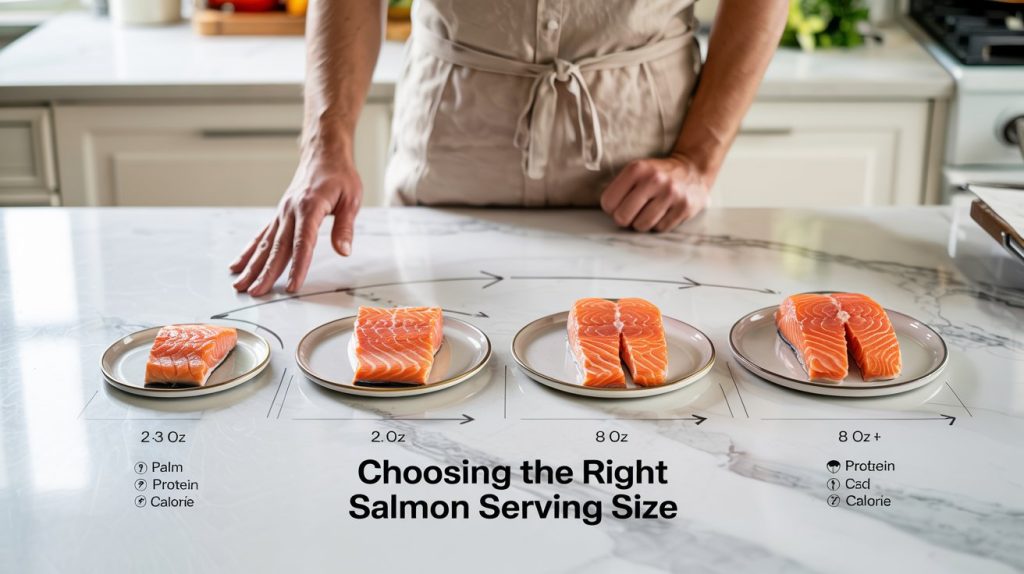
Choosing The Right Salmon Serving Size
The best portion depends on your needs:
- 2–3 oz: Light meal or salad topping
- 3–4 oz: Standard serving for most people
- 5–6 oz: High-protein meal
- 8 oz+: Larger portion, often more than needed
For most people, 3–4 oz is the ideal balance.
Salmon Serving Size Comparison: Fillet vs Steak
Salmon comes in different cuts.
Salmon Cuts Comparison
| Cut Type | Typical Serving | Notes |
|---|---|---|
| Fillet | 3–6 oz | Most common, easy to portion |
| Steak Cut | 5–8 oz | Thicker, bone-in |
Fillets are easier for portion control, while steaks are usually larger.
Salmon Serving Size And Nutrition
Salmon is rich in:
- Omega-3 fatty acids
- High-quality protein
- Vitamin D and B12
A 3–4 oz serving typically contains:
- 180–250 calories
- 20–25g protein
- Healthy fats
It’s excellent for heart and brain health.
Visual Guide: Salmon Serving Size
Here’s a simple way to estimate portions:
| Serving Size | Visual Comparison | Best Use |
|---|---|---|
| 3 oz | Deck of cards | Standard serving |
| 4 oz | Palm of hand | Balanced meal |
| 6 oz | Full hand | Larger portion |
Visual cues help when you don’t have a scale.
Tips For Measuring And Cooking Salmon
- Weigh before cooking: More accurate portions
- Cook evenly: Prevents dryness
- Avoid overcooking: Keeps salmon tender
- Use healthy cooking methods: Bake, grill, or steam
- Pair with vegetables: Creates a balanced meal
Proper preparation enhances flavor and nutrition.
Common Mistakes When Choosing Salmon Serving Size
- Eating oversized portions: Adds extra calories
- Not accounting for cooking shrinkage: Salmon loses weight when cooked
- Using heavy sauces: Increases calorie intake
- Ignoring portion control: Easy to overeat
Being mindful helps maintain balance.
How Salmon Serving Size Affects Your Meal
The portion of salmon you choose determines your protein and fat intake. A standard serving fits well into a balanced meal, while larger portions can increase calories quickly.
Balancing salmon with grains and vegetables ensures a complete meal.
The Popularity Of Salmon
Salmon is widely enjoyed around the world for its taste and health benefits. It’s a staple in many healthy diets and is commonly used in both simple and gourmet dishes.
Frequently Asked Questions
What Is A Standard Serving Size Of Salmon?
About 3–4 oz cooked.
Is 6 Oz Of Salmon Too Much?
It can be a large portion depending on your needs.
Can I Eat Salmon Every Day?
Yes, in moderation as part of a balanced diet.
Is Salmon Good For Weight Loss?
Yes, it’s high in protein and healthy fats.
How Do I Measure Salmon Without A Scale?
Use your palm as a guide for a standard serving.
Salmon serving sizes may seem simple, but they play a big role in your nutrition. By understanding the salmon serving size chart, you can enjoy this healthy fish in the right amount while keeping your meals balanced and satisfying.
