
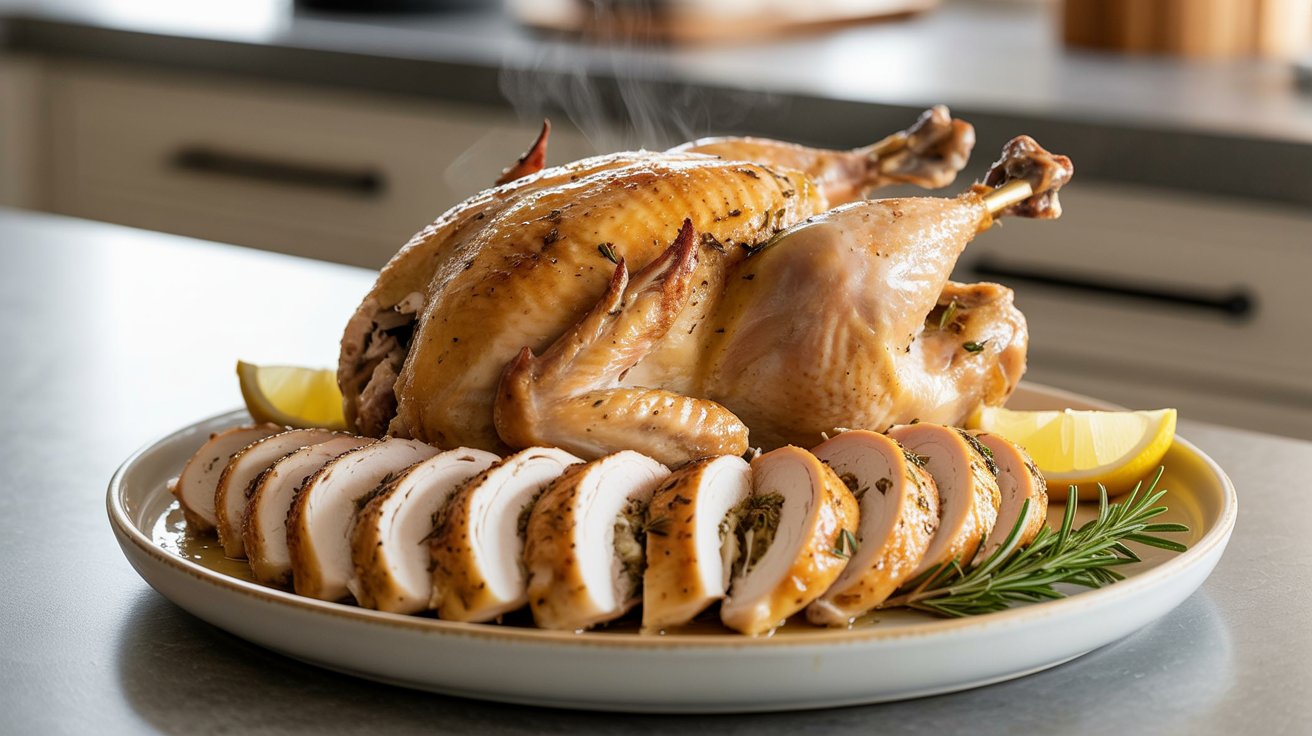
Rotisserie chicken is a convenient, flavorful, and protein-rich option that’s perfect for quick meals. Whether you’re grabbing one from the store or serving it at home, it’s easy to eat more than you realize. Understanding a rotisserie chicken serving size helps you portion correctly, balance your meals, and make the most out of one whole chicken.
Why Rotisserie Chicken Serving Size Matters
Rotisserie chicken is high in protein but can also contain fat and sodium—especially if the skin is included. Portion size plays a key role in managing calories and maintaining a balanced diet.
Knowing the right serving size helps you:
- Control calorie and fat intake
- Get enough protein without overeating
- Plan meals efficiently
It also helps stretch one chicken across multiple meals.
Standard Rotisserie Chicken Serving Sizes And Portions
Rotisserie chicken is usually measured by cooked weight and can vary depending on the cut (breast, thigh, wing).
Rotisserie Chicken Serving Size Chart
| Serving Type | Cooked Weight | Portion Description | Calories (Approx.) |
|---|---|---|---|
| Small Portion | 2–3 oz (60–85g) | Light meal or salad | 120–160 |
| Standard Serving | 3–4 oz (85–113g) | Recommended portion | 180–250 |
| Large Portion | 5–6 oz (140–170g) | Hearty meal | 250–350 |
| Extra Large | 8 oz+ (225g+) | Restaurant-style portion | 400+ |
Values vary depending on whether you include the skin.
Choosing The Right Rotisserie Chicken Serving Size
The best portion depends on your needs:
- 2–3 oz: Ideal for salads, wraps, or light meals
- 3–4 oz: Standard serving for most people
- 5–6 oz: Great for high-protein meals
- 8 oz+: Often more than needed for one meal
A 3–4 oz portion is roughly the size of your palm.
Rotisserie Chicken Serving Size Comparison: Breast Vs Thigh
Different parts of the chicken have different portion sizes and nutrition.
Breast vs Thigh Portions
| Cut Type | Typical Serving | Calories | Notes |
|---|---|---|---|
| Chicken Breast | 3–4 oz | Lower | Leaner, high protein |
| Chicken Thigh | 3–4 oz | Higher | More fat, richer flavor |
| Wings | 2–3 pieces | Moderate | Smaller portions |
Choosing breast meat is a leaner option.
Rotisserie Chicken Serving Size And Nutrition
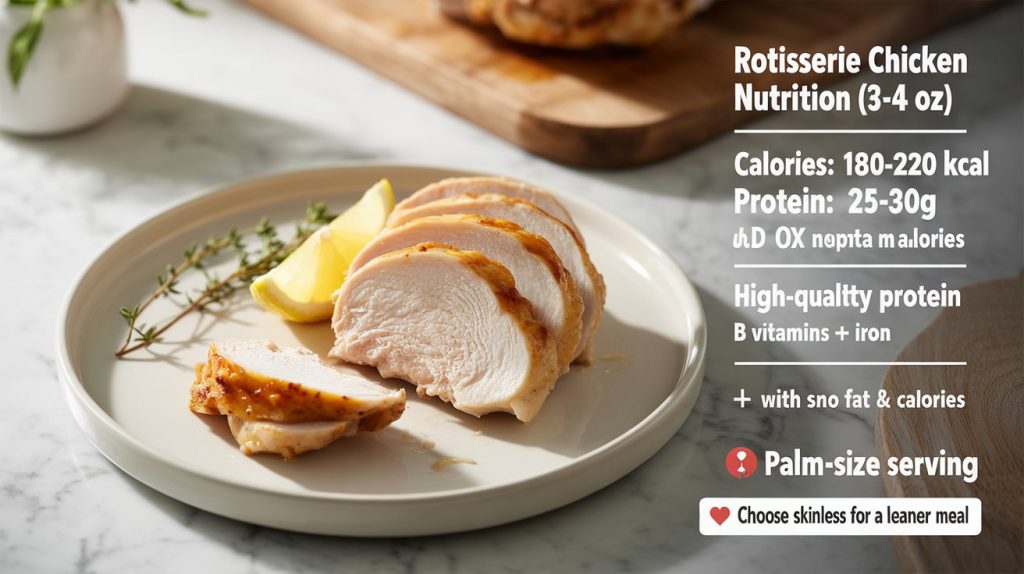
Rotisserie chicken provides:
- High-quality protein
- B vitamins
- Minerals like iron and zinc
A 3–4 oz serving (skinless) typically contains:
- 180–220 calories
- 25–30g protein
Including the skin can increase fat and calories significantly.
Visual Guide: Rotisserie Chicken Serving Size
Here’s a simple way to estimate portions:
| Serving Size | Visual Comparison | Best Use |
|---|---|---|
| 3 oz | Deck of cards | Standard serving |
| 4 oz | Palm of hand | Balanced meal |
| 6 oz | Full hand | Larger portion |
These visuals help when you don’t have a scale.
Tips For Portioning Rotisserie Chicken
- Remove skin if needed: Reduces fat and calories
- Use a scale: For accurate portions
- Shred meat evenly: Helps with meal prep
- Store leftovers properly: Keeps chicken fresh
- Plan multiple meals: One chicken can serve several portions
Proper portioning helps you get more value.
Common Mistakes When Eating Rotisserie Chicken
- Eating directly from the chicken: Leads to overeating
- Ignoring portion sizes: Easy to exceed calories
- Eating too much skin: Increases fat intake
- Not balancing meals: Missing vegetables and carbs
Being mindful improves your overall diet.
How Rotisserie Chicken Serving Size Affects Your Meal
The portion of chicken you choose determines how balanced your meal is. A standard serving allows room for sides like vegetables and grains, while larger portions may make the meal too protein-heavy.
Balancing portions ensures better nutrition and satisfaction.
The Popularity Of Rotisserie Chicken
Rotisserie chicken has become a popular ready-to-eat option due to its convenience, flavor, and affordability. It’s widely used in meal prep and quick family dinners.
Frequently Asked Questions
What Is A Standard Serving Size Of Rotisserie Chicken?
About 3–4 oz of cooked chicken.
How Many Servings Are In One Rotisserie Chicken?
Typically 4–6 servings, depending on portion size.
Is Rotisserie Chicken Healthy?
Yes, especially if you remove the skin and control portions.
Can I Eat Rotisserie Chicken Every Day?
Yes, in moderation as part of a balanced diet.
How Do I Measure Without A Scale?
Use your palm as a guide for a standard serving.
Rotisserie chicken serving sizes may seem simple, but they play a big role in your nutrition and meal planning. By understanding the proper portion sizes, you can enjoy this convenient protein while keeping your meals balanced and satisfying.
