
If you’re like me, raspberries are one of those fruits that bring a burst of joy to any dish. Their vibrant color and sweet-tart flavor make them perfect for everything from breakfast smoothies to indulgent desserts. Imagine biting into a fluffy raspberry cake or savoring a refreshing raspberry sorbet on a hot day—pure bliss!
This guide will help you understand the right serving sizes for raspberries, along with measurements in cups and grams. You’ll also find easy recipes that highlight this delightful fruit, complete with preparation tips and storage advice.
Raspberry Origins and Uses
Raspberries have a rich history that dates back to ancient civilizations, celebrated not only for their vibrant flavor but also for their cultural significance. These luscious berries have long been a staple in desserts, elevating dishes with their sweet-tart profile and stunning color.
Cultural Significance
- Originating in Europe and North America, raspberries were cherished by the Greeks and Romans for their unique taste and medicinal properties.
- In medieval times, they were often used in royal kitchens, symbolizing luxury and indulgence.
- Today, raspberries are celebrated across the globe, often featured in festivals dedicated to their harvest.
Popular Dessert Applications
Raspberries are versatile and can be used in various dessert applications, making them a favorite among home bakers and professional chefs alike. Here are some common ways to incorporate raspberries into your sweet creations:
- Raspberry Coulis: A smooth sauce made by pureeing raspberries, perfect for drizzling over cakes or ice cream.
- Raspberry Jam: A classic spread that captures the berry’s essence, ideal for breakfast or as a filling in pastries.
- Fresh Raspberry Tarts: Combine with a pastry crust and custard for a delightful dessert centerpiece.
Chef’s tip: Always choose ripe raspberries for the best flavor; they should be plump, bright red, and slightly fragrant.
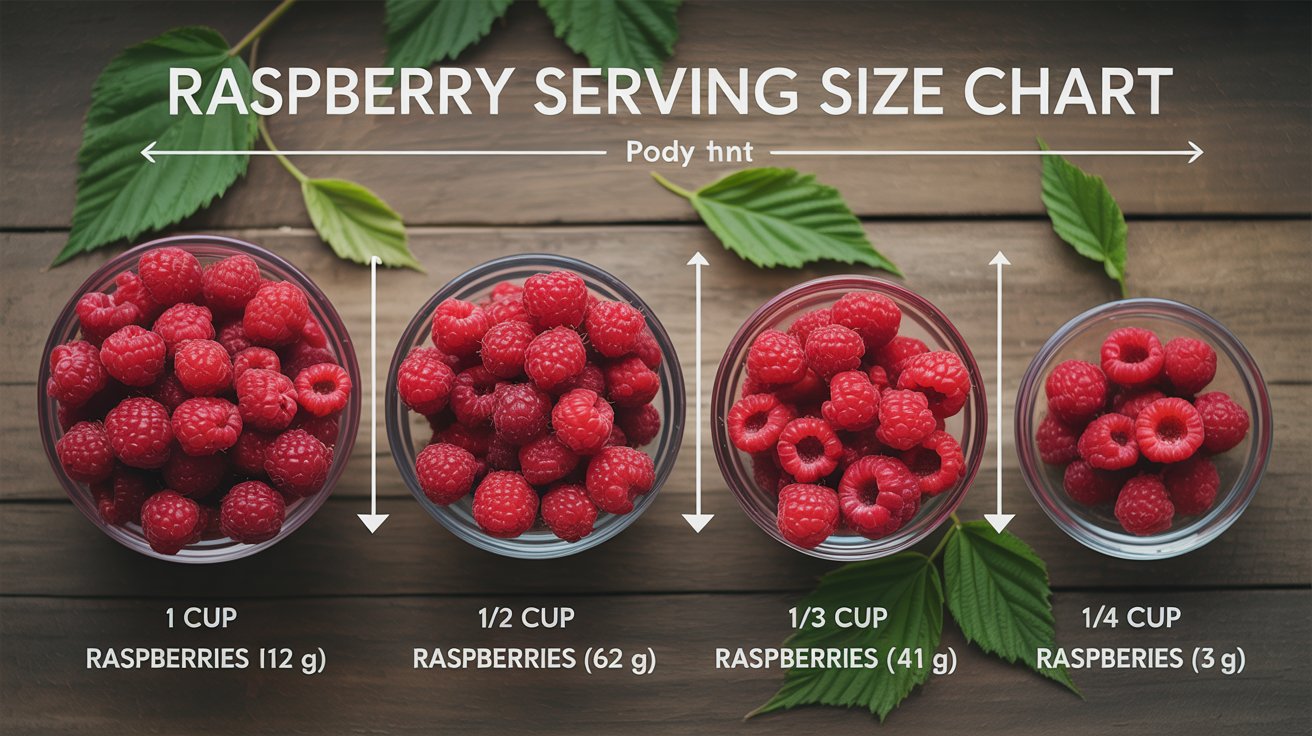
Knowing the right serving size of raspberries is crucial when creating desserts. This ensures that the balance of flavors remains intact while also providing the right visual appeal. A typical serving size is about ½ cup of fresh raspberries, which weighs approximately 60 grams.
Exact Measurements for Serving Size
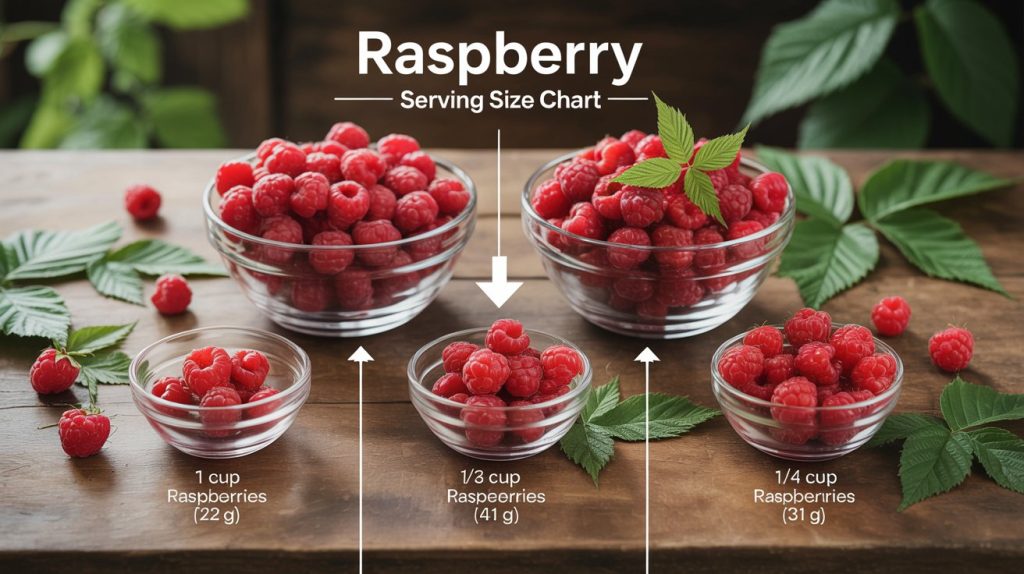
Understanding the appropriate serving size for raspberries is essential for both cooking and nutritional purposes. Whether you’re preparing a dessert or adding them to a salad, knowing how to measure them accurately can enhance your dishes and help maintain portion control.
Serving Sizes in Cups
- 1 cup of raspberries = approximately 123 grams
- 1/2 cup of raspberries = approximately 62 grams
- 1/3 cup of raspberries = approximately 41 grams
Serving Sizes in Grams
When measuring raspberries for recipes, it’s beneficial to know their weight in grams for precision:
Raspberry Serving Size Chart
| Portion | Cups | Grams |
|---|---|---|
| Small serving | ¼ cup | ~31 g |
| Standard serving | ½ cup | ~62 g |
| Large serving | 1 cup | ~123 g |
| Smoothie portion | ¾ cup | ~90 g |
✔ Recommended serving size: ½–1 cup fresh raspberries
Chef’s tip: Always wash raspberries gently under cold water and pat them dry with a paper towel before measuring to avoid crushing them.
For dessert recipes, a standard serving size is often 1/2 cup, which provides a burst of flavor without overwhelming other ingredients. If you’re using raspberries in sauces or as a garnish, adjust the quantities based on your taste preferences.
Essential Kitchen Tools
When working with raspberries, having the right tools can make all the difference in preparing these delightful berries for your recipes. This section outlines the essential equipment and preparation tips to ensure you measure and handle raspberries with ease and precision.
- Measuring Cups and Spoons: Accurate measurement is crucial for recipes. Use dry measuring cups for whole raspberries and liquid measuring cups for raspberry puree. For precise portions, consider a kitchen scale to measure by weight, especially if you need 1 cup (about 123g) of fresh raspberries.
- Colander: Raspberries are delicate and can easily bruise. Use a colander to rinse them gently under cold running water. Allow them to drain completely to avoid excess moisture which can affect your dish’s texture.
- Sharp Knife: If you need to slice or chop raspberries, a sharp knife is essential. This will help you cleanly cut them without crushing the berries. Aim for quartering the raspberries if you’re adding them to a dessert, ensuring even distribution throughout.
- Cutting Board: A sturdy cutting board provides a safe and clean surface for preparing your raspberries. Choose a board that’s easy to clean, especially if you’re working with multiple ingredients.
- Mixing Bowls: Having a variety of mixing bowls on hand is useful for combining raspberries with other ingredients. Use a large bowl for tossing them with sugar or lemon juice to macerate, which enhances their flavor and sweetness.
- Food Processor: If your recipe calls for raspberry puree, a food processor will make quick work of blending. Process the berries until smooth, and strain through a fine mesh sieve if you want to remove the seeds for a smoother texture.
Nutrition Section (important for SEO)
Nutrition Per 1 Cup (123 g) of Raspberry
| Nutrient | Amount |
|---|---|
| Calories | 65 kcal |
| Carbohydrates | 15 g |
| Fiber | 8 g |
| Protein | 1.5 g |
| Fat | 0.8 g |
Key vitamins:
• Vitamin C
• Vitamin K
• Manganese
• Antioxidants
Step-by-Step Recipe Instructions
This section will guide you through the preparation and cooking processes for working with raspberries, including how to measure them for various recipes. Understanding the appropriate serving sizes and methods for using raspberries will enhance your dishes, whether you’re making a dessert or a savory sauce.
- Preparation of Raspberries: Start by rinsing 1 cup (about 120g) of fresh raspberries under cold water to remove any dirt or pesticides. Gently pat them dry with a paper towel, being careful not to crush them. If you notice any overripe or mushy berries, discard them to maintain the quality of your dish.
- Measuring Raspberries: Use a dry measuring cup to accurately measure your raspberries. When measuring, fill the cup gently without packing the berries down. This will help you achieve the correct serving size, which is typically about ½ cup (60g) for individual servings in desserts or sauces.
- Cooking with Raspberries: Depending on your recipe, you may need to cook your raspberries. For a raspberry sauce, combine 1 cup (120g) of raspberries with ½ cup (100g) of granulated sugar in a saucepan over medium heat. Cook for about 5-7 minutes, stirring occasionally, until the raspberries break down and the mixture thickens slightly. The sauce should be a vibrant red and smell fruity.
- Common Mistakes: Do not overcrowd the saucepan if you’re making a larger batch, as this can result in uneven cooking. Keep the heat moderate to avoid burning the sugar or fruit. If your sauce is too thick, add a tablespoon of water at a time until you reach your desired consistency.
Chef Tips and Common Pitfalls
Understanding the right serving size for raspberries is crucial for achieving balance in your recipes, especially in desserts where flavor and texture are key. This section provides expert tips and highlights common mistakes to avoid when working with this delicious berry, ensuring your dishes shine.
Expert Tips
- For desserts like pies or tarts, aim for about 1 to 1.5 cups (150-225g) of raspberries per recipe. This ensures a balanced flavor without overwhelming the other ingredients.
- When measuring raspberries, use a dry measuring cup. Gently fill the cup without packing them down, as raspberries are delicate and can crush easily.
- For smoothies, consider using ½ to 1 cup (75-150g) of raspberries per serving to achieve a vibrant color and a refreshing taste without overpowering other fruits.
Common Mistakes
Chef’s tip: Always wash raspberries gently under cold water and pat them dry with a paper towel to avoid crushing.
- Do not overmeasure: Using too many raspberries can lead to a soggy texture in baked goods. Stick to the recommended serving sizes.
- Avoid freezing thawed raspberries: Once thawed, raspberries become mushy. Use them fresh or in recipes that call for cooked fruit.
- Don’t skip ripeness: Overripe raspberries can taste fermented, while underripe ones may be too tart. Aim for firm, plump, and brightly colored berries.
| Pie/Tart | 1-1.5 cups (150-225g) |
| Smoothie | ½-1 cup (75-150g) |
| Salad | ½ cup (75g) |
Variations and Substitutes
Finding the right serving size for raspberries can be crucial, especially if you’re accommodating dietary restrictions or preferences. In this section, we’ll explore gluten-free options and vegan substitutes to ensure everyone can enjoy your raspberry creations while still adhering to their dietary needs.
Gluten-Free Options
Raspberries are naturally gluten-free, making them a great choice for those avoiding gluten. When incorporating them into recipes, here are some gluten-free alternatives:
- Use gluten-free flour blends (such as almond or coconut flour) in baking recipes that call for all-purpose flour.
- For desserts like pies or tarts, consider using a gluten-free pie crust or make your own with oats and nuts.
- For sauces or fillings, thicken with cornstarch instead of wheat flour, using 1 tablespoon of cornstarch mixed with 2 tablespoons of cold water for every cup of liquid.
Vegan Substitutes
If you’re looking to make vegan-friendly dishes with raspberries, here are some options to consider:
- Replace dairy in recipes with coconut cream or almond milk for creams and sauces.
- For sweetening, opt for maple syrup or agave nectar instead of honey.
- In baking, substitute eggs with flaxseed meal or chia seeds (1 tablespoon of flaxseed meal or chia seeds mixed with 2.5 tablespoons of water equals 1 egg).
Chef’s tip: If using frozen raspberries, thaw and drain them before adding to recipes to avoid excess moisture, which can alter the final texture.
| Ingredient | Measurement |
|---|---|
| Raspberries | 1 cup (123g) |
| Flour (gluten-free) | 1 cup (120g) |
| Coconut cream | 1 cup (240ml) |
Serving and Plating Ideas
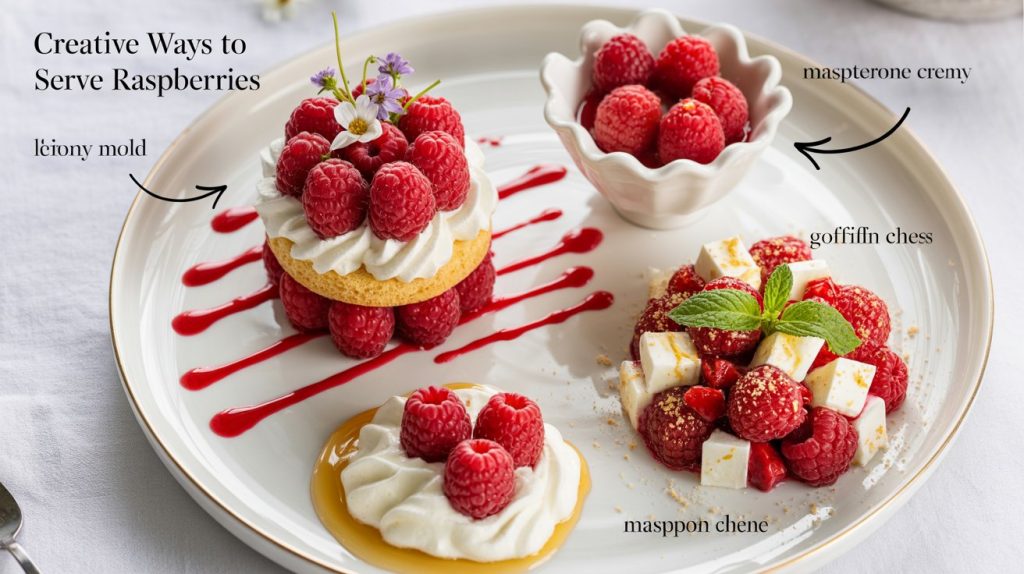
Presenting raspberries beautifully can elevate your dish from simple to stunning. The right plating techniques and complementary flavors will not only enhance the visual appeal but also the overall taste experience. Here are some serving suggestions and flavor pairings to consider.
Plating Techniques
- Use a clean, white plate to make the vibrant red of the raspberries pop. Arrange the berries in a circular pattern or a line to create visual interest. For a dessert, consider using a ring mold to stack layers of raspberries, cream, and cake.
- Drizzle a sauce, such as a raspberry coulis or a balsamic reduction, across the plate before placing the raspberries. This not only adds flavor but also creates a beautiful contrast with the fruit.
- Garnish with fresh mint leaves or edible flowers to add a touch of color and freshness. This provides a nice aroma and enhances the overall presentation.
Flavor Pairings
- Raspberries pair excellently with creamy textures like mascarpone or whipped cream. Consider serving them with a dollop of whipped cream or a mascarpone cheese mixture sweetened with a little honey or vanilla.
- Citrus flavors, such as lemon or lime zest, brighten the tartness of raspberries. Grate some zest over your dish for an extra layer of flavor that balances sweetness and acidity.
- For a savory twist, combine raspberries with goat cheese or feta in salads. The creaminess of the cheese complements the tartness of the fruit, creating a delightful contrast.
Quick Summary
| Prep Time | 5 minutes |
|---|---|
| Cook Time | 0 minutes |
| Total Time | 5 minutes |
| Servings | 1 cup |
- Serving Size: One cup of raspberries (about 123 grams) is ideal for one person.
- Nutritional Boost: One cup contains around 65 calories and is packed with fiber.
- Wash Before Use: Rinse raspberries gently under cold water to avoid bruising.
- Storage Tips: Keep in a breathable container in the fridge to maintain freshness.
- Flavor Pairings: Great with yogurt, oatmeal, or in salads for added sweetness.
Frequently Asked Questions
Can I make this ahead of time? How to store and reheat?
You can prepare recipes using raspberries ahead of time and store them in the refrigerator for up to 3 days. Just make sure to keep them in an airtight container to maintain freshness.
What can I substitute for fresh raspberries?
If you don’t have fresh raspberries, you can use frozen raspberries instead, but keep in mind they may release more liquid when thawed.
How do I know when raspberries are ripe?
Ripe raspberries should be a deep red color, plump, and slightly soft to the touch; look for no white or green spots on the fruit.
Can I freeze raspberries? How long do they last?
Yes, you can freeze raspberries, and they will maintain their best quality for up to 12 months when stored in a freezer-safe bag or container.
What if I don’t have a food scale to measure raspberries?
If you don’t have a food scale, you can use 1 cup of raspberries as a general serving size, which typically weighs around 120 grams or 4.2 ounces.
