
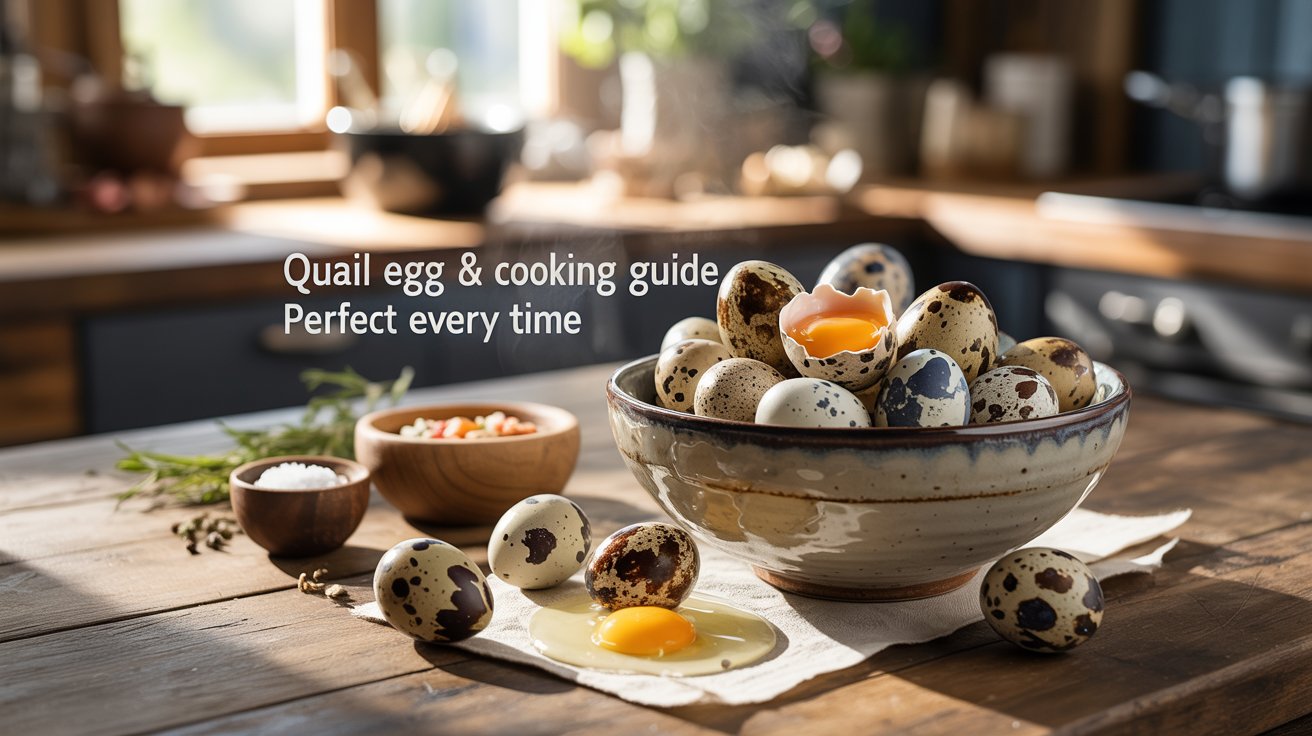
If you’re looking to elevate your culinary game, quail eggs are a delightful twist to your regular egg dishes. Their delicate flavor and unique size make them perfect for appetizers, salads, or even as a topping for your favorite ramen. Trust me, once you try them, you’ll want to include these little gems in your weeknight meals!
Key details: Total time: 30 minutes, Difficulty level: Easy, Servings: 4.
Quail Egg History
The history of quail eggs is rich and steeped in cultural significance, particularly in culinary practices around the world. Understanding their origins and uses can enhance your appreciation for these delicate and flavorful eggs, especially when considering their size and how that impacts various recipes.
- Ancient origins: Quail eggs have been consumed for thousands of years, dating back to ancient civilizations in Asia and Europe. Their small size and high nutritional value made them a sought-after food source.
- Cultural significance: In many cultures, quail eggs are considered a delicacy and are often featured in traditional dishes. For instance, in Japan, they are commonly used in sushi, while in Mediterranean countries, they are often served as appetizers or in salads.
- Gourmet cuisine: With the rise of gourmet cooking, quail eggs have gained popularity in fine dining. Chefs often utilize their unique size and flavor profile to create elegant presentations in various dishes, enhancing both taste and visual appeal.
- Health benefits: Quail eggs are rich in protein, vitamins, and minerals, making them a nutritious choice for many recipes. Their small size means they are lower in calories compared to chicken eggs, which can be appealing for those mindful of their diet.
As we explore the quail egg size chart in the following sections, keep in mind that the size not only affects cooking times but also how they integrate into various dishes, contributing to both flavor and presentation.
Quail Egg Size Categories
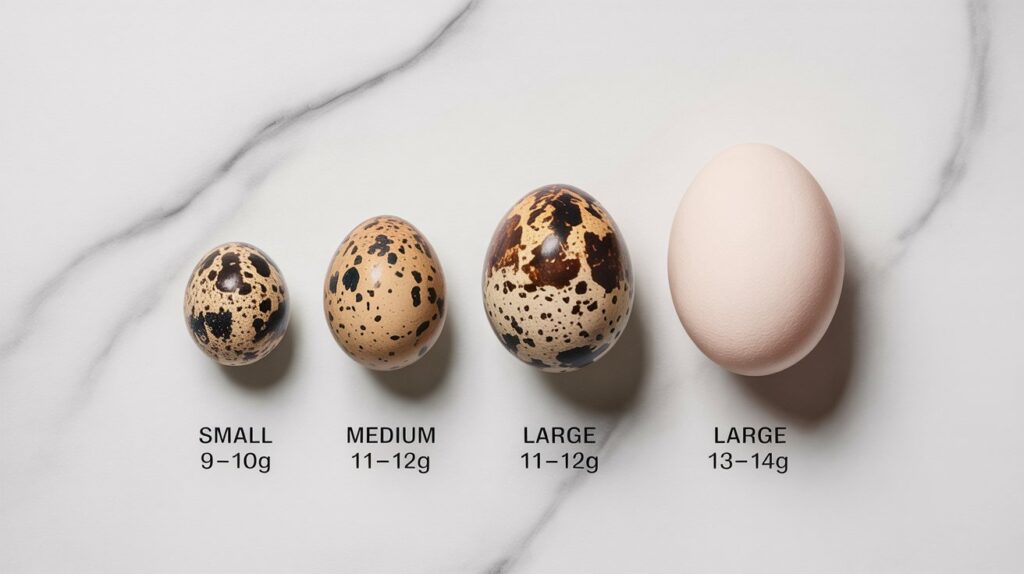
This section provides a detailed breakdown of quail egg sizes, defining small, medium, and large categories with their exact weight measurements. Understanding these categories is essential for selecting the right eggs for your recipes, as size can greatly influence cooking times and results.
? Quail Egg Serving Size Chart
| Size | Weight | Equivalent to Chicken Egg | Serving Amount | Best Use |
|---|---|---|---|---|
| Small | 9–10 g | ~1/6 egg | 5–6 eggs | salads, garnishes |
| Medium | 11–12 g | ~1/5 egg | 4–5 eggs | ramen topping |
| Large | 13–14 g | ~1/4 egg | 3–4 eggs | appetizers, snacks |
Size Definitions
- Small: 9-10 grams
- Medium: 11-12 grams
- Large: 13-14 grams
Why Size Matters
The size of quail eggs can affect not only the quantity needed in recipes but also the cooking times and methods used. Here’s how each size impacts your cooking:
Chef’s tip: When using smaller eggs, you may need to adjust the cooking time by a minute or two to ensure they are fully cooked.
| Small | 9-10 | About 2 small chicken eggs |
| Medium | 11-12 | About 1.5 small chicken eggs |
| Large | 13-14 | About 1 large chicken egg |
When cooking with quail eggs, be sure to select the appropriate size based on your recipe requirements. This will help ensure optimal results, particularly in dishes where egg size can significantly affect texture and flavor.
Equipment for Cooking
Having the right kitchen tools is essential for successfully cooking quail eggs. Each piece of equipment plays a specific role in ensuring that your eggs are perfectly boiled and cooled, making your cooking experience smoother and more enjoyable.
- Boiling Pot: Choose a medium-sized pot that can hold at least 6 cups (1.4 liters) of water. This amount is necessary to ensure the quail eggs are fully submerged during cooking. Fill the pot with water and bring it to a rolling boil over medium-high heat, which should take about 5-7 minutes.
- Egg Timer: A reliable egg timer is crucial for achieving the desired doneness of your quail eggs. For soft-boiled quail eggs, set the timer for 2-3 minutes, and for hard-boiled, aim for 4-5 minutes. Knowing the precise cooking time will help you avoid overcooking, which can lead to a rubbery texture.
- Colander for Cooling: After boiling, use a colander to drain the hot water from the pot. This allows the eggs to cool quickly and prevents them from continuing to cook in residual heat. Rinse the eggs under cold running water for about 1-2 minutes to halt the cooking process effectively.
Cooking Quail Eggs
Understanding how to cook quail eggs properly is essential for bringing out their delicate flavor and creamy texture. This section will guide you through boiling, frying, and poaching quail eggs, ensuring you achieve the best results every time.
Boiling Quail Eggs
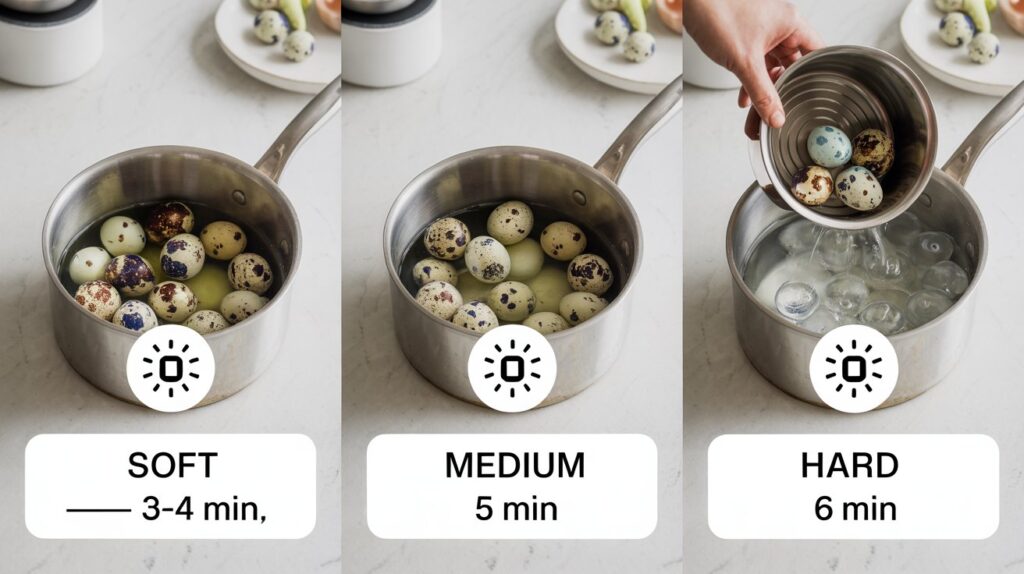
- Start by filling a small saucepan with water, enough to cover the eggs by about 1 inch, and bring it to a rolling boil over medium-high heat.
- Once boiling, gently lower 10-12 quail eggs into the water using a slotted spoon. Boil for 4 minutes for a soft center or 5 minutes for a firmer yolk.
- After boiling, immediately transfer the eggs to an ice bath (a bowl filled with cold water and ice) for at least 5 minutes to stop the cooking process.
Frying Quail Eggs
- Heat 1 tablespoon of olive oil or butter in a non-stick skillet over medium heat until it shimmers, about 2 minutes.
- Carefully crack 2-3 quail eggs into the skillet, taking care not to break the yolks. Cook for about 2-3 minutes until the whites are set but the yolks remain runny.
- Season with salt and pepper to taste before serving, and consider garnishing with fresh herbs or a sprinkle of chili flakes for added flavor.
Poaching Quail Eggs
- Fill a saucepan with water and bring it to a gentle simmer over medium heat. Add a splash of vinegar to help the egg whites coagulate.
- Crack a quail egg into a small bowl. Create a gentle whirlpool in the water with a spoon and then gently slide the egg into the center. Poach for 2-3 minutes until the whites are set but the yolk is still soft.
- Using a slotted spoon, remove the poached egg and place it on a paper towel to absorb excess water before serving.
Pro Tips and Common Mistakes
This section provides essential advice on cooking quail eggs perfectly and avoiding common pitfalls. Understanding how to handle these delicate eggs ensures they come out beautifully every time, enhancing your dishes.
Avoid Overcooking
Quail eggs are small and cook quickly. Overcooking them can result in a rubbery texture and an undesirable gray ring around the yolk. Here are some tips to avoid this:
- For soft-boiled quail eggs, cook for exactly 4 minutes. The whites should be set, while the yolks remain creamy and runny.
- For hard-boiled eggs, cook for 6 minutes. The yolks should be fully set but not dry.
- Always place the eggs in cold water and bring to a boil to ensure even cooking.
Proper Cooling Methods
Immediately cooling the eggs after boiling is crucial to stop the cooking process. Follow these steps:
- After boiling, transfer the quail eggs to an ice bath (a bowl filled with ice and cold water) for at least 5 minutes.
- This rapid cooling helps preserve the texture and flavor, making them easier to peel.
Cracking Technique
Cracking quail eggs can be tricky due to their fragile shells. Here’s how to do it effectively:
Chef’s tip: Gently tap the egg on a flat surface rather than the edge of a bowl to create a clean break.
- Once cracked, use your fingers to open the shell carefully without squeezing too hard.
- To avoid mess, crack them into a small bowl before adding to your dish.
| Quail Egg | 9-12 | About 1/5 the size of a chicken egg |
| Chicken Egg | 50-60 | Standard size for comparison |
Substitutions and Dietary Tips
This section provides alternatives to quail eggs for those who may have dietary restrictions or preferences. Understanding these substitutes can ensure you still achieve delicious results in your recipes while accommodating different needs.
Using Chicken Eggs
If you don’t have quail eggs on hand, chicken eggs can be a reliable substitute. Keep in mind that quail eggs are smaller and have a richer flavor compared to chicken eggs, so adjust the quantity accordingly:
- 1 quail egg = 1 chicken egg (large) can be used in most recipes, but for better flavor balance, use 1 chicken egg for every 3 quail eggs.
- Cooking times may need slight adjustments; chicken eggs usually require a bit longer to set.
Vegan Alternatives
For those following a vegan diet, here are some effective substitutes for quail eggs:
- Flaxseed Meal: Mix 1 tablespoon of flaxseed meal with 2.5 tablespoons of water. Let it sit for 5 minutes until it thickens, mimicking the texture of quail eggs.
- Chia Seeds: Similar to flaxseed, combine 1 tablespoon of chia seeds with 2.5 tablespoons of water. Allow it to gel for 10-15 minutes before using.
Gluten-Free Options
Quail eggs are naturally gluten-free, making them suitable for those with gluten intolerance. If you are using quail eggs in baked goods, consider these flour alternatives:
- Almond Flour: Use a 1:1 ratio as a substitute for all-purpose flour, but you may need to add an extra egg for moisture.
- Coconut Flour: Use ¼ cup of coconut flour for every 1 cup of all-purpose flour, and add an additional egg or liquid to your recipe.
Chef’s tip: Always test a small batch of your chosen substitute to ensure the flavor and texture meet your expectations before cooking larger quantities.
| Chicken Egg | 1 large egg for every 3 quail eggs |
| Flaxseed Meal | 1 tbsp mixed with 2.5 tbsp water |
| Chia Seeds | 1 tbsp mixed with 2.5 tbsp water |
| Almond Flour | 1 cup for 1 cup all-purpose flour |
| Coconut Flour | ¼ cup for 1 cup all-purpose flour |
Serving Ideas for Quail Eggs
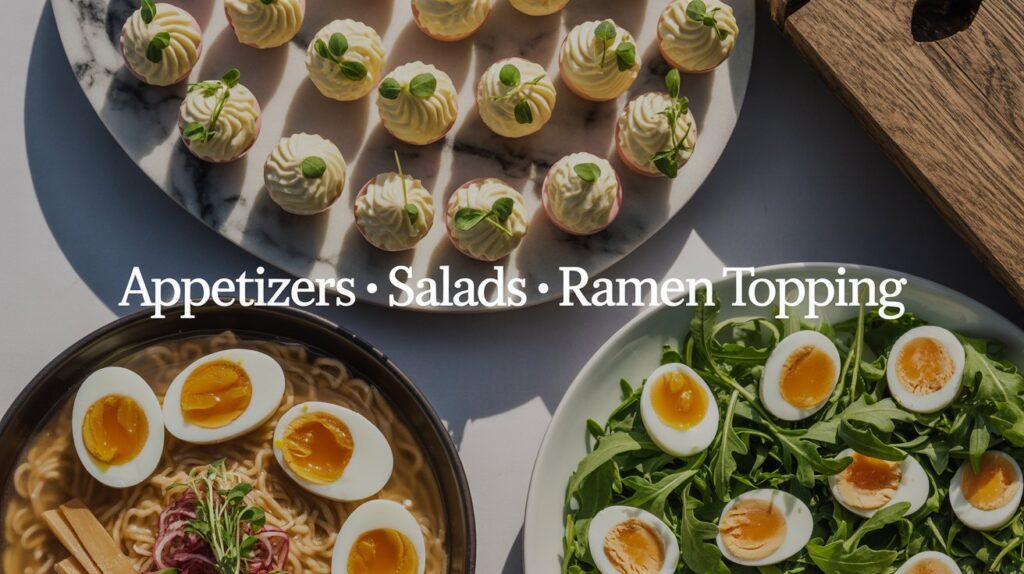
Quail eggs not only add a touch of elegance to your dishes but also bring unique flavors and textures. Knowing how to serve them creatively can elevate your meals and impress your guests. Here are some delightful serving ideas and drink pairings that complement the delicate nature of quail eggs.
Plating Techniques
When presenting quail eggs, consider the following techniques to make your dish visually appealing:
- Half-Shell Presentation: Cut the eggs in half and place them cut-side up on a bed of greens, such as arugula or microgreens. Drizzle with balsamic reduction for a pop of color.
- Deviled Quail Eggs: Mash the yolks with mayonnaise, Dijon mustard, and a dash of paprika. Pipe the mixture back into the halved whites for a refined appetizer.
- Egg Cups: Serve quail eggs in small cups or shot glasses filled with a creamy soup or sauce, garnished with herbs for an elegant touch.
Side Dishes
Pair your quail eggs with complementary side dishes:
- Roasted Asparagus: The slight bitterness of asparagus balances the richness of the eggs.
- Potato Salad: A light, herbed potato salad adds texture and flavor contrast.
- Grilled Vegetables: Charred bell peppers and zucchini bring freshness and color to the plate.
Pairing Drinks
Consider these drink options that pair beautifully with quail eggs:
- Champagne: The bubbles accentuate the richness of the eggs.
- Light White Wine: A Sauvignon Blanc or Pinot Grigio complements the dish without overpowering it.
- Cocktails: A light gin and tonic with fresh herbs can enhance the overall dining experience.
Chef’s tip: Always serve quail eggs at room temperature for optimal flavor and texture.
Quick Summary
| Prep Time | Cook Time | Total Time | Servings |
|---|---|---|---|
| 5 mins | 10 mins | 15 mins | 2-4 |
- Measure accurately: Use a kitchen scale for precise egg weights.
- Know sizes: Familiarize yourself with sizes: small (9-10g), medium (11-12g), large (13-14g).
- Cooking method: Boil for 3-4 minutes for soft yolks, 6-8 minutes for hard.
- Cool quickly: Place eggs in ice water immediately after boiling to stop cooking.
- Peeling tips: Tap gently and roll to crack the shell for easier peeling.
Frequently Asked Questions
Can I make quail eggs ahead of time? How should I store and reheat them?
You can boil quail eggs ahead of time; store them in the refrigerator in a sealed container for up to one week. When you’re ready to eat them, reheat by placing them in hot water for a few minutes.
What can I substitute for quail eggs in recipes?
If you don’t have quail eggs, you can use one large chicken egg as a substitute for about three quail eggs in most recipes. Just adjust the cooking time accordingly since chicken eggs take longer to cook.
How do I know when quail eggs are done cooking?
For hard-boiled quail eggs, cook them for 4-5 minutes in boiling water, then plunge them into ice water; they should be firm to the touch. If you’re making soft-boiled, aim for 2-3 minutes for a runny yolk.
Can I freeze quail eggs? How long do they last?
You can freeze quail eggs, but it’s best to crack them open and beat them first, then store in an airtight container for up to six months. Keep in mind, freezing may affect their texture, so they’re better used in cooked dishes.
What if I don’t have a quail egg cooker?
If you don’t have a quail egg cooker, you can easily boil them in a pot of water; just use a timer to ensure perfect cooking times. A gentle simmer works best; avoid a rolling boil to prevent cracking.
