
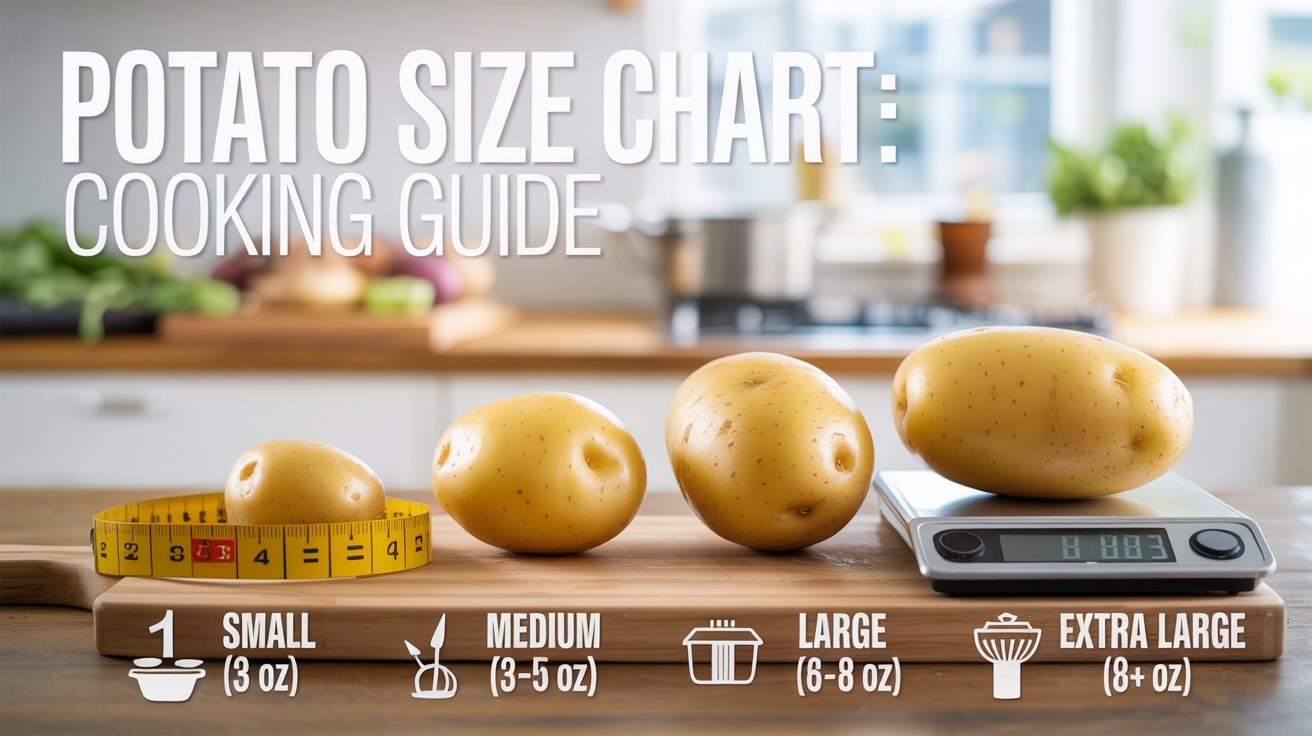
Are you tired of guessing the right potato size for your recipes? Knowing the exact size can make a huge difference in cooking times, portions, and even taste.
Whether you’re baking, frying, or mashing, having a clear potato size chart at your fingertips will save you time and frustration. You’ll discover how to easily identify potato sizes and choose the perfect one for your meals. Keep reading, and you’ll never struggle with potato measurements again!
Potato Size Categories
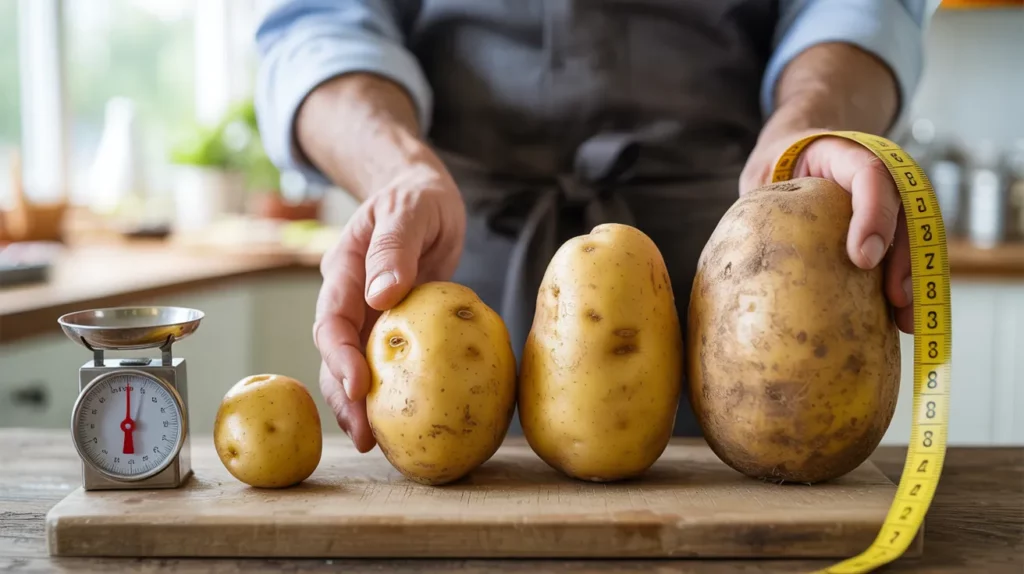
Potatoes come in many sizes. Each size fits different cooking needs. Knowing potato size categories helps in choosing the right potato.
This guide breaks down potato sizes into four groups. Small, medium, large, and extra large. Understanding these groups makes cooking easier and more precise.
? Potato Size Chart
| Size Category | Weight | Length | Best Use |
|---|---|---|---|
| Small | < 3 oz ( < 85 g ) | < 3 in ( < 7.5 cm ) | Salads, roasting whole, boiling |
| Medium | 3–5 oz (85–140 g) | 3–5 in (7.5–13 cm) | Mashing, boiling, frying |
| Large | 6–8 oz (170–225 g) | 5–6 in (13–15 cm) | Baking, fries, stuffed potatoes |
| Extra Large | 8+ oz (225+ g) | 6+ in (15+ cm) | Giant baked potatoes, large portions |
Small Potatoes
Small potatoes usually weigh less than 3 ounces. They are perfect for roasting or boiling whole. Their thin skins and tender flesh cook quickly.
These potatoes are great for salads and side dishes. Small potatoes hold their shape well after cooking. They are easy to handle and serve.
Medium Potatoes
Medium potatoes weigh between 3 to 5 ounces. They suit many recipes, from mashing to baking. Medium potatoes are the most common size found in stores.
They offer a good balance of skin and flesh. Medium potatoes cook evenly and have a mild flavor. Ideal for everyday meals and snacks.
Large Potatoes
Large potatoes weigh 6 to 8 ounces or more. They are best for baking or making fries. Large potatoes provide more flesh for stuffing or slicing.
These potatoes need longer cooking times. Their size makes them perfect for feeding more people. Large potatoes also work well for mashed dishes.
Extra Large Potatoes
Extra large potatoes can weigh over 8 ounces. They are ideal for recipes requiring a lot of potato. These potatoes are often used for baking giant stuffed potatoes.
Extra large potatoes take the longest to cook. They offer a lot of texture and flavor. Use them when you need more potato in one dish.
Measuring Potato Size
Measuring potato size helps in cooking, selling, and sorting. It ensures you pick the right potato for your needs. Different methods give you different details about the potato’s size.
Weight-based Measurement
Weight is the easiest way to measure potatoes. You use a kitchen scale to find out how heavy the potato is. This method works well for recipes that need specific amounts of potato.
Potatoes can weigh from a few ounces to several pounds. Small potatoes weigh less than 4 ounces. Medium potatoes weigh between 5 and 8 ounces. Large potatoes weigh over 8 ounces. This helps you choose the correct size for cooking.
Dimension-based Measurement
Measuring potato dimensions means checking length, width, and sometimes height. You can use a ruler or measuring tape for this. This method is useful for sorting potatoes by size before selling or packaging.
Small potatoes are usually under 3 inches long. Medium potatoes range from 3 to 5 inches. Large potatoes are over 5 inches in length. Dimension measurement gives a clear idea of the potato’s shape and size.
Common Potato Varieties And Sizes
Potatoes come in many types and sizes. Each variety has unique features. Knowing these helps choose the best potato for cooking and recipes.
Common potato varieties vary in size and texture. Some are large and starchy, while others are small and waxy. Understanding these differences improves meal results.
Russet Potatoes
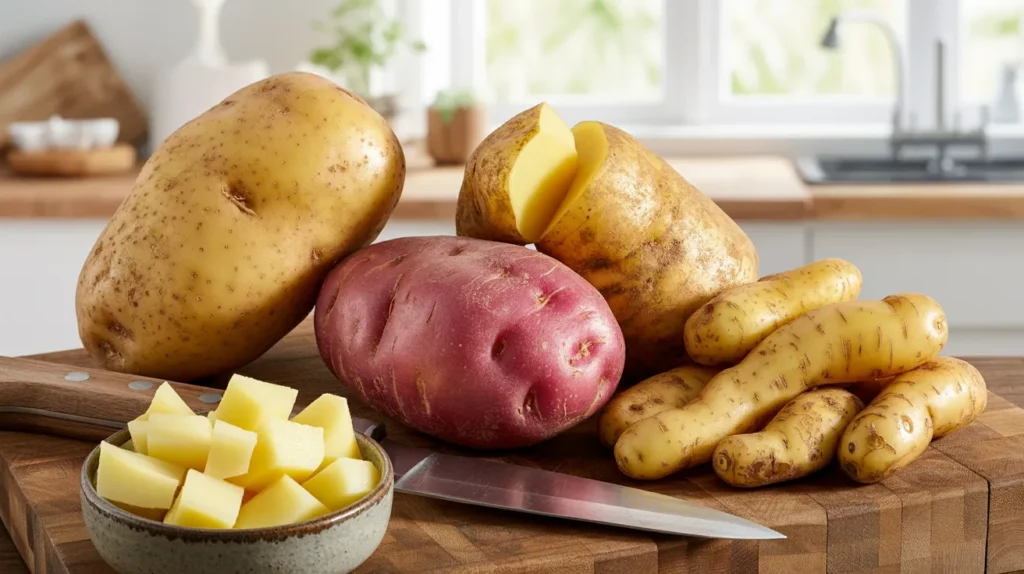
Russet potatoes are large and brown with rough skin. They have a dry, fluffy texture inside. Great for baking, mashing, and frying. Sizes usually range from medium to extra-large.
Red Potatoes
Red potatoes have smooth, red skin and white flesh. They are smaller and waxy, holding shape well after cooking. Perfect for boiling, roasting, and salads. Size varies from small to medium.
Yukon Gold Potatoes
Yukon Golds have yellow skin and flesh. They offer a creamy, buttery taste and texture. Medium size is most common. Ideal for mashing, roasting, and soups.
Fingerling Potatoes
Fingerlings are small, finger-shaped potatoes. They have thin skin and firm flesh. Sizes are generally small, perfect for roasting whole. They add a unique look and taste to dishes.
Choosing Potatoes For Recipes
Choosing the right potato size matters for cooking. Different recipes need different sizes for best results. Small, medium, and large potatoes all have their uses. Picking the right size helps your dish taste better and cook evenly.
Best Sizes For Baking
Large potatoes work best for baking. They cook evenly inside and stay soft. Look for potatoes about 8 to 12 ounces each. These sizes fit well in the oven and give a fluffy texture.
Ideal Sizes For Frying
Medium-sized potatoes suit frying perfectly. They hold shape and crisp well. Choose potatoes around 5 to 7 ounces each. These sizes cook fast and become golden brown without burning.
Perfect Sizes For Mashing
Medium to large potatoes are ideal for mashing. They have enough starch to become smooth and creamy. Pick potatoes between 6 and 10 ounces each. This size peels easily and cooks quickly for soft mash.
Tips For Buying Consistent Potato Sizes
Buying potatoes with a consistent size helps in cooking evenly. It makes meal prep easier and results in better dishes. Small, medium, or large potatoes all have their uses, but choosing the same size is key for recipes.
Follow these tips to pick potatoes that match in size every time. This saves time and improves the quality of your food.
Inspect Potatoes Visually
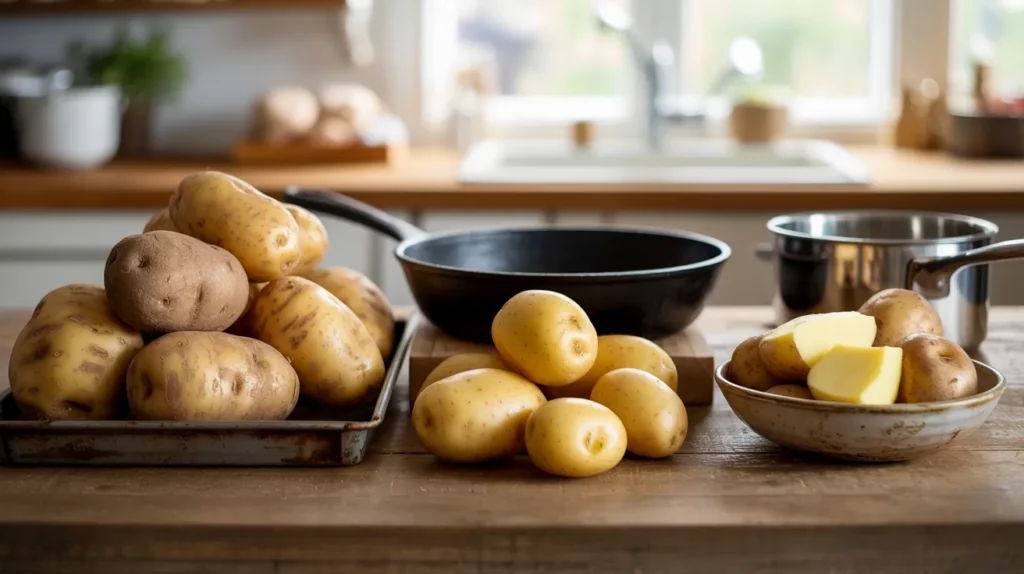
Look closely at the potatoes before buying. Pick those that are similar in shape and size. Avoid very large or very small potatoes mixed in the batch.
Use A Size Guide
Bring a simple size chart or use your hand as a reference. Compare potatoes to this guide for a consistent choice. This helps keep the sizes uniform for your recipes.
Buy From The Same Source
Choose potatoes from one store or market. Different sellers may have different grading systems. Sticking to one source ensures consistent quality and size.
Choose The Right Variety
Some potato types grow bigger or smaller naturally. Pick a variety known for uniform size. This reduces the need to sort potatoes at home.
Ask The Seller For Help
Talk to the vendor about your size needs. Many sellers can help select potatoes that match. This saves effort and guarantees better results.
Storing Potatoes By Size
Storing potatoes by size helps keep them fresh longer. Different sizes have different storage needs. Proper storage stops sprouting and rotting. It also keeps their taste and texture intact. Organizing potatoes by size is a smart way to manage your supply.
Small Potatoes: Best Storage Tips
Small potatoes dry out faster than big ones. Store them in a cool, dark place with good air flow. Avoid plastic bags that trap moisture. Use paper bags or baskets instead. Check small potatoes often for soft spots or sprouts.
Medium Potatoes: Ideal Storage Conditions
Medium potatoes last longer than small ones. Keep them in a cool area around 45-50°F (7-10°C). Avoid places with bright light. Light makes potatoes turn green and taste bitter. Store medium potatoes loosely, so air can circulate.
Large Potatoes: How To Store Properly
Large potatoes need more space and air. Store them in a single layer, not stacked. This stops bruises and mold. Use a dark, well-ventilated place with stable temperature. Inspect large potatoes regularly and remove any damaged ones.
Frequently Asked Questions
What Are The Standard Potato Sizes?
Potato sizes range from small to jumbo. Common sizes include baby, small, medium, large, and extra-large, each with specific weight ranges.
How To Choose Potato Size For Recipes?
Select potato size based on cooking method. Small potatoes suit roasting, medium for boiling, and large for baking or mashing.
Why Is Potato Size Important In Cooking?
Potato size affects cooking time and texture. Uniform sizes ensure even cooking and better recipe results.
How To Measure Potato Size Accurately?
Use a kitchen scale to weigh potatoes. Alternatively, measure circumference or length to estimate size category.
Conclusion
Understanding potato sizes helps in cooking and shopping wisely. Use the chart to pick the right potato for your recipe. Small, medium, or large—each size fits different needs. This guide saves time and avoids confusion in the kitchen. Keep it handy for your next grocery trip or meal plan.
Simple steps lead to better meals and less waste. Potatoes come in many sizes; now you know what to choose.
