
There’s something incredibly satisfying about a perfectly cooked burger, isn’t there? Whether it’s a casual weeknight dinner or a weekend barbecue with friends, the right burger patty can turn any meal into a celebration. The juicy, well-seasoned patty, nestled in a soft bun with all your favorite toppings, is pure comfort food that keeps everyone coming back for more.
Get ready to master your burger game with our comprehensive burger patty size chart. You’ll find essential details about weights, diameters, cooking times, and how these factors affect your final burger. Perfect for 4 servings and easy enough for any home cook!
History of Burger Patties
The history of burger patties is rich and deeply rooted in culinary culture, reflecting both regional flavors and cooking techniques. Understanding their origins and significance helps us appreciate the evolution of this beloved dish and its various sizes, which affect cooking methods and flavor profiles.
Origin of the Burger
- Early Beginnings: The concept of a ground meat patty can be traced back to the 13th century, with the Mongolian Tartars, who used horse meat. However, the modern hamburger is believed to have originated in Hamburg, Germany, where minced beef was served as a steak.
- American Adaptation: German immigrants brought the concept to the United States in the 19th century. By the early 20th century, the hamburger became popular at fairs and diners, leading to its status as an American icon.
Cultural Significance
- Symbol of American Cuisine: The hamburger has evolved into a symbol of American fast food culture, representing convenience and indulgence. It has been embraced worldwide, with each culture adding its own twist to the patty size and toppings.
- Variability in Sizes: As the burger gained popularity, so did the variation in patty sizes. From sliders to quarter-pounders, the size not only influences cooking times but also the overall dining experience, making it vital for home cooks to understand these differences.
Burger Patty Size Chart
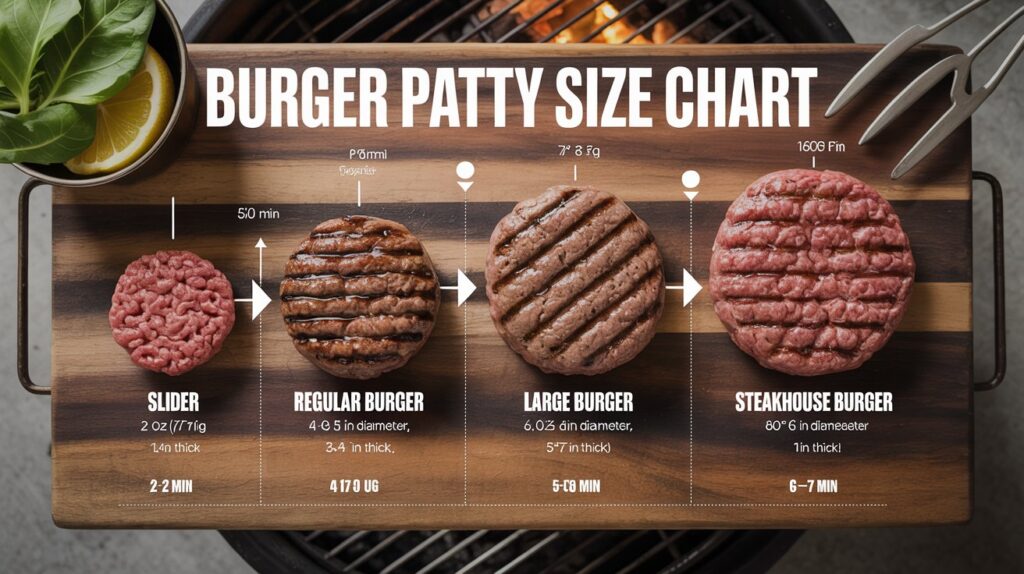
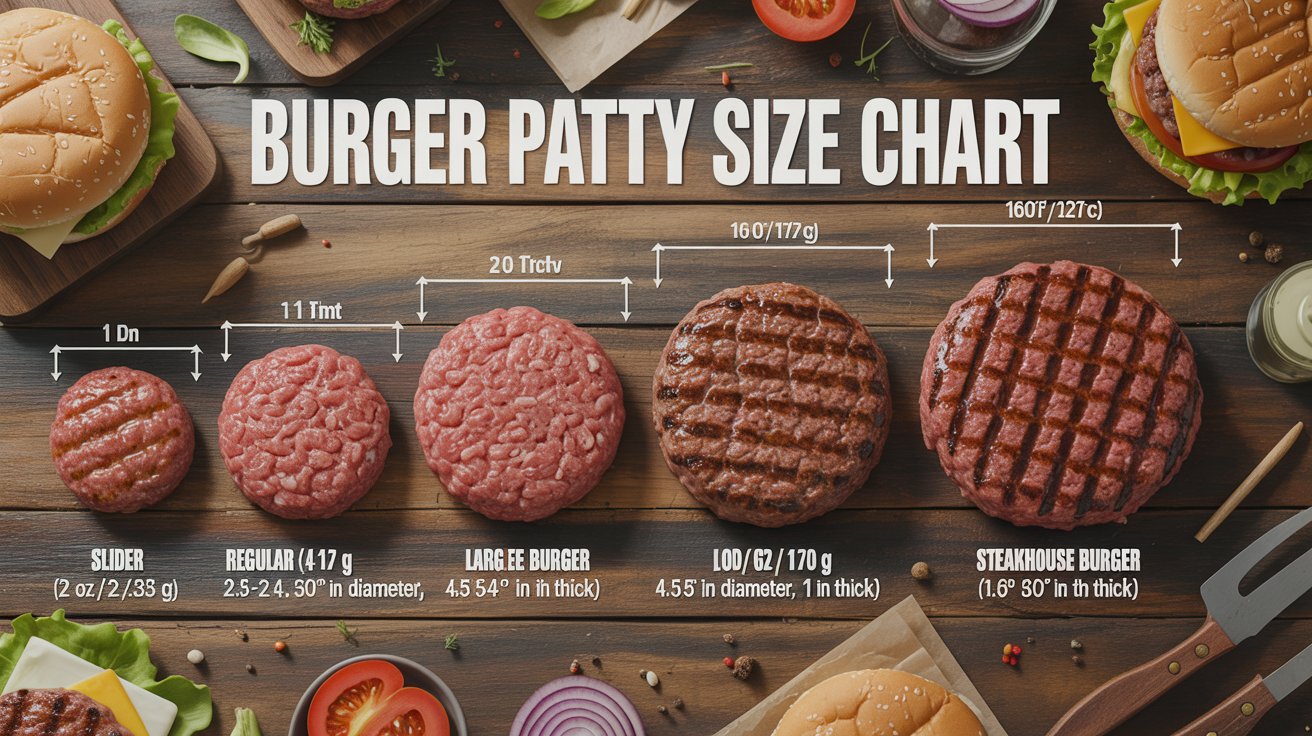
Understanding the sizes of burger patties is crucial for achieving the perfect cook on your burgers. The weight and diameter of each patty directly influence cooking times, textures, and overall flavor. Below, you’ll find a comprehensive chart detailing various burger patty sizes along with their recommended weights and diameters.
| Burger Type | Weight | Diameter | Thickness |
|---|---|---|---|
| Slider | 2 oz (57 g) | 2–2.5 in | ¼ in |
| Regular Burger | 4 oz (113 g) | 3.5–4 in | ½ in |
| Large Burger | 6 oz (170 g) | 4.5–5 in | ¾ in |
| Steakhouse Burger | 8 oz (227 g) | 5–6 in | 1 in |
Here’s how the size and weight affect your cooking:
- Mini Slider: Cooks quickly, usually in 2-3 minutes per side. Ideal for appetizers or parties.
- Regular Burger: Takes about 4-5 minutes per side. A classic choice for backyard barbecues.
- Big Burger: Needs around 5-6 minutes per side. Ensure the center reaches at least 160°F (71°C) for safety.
- Double Patty: Requires about 6-7 minutes per side. A hearty option that demands careful attention to avoid overcooking.
Choosing the right patty size can make all the difference in your burger experience, so consider your desired cooking method and the thickness of your patties for the best results!
Effects of Patty Size on Cooking
Understanding how patty size influences cooking times and burger characteristics is crucial for achieving the perfect burger. The size of your patty not only affects how long it takes to cook but also impacts the juiciness and texture of the final product.
- Cooking Temperature: The ideal cooking temperature for burger patties is typically around 350°F (175°C) for stovetop cooking or grilling. Thicker patties (¾ inch or more) may require a slightly lower heat to ensure they cook through without burning on the outside, while thinner patties (¼ inch) can be cooked on higher heat for a quicker sear. Always use a meat thermometer to check for doneness; ground beef should reach 160°F (71°C).
- Juiciness: Thicker patties generally retain more moisture as they cook, creating a juicier burger. For example, a ½ pound (227g) patty that is ¾ inch thick will stay moister than a ¼ pound (113g) patty that is the same diameter but thinner. If you choose to make thinner patties, consider using a higher fat content (80/20 beef) to compensate for the potential loss of moisture during cooking.
- Texture: The texture of a burger can change significantly based on patty size. Larger, thicker patties tend to have a coarser texture due to the longer cooking times, which allows the meat fibers to relax and become tender. Conversely, thinner patties may cook too quickly, resulting in a denser texture that lacks the satisfying bite of a thicker burger. Aim for a balance that suits your personal preference.
Recommended Sizes for Different Burgers
Understanding the ideal burger patty sizes is essential for achieving the perfect bite. Different types of burgers call for varying sizes, which can affect cooking times, juiciness, and overall flavor. Below is a detailed chart that outlines recommended sizes for classic and specialty burgers, along with tips for making the most of each type.
Classic Burgers
- Regular Burger: 4 to 6 ounces (113g to 170g), 4 to 5 inches in diameter. Cook at 375°F (190°C) for 8-10 minutes on each side for medium doneness. Look for a nice sear and juices running clear.
- Jumbo Burger: 8 ounces (227g), 5 to 6 inches in diameter. Cook at 350°F (175°C) for 10-12 minutes on each side. The patty should be firm to the touch and slightly charred.
Specialty Burgers
- Slider: 2 ounces (57g), 2 to 3 inches in diameter. Cook at 400°F (200°C) for 3-4 minutes per side. They should be golden brown with a juicy center.
- Stuffed Burger: 6 ounces (170g), 4 to 5 inches in diameter. Cook at 375°F (190°C) for 10-12 minutes, flipping once. Check for melted cheese inside and juices running clear.
| Patty Size | Grill Time | Internal Temp |
|---|---|---|
| 2 oz slider | 2–3 min per side | 160°F (71°C) |
| 4 oz burger | 4–5 min per side | 160°F (71°C) |
| 6 oz burger | 5–6 min per side | 160°F (71°C) |
| 8 oz burger | 6–7 min per side | 160°F (71°C) |
Chef’s tip: Allow burgers to rest for a few minutes after cooking to ensure juices redistribute for maximum flavor.
Tips for Forming Perfect Patties
Creating the ideal burger patty goes beyond just the right ingredients; it’s about the technique too. Properly forming your patties helps ensure they cook evenly and maintain their shape on the grill or stovetop. Here are some practical tips to get those burgers just right.
- Use Tools for Consistency: A burger press or a kitchen scale can make a big difference in achieving uniformity. Aim for patties that are 4-6 ounces (113-170g) for standard sizes, and use a round mold or even a lid to help shape them. This will ensure even cooking and a great presentation.
- Avoid Over-Handling: When forming your patties, gently shape the meat without excessive squeezing or compressing. Over-handling can lead to dense patties that don’t cook evenly. Aim for a light touch, just enough to hold them together without compacting them too much.
- Create a Dimple: Make a small indentation in the center of each patty with your thumb. This helps prevent the patties from puffing up while cooking, allowing for a flatter burger that cooks evenly. This simple trick can significantly enhance your burger’s texture.
- Chill Before Cooking: After forming the patties, place them in the refrigerator for about 30 minutes before grilling. This helps them firm up and maintain their shape as they cook. Cold patties are less likely to fall apart, ensuring a great burger experience.
- Season Just Before Cooking: To retain moisture, avoid adding salt or other seasonings too early. Season the exterior just before you place them on the grill or skillet to enhance flavor while keeping the patty juicy. Use about ½ teaspoon of kosher salt per patty for optimal seasoning.
Cooking Times for Each Patty Size
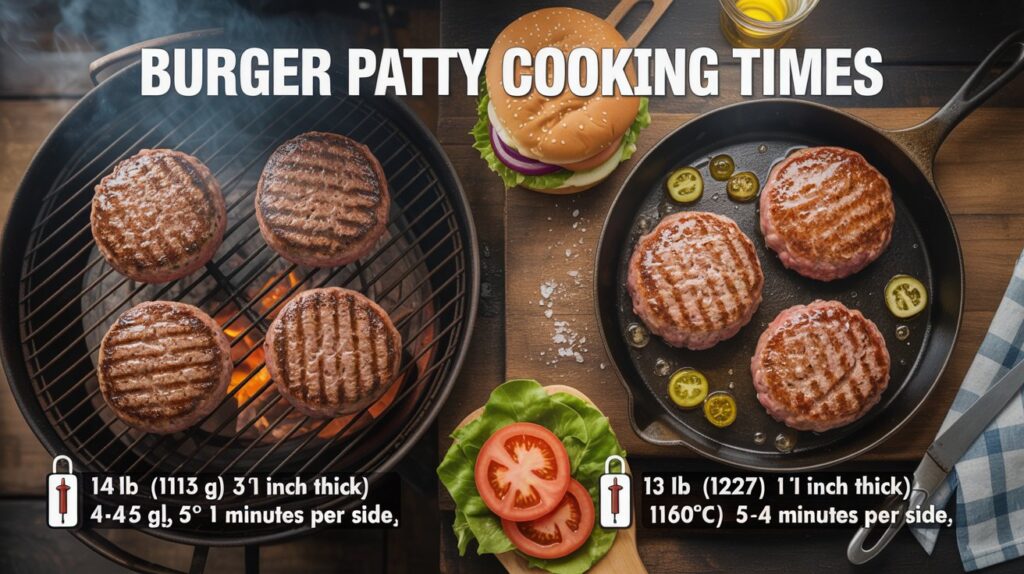
Understanding the cooking times for different burger patty sizes is essential for achieving the perfect cook on your patties. This section will provide detailed timings for both grilling and pan-frying, ensuring your burgers are juicy and flavorful every time.
Grilling Times
Grilling is a popular method for cooking burger patties, giving them that delicious smoky flavor. Here’s a quick reference for grilling times based on patty size and thickness:
| ¼ pound (113g) | ¾ inch | 3-4 minutes | Medium: 160°F (71°C) |
| ⅓ pound (150g) | 1 inch | 4-5 minutes | Medium: 160°F (71°C) |
| ½ pound (227g) | 1 inch | 5-6 minutes | Medium: 160°F (71°C) |
Pan-Frying Times
For those who prefer cooking indoors, pan-frying is a great alternative. Here’s how long to cook your patties in a skillet:
- ¼ pound (113g), ¾ inch thick: Heat 2 tablespoons olive oil in a skillet over medium heat (350°F/175°C) and cook for 3-4 minutes until browned, then flip and cook for another 3-4 minutes.
- ⅓ pound (150g), 1 inch thick: Cook for 4-5 minutes on each side, ensuring a nice golden crust forms.
- ½ pound (227g), 1 inch thick: Sauté for 5-6 minutes per side, watching for a rich brown color and internal temperature of 160°F (71°C).
Chef’s tip: Always let your patties rest for a few minutes after cooking to lock in the juices.
Serving Suggestions and Pairings
Choosing the right sides and beverages to accompany your burger can elevate your meal to a whole new level. The size of your burger patty can influence not only the cooking time but also the ideal pairings that complement the flavors and textures of your creation.
Side Dishes
- Classic French Fries: Crispy, golden fries are a traditional pairing. For an added twist, try sweet potato fries seasoned with paprika and garlic powder.
- Coleslaw: A tangy, creamy coleslaw (1 cup shredded cabbage, 1/2 cup carrots) provides crunch and balances the richness of the burger.
- Onion Rings: Beer-battered onion rings add a delightful crunch. Dip in ranch or spicy ketchup for extra flavor.
- Grilled Vegetables: Toss zucchini, bell peppers, and asparagus with olive oil and grill until charred for a fresh side.
Beverage Pairings
- Craft Beer: A hoppy IPA or a rich stout pairs beautifully with beefy burgers, enhancing their flavors.
- Homemade Lemonade: For a refreshing non-alcoholic option, mix 1 cup fresh lemon juice, 1 cup sugar, and 4 cups water. Serve chilled.
- Iced Tea: Sweetened or unsweetened, iced tea is a classic drink that complements the savory notes of the burger.
Chef’s tip: Experiment with different side dishes and beverages based on the size and flavor of your patty. A smaller patty may pair well with lighter sides, while a larger, heartier patty can handle bolder flavors!
Quick Summary
| Prep Time | Cook Time | Total Time | Servings |
|---|---|---|---|
| 10 mins | 10-15 mins | 20-25 mins | 4 |
- Choose your size: Standard sizes are 4 oz for sliders, 6 oz for regular, and 8 oz for hefty burgers.
- Form patties evenly: Use a kitchen scale for consistent weight and thickness.
- Heat the grill: Preheat to 400°F for optimal searing.
- Cook to temp: Aim for 160°F internal temperature for safe beef.
- Rest before serving: Let patties rest for 5 minutes to retain juices.
- Tip: Create a dimple in the center of each patty to prevent puffing up while cooking.
- Tip: Season just before cooking for maximum flavor absorption.
Frequently Asked Questions
Can I make burger patties ahead of time? How to store and reheat?
You can prepare burger patties up to 24 hours in advance; simply cover them tightly with plastic wrap or store them in an airtight container in the fridge. To reheat, cook them on a skillet at medium heat for about 3-4 minutes per side until warmed through.
What can I substitute for ground beef in burger patties?
If you’re looking for alternatives, you can use ground turkey, chicken, or even lentils for a vegetarian option. Just ensure to adjust cooking times accordingly, as leaner meats may cook faster.
How do I know when my burger patties are done?
Burgers should reach an internal temperature of 160°F (71°C) to ensure they’re safe to eat; use a meat thermometer for accuracy. The juices should run clear, not pink, when you cut into them.
Can I freeze raw burger patties? How long do they last?
Yes, you can freeze raw burger patties for up to 3 months; just make sure to separate them with parchment paper and place them in a freezer-safe bag. Thaw them in the fridge overnight before cooking for best results.
What if I don’t have a grill to cook my burger patties?
If you don’t have a grill, you can easily cook your patties in a skillet or on a stovetop griddle over medium-high heat. Just make sure to adjust the cooking time to achieve a nice sear on both sides.
