
Pasta is a staple in many kitchens, loved for its versatility and comfort—but figuring out the right amount to cook can be confusing. Too little leaves you hungry, while too much leads to leftovers. Understanding a pasta serving size chart helps you portion correctly, balance your meals, and avoid waste whether you’re cooking for one or a group.
Why Pasta Serving Size Matters
Pasta is rich in carbohydrates, making it a great energy source—but portion size plays a big role in calorie intake and meal balance.
Knowing the right serving size helps you:
- Avoid overeating
- Balance pasta with protein and vegetables
- Reduce food waste
It also makes meal planning easier and more consistent.
Standard Pasta Serving Sizes And Portions
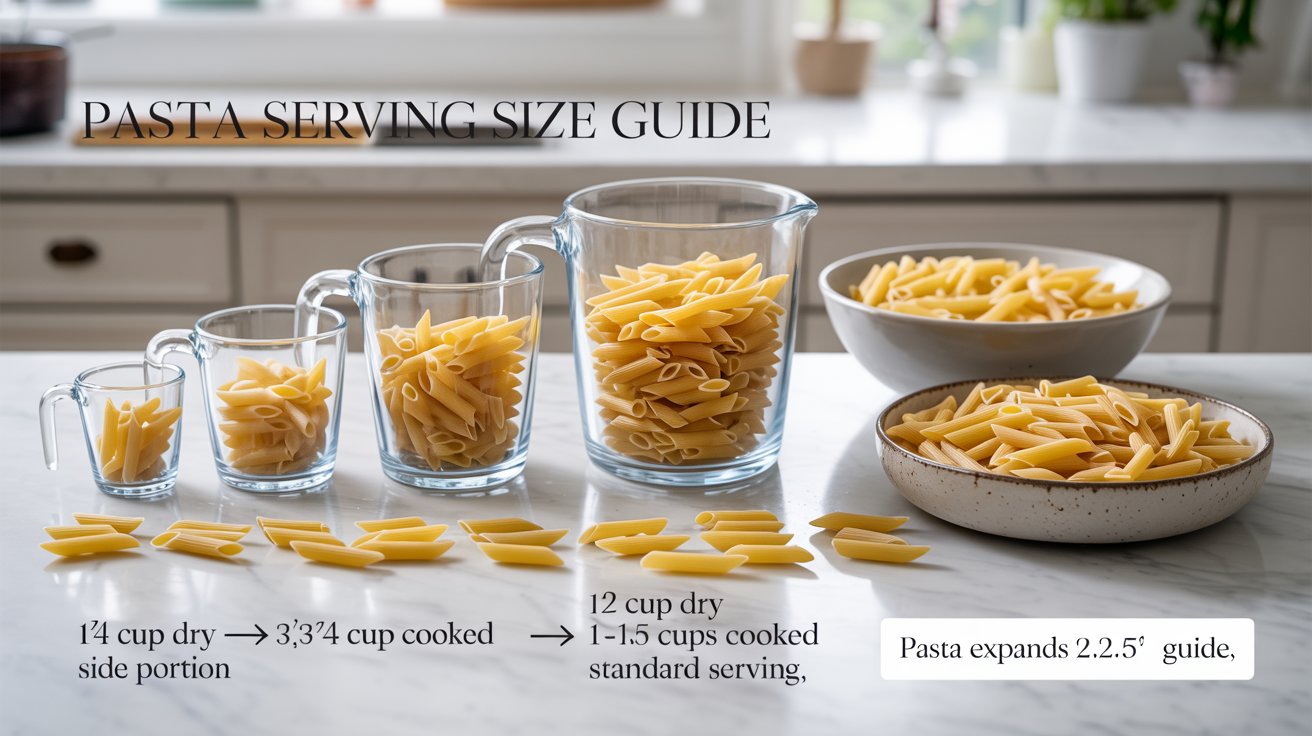
Pasta is usually measured in dry weight or cups before and after cooking. It expands significantly once cooked.
Pasta Serving Size Chart
| Serving Type | Dry Amount | Cooked Amount (Approx.) | Calories |
|---|---|---|---|
| Small Portion | ¼ cup (30g) | ¾ cup | 100–120 |
| Standard Serving | ½ cup (55–60g) | 1–1.5 cups | 180–220 |
| Large Portion | 1 cup (110–120g) | 2–2.5 cups | 350–400 |
| Family Portion | 2 cups (220g+) | 4–5 cups | 700+ |
These values may vary slightly depending on pasta type and brand.
Choosing The Right Pasta Serving Size
The ideal portion depends on your meal:
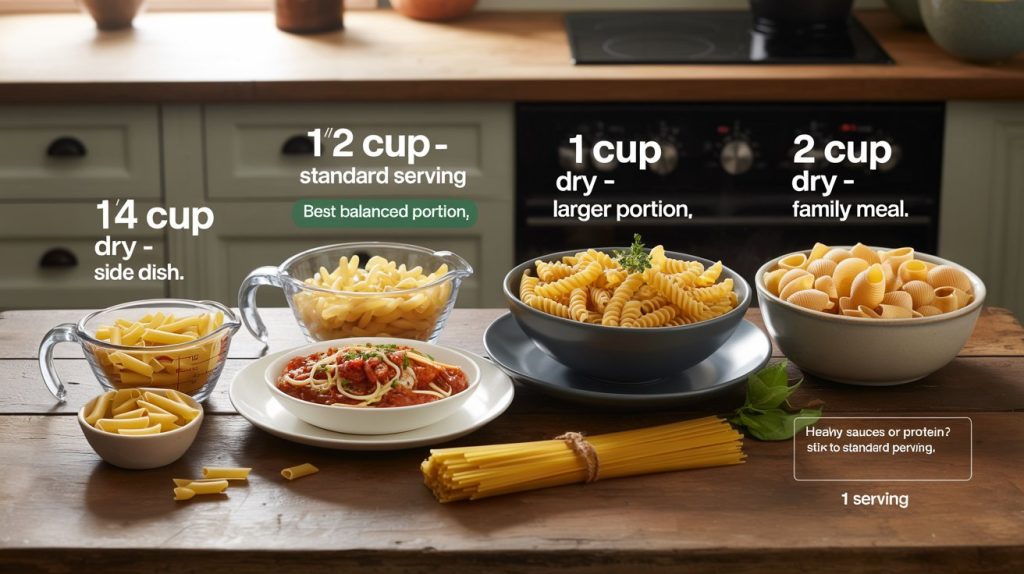
- ¼ cup dry: Great as a side dish
- ½ cup dry: Standard portion for one person
- 1 cup dry: Suitable for larger appetites
- 2 cups dry: Ideal for family meals or sharing
If your dish includes heavy sauces or proteins, a standard portion is usually enough.
Pasta Serving Size Comparison: Dry Vs Cooked
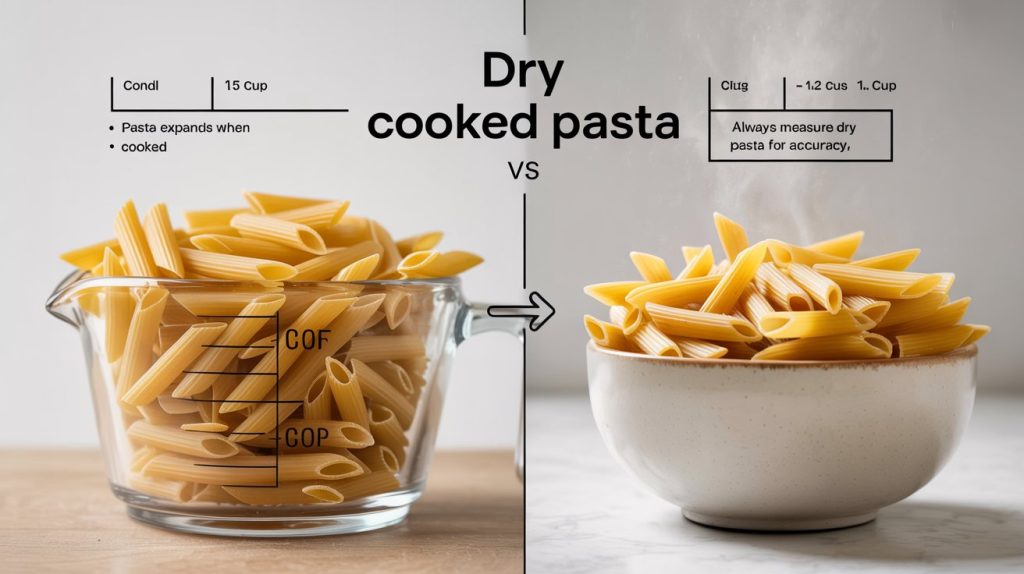
Pasta changes size significantly during cooking, which can be confusing.
Dry vs Cooked Pasta
| Form | Volume Change | Texture | Serving Tip |
|---|---|---|---|
| Dry | Compact | Hard | Measure before cooking |
| Cooked | Expands 2–2.5x | Soft, tender | Easier to visualize portions |
For example, ½ cup of dry pasta becomes about 1 to 1.5 cups cooked.
Pasta Serving Size And Nutrition
Pasta provides energy through carbohydrates, but portion size affects calorie intake.
A ½ cup dry serving typically contains:
- 180–220 calories
- 35–40g carbohydrates
- Small amounts of protein
Adding sauces like cream or cheese can significantly increase calories.
Visual Guide: Pasta Serving Size
Here’s a simple way to estimate portions:
| Serving Size | Visual Comparison | Best Use |
|---|---|---|
| ¼ cup dry | Small handful | Side dish |
| ½ cup dry | Half cup scoop | Standard meal |
| 1 cup dry | Full cup | Large portion |
For long pasta (like spaghetti), a bundle about the size of a coin is roughly one serving.
Tips For Measuring And Cooking Pasta
- Measure dry pasta: More accurate than cooked
- Use plenty of water: Prevents sticking
- Stir occasionally: Ensures even cooking
- Cook al dente: Better texture and digestion
- Add sauce after cooking: Helps control portions
These tips improve both taste and consistency.
Common Mistakes When Measuring Pasta
- Cooking too much: Pasta expands more than expected
- Ignoring sauces: Adds extra calories
- Not measuring portions: Leads to overeating
- Serving oversized plates: Makes portions look smaller
Avoiding these mistakes helps you stay on track.
How Pasta Serving Size Affects Your Meal
The amount of pasta you serve can change your entire meal. Smaller portions allow room for vegetables and protein, while larger portions can make the dish carb-heavy.
Balancing pasta with other ingredients creates a healthier and more satisfying meal.
The Popularity Of Pasta Worldwide
Pasta has been a staple food for centuries, especially in Italian cuisine. Today, it’s enjoyed worldwide in countless forms and recipes, making it one of the most versatile foods available.
Frequently Asked Questions
What Is A Standard Serving Size Of Pasta?
About ½ cup dry pasta per person.
How Much Pasta Should I Cook Per Person?
Roughly 50–60g of dry pasta.
Does Pasta Double When Cooked?
It typically expands 2 to 2.5 times in size.
Is 1 Cup Of Pasta Too Much?
It can be a large portion depending on your needs.
How Do I Measure Pasta Without A Scale?
Use measuring cups or visual cues like a handful.
Pasta serving sizes may seem simple, but they make a big difference in your cooking and nutrition. By understanding the pasta serving size chart, you can prepare the perfect portion every time—saving food, balancing your meals, and enjoying pasta the right way.
