

Are you tired of guessing the right egg size when making pappardelle noodles? Getting it wrong can change the texture and taste of your pasta completely.
But don’t worry—this Pappardelle Noodles With Egg Size Chart will make your cooking easier and your noodles perfect every time. Whether you’re a beginner or an experienced cook, knowing the exact egg size you need will save you from frustration and help you create restaurant-quality pasta right at home.
Keep reading, and you’ll never look at egg sizes the same way again.
Pappardelle Basics
Pappardelle noodles stand out for their wide, flat shape and tender texture. These noodles bring a rich, satisfying bite to many dishes. Understanding the basics helps you appreciate this pasta fully. Below, we explore its origins, ingredients, and how egg size affects the dough.
Origins And Tradition
Pappardelle comes from Tuscany, Italy. It has a long history in Italian cooking. The name means “to gape” or “to open wide.” This name reflects the noodle’s broad, ribbon-like shape. Traditionally, pappardelle pairs with hearty sauces, like wild boar ragu. It reflects rustic, home-style Italian meals.
Key Ingredients
Basic pappardelle dough has just a few ingredients. Flour, eggs, and a pinch of salt form the base. High-quality flour ensures good texture. Fresh eggs add richness and color. Water may be added to adjust dough firmness. The simple mix creates a delicate yet firm pasta.
Egg Size Impact
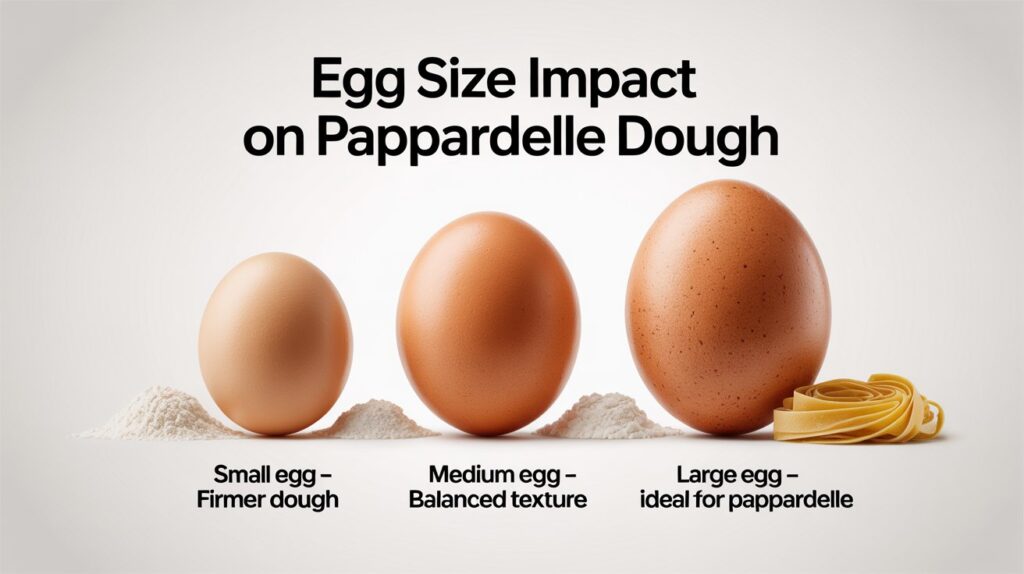
Egg size changes the dough’s moisture and texture. Larger eggs add more liquid, making dough softer. Smaller eggs need less water to balance moisture. Adjusting egg size helps achieve the right dough firmness. It affects how easy the dough is to roll and cut. Perfect egg size creates smooth, elastic pappardelle noodles.
Egg Size Categories
Egg size plays a key role in cooking, especially for recipes like pappardelle noodles. Different sizes affect the texture and moisture of the dough. Knowing the categories helps you choose the right egg for perfect pasta.
| Egg Size | Avg. Egg Weight | Flour Needed (per egg) | Dough Texture Result | Best Use |
|---|---|---|---|---|
| Small | 38–40 g | 80–90 g flour | Firm, slightly dry | Thin pappardelle, light sauces |
| Medium | 44–46 g | 95–100 g flour | Balanced, easy to roll | Standard homemade pasta |
| Large (Ideal) | 50–52 g | 100–105 g flour | Smooth, elastic | Classic pappardelle |
| Extra-Large | 56–58 g | 110–115 g flour | Soft, richer dough | Wide ribbons, hearty sauces |
| Jumbo | 60–63 g | 120 g flour | Very soft, moist | Rustic or thick-cut noodles |
Small Eggs
Small eggs weigh about 38 ounces or less. They have less yolk and white. Using them may make the dough slightly drier. You might need to add a little water to balance moisture.
Medium Eggs
Medium eggs weigh between 38 and 44 ounces. They are common in many kitchens. They offer a good balance of yolk and white. Ideal for standard pasta dough recipes without changes.
Large Eggs
Large eggs weigh 44 to 50 ounces. Most recipes call for this size. They provide enough liquid and fat for smooth dough. Using large eggs usually gives the best texture in pappardelle noodles.
Extra-large And Jumbo Eggs
Extra-large eggs weigh 50 to 56 ounces, and jumbo are over 56 ounces. These eggs add more moisture and fat. Dough may become sticky or too soft. Adjust flour or use fewer eggs for balance.
Noodle Thickness And Width
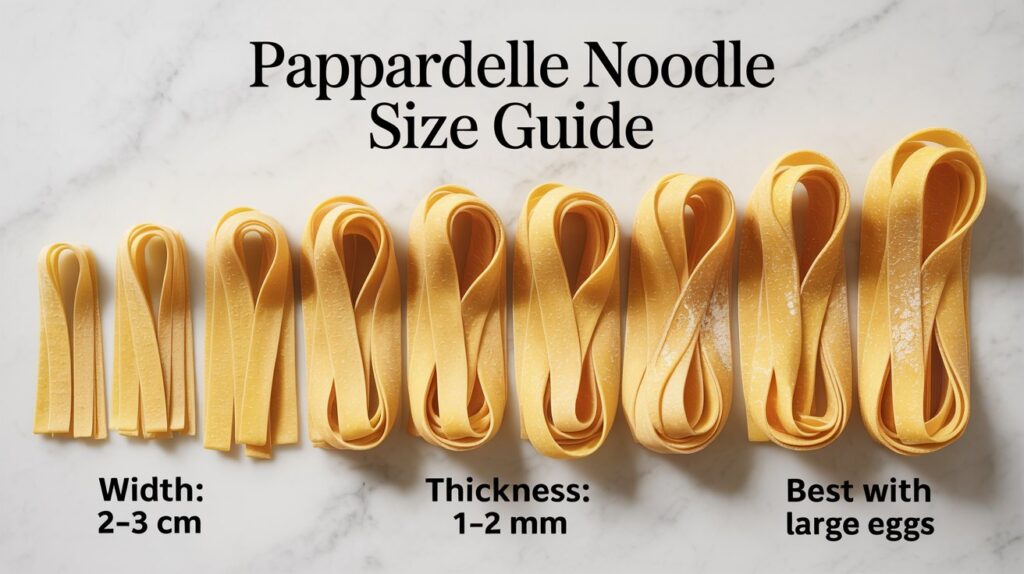
Noodle thickness and width greatly affect the texture and cooking of pappardelle. These wide ribbons have a unique shape that holds sauces well. Understanding the size helps in making perfect pasta every time. The egg size used in the dough changes the noodle dimensions. This section explains the standard sizes and how egg size impacts them.
Standard Pappardelle Dimensions
Traditional pappardelle noodles are 2 to 3 centimeters wide. The thickness usually ranges from 1 to 2 millimeters. These widths give the pasta a broad surface to capture sauces. The thickness keeps the noodles firm yet tender after cooking. Consistent size ensures even cooking and good texture.
Adjusting For Egg Size
The size of eggs affects dough moisture and thickness. Larger eggs add more liquid, making dough softer. Softer dough may require thinner rolling to avoid soggy pasta. Smaller eggs mean less moisture and firmer dough. Adjust the noodle thickness to keep the right bite and texture.
Texture And Cooking Time
Thicker pappardelle takes longer to cook but feels meatier. Thin noodles cook faster and have a lighter texture. Proper thickness balances softness and chewiness. Wide noodles hold chunky sauces better. Cooking time changes with noodle size, so watch carefully to avoid overcooking.
Measuring And Scaling Recipes
Measuring and scaling recipes is key to making perfect pappardelle noodles. Small changes in egg size or flour amounts affect dough texture. Understanding how to adjust ingredients helps maintain the right dough consistency. This section explains how to convert egg sizes, balance flour to eggs, and manage batch sizes.
Converting Egg Sizes
Egg sizes vary from small to extra-large. Recipes usually call for large eggs. One large egg weighs about 50 grams. If you use medium eggs, add two to equal one large egg. For extra-large eggs, reduce the count slightly. This keeps the dough from becoming too wet or dry.
Flour To Egg Ratios
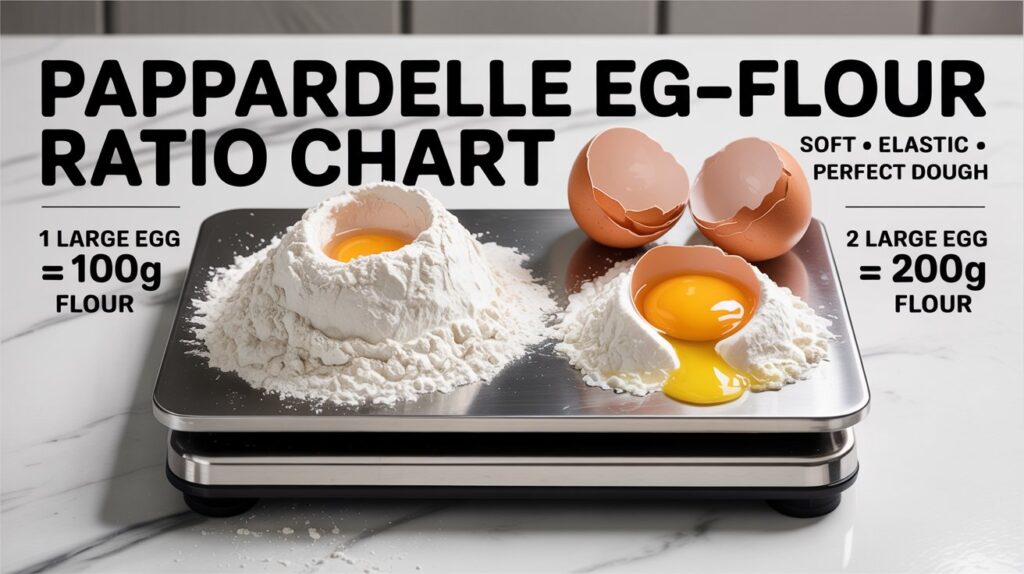
The right flour to egg ratio gives dough its perfect texture. Typically, 100 grams of flour matches one large egg. Adjust flour if eggs are bigger or smaller. Too much flour makes dough tough. Too few means sticky dough. Balance is important for smooth, elastic pappardelle.
Batch Size Tips
Scaling up or down changes ingredient amounts. Keep the flour to egg ratio steady. For larger batches, mix ingredients in parts before combining. This avoids uneven dough. Use a kitchen scale for accuracy. Smaller batches cook faster and dry quicker. Plan batch sizes based on your needs.
Dough Preparation Techniques
The foundation of perfect pappardelle noodles lies in the dough preparation techniques. Proper dough handling ensures the noodles have the right texture and strength. Each step, from mixing to cutting, affects the final quality of your pasta.
Mixing And Kneading
Start by combining flour and eggs in a bowl. Use your hands to bring the ingredients together. Knead the dough on a clean surface until it feels smooth and elastic. This process usually takes about 8 to 10 minutes. Proper kneading develops gluten, which gives noodles their chewy texture.
Resting Time
Wrap the dough in plastic wrap to keep it moist. Let it rest at room temperature for 30 to 60 minutes. Resting relaxes the gluten, making the dough easier to roll out. Skipping this step can result in tough noodles that break easily.
Rolling And Cutting
Divide the dough into smaller pieces for easier handling. Roll each piece with a rolling pin or pasta machine until thin. Aim for about 1 to 2 millimeters thickness. Cut the dough into wide strips, about 3/4 to 1 inch across. This width creates the signature broad ribbons of pappardelle noodles.
Cooking And Serving
Cooking and serving pappardelle noodles requires attention to detail. Proper cooking enhances their wide, flat shape and soft texture. Serving them right makes your dish look and taste better. Below are some tips to help you cook and serve pappardelle perfectly every time.
Boiling Tips
Use a large pot with plenty of water. Add a pinch of salt to the boiling water. This helps season the noodles while cooking. Drop the pappardelle noodles gently to avoid breaking. Stir occasionally to prevent sticking. Cook for 3 to 5 minutes or until tender but firm. Drain the noodles quickly to keep their shape. Avoid overcooking to prevent mushy texture.
Sauce Pairings
Pappardelle noodles match well with thick sauces. Rich meat sauces like ragù or bolognese are perfect. Creamy mushroom sauces also complement the wide noodles. Tomato-based sauces with herbs add a fresh taste. Toss the noodles gently with the sauce for even coverage. Use enough sauce to coat but not drown the pasta.
Presentation Ideas
Serve pappardelle noodles on warm plates to keep heat. Twirl a small nest of noodles for a neat look. Garnish with fresh herbs like basil or parsley. Sprinkle grated cheese or cracked black pepper on top. Add colorful vegetables or meat pieces for visual appeal. Keep the presentation simple to highlight the pasta’s shape.
Common Mistakes To Avoid
Making pappardelle noodles can be simple. But some common mistakes can spoil the dough or taste. Avoiding these errors helps you create perfect pasta every time. Focus on the egg size, dough texture, and cooking time. These parts matter a lot for the final dish.
Egg Size Miscalculations
Egg size changes dough moisture and texture. Using large eggs instead of medium can make dough too wet. Too small eggs make dough dry and crumbly. Check the egg size chart before mixing. Always measure ingredients carefully for best results.
Overworking The Dough
Kneading dough too long can make it tough. The gluten becomes strong and hard to roll out. Stop kneading once the dough feels smooth and elastic. Rest the dough to relax gluten before cutting noodles. This step keeps noodles tender and easy to cook.
Improper Cooking Time
Cooking pappardelle too long makes noodles mushy and sticky. Too short cooking leaves them hard and chewy. Boil noodles in plenty of salted water. Check texture often and drain when al dente. Perfect cooking keeps the noodles light and tasty.
Advanced Tips And Variations
Exploring advanced tips and variations can elevate your pappardelle noodle experience. These ideas help you customize texture, flavor, and appearance. Small changes make your pasta unique and exciting.
Using Alternative Flours
Try different flours for varied taste and texture. Whole wheat flour adds nuttiness and fiber. Semolina flour creates a firmer, chewier noodle. Gluten-free options like rice or chickpea flour work well. Experiment with blends to find your favorite mix.
Adding Herbs Or Spices
Enhance flavor by mixing herbs or spices into the dough. Fresh basil or parsley adds a fresh, green taste. Dried oregano or thyme brings warmth and depth. A pinch of black pepper or chili flakes can add subtle heat. These small touches brighten simple noodles.
Shaping Variations
Change the noodle shape for different meals and presentations. Cut wider or narrower strips to suit sauces and dishes. Twist or braid dough strips for a decorative touch. Create ribbons with wavy edges for texture. Shaping affects cooking time and sauce cling.
Frequently Asked Questions
What Is The Ideal Egg Size For Pappardelle Noodles?
Large eggs are ideal for pappardelle noodles. They provide the right moisture and binding needed for smooth dough. Using large eggs ensures consistent texture and flavor in your pasta.
How Does Egg Size Affect Pappardelle Dough Texture?
Egg size directly impacts dough moisture and firmness. Smaller eggs may result in dry dough, while larger ones make it too soft. Adjust flour accordingly for perfect pappardelle texture.
Can I Substitute Egg Size In Pappardelle Recipes?
Yes, but adjust flour quantity if you change egg size. More egg liquid needs more flour to maintain dough consistency. Always aim for a smooth, elastic dough.
Why Is An Egg Size Chart Important For Pappardelle?
An egg size chart helps maintain recipe accuracy and dough quality. It guides ingredient adjustments, ensuring consistent pasta texture and taste every time you cook.
Conclusion
Pappardelle noodles vary by egg size, affecting texture and taste. Choosing the right egg size helps you make noodles just right. This chart guides you to pick eggs that match your recipe. Cooking becomes easier with the right noodle thickness.
Enjoy pasta that feels fresh and tastes great every time. Simple tips like these improve your cooking skills quickly. Try using the chart for your next pasta dish. You will see the difference in your homemade noodles.
