
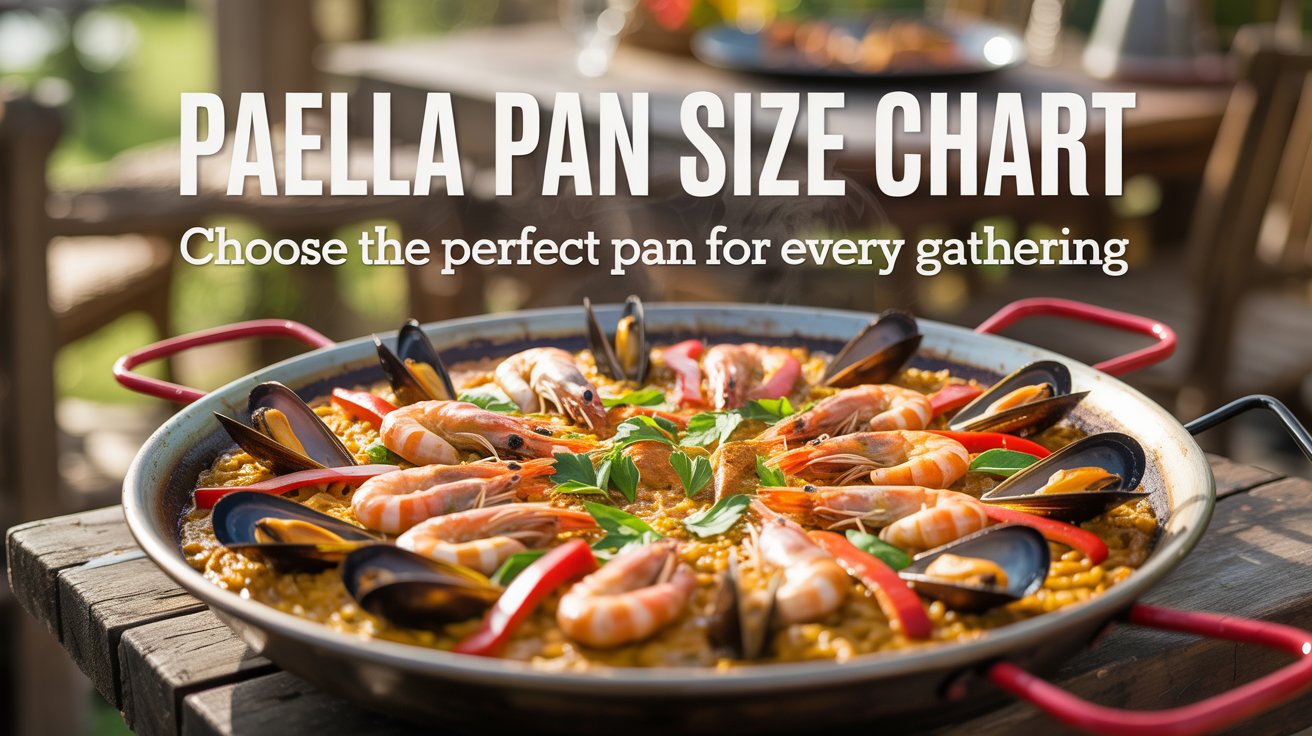
Paella is that vibrant dish that brings everyone together, whether it’s a cozy dinner for two or a lively gathering with friends. The golden rice, fresh seafood, and colorful veggies create a feast for the eyes and the palate. You can almost hear the sizzle as it cooks, making your mouth water in anticipation!
In this article, you’ll find a comprehensive paella pan size chart to help you choose the right pan for your dish. You’ll get to know the diameter, volume, and recommended servings for each size, ensuring you always have the perfect pan for your recipe.
History of Paella
Understanding the history of paella not only highlights its cultural significance but also informs the choices we make regarding the right paella pan size. Originating from Valencia, Spain, this iconic dish is a celebration of communal cooking, bringing people together around a shared meal.
- Origin in Valencia: Paella traces its roots to the rice fields of Valencia, where farmers would cook rice over an open fire after a long day. The combination of local ingredients and the traditional use of a wide, shallow pan became the foundation of this beloved dish.
- Traditional ingredients: Originally, paella was made with rabbit, snails, and a variety of local vegetables. Over time, seafood and chicken became popular additions, each influencing the style and size of the pan needed for preparation.
- Cultural celebrations: Paella is more than just food; it’s a symbol of Spanish hospitality and festive gatherings. It is often served during family celebrations and public festivals, emphasizing the need for larger pans to accommodate big groups, influencing the variety of pan sizes available.
Paella Pan Size Chart
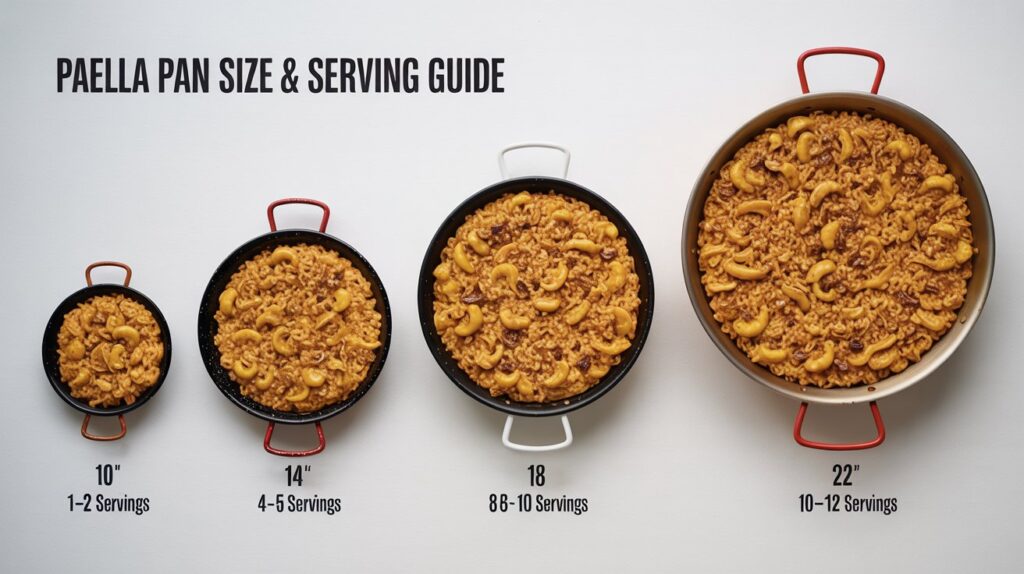
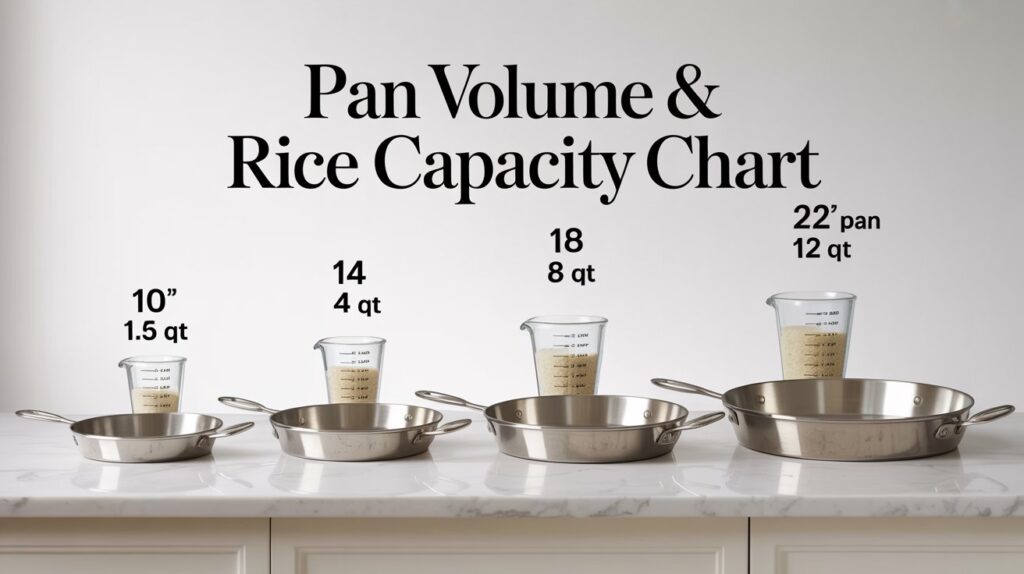
Choosing the right size paella pan is essential for preparing the perfect dish. The size of the pan affects not only the cooking time but also the texture and flavor of the paella. Below is a detailed chart that outlines various paella pan sizes, their volume capacities, recommended servings, and common uses.
| 10″ | 1.5 | 1-2 | Single serving, small tapas |
| 12″ | 2.5 | 2-3 | Personal paella, small gatherings |
| 14″ | 4 | 4-5 | Family meals, casual get-togethers |
| 16″ | 6 | 6-8 | Medium gatherings, dinner parties |
| 18″ | 8 | 8-10 | Festive occasions, larger family events |
| 22″ | 12 | 10-12 | Large celebrations, outdoor parties |
Chef’s tip: When selecting a pan size, consider the number of guests and the type of paella you plan to make. A wider pan allows for a better socarrat (crispy bottom layer).
By understanding these dimensions and capacities, you can ensure that you’re preparing the right amount of paella for your occasion, allowing for even cooking and delicious results every time.
Choosing the Right Pan Size
Selecting the right size paella pan is crucial for achieving that perfect, evenly cooked dish. The pan size affects not just the cooking process but also the final presentation and flavor of your paella. Here’s what to consider when choosing your pan.
- Factors to Consider: The size of your paella pan should be influenced by the number of servings you need. A general rule is that a pan with a diameter of 10 inches (25 cm) can serve about 2-3 people, while a 15-inch (38 cm) pan accommodates approximately 4-6. For larger gatherings, a 20-inch (50 cm) pan or more is ideal for serving 8-10 or even more, depending on your recipe.
- Type of Paella: Different types of paella may require different pan sizes. For example, a traditional seafood paella typically requires a larger surface area to allow even cooking of the seafood and to achieve that signature socarrat (crispy bottom layer). If you’re making a meat-based paella, consider a slightly smaller pan since the meat can be layered and cooked effectively without overcrowding.
- Serving Size: Always plan your serving size ahead of time. If you’re expecting guests, it’s better to err on the side of a larger pan to ensure everyone gets enough. Remember, paella is best enjoyed fresh, so larger pans might also allow for leftovers, which can be reheated the next day!
Materials Used in Paella Pans
Understanding the materials used in paella pans is crucial for achieving the perfect dish. Each material has its unique properties that can affect heat distribution, cooking time, and flavor, making your choice important based on the size of your pan and the type of paella you wish to prepare.
Stainless Steel
Stainless steel pans are durable and resistant to rust and corrosion. They provide even heat distribution but may not develop the same depth of flavor as other materials.
- Heat tolerance: Up to 500°F (260°C)
- Best for: Quick-cooking paellas with seafood
Carbon Steel
Carbon steel pans are favored among traditionalists for their excellent heat conduction and ability to develop a natural non-stick surface over time. They require seasoning, similar to cast iron.
- Heat tolerance: Up to 600°F (315°C)
- Best for: Classic Valencian paella with meat
Enamel Coated
Enamel-coated pans combine the benefits of metal with the easy maintenance of a non-reactive surface. They are perfect for those who want the look of a traditional paella pan without the upkeep.
- Heat tolerance: Up to 400°F (204°C)
- Best for: Vegetable paellas or as a serving dish
Chef’s tip: Always preheat your paella pan over medium heat to ensure even cooking and achieve that desirable socarrat at the bottom!
Choosing the right material based on your cooking style can significantly impact the outcome of your paella, ensuring it’s not just a meal but a delightful experience.
Common Mistakes with Pan Sizes
Choosing the right paella pan size is crucial for achieving that perfect dish. Common mistakes can lead to uneven cooking, burnt ingredients, or a meal that just doesn’t come together as intended. Here are some key points to keep in mind to avoid these pitfalls.
Overcrowding Ingredients
One of the biggest mistakes home cooks make is overcrowding the pan. When you add too many ingredients, they end up steaming rather than browning, which is essential for developing flavor. Here’s how to avoid this:
- Choose a pan that allows for at least 1 inch of space around the ingredients.
- For a 12-inch (30cm) pan, limit your ingredients to about 1.5 cups of rice and 2-3 cups of other ingredients.
- Cook in batches if necessary; this ensures that each component gets the heat it needs.
Incorrect Heat Distribution
Using a pan that is too small can lead to uneven cooking. A wider pan allows for better heat distribution, which is vital for the socarrat (the crispy bottom layer). Here’s what to consider:
- Use a burner that matches the size of your pan; a small burner on a large pan will cause hot spots.
- Ensure even heat by rotating the pan occasionally if you’re using a multi-burner stove.
Ignoring Pan Size
When selecting a pan, it’s essential to consider the number of servings you want to prepare. Here’s a quick reference chart:
| 10 | 2-4 |
| 12 | 4-6 |
| 14 | 6-8 |
| 16 | 8-10 |
Choosing the correct size will ensure that your paella cooks evenly and allows all flavors to meld beautifully. Avoid these common mistakes, and you’ll be well on your way to a delicious paella experience!
Care and Maintenance Tips
Taking proper care of your paella pan is essential for maintaining its quality and longevity. Whether you have a traditional carbon steel pan or a modern non-stick version, following these maintenance tips will ensure that your pan remains in great shape for years to come.
Cleaning Techniques: After using your paella pan, allow it to cool completely before cleaning. Avoid using soap, as it can strip the seasoning. Instead, use a soft sponge or cloth with warm water to scrub off any food residue. For stubborn bits, soak the pan in warm water for about 15-20 minutes before cleaning.
Seasoning the Pan: To keep a carbon steel or cast iron paella pan seasoned, apply a thin layer of vegetable oil (such as canola or grapeseed) to the surface using a paper towel. Heat the pan over medium heat for about 10 minutes until the oil begins to smoke slightly. Let it cool, and then wipe off any excess oil with a clean cloth.
Storage Guidelines: Store your paella pan in a dry place to prevent rusting. It’s best to place a paper towel between the pan and any lid or other cookware to absorb moisture. If your pan is particularly large, consider hanging it up to avoid scratching the surface.
Serving Suggestions for Paella
When it comes to serving paella, presentation and pairing can elevate the experience. Here are some garnishing ideas, wine pairings, and tips on serving temperature to ensure your paella is enjoyed to its fullest.
Garnishing Ideas
Adding a few finishing touches can enhance both the flavor and presentation of your paella. Consider garnishing with fresh herbs like parsley or cilantro, which add a vibrant color and freshness. Lemon wedges are also a great addition; a squeeze of fresh lemon juice right before serving brightens up the dish beautifully.
Wine Pairings
The right wine can complement the flavors of your paella perfectly. For seafood paella, a crisp white wine like Albariño or a dry rosé works well. If you’re serving a meat-based paella, consider a fruity red like Tempranillo or Garnacha, which can enhance the dish without overpowering it.
Serving Temperature
Paella is best served hot, straight from the pan. Ideally, it should be around 160°F (70°C) when served. This ensures that the rice is perfectly cooked and the flavors are at their peak. If you need to keep it warm, cover the pan with foil and place it in a low oven set at 200°F (93°C) until ready to serve.
Quick Summary
| Prep Time | Cook Time | Total Time | Servings |
|---|---|---|---|
| 15 minutes | 30-45 minutes | 45-60 minutes | 4-6 |
- Choose the right pan: Select a pan size based on servings; 13-15 inches for 4-6 servings.
- Preheat your pan: Heat the pan on medium for even cooking.
- Layer ingredients: Start with sofrito, then add rice and broth in a single layer.
- Do not stir: Let the rice form a crust for authentic texture.
- Rest before serving: Allow paella to sit for 5-10 minutes for flavors to meld.
- Tip: Use a wide, shallow pan for proper rice cooking.
- Tip: Maintain a consistent heat to avoid burning.
Frequently Asked Questions
Can I make paella ahead of time? How do I store and reheat it?
You can make paella ahead of time and store it in an airtight container in the refrigerator for up to 2 days. To reheat, warm it in a skillet over medium heat for about 5-10 minutes, adding a splash of broth if it seems dry.
What can I substitute for saffron in paella?
If you don’t have saffron, you can substitute with turmeric for color and a bit of flavor, using about 1/4 teaspoon for every pinch of saffron. Keep in mind the flavor won’t be exactly the same, but it will still be delicious!
How do I know when my paella is done cooking?
Your paella is done when the rice is tender and has absorbed most of the liquid, with a slight crispy layer on the bottom. You can check by tasting the rice; it should be cooked through but not mushy.
Can I freeze leftover paella? How long does it last?
You can freeze leftover paella for up to 3 months in an airtight container. Just make sure to let it cool completely before freezing to maintain its texture.
What if I don’t have a paella pan?
If you don’t have a paella pan, you can use a large, shallow skillet or a wide, heavy-bottomed pot, keeping the cooking surface at least 12 inches wide for even cooking. Just be sure to adjust the cooking time as needed, since the heat distribution may vary.
