
Oranges are not just a vibrant splash of color on your plate; they burst with flavor and nutrition, making them a delightful addition to any meal. Whether you’re tossing them into a fresh salad or juicing them for a refreshing drink, their zesty sweetness is sure to brighten your day. You’ll find that the perfect serving size can enhance both your dishes and your health!
Here’s what you can expect: Recommended serving size: about one medium orange or about 130 grams. Get ready to learn about nutritional information, tips for measuring servings, and how to incorporate them into your favorite recipes.
History of Oranges
The history of oranges is rich and intertwined with various cultures, reflecting their significance and evolution over time. Understanding their origins and cultural importance offers valuable insights into their serving size and nutritional value.
- Origin of Oranges: Oranges are believed to have originated in Southeast Asia, particularly in regions like India and China, around 4000 years ago. They were later cultivated in the Middle East and spread throughout Europe and the Americas during the age of exploration. Today, they are one of the most widely grown fruits globally.
- Cultural Significance: In many cultures, oranges symbolize prosperity and good fortune. For instance, in Chinese traditions, they are often exchanged during the Lunar New Year as a gesture of good luck. Additionally, in Mediterranean cultures, oranges have been celebrated in festivals and culinary dishes, highlighting their role as a staple fruit.
- Nutritional Value: Oranges are not only delicious but also packed with nutrients. A medium-sized orange (about 130 grams) typically contains around 62 calories, 15.4 grams of carbohydrates, and is an excellent source of vitamin C, which supports immune function and skin health. Knowing this helps in determining appropriate serving sizes for various recipes.
Recommended Serving Size
Understanding the recommended serving size for oranges can help you incorporate this nutritious fruit into your meals effectively. The right amount ensures you benefit from their flavor and health advantages without overindulging. Below, you’ll find specific measurements to guide your orange consumption.
Number of Oranges
- A typical serving size is 1 medium orange (approximately 2.5 to 3 inches in diameter).
- For larger oranges, such as navel or blood oranges, 1 orange can suffice as a serving.
- If using smaller varieties, consider 2 to 3 oranges for a similar serving size.
Weight and Volume
When measuring oranges, both weight and volume can provide a clear idea of serving sizes:
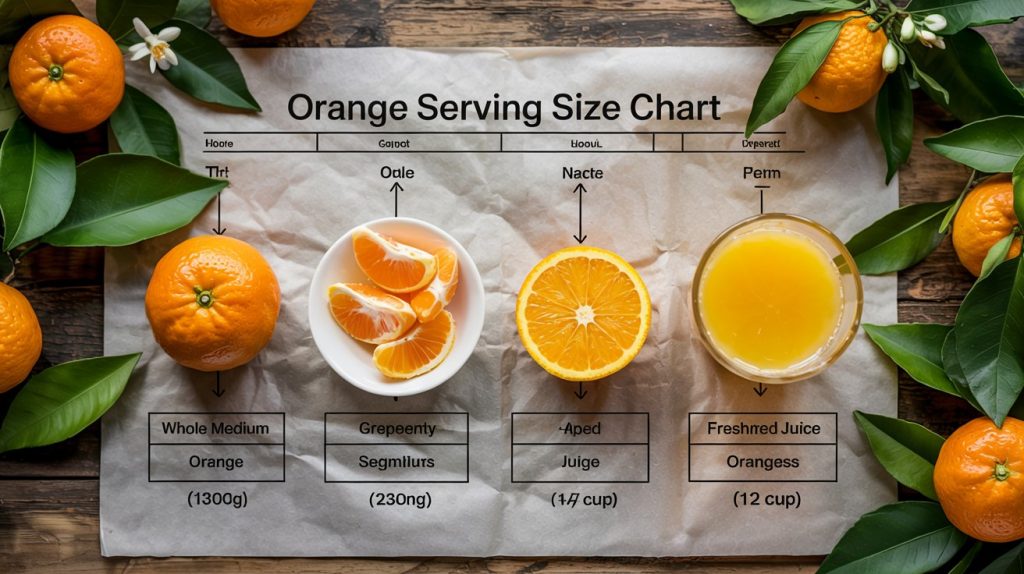
Orange Serving Size Chart
| Portion | Measurement | Weight |
|---|---|---|
| Small portion | ½ orange | ~65 g |
| Standard serving | 1 medium orange | ~130 g |
| Orange segments | 1 cup | ~180 g |
| Fresh juice | ½ cup | ~120 ml |
✔ Recommended serving size:
1 medium orange (130 g) or 1 cup orange segments
Chef’s tip: When selecting oranges, look for those that feel heavy for their size and have a firm skin, indicating juiciness.
By adhering to these serving sizes, you can easily integrate oranges into your diet, whether you enjoy them fresh, juiced, or in recipes. Adjust the quantity based on your meal composition and personal preferences.
Nutritional Information
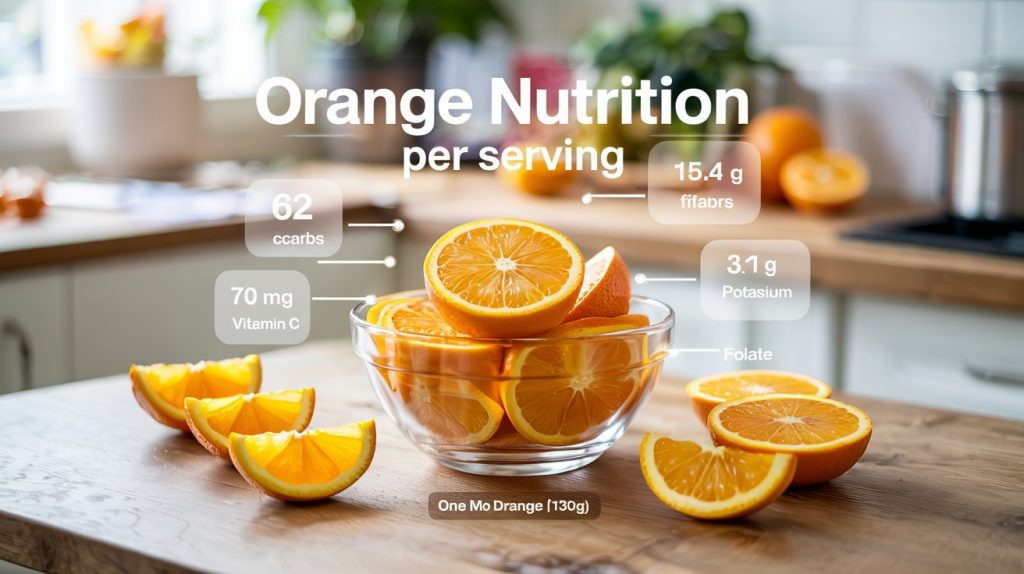
Understanding the nutritional benefits of oranges is essential for making informed choices about your diet. Each orange serving provides a wealth of vitamins and minerals that contribute to overall health. Here’s a breakdown of the key nutrients you can expect from a standard serving size of an orange, which is typically one medium orange (about 130 grams).
- Calories: A medium orange contains approximately 62 calories. This makes it a low-calorie option, perfect for snacking or adding to meals without significantly increasing calorie intake.
- Vitamin C: One medium orange offers about 70 mg of vitamin C, which is 78% of the recommended daily intake. Vitamin C is crucial for immune function, skin health, and the absorption of iron from plant-based foods.
- Fiber: Oranges provide about 3.1 grams of dietary fiber per serving. Fiber is essential for digestive health and can help maintain a feeling of fullness, making it a great choice for weight management.
- Potassium: Each orange contains around 237 mg of potassium, which is important for heart health and regulating blood pressure. Potassium helps balance fluids in the body and supports proper muscle function.
- Folate: A serving of orange has about 40 mcg of folate, which is important for cell division and is particularly vital during pregnancy for fetal development.
Incorporating oranges into your daily diet can significantly boost your nutrient intake and add a refreshing flavor to various dishes. Enjoy them fresh, in salads, or as part of a delicious smoothie!
Measuring Serving Sizes
Understanding how to accurately measure a serving size of oranges is key for both nutrition and recipe success. Whether you’re weighing them for a health-focused meal or measuring for a delicious dessert, knowing the right amounts ensures you get the best flavor and texture.
Using Weight
- To measure oranges by weight, start by using a kitchen scale. Place a bowl on the scale and reset it to zero (this is called taring). This allows you to measure only the weight of the oranges.
- For a standard serving size, aim for approximately 130 grams (about 4.6 ounces) per orange. Most medium-sized oranges fall within this weight range, giving you about 62 calories and 15 grams of carbohydrates per serving.
- Keep in mind that larger oranges will weigh more. If you have a larger orange, you might want to adjust your serving size accordingly or consider cutting it into wedges to make it easier to manage portion sizes.
Using Volume
- If you prefer to measure oranges by volume, start by peeling and segmenting the orange. This will allow you to capture the juice and pulp without the skin.
- A standard serving size is about 1 cup of orange segments, which is roughly equivalent to two medium oranges. This amount provides a refreshing burst of flavor and a good source of vitamin C.
- To avoid waste, use the leftover peels to make candied orange peels or zest for other recipes. This will help you utilize every part of the fruit while ensuring you have the right serving size for your dish.
Incorporating Oranges in Recipes
Using oranges in your dishes not only adds a burst of flavor but also enhances the nutritional profile. Understanding the ideal serving size for oranges can guide you in creating balanced meals and snacks. Here’s how you can incorporate this citrus delight into various recipes.
Salads
Oranges can elevate salads with their refreshing taste and vibrant color. A typical serving size is about one medium orange (about 130 grams), which can be segmented and tossed into your salads for a bright contrast. Try this:
- 1 medium orange, segmented
- 4 cups mixed greens
- ½ cup sliced almonds
- 2 tablespoons olive oil
- 1 tablespoon balsamic vinegar
Combine these ingredients in a large bowl. Drizzle with olive oil and balsamic vinegar, then toss gently until the greens are coated. Serve immediately for a fresh crunch!
Desserts
For a sweet treat, consider using orange zest and juice in your desserts. A serving of orange zest can be derived from one medium orange, while ¼ cup of freshly squeezed orange juice is typically sufficient for most dessert recipes. Here’s a simple orange mousse:
- In a mixing bowl, combine ¼ cup fresh orange juice and 2 teaspoons of orange zest.
- In another bowl, whip 1 cup of heavy cream until soft peaks form.
- Gently fold the orange mixture into the whipped cream, being careful not to deflate it.
Chef’s tip: Chill the mousse for at least 1 hour before serving to enhance the flavors.
Juicing
When juicing oranges, a serving is usually about 2-3 medium oranges, yielding approximately 1 cup (240 mL) of juice. Freshly squeezed orange juice can be enjoyed on its own or as an ingredient in smoothies or marinades. To juice:
- Roll the oranges on the counter to loosen the juice.
- Cut them in half and use a citrus juicer to extract the juice.
| Serving Size | Calories | Vitamin C |
|---|---|---|
| 1 medium orange | 62 | 70 mg |
| 1 cup orange juice | 112 | 124 mg |
Variations and Substitutions
When it comes to enjoying oranges, there are a few variations that can enhance your recipes and offer flexibility in serving sizes. Dried oranges and juiced oranges can be excellent alternatives, each with their own unique measurements and uses. Understanding these options allows you to adapt your recipes based on the form of orange you have on hand.
Dried Oranges
Dried oranges can bring a concentrated flavor to your dishes. When using dried oranges, the serving size differs from fresh oranges due to their lower moisture content. Here’s a quick reference:
- 1 medium fresh orange (about 130 grams) equals approximately ¼ cup of dried orange slices.
- Serving size: ¼ cup (about 35-40 grams) of dried orange slices.
Chef’s tip: Soak dried orange slices in warm water for about 10 minutes before using them in salads or baked goods to rehydrate and enhance their flavor.
Juiced Oranges
Juiced oranges are perfect for adding flavor to drinks, marinades, or dressings. The serving size for juice can vary depending on the intended use:
- 1 medium orange yields about ¼ to ⅓ cup of juice (about 60-80 ml).
- For recipes, use about 2 tablespoons (30 ml) of juice per serving for dressings.
| Dried Orange | ¼ cup (35-40 grams) |
| Juiced Orange | ¼ to ⅓ cup (60-80 ml) |
Common mistake: Avoid using juice from oranges that are too ripe, as it may have a bitter taste.
Tips for Serving Oranges
Serving oranges can elevate your dishes, bringing vibrant color and refreshing flavor. Understanding the appropriate serving size and pairing suggestions can enhance your culinary creations. Here’s a guide to help you plate and enjoy oranges like a pro!
Plating Tips
- For a single serving, aim for about 1 medium orange (approximately 130g). This provides a satisfying portion without overwhelming your palate.
- When creating a fruit salad, combine 1 cup (about 150g) of orange segments with other fruits for balance and variety.
- Arrange orange slices in a fan shape on the plate for an elegant presentation, drizzling with a touch of honey or balsamic glaze for added flavor.
Pairing Suggestions
Oranges are versatile and can be paired with various ingredients to enhance their natural sweetness and acidity. Here are some delicious combinations:
- Cheese: Pair orange slices with creamy goat cheese or sharp feta for a delightful contrast.
- Herbs: Fresh mint or basil complements the citrusy flavor beautifully.
- Nuts: Chopped almonds or pistachios add a satisfying crunch and richness.
- Protein: Incorporate oranges into savory dishes with chicken or fish for a refreshing zing.
Chef’s tip: For a refreshing summer salad, combine mixed greens, orange segments, and a light vinaigrette made with 2 tablespoons olive oil, 1 tablespoon apple cider vinegar, and a pinch of salt.
| 1 medium orange (130g) | 62 | 116% DV |
| 1 cup orange segments (150g) | 85 | 137% DV |
Common Questions About Oranges
Understanding the appropriate serving size for oranges is essential for both nutritional balance and recipe planning. This section addresses common questions regarding serving sizes, along with practical storage tips to maximize freshness and flavor.
Serving Size Clarifications
The standard serving size for a medium orange is typically one whole orange, which weighs about 130-150 grams (approximately 4.5-5.3 ounces). Here’s a breakdown of the key nutritional components found in this serving size:
| Nutrient | Amount per Serving |
|---|---|
| Calories | 62 |
| Carbohydrates | 15.4g |
| Fiber | 3.1g |
| Sugar | 12.2g |
| Vitamin C | 70mg |
If you’re incorporating oranges into recipes, consider using segments or juice. For recipes, a serving can translate to:
- 1 medium orange, segmented
- ½ cup orange juice (about 2-3 oranges)
Storage Tips
To keep your oranges fresh and flavorful, follow these storage tips:
- Store oranges in a cool, dry place or in the refrigerator for up to two weeks.
- Keep them in a mesh bag to allow airflow, preventing mold.
- Do not wash oranges until you’re ready to eat them, as moisture can lead to spoilage.
Pro tip: If your oranges start to dry out, you can revive them by soaking in cold water for about 30 minutes!
Quick Summary
| Prep Time | Cook Time | Total Time | Servings |
|---|---|---|---|
| 5 mins | 0 mins | 5 mins | 1 serving |
- Choose the right size: A medium orange weighs about 130 grams.
- Portion control: Aim for one medium orange per serving for balanced nutrition.
- Peel with care: Use a sharp knife to avoid wasting the fruit.
- Juice it up: Half an orange yields about 2 tablespoons of juice.
- Store properly: Keep oranges in a cool, dry place for maximum freshness.
- Tip for sweetness: Choose oranges that feel heavy for their size.
- Maximize flavor: Roll the orange on the counter before cutting to release juices.
Frequently Asked Questions
Can I make this ahead of time? How to store and reheat?
You can prepare orange slices a day in advance; store them in an airtight container in the refrigerator. Just give them a gentle toss with a little citrus juice before serving to refresh their flavor.
What can I substitute for fresh oranges?
If you don’t have fresh oranges, you can use canned mandarin oranges or orange juice as a substitute, though the texture will differ slightly. Aim for about 1 cup of juice for every 2 medium-sized oranges.
How do I know when the oranges are ripe for serving?
Oranges are best when they are , with a smooth skin. A little give when gently squeezed indicates they are ripe and ready to eat.
Can I freeze orange slices? How long does it last?
You can freeze orange slices for up to 3 months by placing them in a single layer on a baking sheet before transferring to a freezer bag. This helps prevent them from sticking together.
What if I don’t have a citrus juicer?
If you don’t have a citrus juicer, you can easily use a fork or a handheld reamer to extract juice from the oranges. Just cut them in half and twist the fork into the flesh to access the juice.
