
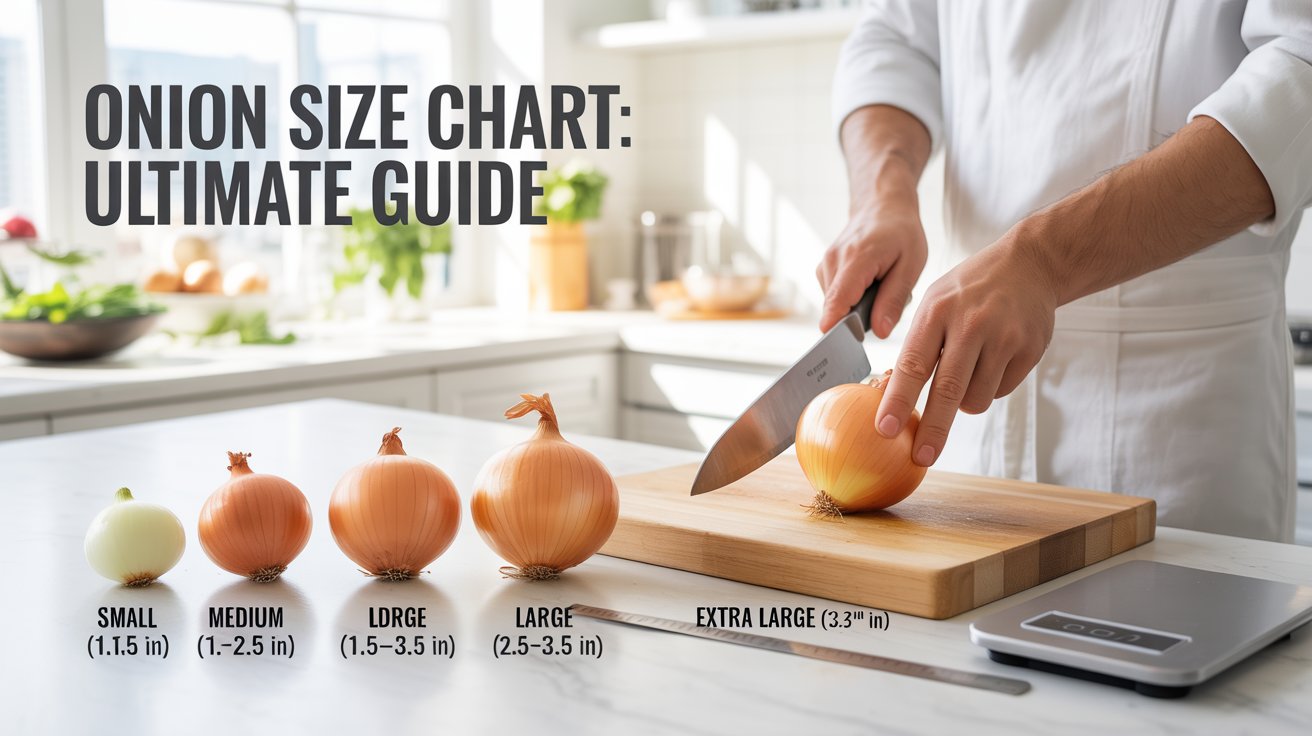
Are you tired of guessing the right onion size for your recipes? Knowing the exact size of an onion can make a big difference in your cooking, helping you get the flavor just right every time.
Whether you’re chopping for a salad, stew, or sauce, understanding the onion size chart will save you time and avoid any unpleasant surprises. In this guide, you’ll discover how to pick the perfect onion size and why it matters for your meals.
Keep reading to unlock the secret to better cooking with onions!
Onion Size Categories
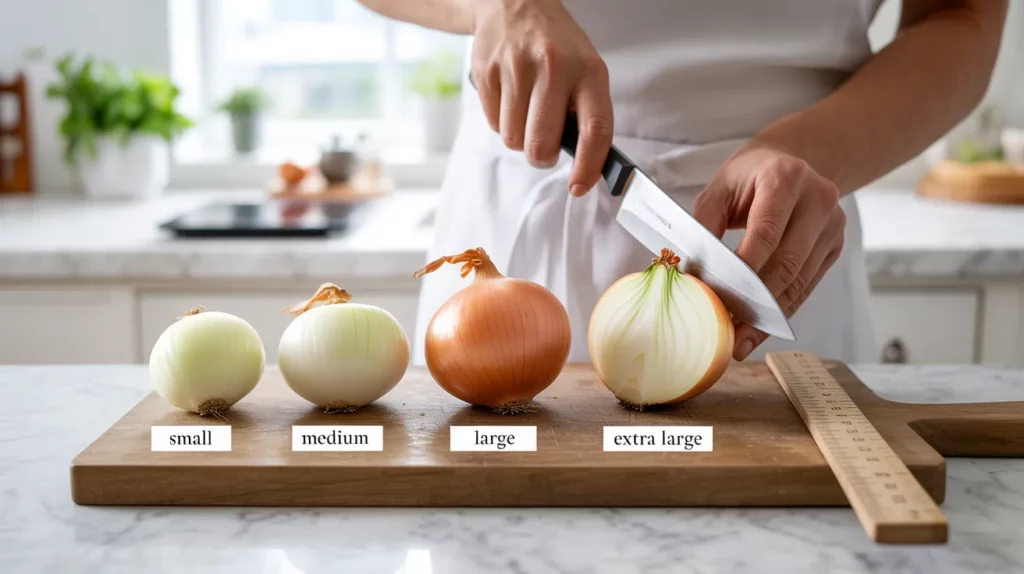
Onions come in many sizes. Each size fits different cooking needs. Knowing onion size categories helps you pick the right onion. This guide explains the common onion size groups. It makes shopping and cooking easier.
? Onion Size Chart
| Size Category | Diameter | Weight | Best Use |
|---|---|---|---|
| Small | < 1.5 in ( < 4 cm ) | ~4 oz / 110 g | Pickling, salads, garnishes |
| Medium | 1.5 – 2.5 in (4 – 6.5 cm) | 6–8 oz / 170–225 g | Sautéing, soups, sauces |
| Large | 2.5 – 3.5 in (6.5 – 9 cm) | 10 oz+ / 280 g+ | Roasting, grilling, caramelizing |
| Extra Large | 3.5+ in (9+ cm) | 12 oz+ / 340 g+ | Stuffing, thick slices, bold flavor |
Small Onions
Small onions are usually less than 1.5 inches in diameter. They are great for pickling or roasting whole. Small onions cook quickly and add a mild flavor. Perfect for salads or garnishes.
Medium Onions
Medium onions measure between 1.5 and 2.5 inches across. They are the most common size used in recipes. Medium onions work well for sautéing and soups. They balance flavor and texture nicely.
Large Onions
Large onions range from 2.5 to 3.5 inches wide. They have a stronger taste and more juice. Large onions are ideal for grilling or caramelizing. Use them when you want a bold onion flavor.
Extra Large Onions
Extra large onions are over 3.5 inches in diameter. These onions have a powerful taste and thick layers. They are best for recipes needing a strong onion presence. Also good for stuffing or slicing thick.
Measuring Onion Size
Measuring the size of an onion helps in cooking, buying, and storing. Knowing the size guides you to choose the right onion for recipes. You can measure onions in different ways. Each method gives useful information.
Diameter Measurement
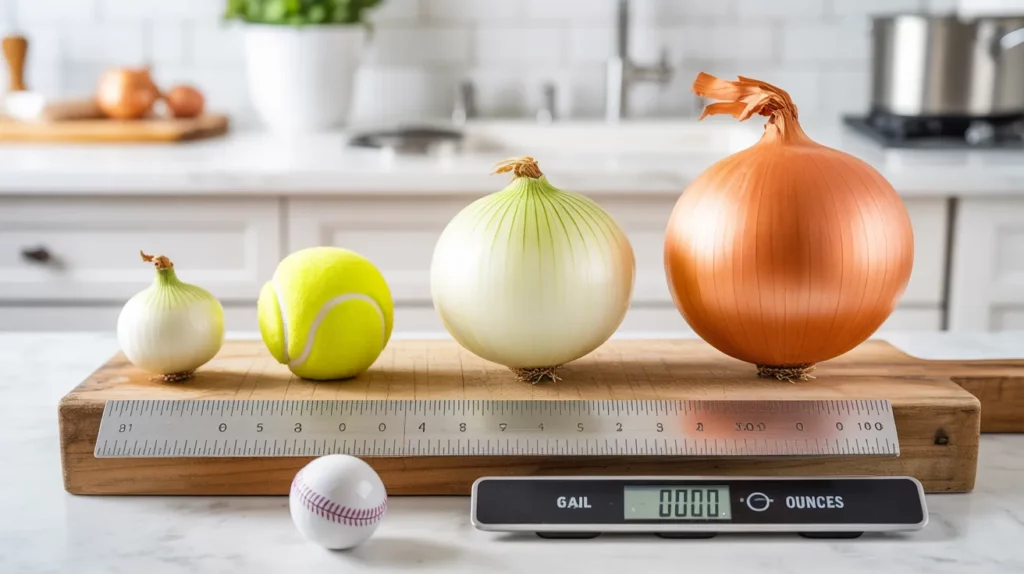
Measure the onion’s widest part for diameter. Use a ruler or tape for accuracy. This shows the onion’s size in inches or centimeters. Small onions are about 1-2 inches wide. Medium onions range from 2-3 inches. Large onions are over 3 inches wide. Diameter helps compare onions easily.
Weight Estimation
Weight tells how heavy the onion is. Use a kitchen scale for the best result. Small onions weigh around 4 ounces or 110 grams. Medium onions weigh 6-8 ounces or 170-225 grams. Large onions can weigh over 10 ounces or 280 grams. Weight helps when recipes need specific onion amounts.
Visual Size Comparison
Look at the onion next to common objects. For example, a small onion is about the size of a golf ball. Medium onions look like a tennis ball. Large onions can be as big as a baseball. This method helps without tools. It is quick and easy.
Common Onion Varieties
Onions come in many types, each with its own size and flavor. Knowing the common onion varieties helps choose the right one for any dish. This guide explains the four main types and their typical sizes.
Yellow Onions
Yellow onions have a strong, sharp taste. They are the most common onion variety. Their size ranges from small to large, usually 2 to 4 inches in diameter. Yellow onions turn sweet when cooked. They work well in soups, stews, and roasting.
Red Onions
Red onions have a mild, slightly sweet flavor. They have a deep purple skin and white flesh with red edges. Their size is usually medium, about 2 to 3 inches wide. Red onions are great raw in salads and sandwiches. They add color and crunch to many dishes.
White Onions
White onions have a sharp, clean taste. They are usually smaller than yellow onions, around 2 to 3 inches in diameter. Their skin is white and thin. White onions are common in Mexican cooking. They taste great raw or cooked and have a crisp texture.
Sweet Onions
Sweet onions have a mild, sugary flavor. They are larger than other onions, often 3 to 5 inches wide. Their skin is pale yellow or white. Sweet onions are perfect for frying or eating raw. They add a gentle sweetness to salads and burgers.
Cooking Uses By Onion Size
Onion size affects how they cook and taste. Different sizes suit different dishes. Choosing the right size helps improve flavor and texture.
Small Onions For Garnishes
Small onions are perfect for garnishes. They add a mild crunch and fresh taste. Use them raw or lightly cooked. Thin slices or rings make dishes look nice. They work well in salads and sandwiches.
Medium Onions For Sautéing
Medium onions are the best for sautéing. They cook evenly and release sweet flavors. Use them for stir-fries, sauces, and soups. They soften quickly and blend well. Their size is easy to manage in the pan.
Large Onions For Roasting
Large onions hold up well in roasting. They caramelize nicely and become tender. Use them with meats or vegetables. Their size helps them cook slowly and evenly. Roasted large onions add rich flavor to meals.
Extra Large Onions For Stuffing
Extra large onions are ideal for stuffing. They have enough space to hold fillings. Use them for baked dishes or side plates. Their size keeps fillings moist while cooking. Stuffed onions make a hearty, tasty meal.
Buying Tips For Perfect Onions
Buying the perfect onion can make a big difference in your cooking. Knowing how to pick fresh, good-quality onions saves money and time. This guide helps you spot the best onions every time.
Selecting Freshness
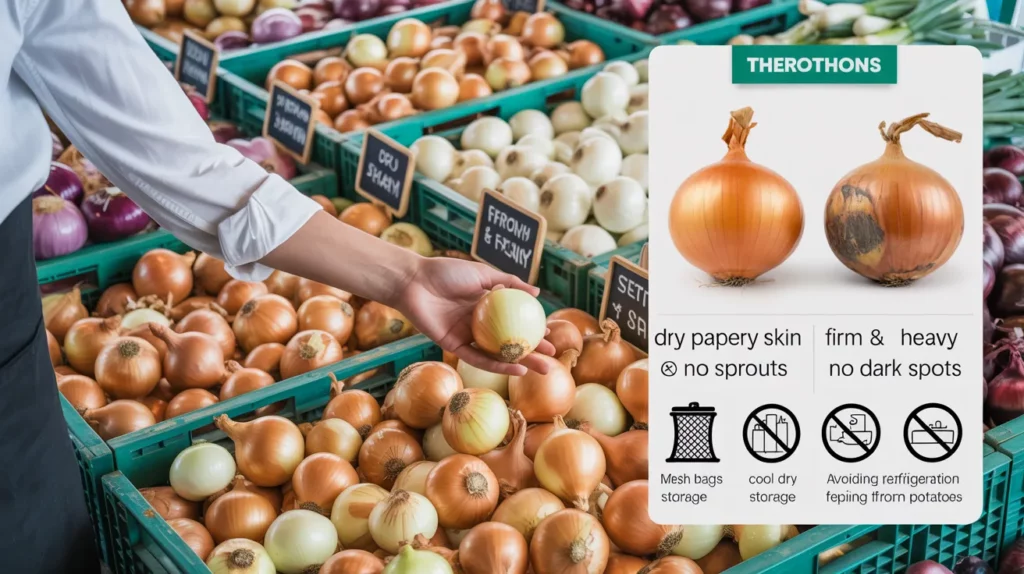
Choose onions with dry, papery skin. Avoid any that feel soft or have wet spots. Fresh onions are firm and heavy for their size. The neck should be tight and dry. Smell the onion; it should not have a strong odor.
Avoiding Common Defects
Check for dark spots or mold on the skin. Avoid onions with sprouts or green shoots. These signs mean the onion is old or stored poorly. Also, skip onions with bruises or cuts. They spoil faster and may affect taste.
Storage Suggestions
Store onions in a cool, dry, and well-ventilated place. Keep them away from potatoes, which release moisture. Use mesh bags or baskets for airflow. Do not refrigerate whole onions; it makes them soft. Proper storage keeps onions fresh longer and tasty.
Substituting Onion Sizes In Recipes
Substituting onion sizes in recipes can be tricky. Different onion sizes affect the amount you use and the dish’s taste. Knowing how to adjust helps keep your recipe balanced and tasty. Small, medium, and large onions are common sizes. Each size has a different weight and volume.
Adjusting Quantity
Use a kitchen scale or measure by volume for best results. A medium onion usually weighs about 150 grams or 5 ounces. If your recipe calls for a large onion, use about 1.5 times the amount of a medium one. For small onions, use less than a medium onion, about half or two-thirds. Chop the onion finely to spread the flavor evenly. Adjust the pieces to keep texture consistent.
Impact On Flavor And Texture
More onion adds stronger flavor and moisture to your dish. Less onion results in a milder taste and drier texture. Large onion pieces can make the dish chunkier. Small pieces blend smoothly into sauces or soups. Overusing large onions may overpower other flavors. Using too little can make the dish bland. Balance size and quantity for best results.
Frequently Asked Questions
What Are The Common Onion Size Categories?
Onion sizes range from small to jumbo, measured by diameter. Common categories include small (1-2 inches), medium (2-3 inches), large (3-4 inches), and jumbo (over 4 inches). These sizes help in cooking and pricing.
How Does Onion Size Affect Cooking Time?
Larger onions take longer to cook due to their thickness. Small onions cook quickly and are ideal for sautés. Medium and large onions suit recipes needing longer cooking or caramelization.
Why Is Onion Size Important In Recipes?
Onion size impacts flavor intensity and texture in dishes. Using the right size ensures balanced taste and proper cooking. It helps maintain recipe consistency and desired dish outcomes.
How To Measure Onion Size Accurately?
Measure the onion’s diameter across its widest part. Use a ruler or tape measure for precision. Knowing exact size helps in recipe adjustments and portion control.
Conclusion
Knowing onion sizes helps you pick the right one for recipes. Small onions work well for salads and snacks. Medium onions suit most cooking needs. Large onions add flavor to soups and stews. Use this chart to avoid guesswork and save time.
Cooking becomes easier with the right onion size. Keep this guide handy in your kitchen always. It makes meal prep simple and efficient. Choose onions with confidence every time you cook.
