
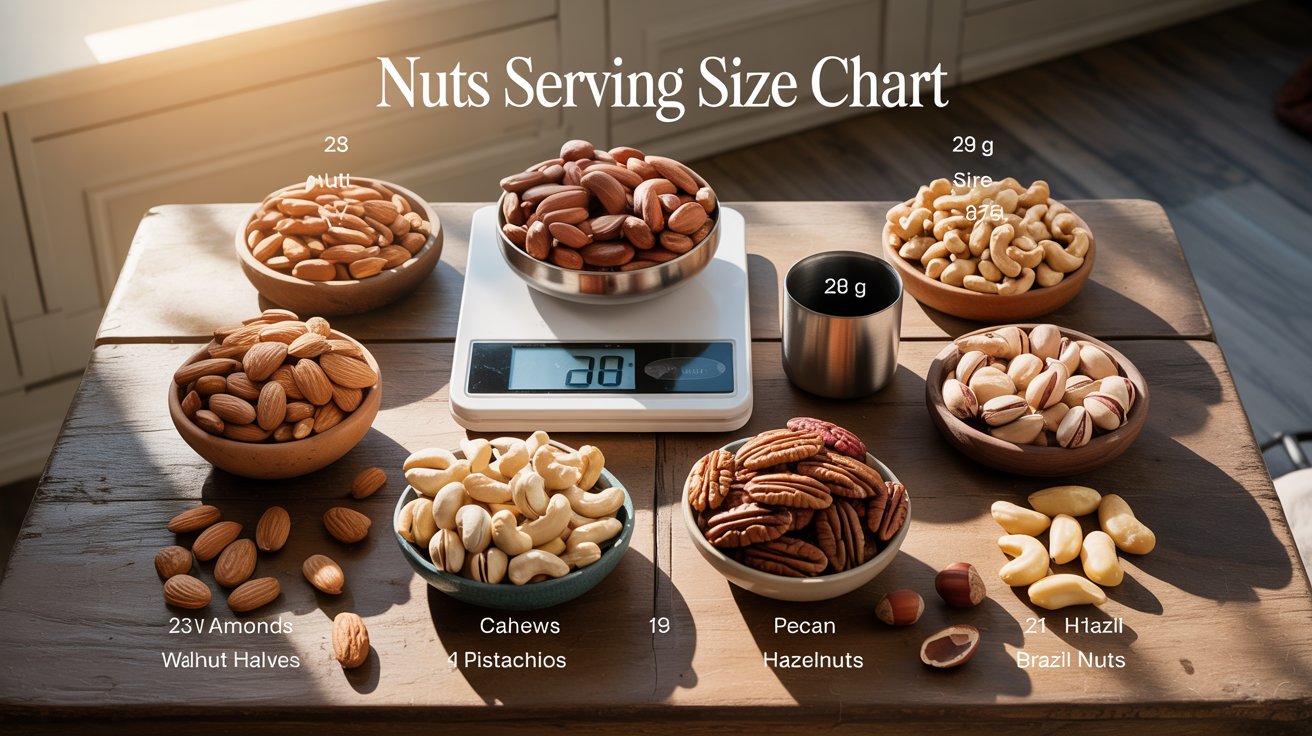
Nuts are a favorite snack for many people around the world. They are packed with healthy fats, protein, vitamins, and minerals. But nuts are also high in calories, so eating the right amount is important. Understanding the serving size for different nuts can help you get the benefits without eating too much. This article will guide you through the typical serving sizes for popular nuts, show you how to measure them, and explain why portion control matters.
Why Serving Size Matters With Nuts
Nuts are nutrient-dense foods. This means they provide a lot of nutrients in a small amount. However, because of their high fat content, even small servings have a lot of calories. For example, a handful of almonds (about 28 grams) has nearly 160 calories.
Eating more than the recommended serving size can quickly add extra calories to your diet. This can lead to weight gain over time, even though the nuts themselves are healthy. Portion control allows you to enjoy the flavor and nutrition without overdoing it.
Standard Serving Sizes For Common Nuts
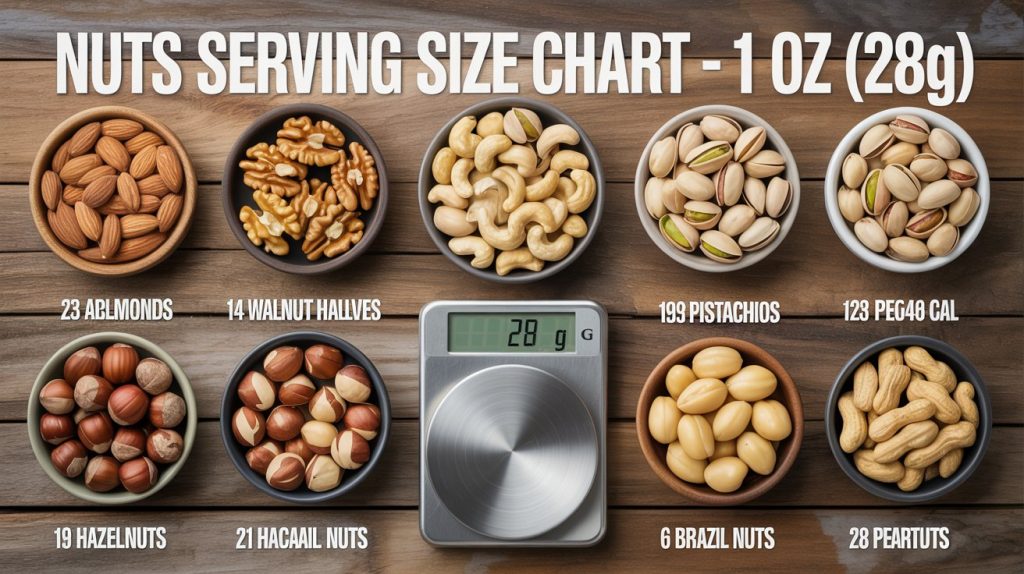
Nutrition experts often use 1 ounce (28 grams) as the standard serving size for nuts. But not all nuts are the same size or shape. Some are heavy and dense, while others are lighter and airy. This can make it tricky to know how many pieces are in one serving.
Below is a comparison of typical serving sizes for popular nuts:
Nuts Serving Size Chart
| Nut Type | Serving Size | Pieces | Calories |
|---|---|---|---|
| Almonds | 28 g (1 oz) | 23 | 160 kcal |
| Walnuts (halves) | 28 g | 14 | 185 kcal |
| Cashews | 28 g | 18 | 155 kcal |
| Pistachios | 28 g | 49 | 160 kcal |
| Pecans (halves) | 28 g | 19 | 200 kcal |
| Hazelnuts | 28 g | 21 | 180 kcal |
| Macadamia | 28 g | 10–12 | 200 kcal |
| Brazil nuts | 28 g | 6–8 | 190 kcal |
| Peanuts | 28 g | 28 | 160 kcal |
✔ Standard serving: 1 ounce (28 g)
You can see that the number of pieces per serving can be very different. For example, you get almost 50 pistachios in one serving, but only 6–8 Brazil nuts.
How To Measure Nut Serving Sizes At Home
Most people do not use a scale every time they snack on nuts. Here are some simple ways to measure a serving:
- Handful Method: For most nuts, a small handful (not overflowing) is close to 1 ounce.
- Counting Pieces: Use the counts from the table above. For example, 23 almonds or 14 walnut halves is a serving.
- Measuring Cups: For chopped or slivered nuts, 1/4 cup is usually about 1 ounce.
For accuracy, compare your handful to a kitchen scale at least once. This helps you get a feel for the right portion.
Quick Reference: Serving Size By Nut Type
Here is a handy overview for quick reference:
| Nut Type | Serving Size (cups) | Pieces per Serving |
|---|---|---|
| Almonds (whole) | 1/4 cup | 23 |
| Walnuts (halves) | 1/4 cup | 14 |
| Cashews (whole) | 1/4 cup | 18 |
| Pistachios (shelled) | 1/4 cup | 49 |
| Pecans (halves) | 1/4 cup | 19 |
| Hazelnuts (whole) | 1/4 cup | 21 |
| Macadamia (whole) | 1/4 cup | 10-12 |
| Brazil Nuts (whole) | 1/4 cup | 6-8 |
| Pine Nuts | 2 Tbsp | 167 |
| Peanuts (whole) | 1/4 cup | 28 |
Non-obvious Insights About Nut Serving Sizes
Many people assume all nuts are equal when it comes to serving size and nutrition, but there are important differences.
First, Brazil nuts are very high in selenium, a mineral your body needs in small amounts. Just 2–3 Brazil nuts can give you all the selenium you need for a day. Eating too many regularly may cause selenium overload, which can be harmful.
Second, with pistachios, you get almost double the number of nuts in a serving compared to other nuts. Shelled pistachios take longer to eat, so they can help with mindful eating and portion control.
Common Mistakes With Nut Portions
Even people who eat healthy often make mistakes when measuring nuts:
- Guesstimating portions: Grabbing a large handful or eating straight from the bag leads to eating more than a serving.
- Mixing nuts: When eating mixed nuts, it’s easy to lose track of how many of each type you’ve eaten.
- Ignoring added ingredients: Flavored or salted nuts often have added sugar or sodium, which can change the nutrition.
A practical tip: Pre-portion your nuts into small containers or bags. This makes it easier to control how much you eat.
Best Ways To Add Nuts To Your Diet
Nuts are versatile. Here are some healthy ways to enjoy them:
- Sprinkle sliced almonds on oatmeal or yogurt
- Add walnuts to salads for a crunchy texture
- Mix cashews into stir-fries
- Use pecans or hazelnuts in baking
- Snack on pistachios or peanuts between meals
Try not to rely on nuts as your only snack, since they are calorie-dense. Mix them with fruits or seeds for balance.
Calorie Comparison: Nuts Vs. Other Snacks
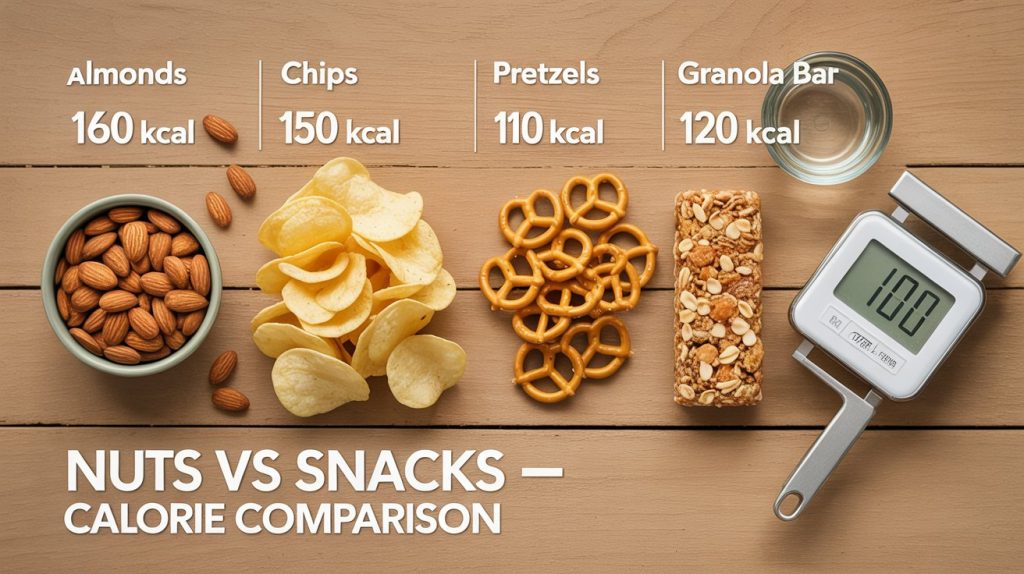
How do nuts compare to other snacks? Here’s a quick look:
| Snack | Serving Size | Calories |
|---|---|---|
| Almonds | 28g (1 oz) | 160 |
| Potato Chips | 28g (1 oz) | 150 |
| Pretzels | 28g (1 oz) | 110 |
| Granola Bar | 28g (1 bar) | 120 |
Nuts have similar or slightly higher calories than chips or granola bars, but they offer more healthy fats, protein, and nutrients.
Nutrition Per 1 Serving of Nuts
| Nutrient | Amount |
|---|---|
| Calories | 150–200 kcal |
| Protein | 4–6 g |
| Fat | 13–20 g |
| Fiber | 2–4 g |
| Magnesium | 10–20% DV |
Frequently Asked Questions
How Many Nuts Should I Eat Per Day?
A typical serving is 1 ounce (28 grams), which is about a small handful. Most health experts suggest eating one serving per day to get the benefits without too many calories.
Are Roasted Nuts’ Serving Sizes Different From Raw Nuts?
The serving size is usually the same. However, roasted nuts may have added oil or salt, which changes the nutrition slightly.
Can I Eat Mixed Nuts And Still Follow The Serving Sizes?
Yes, just make sure the total weight is about 28 grams (1 ounce). The number of pieces of each nut may vary.
Are Nut Butters’ Serving Sizes The Same As Whole Nuts?
Nut butters are more concentrated. One serving is about 2 tablespoons (32 grams), which is similar in calories to 1 ounce of whole nuts.
Where Can I Find More Information About Nut Nutrition?
You can learn more from the Wikipedia article on nuts for detailed information on types, nutrition, and health effects.
Nuts are a powerful addition to a healthy diet, but the right serving size is key. By measuring carefully and eating mindfully, you can enjoy their flavor and nutrition without the extra calories.
