
If you love bright, tropical flavors, mango is your best friend! This juicy fruit brings a burst of sweetness to any dish, making it perfect for salsas, smoothies, or simply as a refreshing snack. Picture a vibrant mango salad that dances on your taste buds — you’ll be coming back for seconds!
We’ll cover the recommended serving size of mango (1 cup diced), along with nutritional details like calories and vitamins. Expect 3-5 delicious recipes with precise measurements and simple steps to follow.
Mango Serving Sizes
Understanding the recommended serving sizes of mango is essential for incorporating this delicious fruit into a balanced diet. The right serving size can enhance your meals while ensuring you reap the health benefits without overindulging.
| Serving Type | Measurement | Weight |
|---|---|---|
| Diced mango | 1 cup | ~165 g |
| Mango slices | ½ cup | ~80 g |
| Medium mango | 1 fruit | ~200–300 g |
| Mango halves | ½ mango | ~100–150 g |
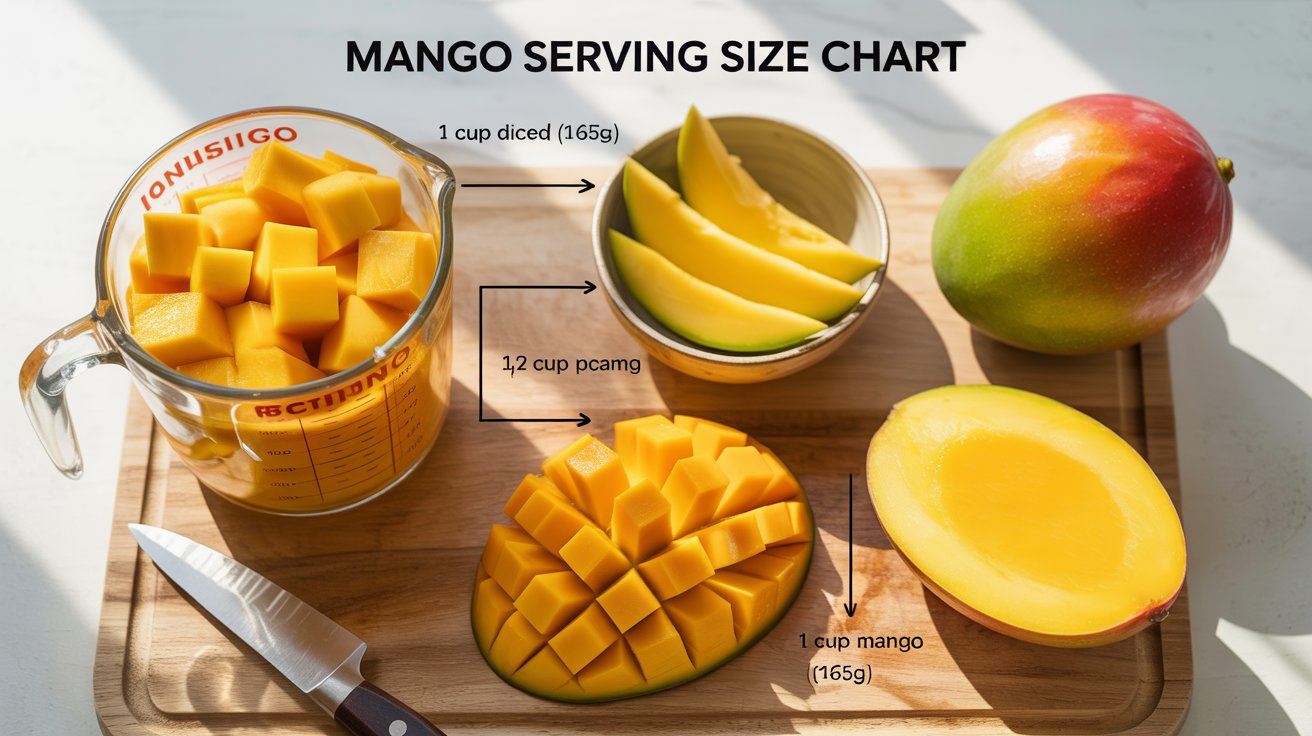
✔ The recommended serving size is 1 cup (165 g) of diced mango.
Standard Serving Size
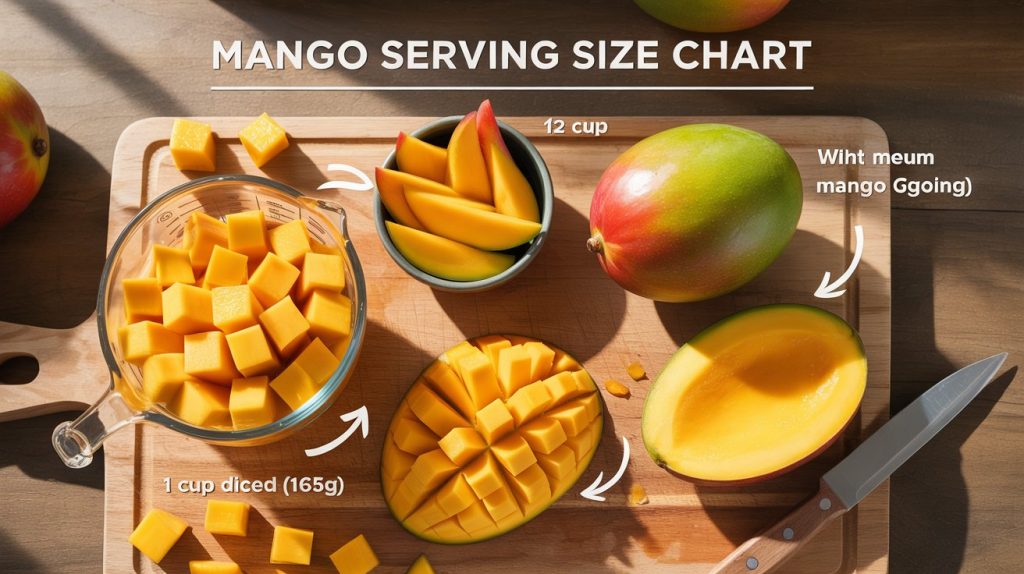
The standard serving size for fresh mango is about 1 cup of diced mango, which is approximately 165 grams. This serving size provides a perfect balance of sweetness and nutrition, making it an excellent addition to various dishes. Here’s a quick breakdown:
- 1 medium mango: roughly 1 cup diced (165g)
- 1 whole mango: typically around 200-300 grams
- Fresh mango slices: ½ cup (75g)
Adjusting for Recipes
When using mango in recipes, it’s important to adjust the serving size based on the dish’s needs. For instance, salads or smoothies may require different quantities to achieve the desired flavor and texture. Here’s a quick reference for common recipes:
Chef’s tip: For a refreshing mango salsa, use 1 cup diced mango combined with ½ cup diced red onion and 1 chopped jalapeño.
| Mango Smoothie | 1 cup diced mango |
| Mango Salad | 1 cup diced mango |
| Mango Chutney | ½ cup diced mango |
Remember, adjusting the serving size to fit your recipe ensures that the flavors meld well and the dish remains balanced. Enjoy experimenting with mango in various culinary creations!
Nutritional Value of Mango
Understanding the nutritional value of mango is essential for incorporating this delicious fruit into your diet effectively. A typical serving size of mango provides a wealth of vitamins and minerals, making it a healthy addition to various meals and snacks.
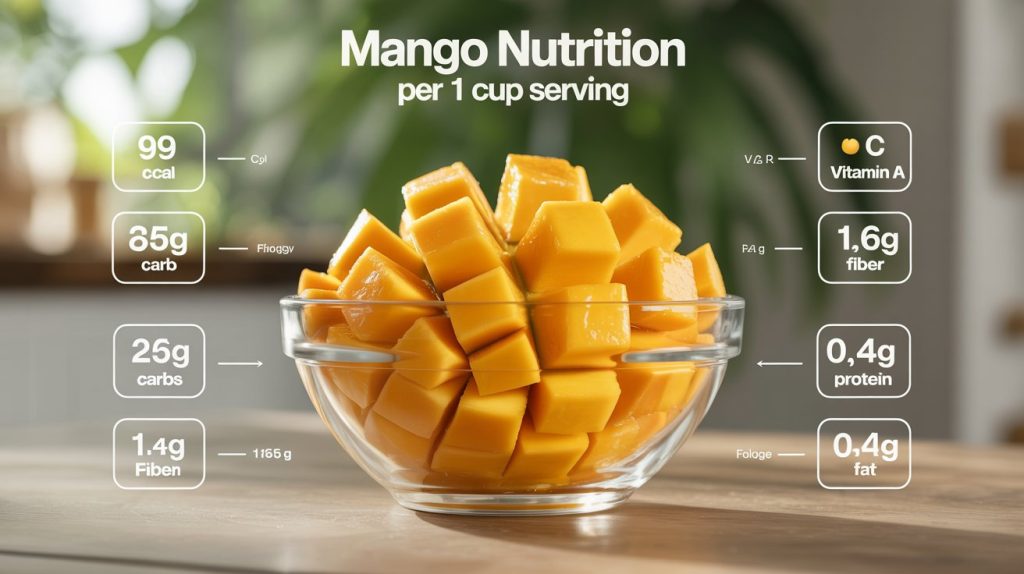
A 1-cup serving (165 g) provides approximately:
| Nutrient | Amount |
|---|---|
| Calories | 99 kcal |
| Carbohydrates | 25 g |
| Fiber | 2.6 g |
| Protein | 1.4 g |
| Fat | 0.4 g |
Calories and Macronutrients
- Calories: One cup of sliced mango (about 165g) contains approximately 99 calories. This makes it a low-calorie fruit option that can satisfy sweet cravings without excessive caloric intake.
- Carbohydrates: A serving offers around 25g of carbohydrates, primarily from natural sugars, providing a quick energy boost. This is ideal for a post-workout snack.
- Protein: Mango contains about 1.4g of protein per serving, which contributes to muscle repair and growth, though it shouldn’t be relied on as a primary protein source.
- Fat: This fruit is virtually fat-free, with less than 0.5g of fat per serving, making it a heart-healthy choice.
Vitamins and Minerals
- Vitamin C: A single serving provides approximately 60mg of Vitamin C, which supports the immune system and promotes healthy skin.
- Vitamin A: Mango is a great source of Vitamin A, offering around 1120 IU per serving, essential for vision and skin health.
- Folate: With about 71mcg of folate per cup, mango aids in cell division and is particularly important for pregnant women.
- Potassium: Each serving contains about 277mg of potassium, vital for heart health and maintaining fluid balance in the body.
Essential Kitchen Tools
To prepare and serve mango effectively, having the right kitchen tools is essential. This section highlights the cutting tools and measuring equipment you’ll need to ensure precise servings and delightful presentations of mango in your dishes.
| Chef’s Knife | 8-10 inches | For peeling and cutting mango into desired sizes. |
| Cutting Board | 1 | A sturdy surface for cutting fruits without slipping. |
| Measuring Cups | 1 set | For measuring out serving sizes accurately. |
| Measuring Spoons | 1 set | Useful for measuring smaller quantities when mixing with other ingredients. |
| Peeler | 1 | A simple vegetable peeler for easy skin removal. |
| Corer | 1 | Optional, helps remove the pit quickly and cleanly. |
- Tip: Ensure your knife is sharp for clean cuts; a dull knife can slip and cause accidents.
- When measuring mango, aim for about 1 cup (150g) per serving, which fits well into a balanced diet.
- For uniform pieces, cut mango into cubes or slices—this makes it easier to serve and enjoy.
Preparing Mango for Serving
Preparing mango properly not only enhances its flavor but also ensures you get the most out of this delicious fruit. Understanding how to peel and dice mango will help you serve the perfect portion size, making it easier to incorporate into your meals or snacks.
- Choose a ripe mango: Look for mangoes that yield slightly to pressure and have a fruity aroma near the stem. A ripe mango will have vibrant skin, though color may vary by variety.
- Peeling the mango: Start by washing the mango under cool water. Use a vegetable peeler to remove the skin, starting from the top and moving downward in a circular motion. Be careful not to remove too much flesh; a ripe mango’s skin should come off easily.
- Cutting the mango: Place the mango upright on a cutting board. With a sharp knife, slice down alongside the pit on both sides to create two “cheeks.” The pit runs vertically, so angle your knife accordingly to maximize fruit yield.
- Dicing the mango: Take each mango cheek and score the flesh in a grid pattern without cutting through the skin. Then, using a spoon, scoop out the diced mango into a bowl. This technique helps achieve perfectly uniform pieces for serving.
- Measuring your serving size: A standard serving size of mango is about 1 cup (approximately 165 grams). This amount provides a delightful burst of sweetness and fits well within a balanced diet.
Chef’s tip: If your mango isn’t quite ripe, leave it at room temperature until it softens, then refrigerate to prolong freshness. Ripe mango can also be frozen for later use in smoothies or desserts.
Common Mistakes with Mango
Understanding common mistakes when it comes to serving mango can enhance your overall experience and ensure you enjoy the fruit at its best. Key pitfalls include using mangoes that are either overripe or underripe, as well as errors in cutting that can affect both presentation and taste.
Overripe vs. Underripe
Choosing the right ripeness level for mango is crucial. Here’s what to look for:
- Overripe Mango: The skin may be very wrinkled, and the flesh feels mushy when gently squeezed. The flavor can be overly sweet and cloying.
- Underripe Mango: The skin is still firm, and the fruit lacks the characteristic sweet aroma. The flesh will be hard with a tart taste.
For a perfect serving size, aim for about ½ a medium mango (approximately 100g) per person as part of a balanced meal.
Cutting Errors
Improper cutting can lead to wasted fruit and unappealing presentations. Here are some common mistakes:
- Not cutting around the pit: Mango pits are large and flat. Always slice the mango along the sides of the pit to maximize the edible fruit.
- Uniformity: When dicing or slicing, aim for consistent sizes. This ensures even ripening and a more appealing presentation.
Chef’s tip: After cutting, sprinkle the mango with a little lime juice to enhance flavor and prevent browning.
Mango Recipe Variations
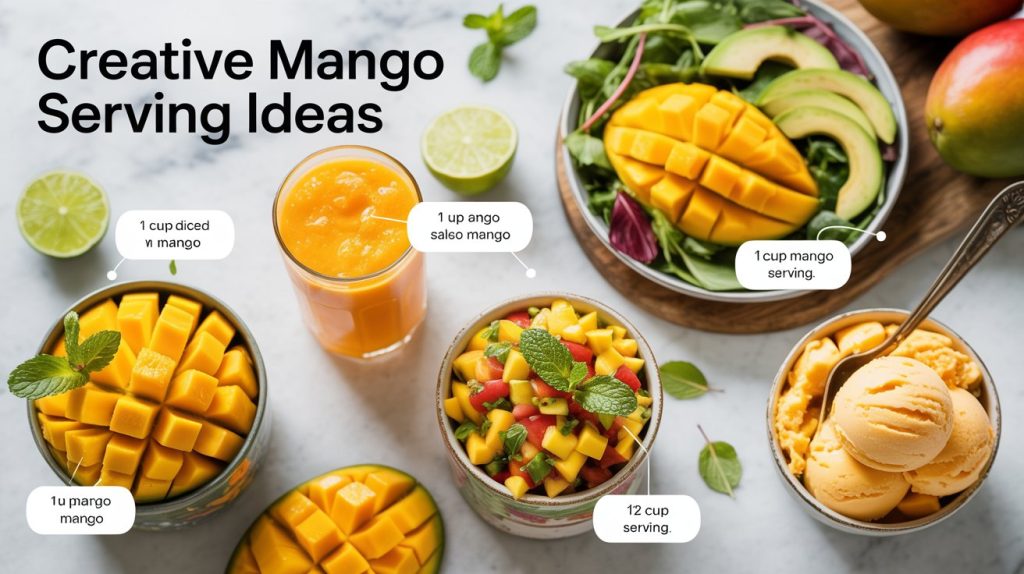
Incorporating mango into your meals not only adds vibrant flavor but also helps you understand ideal serving sizes for a balanced diet. Here are some delicious ways to enjoy mango while keeping serving sizes in mind.
Smoothies and Salads
- Mango Smoothie: Blend 1 cup of diced mango (about 1 medium mango), 1 banana, ½ cup Greek yogurt, and 1 cup of almond milk. Blend until smooth; it should feel creamy and thick. This recipe provides a refreshing drink serving about 2 cups, suitable for breakfast or a snack.
- Mango Salad: Combine 1 cup of diced mango with 2 cups mixed greens, ¼ cup red onion, and ½ avocado. Drizzle with 2 tablespoons lime juice and 1 tablespoon olive oil. Toss gently; the salad should look colorful and fresh, perfect as a side dish.
Salsas and Desserts
- Mango Salsa: Mix 1 cup diced mango, ½ cup diced red bell pepper, ¼ cup chopped cilantro, and the juice of 1 lime. Serve chilled. This salsa makes about 2 cups, ideal for topping grilled chicken or fish.
- Mango Sorbet: Blend 2 cups diced frozen mango with 2 tablespoons honey and 1 tablespoon lime juice until smooth. Freeze for 1-2 hours; it should be scoopable and creamy. This dessert serves about 4, making it a sweet ending to your meal.
Chef’s tip: Use ripe, but not overripe, mangoes for the best flavor and texture in your recipes.
| Recipe | Serving Size | Calories |
|---|---|---|
| Mango Smoothie | 2 cups | 250 |
| Mango Salad | 1 serving | 150 |
| Mango Salsa | ½ cup | 50 |
| Mango Sorbet | ½ cup | 120 |
Serving Ideas for Mango
Mango is a versatile fruit that can elevate many dishes with its sweet and juicy flavor. Understanding how to serve mango, including portion sizes and complementary flavors, can enhance your meal experience and contribute to a balanced diet. Here are some delicious ways to enjoy mango in your meals.
Plating Techniques
- Fresh Fruit Salad: Dice 1 medium mango (about 200g) and combine it with other fruits like pineapple, kiwi, and berries for a refreshing salad. Use a melon baller for a fun presentation.
- Mango Salsa: Combine 1 diced mango, ¼ cup finely chopped red onion, 1 diced jalapeño, 2 tablespoons cilantro, and the juice of 1 lime. Serve as a topping for grilled fish or chicken.
- Garnish: Thinly slice mango and arrange it on top of desserts like panna cotta or cheesecake for an elegant touch.
Complementary Flavors
| Sweet & Tangy | Chili powder, lime juice, coconut milk |
| Creamy | Greek yogurt, mascarpone cheese |
| Spicy | Ginger, cilantro, jalapeño |
Chef’s tip: If your mango is slightly underripe, slice it and marinate in lime juice for 15 minutes. This enhances the sweetness and softens the texture!
For a balanced serving, aim for about ½ cup (75g) of diced mango, which contributes vitamins A and C to your diet. Enjoy experimenting with these serving ideas to find what pairs best with your favorite dishes!
Quick Summary
| Prep Time | Cook Time | Total Time | Servings |
|---|---|---|---|
| 5 mins | N/A | 5 mins | 1-2 |
- Standard serving size: 1 medium mango (200g).
- Nutrition boost: Provides 60 calories and high vitamin C.
- Cutting technique: Slice around the pit to maximize fruit yield.
- Ripeness check: Gently squeeze; it should yield slightly when ripe.
- Storage tip: Refrigerate cut mango to maintain freshness for up to 2 days.
Frequently Asked Questions
Can I make mango servings ahead of time? How to store and reheat?
You can prepare mango slices ahead of time; just store them in an airtight container in the refrigerator. For best texture, consume within 1-2 days and avoid reheating as it can make them mushy.
What can I substitute for mango in a recipe?
If you’re out of mango, you can substitute with peaches or nectarines for a similar sweetness and texture. Just keep in mind that the flavor will differ slightly.
How do I know when my mango is ripe for serving?
A ripe mango will yield slightly to gentle pressure and have a fruity aroma near the stem. The skin may also develop yellow or red hues, indicating it’s ready to eat.
Can I freeze mango? How long does it last?
Yes, you can freeze mango slices, and they will last for about 6-12 months in the freezer. Make sure to store them in a freezer-safe bag, removing as much air as possible to prevent freezer burn.
What if I don’t have a mango peeler?
If you don’t have a mango peeler, you can easily use a sharp knife to slice the mango in half, then score the flesh in a grid pattern before scooping it out with a spoon. Just be careful to avoid cutting through the skin.
