
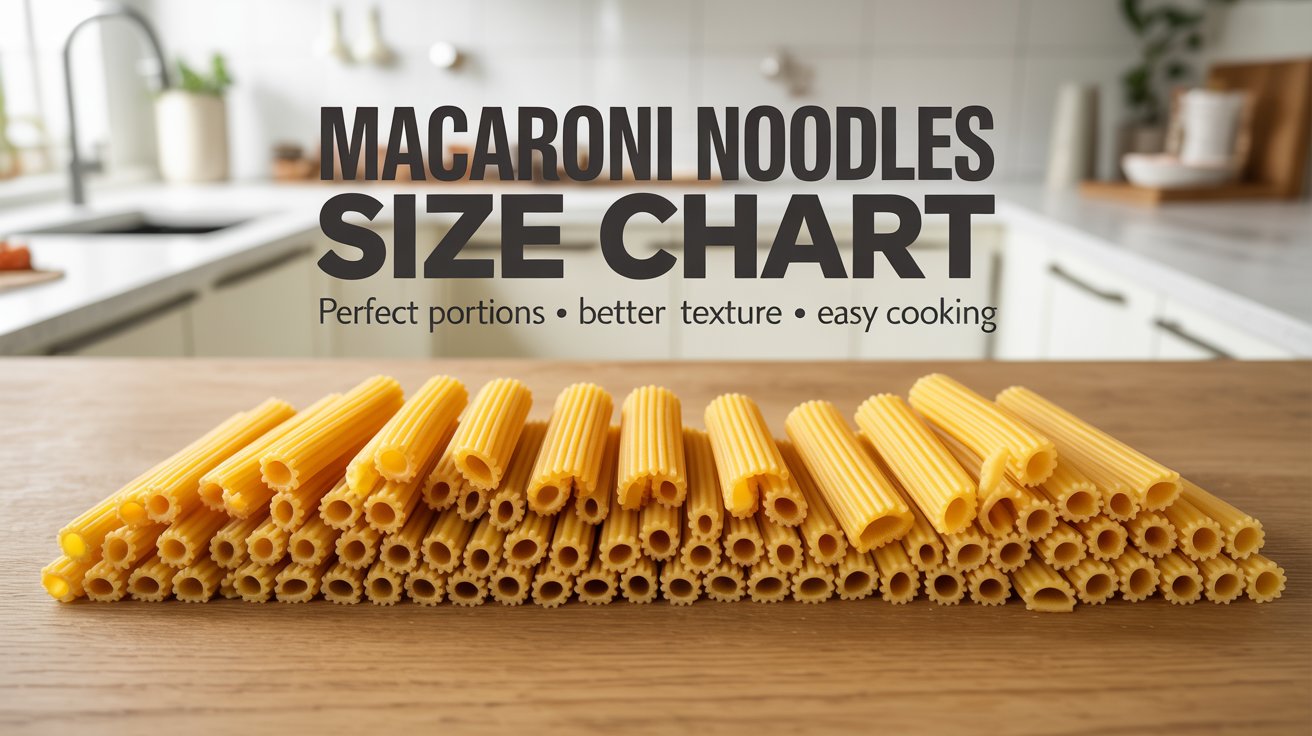
Are you puzzled about which macaroni noodle size to choose for your recipe? Whether you’re cooking a creamy macaroni and cheese or a hearty pasta salad, the right noodle size can make all the difference.
Understanding the macaroni noodles size chart will help you get the perfect texture and taste every time. Keep reading, and you’ll discover how to pick the best size for your dish, making your meals more enjoyable and your cooking easier than ever.
Macaroni Noodles Varieties
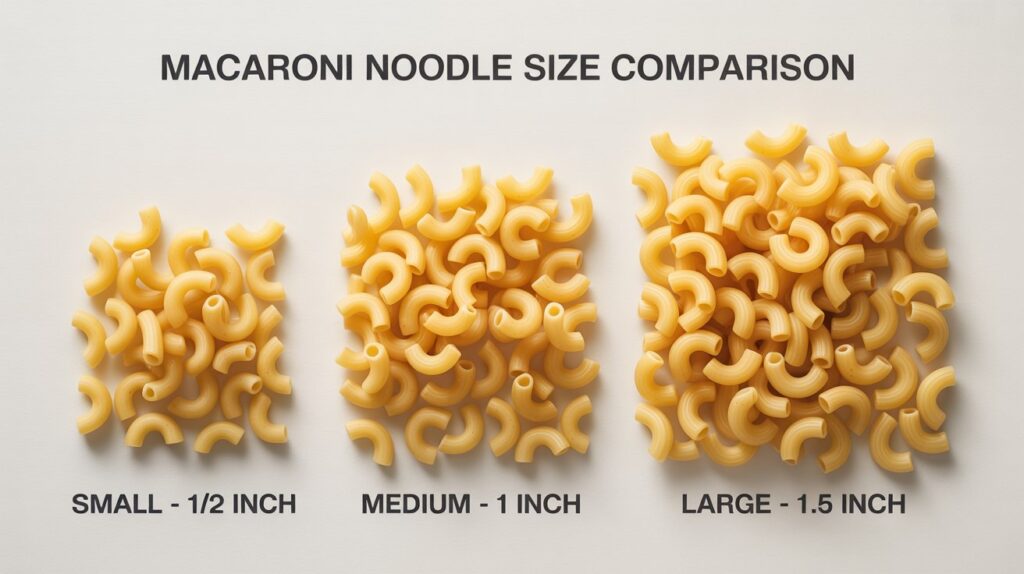
Macaroni noodles come in many shapes and sizes. Each type fits different recipes and cooking styles. Knowing these varieties helps you pick the right noodle. This guide explains common shapes and specialty types.
? Macaroni Noodles Size Chart
| Macaroni Size | Length (Approx.) | Diameter (Approx.) | Cooking Time | Best Uses |
|---|---|---|---|---|
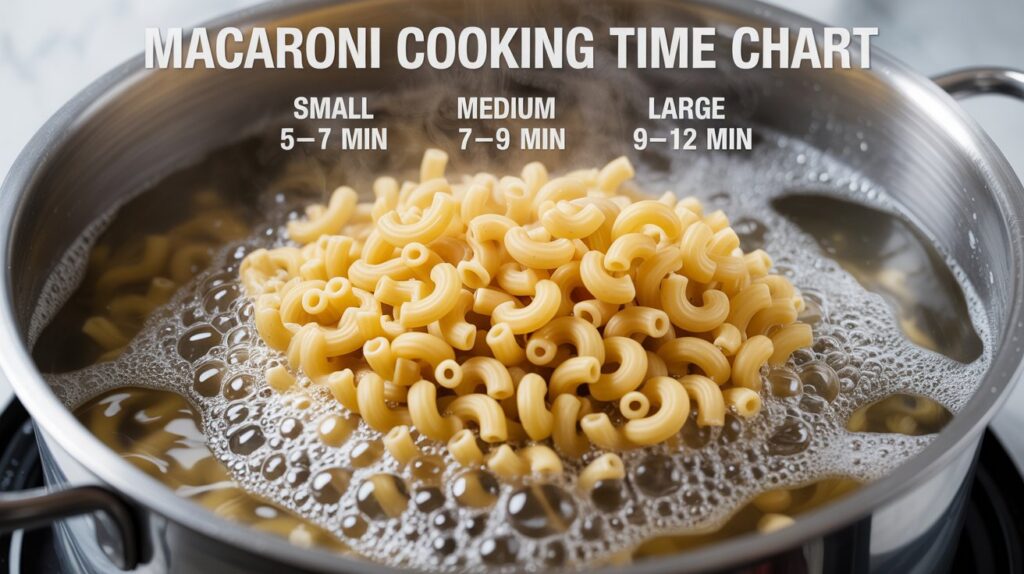
| Small Macaroni | 0.5–0.75 in (1.2–1.9 cm) | 0.25 cm | 5–7 min | Soups, light salads |
| Standard Elbow Macaroni | 1 in (2.5 cm) | 0.4–0.5 cm | 7–9 min | Mac & cheese, casseroles |
| Large Macaroni | 1.25–1.5 in (3–3.8 cm) | 0.6 cm | 9–12 min | Baked pasta, hearty dishes |
Common Shapes And Sizes
Classic macaroni is small and curved. It often measures about 1 inch long. This shape holds sauces well. Elbow macaroni is the most popular type. It fits soups, salads, and casseroles.
Other common shapes include straight tubes and small shells. Sizes range from tiny pieces to larger pasta. Size affects cooking time and texture. Smaller noodles cook faster and feel softer.
Specialty Macaroni Types
Specialty macaroni includes unique shapes and textures. Examples are ridged tubes and hollow spirals. These shapes trap sauce better than smooth noodles. Some types have thicker walls for a chewy bite.
Gluten-free and whole wheat macaroni are also popular. They suit different diets and tastes. Specialty noodles add variety to meals. They bring new flavors and fun to the table.
Measuring Macaroni Portions
Measuring macaroni portions helps in cooking the right amount. It avoids waste and ensures proper nutrition. Knowing how to measure macaroni can save time and effort in the kitchen.
Portion sizes can vary depending on the recipe and number of people. Using a size chart or scale makes measuring easy and accurate.
Dry Vs Cooked Weight
Dry macaroni weighs less than cooked macaroni. It absorbs water and expands during cooking. Typically, dry pasta doubles or triples in weight after cooking.
For example, 100 grams of dry macaroni may become 200 to 300 grams when cooked. This difference is important for portion control and calorie counting.
Standard Serving Sizes
A standard serving size of dry macaroni is about 56 to 85 grams. This amount usually serves one person. Cooked, this equals roughly 1 to 1.5 cups of macaroni.
Adjust portions based on appetite and dish type. Using a measuring cup or kitchen scale ensures consistent servings each time.
Portion Sizes For Different Meals
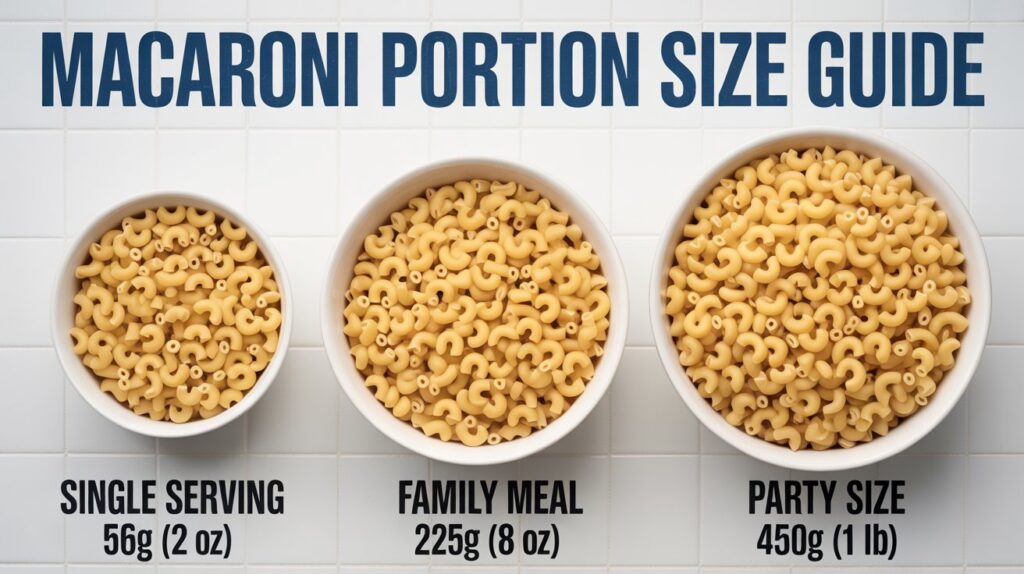
Understanding portion sizes of macaroni noodles helps prepare meals with the right amount. Different meals need different noodle quantities. Serving size depends on the number of people and the type of meal.
Portion control avoids waste and ensures everyone gets enough food. It also helps with meal planning and budgeting. Below, find portion sizes for various meal needs.
Single Servings
For one person, 2 ounces (about 56 grams) of dry macaroni is enough. This amount cooks up to about 1 cup of noodles. It suits a simple lunch or dinner plate. Add sauce and toppings to complete the meal.
Family Portions
For families of four, use 8 ounces (about 225 grams) of dry macaroni. This quantity makes about 4 cups of cooked noodles. It fits well for a family dinner with sides. Adjust slightly for bigger or smaller appetites.
Party And Bulk Cooking
For parties or large groups, use 1 pound (16 ounces or 450 grams) or more. This amount serves about 6 to 8 people. It works well for pasta salads or baked dishes. Prepare extra sauce to mix with the noodles for flavor.
Tools For Accurate Measurement
Measuring macaroni noodles accurately helps cook perfect meals. Using the right tools makes portion control easier. It avoids waste and ensures consistent cooking results.
Measuring Cups And Scales
Measuring cups show the volume of macaroni noodles. They come in different sizes for dry and cooked pasta. Use a dry measuring cup for uncooked noodles. A kitchen scale measures noodles by weight. It gives precise amounts for any recipe. Scales work well for large or small portions. Both tools help avoid guessing and save time.
Visual Portion Guides
Visual guides help estimate noodle sizes without tools. They use common objects to compare portions. For example, a fist or a golf ball size. These guides assist when tools are not nearby. They work well for quick meal prep. Visual guides reduce stress and improve cooking confidence.
Adjusting Portions By Dish Type
Adjusting macaroni noodle portions depends on the dish type. Different recipes need different amounts. This helps keep the balance of flavors and textures. Serving sizes vary for soups, baked dishes, and pasta salads. Knowing the right portion keeps the dish perfect and satisfying.
Soups And Salads
Soups and salads use smaller noodle portions. Macaroni adds texture without overpowering other ingredients. Use about 1/4 to 1/3 cup of dry noodles per serving. This prevents the soup from becoming too thick or heavy. In salads, noodles mix well with vegetables and dressing.
Baked Dishes
Baked dishes need larger noodle portions. Macaroni holds sauce and cheese better in casseroles. Plan for 1/2 to 3/4 cup of dry noodles per serving. This creates a hearty, filling meal. The noodles absorb flavors and stay tender after baking.
Pasta Salads
Pasta salads require moderate noodle amounts. Macaroni should blend with other salad elements. Use about 1/3 to 1/2 cup of dry noodles per serving. This keeps the salad light and easy to eat. The noodles add body without too much bulk.
Tips To Avoid Over Or Under Cooking
Cooking macaroni noodles just right can be tricky. Overcooking makes them mushy. Undercooking leaves them hard. Both affect taste and texture. Following some simple tips helps achieve perfect noodles every time. Pay attention to timing and water amounts. These factors matter most for great macaroni.
Timing And Texture
Start by checking the package for cooking times. These times suit most sizes of macaroni noodles. Smaller noodles cook faster. Larger ones take longer. Taste test the noodles a minute before the timer ends. They should be soft but firm to bite. This is called “al dente.” Avoid cooking too long. Noodles keep cooking slightly after draining.
Water Ratios
Use plenty of water to cook macaroni. About 4 to 6 quarts per pound works well. This stops noodles from sticking together. Salt the water for better flavor. Stir the noodles during the first two minutes. This prevents clumping. Using too little water causes uneven cooking. Noodles may stick and become gummy. Proper water amounts help noodles cook evenly and stay separate.
Storing And Reheating Leftovers
Storing and reheating macaroni noodles properly keeps them fresh and tasty. Leftovers can lose texture and flavor if not handled well. Follow simple steps to save your pasta for later meals. This helps reduce food waste and saves time in the kitchen.
Proper Storage Methods
Cool the macaroni noodles before storing. Hot food causes moisture and spoils faster. Use airtight containers to keep noodles fresh longer. Store in the refrigerator for up to 3-5 days. For longer storage, freeze the noodles in freezer-safe bags or containers. Label with the date to track freshness. Avoid storing noodles with heavy sauces separately to prevent sogginess.
Reheating Tips
Reheat noodles gently to keep texture soft. Use a microwave or stovetop for best results. Add a splash of water or sauce to prevent drying out. Stir noodles occasionally while reheating. Heat until noodles are warm throughout, about 1-2 minutes in microwave. Avoid overheating to stop noodles from becoming mushy. For stovetop, warm on low heat with a lid to keep moisture.
Frequently Asked Questions
What Are The Common Sizes Of Macaroni Noodles?
Macaroni noodles typically come in small, medium, and large sizes. Small ones are about 1/2 inch long, medium around 1 inch, and large can be 1. 5 inches or more. Size affects cooking time and dish texture.
How Does Macaroni Size Affect Cooking Time?
Smaller macaroni noodles cook faster, usually within 5-7 minutes. Larger sizes need 8-12 minutes to become tender. Adjust cooking times to avoid mushy or undercooked pasta.
Can Macaroni Size Change Recipe Outcomes?
Yes, macaroni size impacts sauce absorption and dish texture. Smaller noodles suit creamy sauces, while larger ones hold chunkier sauces better. Choose size based on your recipe for best results.
Where Can I Find A Macaroni Noodle Size Chart?
Macaroni size charts are available on pasta brands’ websites and cooking blogs. They help compare sizes, cooking times, and recipe uses. A size chart ensures you pick the right macaroni for your dish.
Conclusion
Macaroni noodles come in many sizes for different dishes. Knowing their size helps you cook better meals. Use the chart to choose the right noodle size. It makes your recipes taste just right. Cooking becomes easier when you understand these details.
Enjoy making pasta with confidence and ease. Keep experimenting with macaroni to find your favorite. Simple steps lead to great food every time.
