

Are you ever puzzled by the different sizes of linguine noodles when cooking or shopping? Knowing the right size can make a big difference in your dish’s texture and taste.
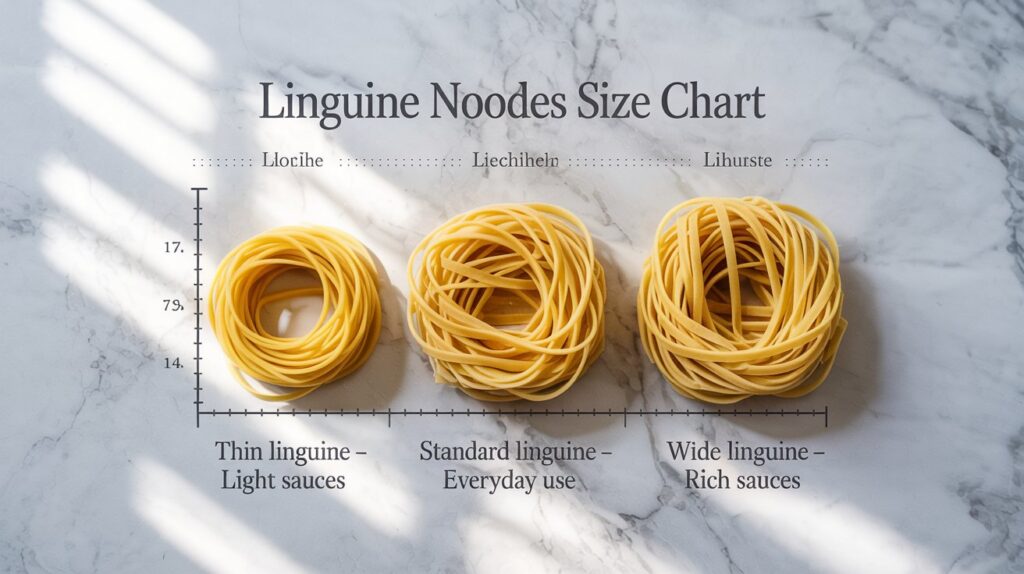
This Linguine Noodles Size Chart will help you quickly understand the varieties and choose the perfect noodles for your recipe. Keep reading, and you’ll never have to guess which linguine to use again!
Linguine Noodles Basics
Linguine noodles are a popular type of pasta that many people enjoy. They have a unique shape and texture that makes them stand out. Understanding the basics of linguine noodles helps in choosing the right size for your recipe. This guide explains what makes linguine special and how it is commonly used in cooking.
Knowing the size and shape of linguine noodles can improve your cooking results. It also helps in pairing the noodles with the right sauces and ingredients. Let’s explore the key features of linguine and its typical uses in meals.
What Sets Linguine Apart
Linguine noodles are flat and narrow. They are wider than spaghetti but thinner than fettuccine. This shape allows them to hold sauces well without being too thick. The name “linguine” means “little tongues” in Italian. This reflects their long, flat shape. Linguine has a firm texture that cooks evenly and remains slightly chewy. It is made from durum wheat, which gives it a firm bite.
Common Uses In Recipes
Linguine is often served with seafood sauces. It pairs well with clams, shrimp, and light tomato sauces. Creamy sauces also cling nicely to linguine’s flat surface. This pasta works well in dishes that need a delicate balance of flavor and texture. It is popular in both simple and more complex recipes. Linguine is easy to cook and fits many meal styles, from casual dinners to special occasions.
Measuring Linguine Portions
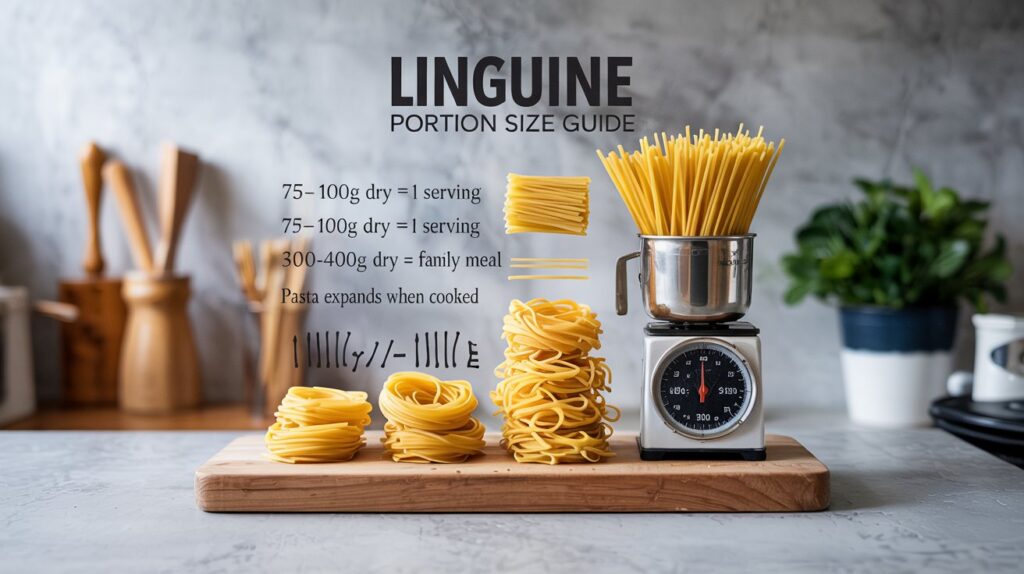
Knowing how to measure linguine portions helps avoid waste and ensures enough food. Different meals need different amounts of pasta. Serving the right size makes your dish perfect.
Portion sizes depend on whether the pasta is dry or cooked. Also, serving for one person or a group changes the amount needed. Use simple tools and tips to measure easily.
Dry Vs Cooked Weight
Dry linguine weighs less than cooked linguine. Pasta doubles or triples in weight after cooking. Measure dry pasta for better portion control. For example, 100 grams dry can become 200-300 grams cooked.
Use a kitchen scale for dry pasta. Cooked portions can be harder to measure because of water content. Knowing this helps plan servings accurately and avoid too much or too little.
Portion Sizes For Singles
A single serving of dry linguine is about 75-100 grams. This equals roughly one cup of cooked pasta. This amount fills most adult appetites without leftovers. Adjust slightly for bigger or smaller meals.
Use a pasta measuring tool or a kitchen scale. Another trick is to form a circle with dry pasta about 2 inches wide. This fits a single meal well and is easy to measure.
Portion Sizes For Groups
For groups, multiply single servings by the number of people. For example, 4 people need about 300-400 grams dry pasta. This amount makes enough cooked linguine for a meal.
Consider the appetite and side dishes when measuring. More sides mean less pasta needed. Use larger bowls or pots to cook pasta evenly for groups.
Visual Portion Guides
Visual portion guides help you serve the right amount of linguine noodles. They make cooking easier and reduce waste. By using simple methods, you can measure portions without stress. Visual cues work well in busy kitchens or when you lack tools.
Using A Kitchen Scale
A kitchen scale gives the most precise portion size. Place a bowl on the scale and tare it to zero. Add dry linguine noodles until you reach the desired weight. Most servings weigh between 56 to 85 grams per person. Scales help control nutrition and avoid overeating.
Handful Method
The handful method offers a quick portion estimate. Grab a small bunch of linguine noodles with your fingers. One handful usually equals one serving. This method works well when you cook without tools. Practice helps improve accuracy over time.
Measuring Tools For Accuracy
Measuring cups and noodle portion rings assist in portion control. Use a dry measuring cup to scoop noodles for a standard serving. Portion rings help separate servings before cooking. These tools add consistency and save time. Keep them handy in your kitchen for easy use.
Cooking Impact On Size
Cooking changes the size of linguine noodles. The noodles absorb water and swell. This affects both their length and thickness. Understanding these changes helps in cooking perfect pasta every time.
? Linguine Noodles Size Chart
| Linguine Type | Width (mm) | Thickness | Dry Portion (per person) | Cooked Volume | Best Sauce Pairing |
|---|---|---|---|---|---|
| Thin Linguine | 3–3.5 mm | Thin | 70 g | ~1 cup | Olive oil, seafood |
| Standard Linguine | 4 mm | Medium | 85 g | ~1.25 cups | Pesto, clam sauces |
| Wide Linguine | 4.5–5 mm | Thick | 100 g | ~1.5 cups | Creamy or tomato sauces |
| Fresh Linguine | 4–5 mm | Soft | 90 g | ~1.5 cups | Butter, cheese-based |
Tip: Wider linguine holds heavier sauces better, while thinner linguine works best with light, oil-based sauces.
Water Absorption Effects
Linguine noodles soak up water during cooking. This makes them softer and bigger. The noodles can grow to almost twice their dry size. Water absorption varies by noodle type and cooking time. Overcooked noodles absorb more water and become mushy. Proper water absorption keeps noodles firm and tasty.
Cooking Time And Texture
Cooking time directly impacts noodle texture and size. Shorter cooking keeps noodles firmer and smaller. Longer cooking makes them softer and larger. Al dente linguine is cooked just right—soft but still firm. Too much cooking causes noodles to lose shape and size. Watching cooking time ensures noodles have the best texture.
Adjusting Portions For Diet
Adjusting portions of linguine noodles helps manage diet goals effectively. Serving sizes impact calorie intake and nutrition. Knowing the right portion size can prevent overeating and support weight control.
Calorie Considerations
Linguine noodles have about 200 calories per cooked cup. Portion size changes affect total calorie consumption. Smaller servings reduce calorie intake for weight loss. Larger portions add energy for active days. Balancing noodles with vegetables and protein lowers calorie density.
Portion Control Tips
Use a kitchen scale or measuring cup for accuracy. One cup of cooked linguine equals about two ounces dry. Fill half your plate with vegetables to add volume and fiber. Avoid piling noodles high; smaller heaps help control portions. Eating slowly allows the brain to register fullness earlier.
Storing And Reheating Portions
Storing and reheating linguine noodles properly keeps them fresh and tasty. This helps avoid waste and saves cooking time. Knowing the right way to store and heat noodles preserves their texture and flavor.
Best Storage Practices
Cool linguine noodles before storing. Place them in an airtight container. Refrigerate within two hours of cooking. Use the noodles within three to five days. For longer storage, freeze noodles in a sealed bag. Label with the date to track freshness.
Maintaining Texture After Reheating
Reheat noodles gently to keep texture firm. Use a microwave-safe dish with a lid. Add a splash of water to prevent drying. Heat in short bursts, stirring in between. Alternatively, warm noodles in a pan with a little sauce. Avoid overheating to stop noodles from becoming mushy.
Frequently Asked Questions
What Is The Typical Size Of Linguine Noodles?
Linguine noodles are usually about 4 mm wide. They are narrower than fettuccine but wider than spaghetti. This size helps linguine hold light sauces well, making it ideal for seafood and pesto dishes.
How Does Linguine Size Compare To Other Pasta?
Linguine is wider than spaghetti but thinner than fettuccine. Its flat, narrow shape sets it apart from round pastas. This unique size influences how it pairs with different sauces and ingredients.
Why Is Linguine Noodle Size Important In Recipes?
Noodle size affects sauce absorption and cooking time. Linguine’s size allows even cooking and balances lighter sauces. Choosing the right size ensures your dish has the perfect texture and flavor.
Can Linguine Noodles Vary In Size By Brand?
Yes, linguine size can slightly vary by brand or region. Most range from 3. 5 mm to 5 mm in width. Checking the packaging helps ensure you get the size your recipe calls for.
Conclusion
Knowing the sizes of linguine noodles helps you cook better meals. You can choose the right noodle size for each recipe. This chart makes cooking pasta easier and more fun. Enjoy your dishes with the perfect linguine every time. Simple tips like these improve your cooking skills quickly.
Keep this guide handy for your next pasta night. Cooking with the right noodle size tastes much better. Try different sizes and find what you like best.
