
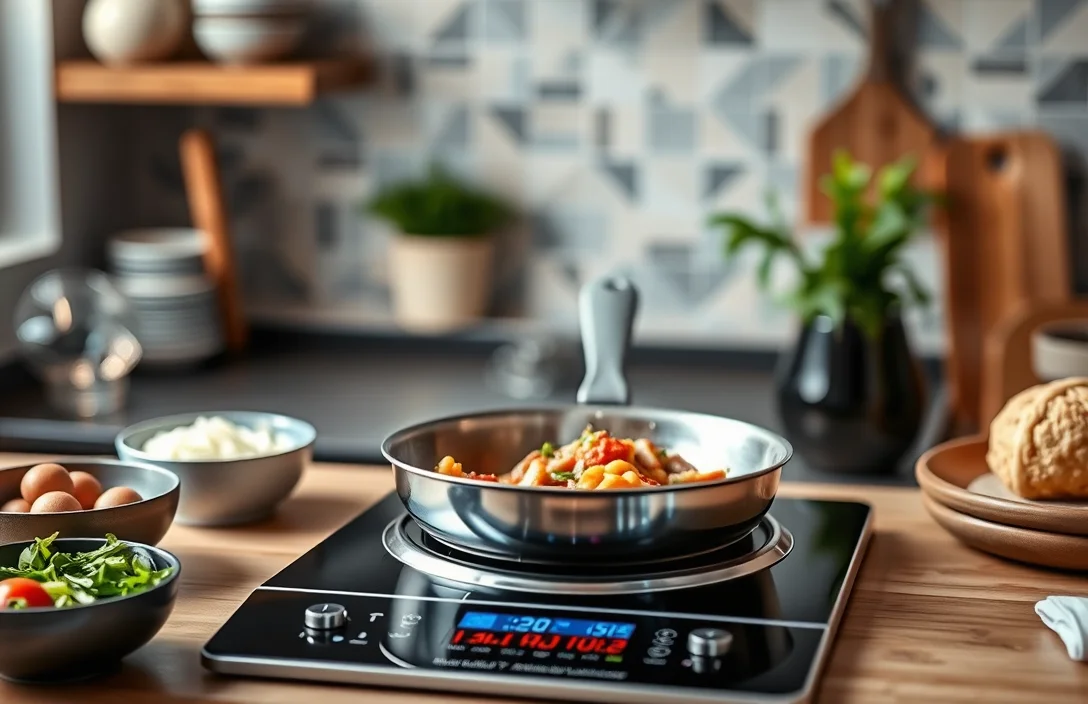
If you’re considering induction cooking, you’re likely seeking a modern, efficient way to prepare meals while saving on energy costs. Induction cooktops can reduce cooking times and energy usage by up to 50% compared to traditional gas or electric stoves, which can translate to significant savings on your utility bills.
Induction cooktops generally range from $1,000 to $3,000, with an average lifespan of about 15 years. Learning to cook on induction can be simple, but some may find it tricky at first.
| Average Cost | Lifespan | Difficulty | When to Call a Pro |
|---|---|---|---|
| $1,000 – $3,000 | 15 years | Moderate | Installation issues |
This guide will cover how induction cooking works, the cookware you need, safety tips, and basic cooking techniques to help you get started confidently.
Induction Cooking Basics
Induction cooking is revolutionizing the way we prepare meals in our kitchens. This modern cooking technique uses electromagnetic energy to heat cookware directly, offering efficiency and precision that traditional methods can’t match. Understanding induction cooking is essential for homeowners looking to upgrade their cooking experience.
Definition of Induction Cooking
Induction cooking works by creating a magnetic field between the cooktop and induction-compatible cookware. This process generates heat directly in the pan, allowing for faster cooking times and better energy efficiency.
Benefits for Homeowners
- Energy Efficiency: Induction cooktops are up to 90% energy efficient, compared to about 70% for gas and electric options.
- Speed: Water boils almost twice as fast on an induction stove compared to traditional methods.
- Temperature Control: Instant adjustments allow for precise cooking, reducing the risk of overcooking.
- Safety: The cooktop remains cool to the touch, minimizing burn hazards. Plus, induction cooktops automatically shut off when cookware is removed.
- Easy Cleaning: Since spills don’t burn onto the cooktop, it requires less effort to maintain.
Pro tip: Induction cooktops can save you up to 30% on energy costs compared to traditional electric models, which translates into significant savings over time.
As you consider transitioning to induction cooking, remember that you’ll need compatible cookware, typically made of magnetic materials such as cast iron or stainless steel. This investment not only enhances your cooking efficiency but can also lead to long-term savings on energy bills.
How Induction Works
Understanding how induction cooking operates is crucial for harnessing its efficiency and speed. This section explains the electromagnetic principles behind induction cooktops and how they generate heat, setting the foundation for your cooking experience.
Electromagnetic Principles
Induction cooking utilizes electromagnetism to heat cookware directly rather than relying on a flame or electric heating element. Here’s how it works:
- An induction cooktop contains copper coils beneath its surface.
- When you turn on the cooktop, an alternating electric current flows through these coils.
- This current creates a magnetic field that induces an electric current in the ferromagnetic cookware placed on top.
How Heat is Generated
The heat in induction cooking is generated within the cookware itself, which leads to several advantages:
- Rapid heating: Cookware heats up almost instantly, reducing cooking time.
- Energy efficiency: Less energy is wasted because only the pan is heated, not the surrounding air.
- Safety: The cooktop remains relatively cool to the touch, minimizing burn risks.
Pro tip: Induction cooktops are typically 70-90% efficient, compared to around 40-60% for traditional gas and electric stoves.
| Feature | Induction | Gas | Electric |
|---|---|---|---|
| Energy Efficiency | 70-90% | 40-60% | 55-65% |
| Heat Up Time | Fast | Moderate | Slow |
| Surface Temperature | Cool | Hot | Hot |
Choosing Induction Cookware
Selecting the right cookware is crucial for effective induction cooking. Unlike traditional methods, induction cooking requires magnetic materials to function properly. Understanding material compatibility and essential cookware items will help you make informed choices and enhance your cooking experience.
Material Compatibility
- Check for magnetic properties: Induction cooktops use magnetic fields, so your cookware must be made from ferrous materials like cast iron or stainless steel. To test, use a magnet; if it sticks, it’s induction-compatible.
- Avoid non-magnetic materials: Cookware made from aluminum, copper, or glass without a magnetic base will not work on induction cooktops. Look for labels or symbols indicating compatibility.
- Consider the cookware’s base: Flat, smooth bases are ideal for even heat distribution. This ensures efficient cooking and prevents hot spots, which can lead to unevenly cooked food.
Essential Cookware Items
- Induction-friendly pots and pans: Invest in a variety of sizes, including sauté pans, saucepans, and stockpots. Prices can range from $30 to $200 depending on brand and material.
- Skillets and frying pans: A good non-stick induction skillet is versatile for daily cooking. Look for one with a heavy bottom to ensure stability and even heating.
- Specialty cookware: Consider adding induction-compatible Dutch ovens and pressure cookers. These can enhance your cooking options, especially for slow-cooked or pressure-prepared meals.
Setting Up Your Induction Cooktop
Properly installing your induction cooktop is crucial for ensuring safe and efficient operation. This section outlines the required tools and a step-by-step installation process to help you set up your cooktop correctly.
Required Tools
- Measuring tape
- Level
- Drill with bits
- Screwdriver set
- Wire stripper
- Electrical tape
- Safety goggles
Step-by-Step Installation
- Turn off the circuit breaker: Ensure the power is off before starting any electrical work.
- Measure the installation area: Confirm that your countertop can accommodate the cooktop’s dimensions. Most models require a cutout of approximately 30 inches by 20 inches.
- Prepare the electrical connection: Most induction cooktops require a dedicated circuit. Check the manufacturer’s specifications for voltage and amperage requirements.
- Connect the wiring: Follow the wiring diagram provided in the manual. Typically, you’ll connect the black (live), white (neutral), and green (ground) wires.
- Secure the cooktop: Place the cooktop in the cutout and ensure it’s level. Use screws to secure it into place if required.
- Test the installation: Turn the circuit breaker back on and test the cooktop functionality to ensure everything is working correctly.
Pro tip: Always consult the manufacturer’s manual for specific installation instructions as they may vary by model.
Induction Cooktop Maintenance
Proper maintenance of your induction cooktop is essential for ensuring its longevity and optimal performance. Regular cleaning and care not only enhance its appearance but also prevent potential issues that could affect cooking efficiency.
Daily Cleaning Tips
- Wipe the surface with a damp cloth after each use to remove spills and splatters.
- Use a mild dish soap or a specialized cooktop cleaner to maintain shine.
- Avoid abrasive cleaners or scouring pads, as they can scratch the surface.
- For tough stains, let a damp cloth sit on the area for a few minutes before wiping.
Long-term Care
To keep your induction cooktop in top condition over the years, consider following these maintenance practices:
| Task | Frequency | Time |
|---|---|---|
| Deep cleaning with specialized cleaner | Monthly | 15 minutes |
| Check for software updates (if applicable) | Annually | 10 minutes |
| Inspect power cord for wear and tear | Every 6 months | 5 minutes |
“Pro tip: Regular maintenance can extend the lifespan of your cooktop, which averages 10-15 years with proper care.”
Always remember to turn off the circuit breaker before any electrical work on your cooktop to ensure safety. Neglecting maintenance can lead to costly repairs, with professional services ranging from $150 to $300 depending on the issue. Regular attention can save you money in the long run and enhance your cooking experience.
Common Induction Problems
Induction cooktops are efficient and convenient, but they can present some common issues that may frustrate new users. Understanding these problems, their symptoms, and how to fix them is essential for a smooth cooking experience.
Cooktop Not Heating
Symptom: The cooktop does not heat up when a pot is placed on it.
Cause: This could be due to the cookware not being compatible with induction cooking, or the cooktop may not be properly plugged in.
Fix: Ensure that your cookware is induction-compatible (magnetic). If it is, check that the cooktop is plugged in and the circuit breaker is turned on.
Error Codes Displayed
Symptom: Error codes appear on the display screen.
Cause: Error codes indicate malfunctions, such as overheating or improper cookware.
Fix: Refer to your cooktop’s user manual for specific error codes. If the error relates to overheating, allow the cooktop to cool down before use.
Cookware Sliding
Symptom: Pots and pans slide around the cooktop.
Cause: The cooktop surface may be too smooth or the cookware may not have a stable base.
Fix: Use cookware with a rougher base or apply a non-slip mat designed for cookware.
Uneven Heating
Symptom: Food cooks unevenly.
Cause: This may occur if the pot is not centered on the burner or is too small for the cooking zone.
Fix: Always center your pots on the burner and use appropriately sized cookware for the cooking zone.
Noise During Operation
Symptom: The cooktop makes buzzing or humming noises.
Cause: This is often normal due to the electromagnetic field used in induction cooking.
Fix: If the noise is excessive, check for loose parts or consult the user manual for further guidance.
Saving Energy with Induction
Understanding the energy efficiency of induction cooking can significantly impact your kitchen’s energy consumption and overall costs. This section highlights energy consumption statistics and provides practical tips for maximizing savings while using induction cooktops.
Energy Consumption Stats
Induction cooktops are known for their efficiency, with energy consumption statistics showcasing their cost-effectiveness:
- Induction cooking uses about 70-90% of the energy it generates, compared to 40-50% for gas and electric coil stoves.
- Cooking with induction typically costs around $0.15 per hour, depending on your local electricity rates.
- In contrast, traditional electric stoves can cost up to $0.30 per hour to operate.
Cost-Saving Tips
To maximize the energy savings from your induction cooktop, consider the following tips:
- Use flat-bottomed cookware: This ensures maximum contact with the induction surface, improving efficiency.
- Keep lids on pots: This helps retain heat and decreases cooking time.
- Batch cooking: Prepare multiple meals at once to take advantage of the heat generated.
- Use the right size burner: Match the burner size to your cookware to minimize wasted energy.
Pro tip: Cooking with induction can reduce your energy bill by up to 30% compared to traditional cooking methods.
| Feature | Standard Electric | Induction |
|---|---|---|
| Energy Efficiency | ~50% | ~90% |
| Cooking Speed | Moderate | Fast |
| Safety Features | Hot surface | Cool to touch |
By following these guidelines and understanding the energy consumption associated with induction cooking, you can enjoy not only the benefits of fast and efficient cooking but also the savings on your energy bills over time.
Quick Summary
- Top 3 maintenance tasks: Clean cooktop weekly, check connections monthly, and inspect cookware compatibility quarterly.
- When to repair vs replace: Consider replacement if repair costs exceed $150.
- Energy saving tip: Using induction can save up to $100 annually in energy costs compared to traditional electric cooking.
- Safety checklist: Ensure cookware is induction-compatible, keep the cooktop clean, monitor for overheating, and use pot handles properly.
| Cost Category | Estimated Amount |
|---|---|
| Buying New | $1,000 – $2,500 |
| Repairing | $75 – $150 |
| Annual Maintenance | $50 – $100 |
Frequently Asked Questions
How long should this appliance last?
Induction cooktops typically last around 10 to 15 years with proper care. Regular maintenance and avoiding overheating can extend their lifespan.
Is it worth repairing or should I buy new?
If the repair costs exceed 50% of a new unit’s price, it’s usually better to buy new. Induction cooktops often have long warranties, making repairs less appealing.
How much does it cost to run per month/year?
Running an induction cooktop may cost you around $10 to $15 per month, depending on usage and local electricity rates. This is significantly lower compared to gas cooking, which can be more expensive.
What brand is most reliable?
Brands like Bosch, KitchenAid, and GE are known for their reliability in induction cooking. Researching customer reviews and warranty options can help you choose the best fit.
Can I install this myself or do I need a professional?
You can install an induction cooktop yourself if you have basic electrical knowledge, but hiring a professional is recommended for safety and compliance with local codes. Proper installation ensures optimal performance and safety.
