
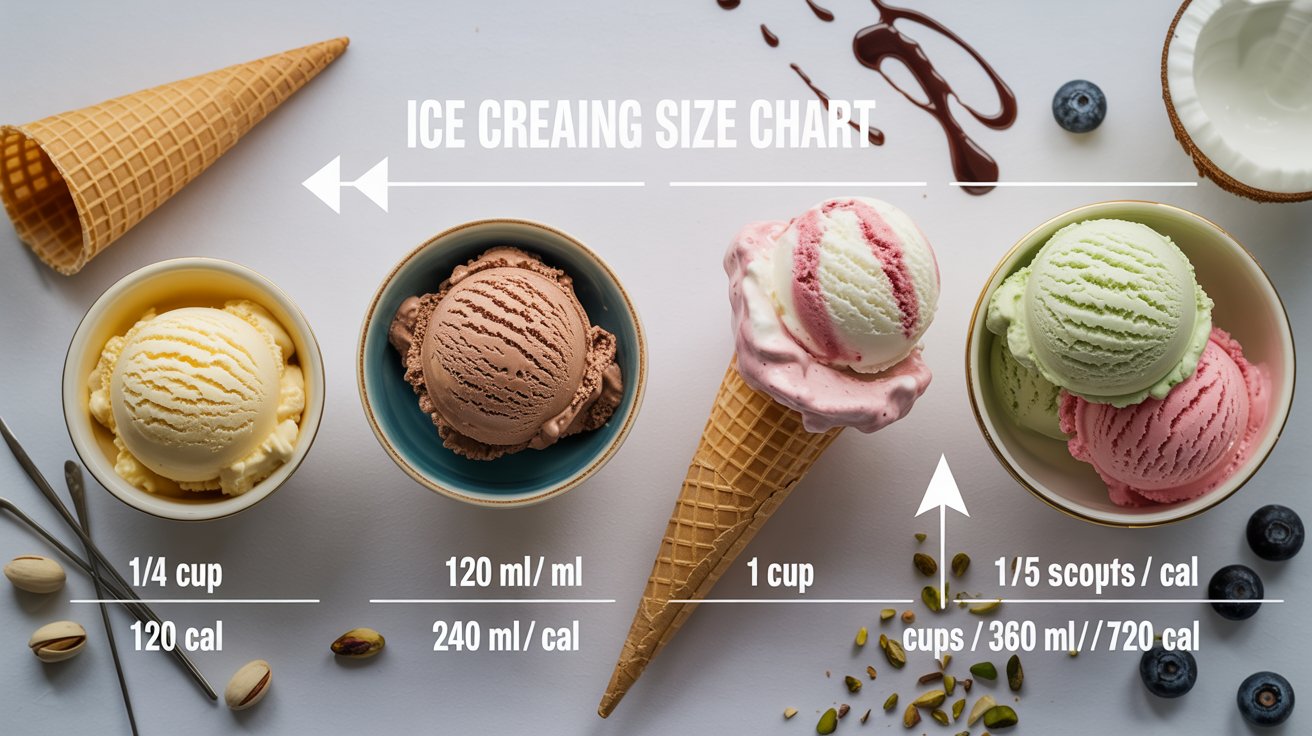
Ice cream is the ultimate treat that brings joy to any occasion, whether it’s a hot summer day or a cozy movie night. The creamy texture and endless flavor possibilities make it a favorite for both kids and adults alike. You can whip up a batch at home that rivals your local ice cream shop, and I’m here to help you serve it just right!
Get ready for a detailed serving size chart that covers various types of ice cream, along with nutritional information and visual aids to help you portion perfectly. This guide is designed for home cooks who want to ensure everyone gets just the right amount.
History of Ice Cream Portions
The history of ice cream portions reflects the evolving cultural practices surrounding this beloved treat. Understanding how serving sizes have transformed over time can enhance our appreciation of ice cream today and guide us in making informed choices about portion control.
Early Serving Practices
Ice cream has a rich history dating back to ancient times, with early serving practices varying widely across cultures.
- In the 16th century, Italian nobility enjoyed ice cream-like desserts served in small portions, often as a palate cleanser between courses.
- During the 18th century, ice cream became more accessible in Europe and America, with early recipes calling for just a few tablespoons per serving.
- The introduction of ice cream parlors in the 19th century popularized larger servings, often served in extravagant dishes.
Modern Trends
Today, ice cream serving sizes are influenced by dietary guidelines, health awareness, and consumer preferences.
- Standard serving sizes are often defined as ½ cup (about 125ml), which balances indulgence and moderation.
- Many brands now offer single-serve containers, making it easier to control portions and reduce overconsumption.
- Ice cream social norms have shifted, with some opting for smaller scoops or sampling multiple flavors in one serving.
Chef’s tip: When serving ice cream at home, consider using a measuring cup to ensure consistent portion sizes for everyone.
Recommended Serving Sizes
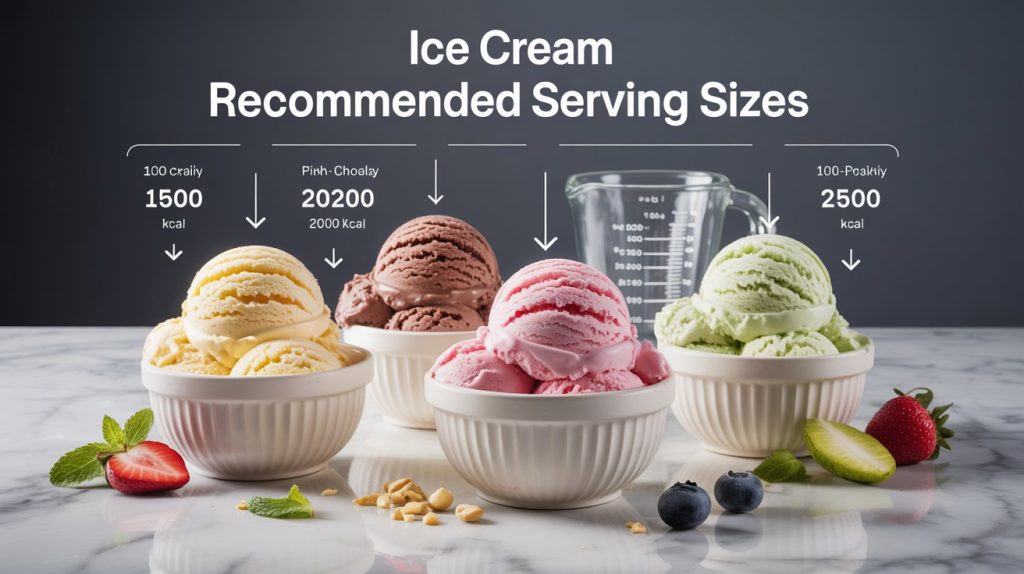
Understanding the recommended serving sizes for different types of ice cream can enhance your enjoyment and help with portion control. Below is a detailed chart that outlines the ideal servings for regular ice cream, gelato, frozen yogurt, and non-dairy ice cream, providing insight into how to indulge without overdoing it.
Serving Size Chart
| Type | Recommended Portion | Calories (approx.) |
|---|---|---|
| Regular ice cream | ½ cup | 150–250 kcal |
| Gelato | ½ cup | 200–300 kcal |
| Frozen yogurt | ½ cup | 100–200 kcal |
| Non-dairy ice cream | ½ cup | 150–250 kcal |
Gelato is denser, so smaller portions are often more satisfying.
Chef’s tip: Use a measuring cup for accurate portions to avoid overindulgence!
- Regular Ice Cream: The creamy texture and rich flavor mean that a little goes a long way. Aim for a serving size of ½ cup to enjoy without guilt.
- Gelato: Denser and richer, gelato is best savored in the same portion size. Keep it to ½ cup for a satisfying treat.
- Frozen Yogurt: A lighter alternative, but still calorie-dense. Stick to ½ cup for a refreshing dessert.
- Non-Dairy Ice Cream: These options can be just as rich, so ½ cup is a reasonable serving to gauge your intake.
Maintaining portion control is essential for enjoying ice cream as part of a balanced diet. If you find yourself wanting more, consider adding fresh fruit or nuts to your serving for added volume and nutrition without excessive calories.
Nutritional Information
Understanding the nutritional content of ice cream is essential for making informed choices about portion sizes and overall consumption. In this section, we’ll break down the key nutritional facts for various serving sizes to help you enjoy your favorite treat while keeping an eye on your dietary needs.
Calories
The calorie count in ice cream can vary significantly depending on the flavor and ingredients. Here’s a general idea of the calories you might expect per serving size:
| ½ cup (about 66g) | 150-250 calories |
| 1 cup (about 132g) | 300-500 calories |
| 2 scoops (about 100g) | 200-400 calories |
Fat Content
Ice cream also varies in fat content, which can impact both flavor and texture. Here’s a quick overview:
- Low-fat ice cream: Approximately 3-7g of fat per serving.
- Regular ice cream: Typically contains 7-14g of fat per serving.
- Premium ice cream: Can have 14-20g of fat per serving due to higher cream content.
Sugar Levels
Sugar content can also fluctuate based on the type of ice cream. Here’s what you might find:
- Regular ice cream: About 14-28g of sugar per serving.
- Low-sugar or sugar-free options: Can range from 0-10g of sugar per serving.
Chef’s tip: Always check the label for specific nutritional information, as brands can differ widely!
Visual Aids for Serving Sizes
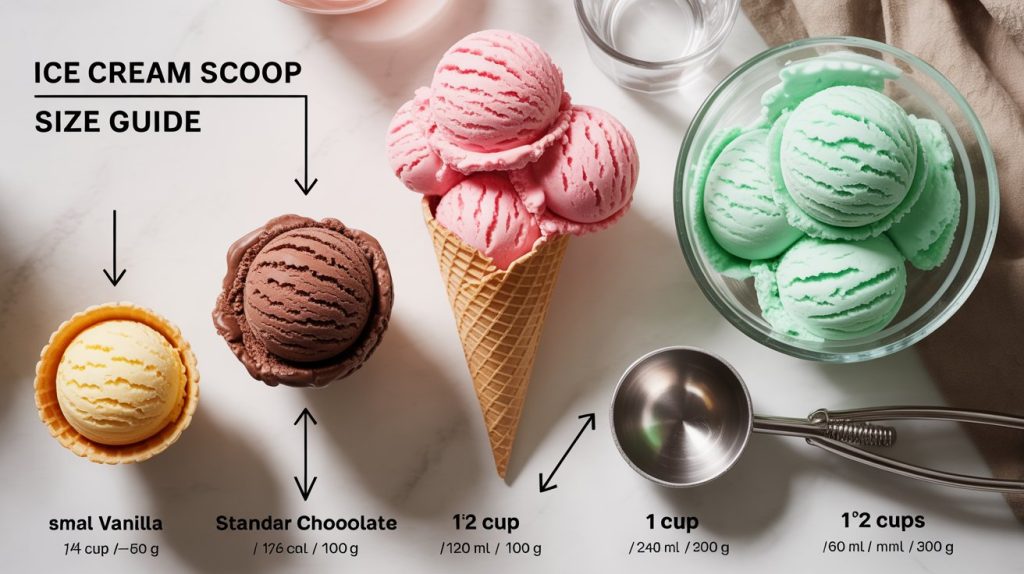
Understanding serving sizes for ice cream can enhance your dessert experience while keeping portions in check. This section provides visual comparisons of common serving sizes and scoop sizes, making it easier to estimate how much ice cream to serve per person.
Scoop Sizes
| Serving | Measurement | Approx. Weight |
|---|---|---|
| Small scoop | ¼ cup (60 ml) | ~50 g |
| Standard scoop | ½ cup (120 ml) | ~100 g |
| Double scoop | 1 cup (240 ml) | ~200 g |
| Large serving | 1½ cups (360 ml) | ~300 g |
✔ ½ cup (120 ml) is considered the standard ice cream serving size.
Ice cream scoops can vary by size. Here’s a handy guide to different scoop sizes and their capacities:
- Small Scoop: ¼ cup (60ml) – Great for tasting or kids.
- Medium Scoop: ½ cup (120ml) – Standard serving for adults.
- Large Scoop: 1 cup (240ml) – Perfect for indulgent treats.
Chef’s tip: For perfectly rounded scoops, dip your scoop in warm water before scooping!
Portion Control Tips
Managing portion sizes when enjoying ice cream can help you savor each scoop while keeping your indulgence in check. Here are practical tips using measuring tools and mindful eating practices to guide you in enjoying your favorite treat without overdoing it.
Using Measuring Tools
Measuring tools can be invaluable for controlling portion sizes. Here are some suggestions:
- Ice Cream Scoop: Use a standard scoop (approximately ½ cup or 120ml) to serve a single portion. This helps you avoid the temptation to take a larger serving.
- Measuring Cups: If you don’t have an ice cream scoop, a ¼ cup (60ml) measuring cup works well for smaller servings, perfect for a tasting experience.
- Scale: For those who prefer precise measurements, aim for about 4 ounces (113g) per serving. This is roughly equivalent to ½ cup of ice cream.
Mindful Eating Practices
Mindful eating can enhance your enjoyment of ice cream while helping you stick to recommended serving sizes:
- Slow Down: Take your time with each bite. Enjoy the texture and flavor, which can help you feel satisfied with smaller portions.
- Use Smaller Bowls: Serving ice cream in smaller bowls can make the portion appear larger, tricking your brain into feeling satisfied.
- Limit Distractions: Avoid eating ice cream while watching TV or scrolling through your phone. Focus on the experience to help curb overindulgence.
Chef’s tip: Pair your ice cream with fresh fruit or nuts to create a more balanced dessert while enjoying smaller amounts of ice cream.
Variations and Substitutions
When it comes to ice cream, there are plenty of variations to accommodate different dietary needs while still enjoying a delicious treat. Whether you’re exploring vegan options or looking for sugar-free alternatives, understanding these substitutes can help you maintain a balanced diet without sacrificing flavor.
Vegan Options
- Use coconut milk: Replace heavy cream with 1 cup of full-fat coconut milk for a rich, creamy texture.
- Nut milks: Almond milk or cashew milk can be used in a 1:1 ratio as a lighter alternative.
- Frozen bananas: Blend 2 ripe frozen bananas for a naturally sweet, dairy-free ice cream base.
Chef’s tip: For a richer flavor, try adding 1 teaspoon of vanilla extract to your vegan ice cream base.
Sugar-Free Alternatives
- Stevia: Use 1 teaspoon of liquid stevia as a sugar substitute for a low-calorie option.
- Erythritol: Replace sugar in your recipe with ½ cup of erythritol for a similar sweetness without the calories.
- Fruit purees: Incorporate ½ cup of unsweetened apple sauce or pureed dates for natural sweetness.
| Regular Vanilla Ice Cream | ½ cup (120ml) | 200 calories, 10g fat, 20g sugar |
| Vegan Coconut Ice Cream | ½ cup (120ml) | 150 calories, 6g fat, 8g sugar |
| Sugar-Free Vanilla Ice Cream | ½ cup (120ml) | 100 calories, 2g fat, 0g sugar |
Using the right substitutions not only allows you to enjoy your favorite treats but also helps you meet your dietary preferences and needs. If you’re experimenting with these options, start small and adjust flavors to find your perfect balance.
Serving Suggestions
Serving ice cream is an art that goes beyond just scooping it into a bowl. The right toppings, sauces, and presentation can elevate your dessert experience. Here are some effective tips to make your ice cream servings both delicious and visually appealing.
- Toppings and Sauces: Consider garnishing your ice cream with a variety of toppings. Classic options include 1 tablespoon of chocolate syrup, crushed nuts, or fresh fruits like strawberries or bananas (about ½ cup sliced). For a unique twist, try adding crushed cookies or candy for texture and flavor.
- Portion Control: To maintain portion sizes, aim for around ½ cup (120ml) of ice cream per serving. This helps prevent overindulgence while still satisfying your sweet tooth. Use an ice cream scoop for uniformity, and level it off for an accurate measurement.
- Presentation Tips: Serve your ice cream in chilled bowls or glasses to keep it from melting too quickly. Consider layering different flavors for a visually appealing dessert. A tall glass can showcase the layers beautifully, making the dessert not just delicious but also a feast for the eyes.
- Serving Temperature: Let your ice cream sit at room temperature for about 5-10 minutes before serving. This softens it just enough to make scooping easy and enhances the flavor, allowing the ingredients to shine.
- Pairing Suggestions: Pair your ice cream with complementary flavors. For instance, a scoop of vanilla ice cream goes well with a warm brownie or apple pie. This contrast in temperature and texture can create a delightful experience.
Quick Summary
| Prep Time | Cook Time | Total Time | Servings |
|---|---|---|---|
| 10 minutes | N/A | 10 minutes | Varies |
- Measure carefully: Use a kitchen scale for accurate serving sizes.
- Standard serving size: 1/2 cup is typically recommended for most ice creams.
- Keep it consistent: Use the same scoop for uniform servings.
- Watch the temperature: Serve ice cream at around 6°F for optimal texture.
- Know your audience: Adjust serving sizes for kids and adults accordingly.
Frequently Asked Questions
Can I make this ahead of time? How to store and reheat?
You can absolutely prepare ice cream ahead of time; just store it in an airtight container in the freezer. It will stay fresh for about 2-3 weeks without losing quality.
What can I substitute for heavy cream?
If you don’t have heavy cream, you can use half-and-half or a combination of milk and butter (3/4 cup milk + 1/4 cup melted butter) to achieve a similar texture. Keep in mind that the ice cream may be slightly less rich.
How do I know when my ice cream is done churning?
Your ice cream is ready when it has thickened to a soft-serve consistency, usually taking about 20-30 minutes in an ice cream maker. It should hold its shape when you scoop it out.
Can I freeze this? How long does it last?
Yes, you can freeze ice cream, and it will last for about 2-3 weeks in the freezer if stored properly. Make sure it’s in an airtight container to prevent freezer burn.
Why did my ice cream turn out icy?
If your ice cream is icy, it might be due to insufficient churning time or too much water in the mix; ensure you churn it until it’s creamy and thick. Also, make sure to use a proper ice cream maker to achieve the best texture.
